Español
 عربى
عربى русский
Modern communication networks increasingly depend on structured cabling systems that are organized, protected, easy to maintain, and adaptable to changing service requirements. While optical fiber is often associated with data centers, telecommunications rooms, and backbone networks, the final connection at the user outlet is equally important. A poorly designed fiber outlet can create excessive bending, expose the fiber to mechanical stress, make port identification difficult, and complicate installation or future maintenance. The SMT-4307SC-2P 86 Type Flat Faceplate Fit for SC Connector, 2 Ports, is designed to address these practical requirements in home, office, and fiber-to-the-desktop applications.
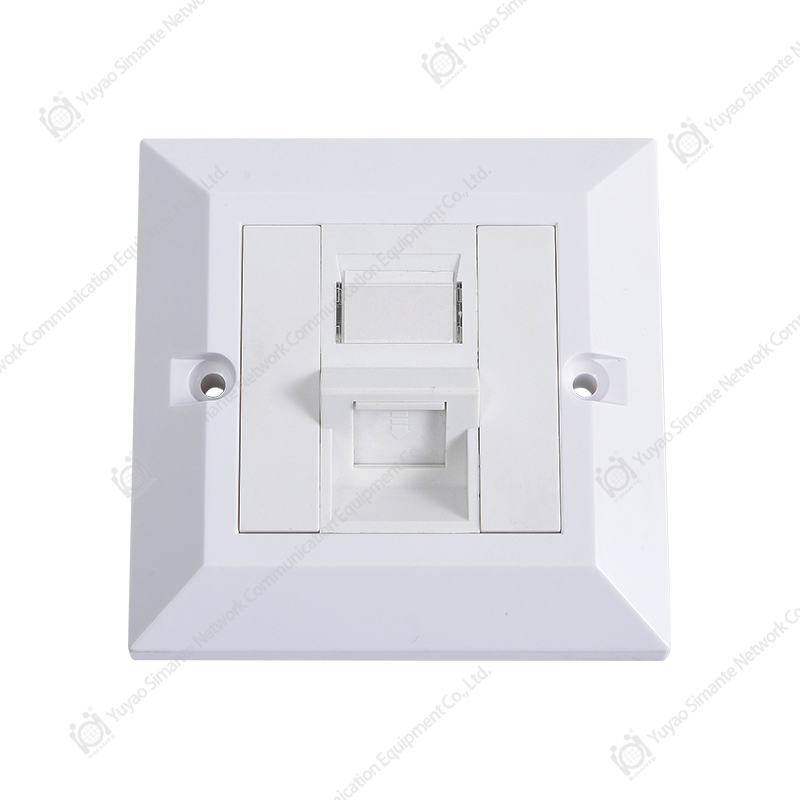
This optical fiber adapter panel provides a compact user terminal for bringing dual-core fiber into a work area or residential environment. It supports two SC connector ports and is designed around an 86-type embedded face frame. Its flat front appearance, concealed fastening structure, detachable identification plate, high-quality ABS construction, and internal space arrangement make it a practical component for structured cabling systems. The design also provides a controlled area for incoming, outgoing, and reserve fiber, helping installers respect the required fiber bending radius while maintaining a neat and serviceable installation.
For distributors, system integrators, contractors, and original equipment buyers, the value of this faceplate is not limited to its visible appearance. Its advantages extend to installation efficiency, port management, material selection, environmental compliance, packaging, production capability, and customization support. The product is manufactured by Yuyao Simante Network Communication Equipment Co., Ltd., a professional network cabling and optical fiber product manufacturer with integrated design, development, sales, and service capabilities.
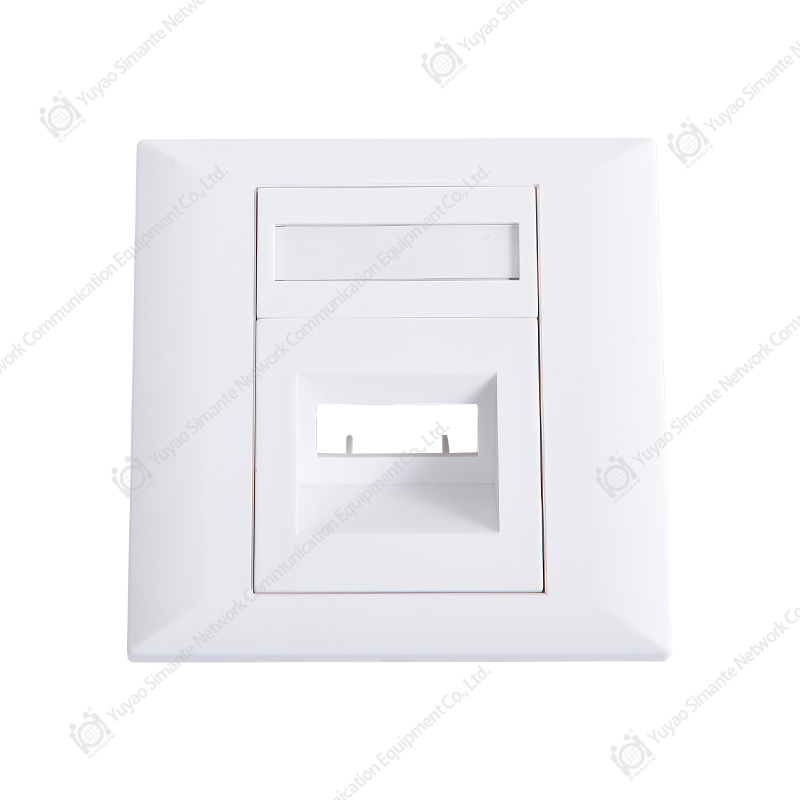
SMT-4307SC-2P 86 Type Flat Faceplate Fit For SC Connector,2 Ports
Product Overview and Application Position
The SMT-4307SC-2P is a two-port optical fiber wall faceplate intended for SC connector applications. It is categorized within the fiber series and functions as a user-side outlet or adapter panel. The product is especially suitable for installations where dual-core fiber must be terminated and presented at a clean, accessible wall point.
In a typical structured cabling system, the fiber pathway may extend from a building entrance facility or telecommunications room to a home, office, workstation, equipment cabinet, or automation area. At the user end, the fiber must transition from the concealed cable route to a connectorized interface. The faceplate performs this transition while protecting the fiber and providing an organized connection point. The two-port configuration supports two SC adapters, making it appropriate for dual-fiber links, separate service connections, spare capacity, or other applications defined by the network designer.
The 86-type format is widely used for wall-mounted electrical and communication accessories in many markets. An embedded face frame allows the product to integrate with a compatible wall box or installation opening. Compared with exposed surface-mounted arrangements, an embedded faceplate can provide a more finished appearance and reduce the visual impact of the network outlet. The flat face design also supports a clean installation in homes, offices, commercial buildings, and other user-access areas.
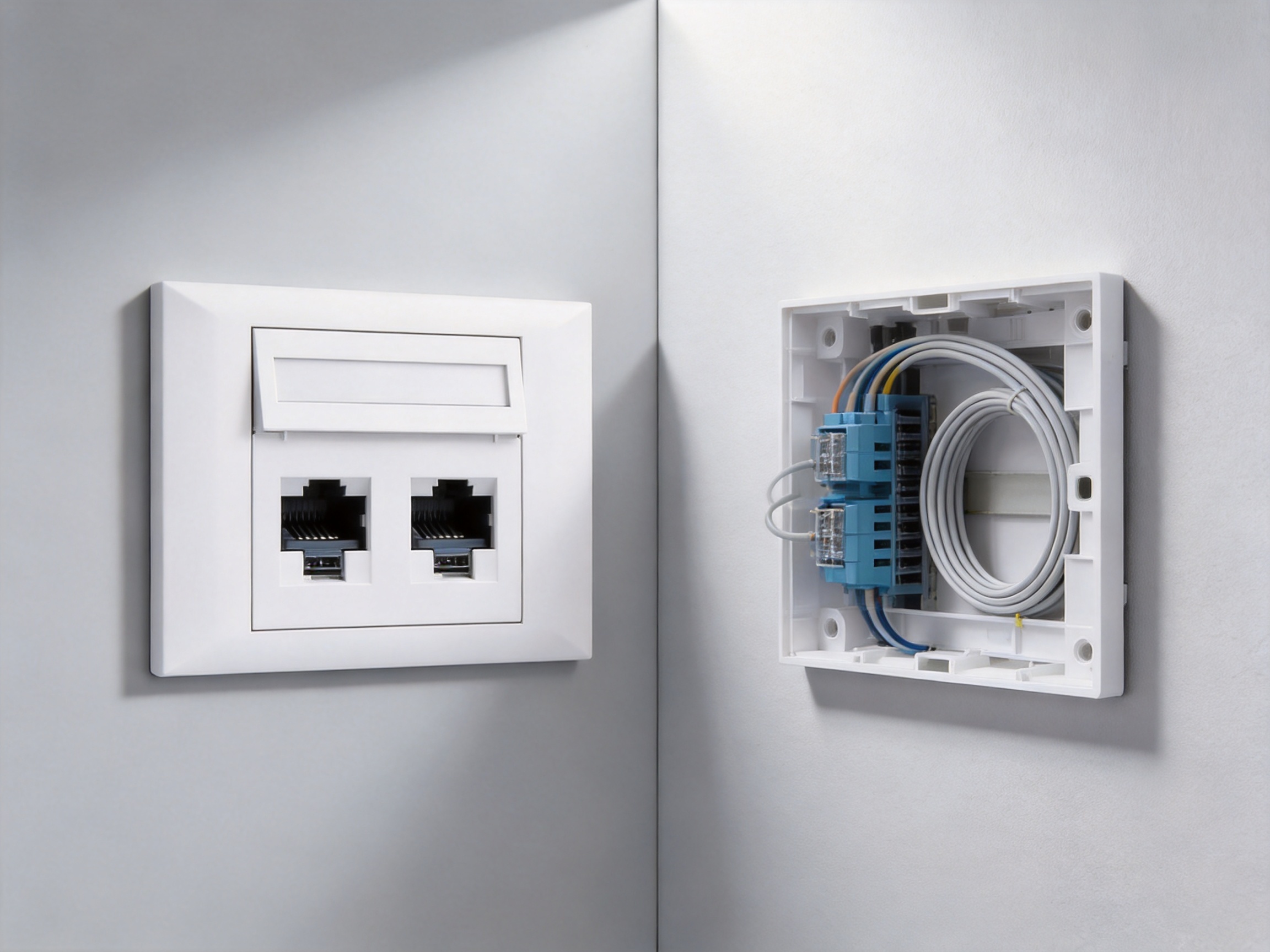
The product is not simply a decorative cover. It is an engineered fiber termination accessory. Its internal area is designed to accommodate the fiber routing requirements associated with installation and maintenance. A suitable internal curvature helps avoid sharp bends that may cause attenuation, damage the cable structure, or reduce long-term reliability. At the same time, the internal space can retain a small amount of redundant fiber, giving technicians useful flexibility during initial installation, connector replacement, testing, or future service work.
Key Product Features
Two SC Connector Ports
The faceplate is configured for two SC connector positions. SC connectors are widely used in optical communication because of their practical push-pull coupling structure, stable physical format, and broad compatibility with fiber network equipment. By providing two dedicated positions, the SMT-4307SC-2P can support dual-core fiber termination while maintaining a clear and orderly front interface.
A two-port faceplate also gives system designers useful flexibility. Both ports may be used for one duplex fiber link, or they may be assigned to separate fibers, services, or future connections according to the project design. The exact connection arrangement depends on the selected adapter and network architecture, but the faceplate provides the physical space required for a two-port SC solution.
86-Type Embedded Face Frame
The embedded 86-type format is intended for a neat wall installation. The face frame sits within the installation structure rather than appearing as a bulky external enclosure. This approach is suitable for locations where appearance, space utilization, and compatibility with common wall-box arrangements are important.
The embedded structure also helps separate the visible user interface from the internal fiber management area. The front of the outlet can remain clean and easy to inspect, while the fiber routing and reserve length are managed behind the faceplate. For contractors, this arrangement can improve the consistency of finished installations across residential and commercial projects.
Concealed Surface Fastening
One of the notable design features is the embedded face frame with no visible screws on the surface. Exposed screws can interrupt the appearance of an outlet and may collect dust or become visually prominent in finished interiors. Concealed fastening creates a smoother front surface and gives the faceplate a more integrated appearance.
From an installation perspective, the design is intended to be easy to install and disassemble. This is valuable during commissioning, testing, troubleshooting, and maintenance. Technicians can access the relevant components without treating the entire wall outlet as a permanent, difficult-to-service assembly. The combination of a clean front surface and serviceable construction makes the faceplate suitable for both new installations and organized retrofit projects.
Large Identification Area and Detachable Nameplate
Fiber networks can become difficult to manage when outlets are not clearly identified. A larger front identification area gives installers and network operators a practical place to record port numbers, room names, service assignments, rack references, or other project information. Clear identification reduces the time required to trace connections and helps prevent accidental disconnection of the wrong service.
The faceplate is equipped with a detachable nameplate. This feature supports structured port management because labels can be replaced when a room function changes, when a port is reassigned, or when an installation is upgraded. A replaceable identification element is more useful than a permanently printed marking in environments where network configurations may change over time.
High-Quality ABS Engineering Plastic
The product uses ABS engineering plastic selected for practical performance in communication accessory applications. The material is described as resistant to collision and impact and not easily deformed under normal use conditions. A faceplate installed in a home, office, corridor, equipment room, or public-access area can be exposed to accidental contact, handling during maintenance, and routine environmental stress. A robust plastic housing helps protect the internal fiber and preserve the appearance of the outlet.
ABS also supports efficient injection molding and repeatable production. When the material, mold design, and process parameters are properly controlled, the resulting parts can maintain consistent dimensions, smooth surfaces, and reliable assembly interfaces. This is particularly important for products that must fit installation boxes, adapter components, face frames, nameplates, and related accessories.
Fiber Bending and Reserve Management
Optical fiber is sensitive to excessive bending. The required bending radius depends on the cable construction and fiber type, so installation personnel must always follow the specifications of the selected cable and connector assembly. The faceplate’s internal space is designed to help installers route the fiber in a reasonable curve rather than forcing it into a sharp corner.
Appropriate curvature also makes it possible to retain a small amount of redundant fiber. Reserve fiber can be useful when a connector must be re-terminated, when an adapter is replaced, or when the outlet needs to be repositioned during service work. Without sufficient reserve, a technician may have to replace a longer cable section or perform an unnecessarily complex repair. The SMT-4307SC-2P therefore supports not only initial connection but also practical long-term maintenance.
Advantages Compared with Basic Fiber Faceplates
Many basic fiber wall outlets provide only a cover and a connector opening. Although a simple product may be adequate for a limited installation, it may not address the full range of requirements encountered in professional structured cabling. The SMT-4307SC-2P adds value through its combination of mechanical design, identification, internal fiber management, material selection, and serviceability.
Improved Installation Appearance
The concealed fastening arrangement provides a cleaner appearance than faceplates with visible screws. This is particularly useful in residential projects, hotels, offices, education facilities, and commercial interiors where communication outlets must blend with the surrounding wall finish. The flat front also reduces the impression of a bulky network enclosure.
Better Port Administration
The larger identification area and detachable nameplate distinguish the product from outlets that offer little or no room for labeling. In a structured cabling system, documentation and physical identification are closely connected. When port markings are clear and easy to revise, technicians can work more efficiently and reduce the risk of incorrect patching or service interruption.
More Practical Fiber Protection
A faceplate that does not provide adequate internal routing space may force the fiber into an excessive bend or place pressure on the connector. The SMT-4307SC-2P is designed with a reasonable internal space arrangement to support fiber routing, reserve storage, and protection of incoming and outgoing fiber. This design approach is more suitable for professional installations than a shallow decorative cover with limited cable management capacity.
Serviceability for the Network Life Cycle
Network infrastructure is expected to remain in service for many years. During that period, outlets may need to be inspected, cleaned, relabeled, reconnected, or upgraded. A faceplate that is easy to install and disassemble can lower the effort required for these tasks. The combination of removable identification and accessible construction supports a more maintainable installation.
Material Durability
Low-quality plastic components may become brittle, deform during installation, or show inconsistent fit. The use of high-quality ABS engineering plastic provides a stronger basis for impact resistance and dimensional stability. While every product must be installed and operated within its intended conditions, the material selection is appropriate for an outlet expected to withstand normal handling and environmental exposure.
Suitable for Professional and Residential Projects
The product combines a finished appearance with practical internal functionality. This makes it suitable for a range of applications, including fiber-to-the-home, fiber-to-the-desktop, office network outlets, smart-home systems, communication rooms, building automation, and other structured cabling projects. Its compact two-port format can be integrated into projects that require a consistent user-side fiber interface without a large wall-mounted enclosure.
Fiber-to-the-Desktop and User-Terminal Applications
Fiber-to-the-desktop, commonly referred to as FTTD, extends optical fiber closer to the end user or active equipment. This architecture can support high bandwidth, long transmission distances, electrical isolation, and reduced susceptibility to electromagnetic interference. However, the success of an FTTD installation depends on every element in the link, including the final wall outlet.
The SMT-4307SC-2P acts as the visible and serviceable endpoint of the fiber route. It provides a defined location for SC connections and helps prevent loose fiber from being left exposed at the workstation or room boundary. By keeping the termination organized, the faceplate contributes to a safer and more professional installation.
In a residential setting, the faceplate may be installed in a study, living room, home office, media area, or utility space. In a commercial environment, it may be placed at a workstation, control desk, reception area, laboratory, or equipment location. In smart-home and automation systems, it can provide a dedicated optical interface that remains separate from ordinary power and copper communication outlets.
For project managers, the faceplate can simplify the visual standardization of multiple user outlets. For installers, the identification area and accessible design can reduce commissioning effort. For building owners, a protected and labeled fiber termination point can make later troubleshooting easier and support better infrastructure records.
Mechanical and Environmental Performance
The stated operating temperature range is -25°C to +70°C. This range covers many indoor and sheltered installation environments, including ordinary residential rooms, offices, communication areas, and equipment spaces. Before deployment, the project designer should confirm that the actual site conditions, cable type, connector type, wall box, and related components are suitable for the complete operating environment.
The product is designed to meet RoHS requirements. Restriction of hazardous substances is an important consideration for international procurement, electronics-related projects, and environmentally responsible product selection. Compliance with RoHS requirements supports buyers that maintain material control policies or serve markets with substance restrictions.
The ABS housing is described as anti-collision, impact resistant, and not easy to deform. These characteristics are relevant because wall outlets may be touched, bumped, opened, and reassembled during the life of the network. The housing also acts as a barrier around the fiber connection area, helping keep the termination organized and reducing the likelihood of accidental contact with the fiber routing.
Environmental performance should always be considered together with installation quality. The faceplate should be installed in a suitable wall box or mounting structure, protected from excessive moisture and corrosive substances, and used with compatible adapters and cables. Proper handling, connector cleaning, bend-radius control, and accurate labeling are also necessary to obtain the best performance from the complete fiber link.
Manufacturing Strengths and Production Capability
The product is manufactured by Yuyao Simante Network Communication Equipment Co., Ltd., a professional manufacturer specializing in network cabling solutions and optical fiber products. The company integrates design, development, sales, and service, allowing product requirements to be considered across the full process rather than at only the final assembly stage.
According to the supplied company information, the manufacturer has nearly 20 years of service experience in the network communication field. This experience provides an important foundation for understanding the practical requirements of structured cabling products. Faceplates, keystone jacks, patch panels, data sockets, fiber accessories, and related components must satisfy both technical and installation expectations. Experience across these product categories can support more consistent interface planning and accessory compatibility.
Engineering and Technical Personnel
The company has more than 10 engineers and over 30 full-time technical personnel. This technical structure supports ongoing product development, process improvement, quality control, and customization work. A strong engineering team is especially valuable for injection-molded communication products because performance depends on the relationship between product geometry, mold construction, material behavior, assembly tolerances, and installation requirements.
Engineering involvement from the design stage can help identify potential problems before mass production. These problems may include insufficient internal routing space, weak clips, inconsistent nameplate fit, uneven surface finish, difficult disassembly, or dimensional incompatibility with related components. A mature research and development system helps address such issues at the source of design rather than relying only on final inspection.
Injection Molding Resources
The factory operates 10 automatic injection molding machines and 20 semi-automatic injection molding machines, according to the provided information. These resources are relevant to products made from ABS engineering plastic. Injection molding provides an efficient method for producing repeatable faceplate bodies, frames, covers, nameplates, and other plastic components in volume.
Automatic and semi-automatic equipment can be used according to product structure, production volume, mold requirements, and process characteristics. Automated equipment may improve repeatability and production efficiency for stable high-volume parts, while semi-automatic equipment can provide flexibility for selected components, model changes, or specialized production requirements. A combination of equipment types allows the factory to balance output, flexibility, and manufacturing efficiency.
Automatic Assembly Capacity
The company also has eight types of automatic installation machines. Automatic assembly equipment can help improve the consistency of repeated operations and reduce variation caused by manual handling. For communication accessories, correct component positioning is important because faceplate parts must align properly with adapters, frames, covers, nameplates, and mounting structures.
Automation does not eliminate the importance of engineering or inspection. Instead, it provides a controlled platform for repetitive processes while technical personnel manage equipment settings, tooling, process verification, and quality standards. The combination of automated and manual capabilities can support both standard products and customized customer requirements.
Stable Production Output
The factory maintains an annual output of more than 9 million units. This production scale demonstrates the capacity to support regular orders and larger structured cabling projects. Stable output is important for distributors and system integrators that need predictable supply, consistent product specifications, and continuity across project batches.
Large-scale production can also support better process familiarity. When manufacturing teams repeatedly produce related network accessories, they can build practical experience in material handling, mold maintenance, component inspection, packaging, and order management. For buyers, this may reduce the supply risk associated with relying on a small or irregular production operation.
Quality and Process Control Considerations
Quality for an optical fiber faceplate involves more than the appearance of the plastic housing. The product must maintain suitable dimensions, provide reliable component retention, protect the fiber routing area, support clear labeling, and remain serviceable after installation. The performance of the faceplate must also be considered as part of a complete system that includes the optical adapter, connector, cable, wall box, and installation environment.
The manufacturer states that its mature research and development system supports quality stability from the design source. This design-led approach is useful because many quality problems originate in product geometry or assembly planning. A faceplate with insufficient clearance may be difficult to install even if the final molded surface looks acceptable. A nameplate that is too loose may fall out, while one that is too tight may be difficult to replace. Product engineering must consider these details before production begins.
Performance testing is another important element of the company’s manufacturing approach. The supplied company information indicates that the factory uses performance testing to meet comprehensive customer requirements. Testing programs for communication accessories may be defined according to customer specifications, project standards, material requirements, dimensional controls, appearance criteria, and environmental expectations.
For professional buyers, it is advisable to confirm the inspection documentation required for each order. Depending on the project, this may include material declarations, RoHS documentation, dimensional inspection records, visual inspection standards, sample approval, packaging confirmation, and customer-specific quality requirements. A clear agreement before production helps ensure that the delivered product matches the intended application.
Customization, OEM, and ODM Support
Different communication projects may require different markings, packaging methods, colors, labels, adapter configurations, or customer identification systems. The manufacturer undertakes OEM and ODM projects and provides customer-specific support. This capability is valuable for distributors and network solution providers that need products aligned with their own product portfolios or project documentation.
Customization may include customer-specified packaging, as indicated in the product notes. Buyers should define packaging requirements in detail, including carton markings, product labels, quantity per inner package, quantity per master carton, language requirements, accessory lists, barcode information, and handling instructions. Clear packaging specifications help reduce confusion during warehousing and project distribution.
OEM and ODM cooperation can also involve product branding, mold modification, adapter selection, front-panel markings, material requirements, and installation accessories. The feasibility of each request depends on order volume, tooling, technical requirements, certification needs, and project schedule. A structured technical discussion at the beginning of the project helps align expectations between the buyer and manufacturer.
Packaging, Storage, and Logistics
The stated packaging method places the product in a special blister bag, followed by placement in a cardboard box. Product accessories are included at the same time. A label indicating the product model and quantity is affixed to the upper-left area of the carton front, and the packaged products are then placed into the carton middle. This packaging approach is intended to protect the faceplate during handling and to keep associated accessories together.
The supplied regular packing information indicates 10 boxes per box, 20 units per box, and 200 units per box. Because this wording may represent multiple packaging levels or a translated packing description, buyers should confirm the exact inner-box and master-carton configuration before placing a purchase order. Confirmation should include the number of units per blister bag, inner carton, and master carton, as well as carton dimensions and gross weight where logistics planning is required.
The recommended storage environment is a warehouse with an ambient temperature from -5°C to +30°C and relative humidity not exceeding 70 percent. The surrounding air should be free from acid, alkali, and other corrosive gases. The stated storage period is three years. Products should remain in their original packaging as much as possible and should be stored in a clean, dry location away from direct chemical exposure, excessive pressure, and conditions that could deform the plastic packaging or product.
Proper storage is particularly important for molded plastic products and optical accessories. Excessive heat may affect packaging or material stability, while high humidity and corrosive atmospheres may damage metallic components or labels. Warehouse personnel should also use a first-in, first-out approach where appropriate and maintain clear product identification to avoid mixing models or packaging versions.
Recommended Installation Practices
Before installation, verify that the faceplate model, SC adapter type, wall box, fiber cable, and accessories are compatible. Check that the wall opening or embedded box matches the 86-type format and that sufficient depth is available for the fiber routing area. The installation location should allow the faceplate to sit securely and should not force the cable into a sharp bend.
Route the incoming and outgoing fiber carefully. Follow the minimum bending radius specified by the cable manufacturer, even though the faceplate provides an appropriate internal curvature for practical fiber management. Do not pull the fiber excessively, twist it sharply, or allow the connector body to support cable tension. A gentle and organized route helps protect optical performance and makes future servicing easier.
Install the SC adapters and confirm that they are seated correctly. Keep connector end faces clean and protected from dust. Optical connectors should not be left uncovered when they are not in use. During maintenance, use suitable inspection and cleaning procedures rather than touching the connector end face directly.
After installation, apply a clear label to the identification area or detachable nameplate. The label should correspond with the network documentation, patch-panel record, or service assignment. Test the optical link according to the project requirements and record the port identification, fiber route, test results, and date of commissioning.
Finally, check that the faceplate is firmly installed, the front surface is properly aligned, the nameplate is secure, and the cable is not pinched by the frame or cover. A final visual inspection can identify installation problems before the outlet is placed into service.
Typical Application Environments
| Application | Typical Requirement | Product Contribution |
|---|---|---|
| Fiber-to-the-home | Clean and protected optical termination in a living area or home office | Two SC ports, flat appearance, and organized internal fiber routing |
| Fiber-to-the-desktop | User-side fiber outlet near a workstation or terminal | Embedded 86-type format and convenient port identification |
| Office structured cabling | Consistent outlets that are easy to label and maintain | Detachable nameplate and serviceable faceplate construction |
| Smart-home systems | Compact optical connection point integrated into the interior | Low-profile flat face and concealed surface fastening |
| Building automation | Organized fiber termination near control or monitoring equipment | Protected fiber area and two-port SC interface |
| Commercial interiors | Professional appearance with manageable network access | Embedded design, smooth front surface, and impact-resistant ABS |
| Retrofit projects | Replacement or upgrade of existing user-side fiber outlets | Easy installation and disassembly for maintenance work |
Technical Summary
| Item | Specification or Description |
|---|---|
| Product model | SMT-4307SC-2P |
| Product type | 86-type flat optical fiber faceplate |
| Connector compatibility | SC connector |
| Port quantity | 2 ports |
| Product series | Fiber Series |
| Installation style | Embedded face frame |
| Front fastening appearance | No visible surface screws |
| Identification | Large front identification area with detachable nameplate |
| Main material | ABS engineering plastic |
| Material characteristics | Anti-collision, impact resistant, and resistant to deformation under normal use |
| Operating temperature | -25°C to +70°C |
| Environmental compliance | RoHS requirements |
| Primary application | Home, work area, structured cabling, and FTTD applications |
| Packaging | Special blister bag, cardboard box, accessories included |
| Storage temperature | -5°C to +30°C |
| Storage humidity | Relative humidity not more than 70 percent |
| Stated storage period | Three years under specified warehouse conditions |
Why Choose This Product for Structured Cabling Projects?
The SMT-4307SC-2P is a strong choice when a project requires a compact SC fiber outlet with a clean appearance and practical maintenance features. Its two-port configuration is straightforward, while the internal space design addresses the needs of fiber routing and reserve management. These details help distinguish it from products designed only to cover a wall opening.
The product also offers a useful balance between appearance and function. Concealed fastening provides a finished front surface, while the embedded frame supports a low-profile installation. The detachable nameplate and larger identification space support professional administration. The ABS housing provides a durable structure suitable for routine handling. Together, these features make the faceplate appropriate for projects where visual quality, installation convenience, and network management are all important.
From a supply perspective, the manufacturer’s engineering team, molding resources, automatic assembly capability, annual production volume, and OEM and ODM experience provide additional value. Buyers can work with a supplier that is able to support standard product procurement as well as customer-specific requirements. This can simplify sourcing for organizations that need multiple structured cabling components from one experienced manufacturer.
The product is also well positioned for international distribution. RoHS compliance, defined storage conditions, protective packaging, and established export experience can help support overseas projects. The manufacturer maintains export activity in Europe, Australia, Africa, the Middle East, and Southeast Asia, while also supporting customized orders. Buyers should still verify project-specific certification, labeling, packaging, and documentation requirements for the destination market.
Procurement Guidance for Distributors and Integrators
When purchasing the SMT-4307SC-2P, first confirm the required SC adapter configuration and whether the adapter is supplied with the faceplate or must be ordered separately. Confirm the compatible wall box and the installation depth required for the selected cable and adapter arrangement. If a project uses a specific SC connector type, shutter design, or polishing format, compatibility should be reviewed before mass ordering.
Second, confirm the exact appearance requirements. These may include color, surface finish, logo marking, label format, nameplate printing, and compatibility with other wall outlets in the same project. For large projects, a pre-production sample or approved reference sample can help ensure that the delivered appearance matches the design expectation.
Third, define the packaging structure. The buyer should confirm unit quantity, inner packaging, master-carton quantity, carton labeling, accessory inclusion, barcode requirements, and customer-specified packaging instructions. This is especially important for distributors that need to place the product directly into their own warehouse or retail supply chain.
Fourth, agree on quality documentation and inspection criteria. Dimensional tolerances, surface appearance, material requirements, assembly function, nameplate retention, and packaging condition should be specified where necessary. If the product is part of a larger system, the buyer may also request sample installation and compatibility verification.
Finally, discuss delivery planning and customization lead times. Standard products and customized products may have different production schedules. Early confirmation of drawings, packaging artwork, labels, and technical specifications can help reduce delays and avoid changes after production begins.
Maintenance and Long-Term Use
A well-installed faceplate requires relatively little routine maintenance, but periodic inspection can help preserve the performance of the complete fiber link. Check that the faceplate remains securely mounted and that the front frame has not been damaged. Confirm that the nameplate remains readable and corresponds with the current network documentation.
When an SC connection is opened, protect the connector from dust and contamination. Clean connectors using approved optical cleaning materials and procedures. Do not place unnecessary force on the adapter or pull the cable from the connector. If the faceplate is disassembled, preserve the original fiber route and avoid reducing the cable bend radius.
If a port is no longer used, keep the optical interface capped and update the label and documentation. If a connector must be replaced, use the reserve fiber stored within the internal area where available. The faceplate’s internal design is intended to make this type of maintenance more practical, but technicians must still follow the specifications of the cable and connector manufacturer.
Q&A
What is the SMT-4307SC-2P?
The SMT-4307SC-2P is an 86-type flat optical fiber faceplate designed for two SC connector ports. It is used as a user-side fiber termination and outlet for homes, offices, work areas, structured cabling systems, and fiber-to-the-desktop applications.
How many SC ports does the faceplate provide?
The faceplate provides two SC connector positions. The exact adapter configuration should be confirmed when ordering, especially for projects that require a specific SC adapter type or accessory set.
What does the 86-type designation mean?
The 86-type designation refers to the common wall faceplate format used for embedded electrical and communication outlets in many markets. The product is intended to be installed with a compatible 86-type wall box or mounting opening.
Are screws visible on the front?
No visible screws are intended on the surface of the embedded face frame. This creates a cleaner appearance and supports integration with residential, office, and commercial interiors.
Does the product include a labeling area?
Yes. The faceplate provides a larger front identification area and a detachable nameplate. These features help installers identify ports and update the labeling when network assignments change.
What material is used?
The product uses ABS engineering plastic. The material is described as anti-collision, impact resistant, and not easy to deform under normal application conditions.
How does the faceplate protect optical fiber?
The internal space is arranged to support reasonable fiber routing, maintain an appropriate radius of curvature, and protect incoming and outgoing fiber. It can also accommodate a small amount of redundant fiber for maintenance or re-termination work.
What is the operating temperature range?
The stated operating temperature range is -25°C to +70°C. The complete installation should also be evaluated according to the cable, connector, wall box, humidity, and environmental conditions at the project site.
Does the product meet RoHS requirements?
The product is specified as meeting RoHS requirements. Buyers with specific regulatory or project documentation needs should confirm the applicable compliance documents before ordering.
Where can the faceplate be used?
It can be used in homes, offices, work areas, structured cabling systems, fiber-to-the-desktop installations, smart-home projects, building automation systems, and other locations requiring a two-port SC optical fiber outlet.
Can the manufacturer support customized packaging?
Yes. The product notes indicate customer-specified packaging is supported. Packaging details, carton markings, quantities, labels, and accessory requirements should be confirmed with the manufacturer before production.
Does the manufacturer provide OEM and ODM services?
The manufacturer undertakes OEM and ODM projects. Depending on the project, support may include product customization, packaging, labeling, component selection, and other technical or commercial requirements.
What are the recommended storage conditions?
The recommended warehouse temperature is -5°C to +30°C, with relative humidity not exceeding 70 percent. The surrounding air should be free from acid, alkali, and other corrosive gases. The stated storage period is three years under the specified conditions.
Should the packing quantity be confirmed before ordering?
Yes. The supplied packaging description states 10 boxes per box, 20 per box, and 200 per box, which may refer to different packaging levels. Buyers should confirm the exact units per inner package and master carton, together with carton dimensions and weight if needed.
Conclusion
The SMT-4307SC-2P 86 Type Flat Faceplate Fit for SC Connector, 2 Ports, is designed to provide a clean, organized, and serviceable endpoint for dual-core optical fiber. Its embedded 86-type face frame, flat appearance, concealed surface fastening, large identification area, detachable nameplate, durable ABS engineering plastic, and internal fiber management space address the practical needs of modern structured cabling installations.
Compared with basic fiber outlets, the product offers stronger attention to installation finish, port administration, fiber protection, and long-term maintenance. Its design is suitable for residential and commercial environments, while its two-port SC configuration supports a broad range of fiber-to-the-desktop and user-terminal applications.
The manufacturing capabilities of Yuyao Simante Network Communication Equipment Co., Ltd. further strengthen the product’s supply value. Integrated design and development, experienced engineering personnel, automatic and semi-automatic injection molding resources, automatic assembly equipment, performance testing, high annual production capacity, export experience, and OEM and ODM support provide a foundation for stable and scalable procurement.
For network contractors, distributors, system integrators, and project owners seeking a professional SC fiber faceplate, this product offers a practical combination of appearance, protection, identification, installation convenience, and manufacturing support. With correct adapter selection, appropriate fiber routing, accurate labeling, and confirmation of project-specific packaging and compliance requirements, it can serve as a dependable component in a well-managed optical fiber cabling system.
References
1. Product information sheet for SMT-4307SC-2P 86 Type Flat Faceplate Fit for SC Connector, 2 Ports.
2. Manufacturer-provided specifications for product materials, operating temperature, RoHS requirements, packaging, and storage.
3. Manufacturer company profile covering network cabling products, optical fiber products, engineering resources, production equipment, export markets, and OEM and ODM services.
4. General structured cabling installation practices for optical fiber routing, connector protection, port identification, and maintenance.
5. General material and environmental considerations for ABS engineering plastic communication accessories.