Español
 عربى
عربى русский
Content
- 1 Product Overview
- 2 Why a Sliding Type 3U Patch Panel Matters
- 3 Core Application Scenarios
- 4 High-Density 72-Port Fiber Management
- 5 SC-LC Connectivity Flexibility
- 6 Advantages Over Ordinary Rack Mount Patch Panels
- 7 Structural Design and Fiber Protection
- 8 Manufacturing Strength Behind the Product
- 9 Advanced Production Processes
- 10 Quality Control and Testing Philosophy
- 11 Comparison Table
- 12 Role in Structured Cabling Systems
- 13 Installation Considerations
- 14 Maintenance and Long-Term Operation
- 15 Customization and OEM/ODM Capability
- 16 Global Market Experience
- 17 Why Choose This Patch Panel for Professional Projects
- 18 Purchasing and Project Planning Guidance
- 19 Q&A Section
- 19.1 Q1: What is the SMT-2206-72P-3U used for?
- 19.2 Q2: Why is the sliding type design useful?
- 19.3 Q3: What does the 3U size provide?
- 19.4 Q4: Why is 72-port capacity important?
- 19.5 Q5: Is the panel suitable for SC and LC connector environments?
- 19.6 Q6: How does this product compare with ordinary fixed patch panels?
- 19.7 Q7: What manufacturing strengths support the product?
- 19.8 Q8: Can the product be customized?
- 19.9 Q9: What maintenance practices are recommended?
- 19.10 Q10: Who should consider using this patch panel?
- 20 Conclusion
- 21 References
In modern structured cabling systems, the fiber optical patch panel is more than a passive box mounted in a rack. It is a control point for optical connectivity, a protection platform for delicate fiber terminations, and an operational interface for technicians who must install, inspect, upgrade, and maintain networks without unnecessary downtime. The SMT-2206-72P-3U Sliding Type SC-LC Rack Mount Fiber Optical Patch Panel is designed for this demanding environment, providing a practical 3U rack-mounted solution for high-density SC and LC fiber connections in enterprise networks, data rooms, telecom facilities, security systems, campus backbones, and other optical distribution applications.
Product Overview
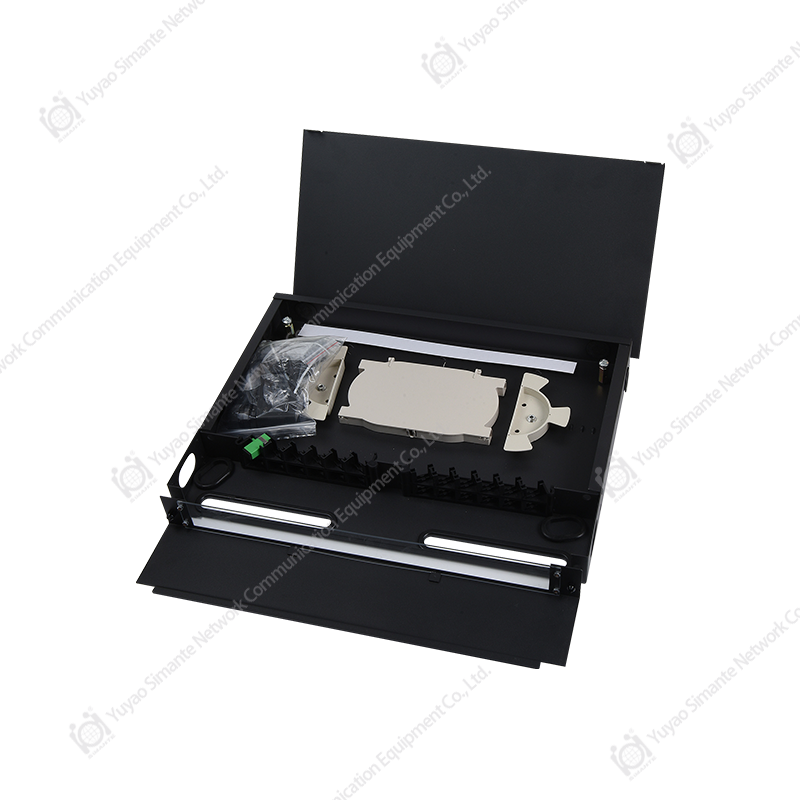
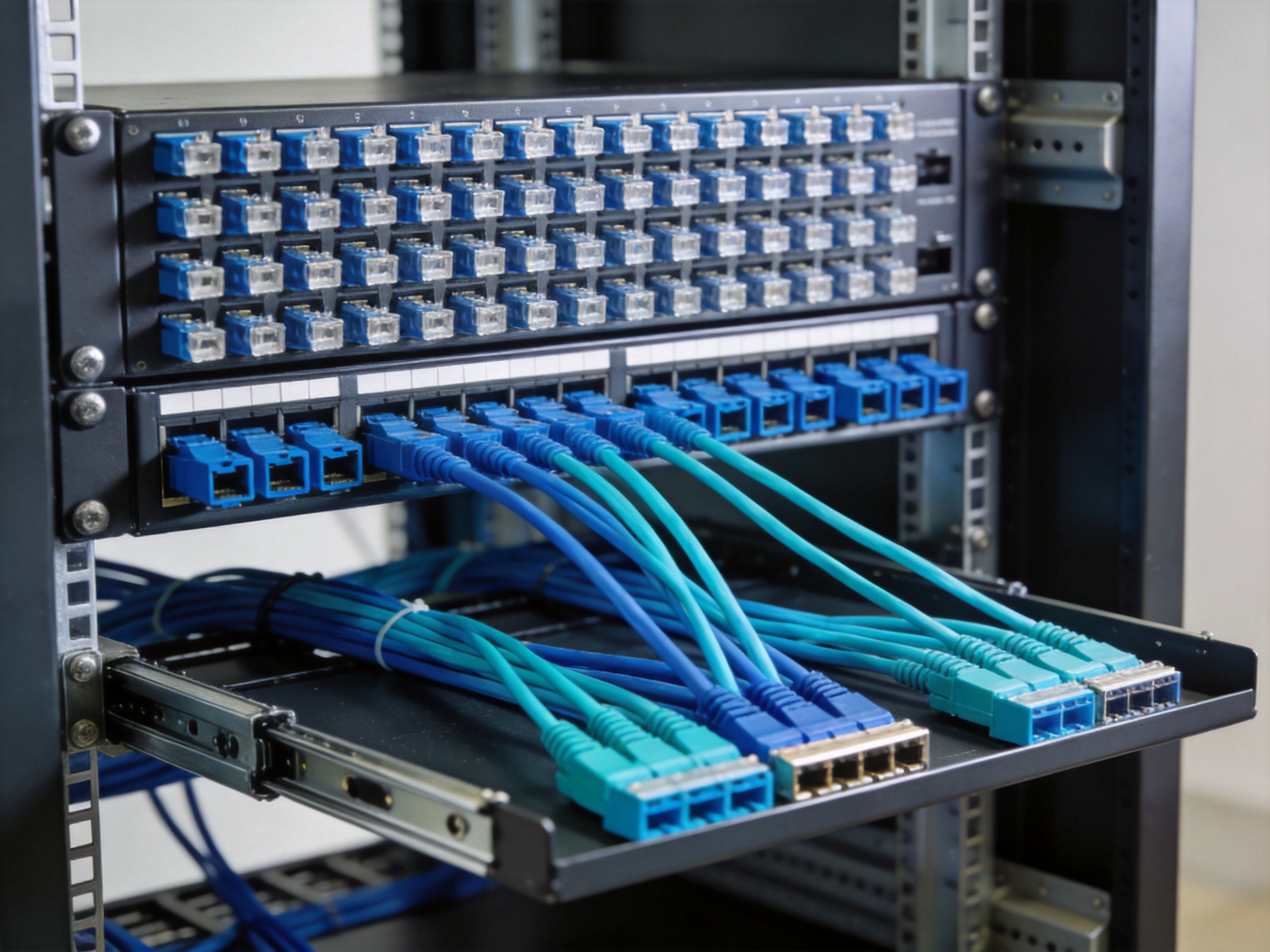
The SMT-2206-72P-3U is a sliding type rack mount fiber optical patch panel with a 3U height, engineered to support organized optical fiber management in standard network cabinets and equipment racks. Its sliding structure allows technicians to pull out the working tray for easier access to adapters, splice areas, pigtails, and cable routing paths. This feature is especially valuable in crowded racks where fixed panels can make inspection and rework difficult.
The product is categorized as a fiber optical patch panel and belongs to a broader fiber system portfolio used in structured cabling infrastructure. It is designed to accommodate SC-LC connectivity requirements, making it suitable for networks where different interface standards must be integrated in a reliable and organized manner. By combining rack-mount compatibility, sliding access, and high port capacity, the panel helps users build cleaner, safer, and more maintainable fiber distribution points.
As fiber networks expand from backbone links into access layers, industrial environments, smart buildings, and high-speed data transmission systems, the need for reliable patching hardware continues to increase. A patch panel like the SMT-2206-72P-3U gives network managers a structured point for fiber termination and cross-connection, reducing disorder and supporting long-term cable administration. Instead of leaving fiber jumpers exposed or routing them loosely through cabinets, the panel provides a defined space for connection, identification, protection, and maintenance.
Why a Sliding Type 3U Patch Panel Matters
A conventional fixed rack mount fiber patch panel can perform basic termination, but it may become inconvenient when technicians need to access rear cable entries, splice trays, adapters, or internal routing paths. In a dense installation, the ability to slide the panel outward greatly improves operational comfort. The SMT-2206-72P-3U is developed around this practical requirement. Its sliding design reduces the need to remove the entire panel from the rack during service and helps prevent accidental pulling, bending, or stressing of live fiber connections.
Fiber optic cables are sensitive to excessive bending, crushing, twisting, and contamination. A patching point must therefore balance density with protection. The 3U format provides more internal space than many compact 1U panels, allowing more comfortable cable routing and easier organization. For 72-port optical patching applications, this additional height can help maintain correct bend radius, separate incoming cables from outgoing jumpers, and improve the visibility of each port position.
In practical network rooms, service speed and accuracy are important. When a technician can slide out a tray, view the internal layout, trace a fiber path, and perform work without disturbing neighboring devices, maintenance becomes safer. This advantage directly affects total cost of ownership because fewer errors, fewer damaged fibers, and faster troubleshooting reduce labor time and service disruption. The SMT-2206-72P-3U is therefore not only a hardware enclosure but also a tool for improving installation discipline.
Core Application Scenarios
The SMT-2206-72P-3U Sliding Type SC-LC Rack Mount Fiber Optical Patch Panel is suitable for a wide range of optical cabling projects. In enterprise data rooms, it can be used as a centralized distribution point between backbone fiber cables and active network equipment. In building backbones, it can organize connections between floors, telecom rooms, and equipment rooms. In campus networks, it can support optical links among buildings while maintaining a clear and labeled patching environment.
For telecom and broadband access applications, the panel provides a protected and manageable location for fiber terminations. Its rack-mounted design allows integration into existing 19-inch cabinet infrastructure, making it convenient for operators who must standardize equipment layouts. For security and surveillance networks, where fiber may be used to transmit video and control signals over longer distances, the patch panel provides stable connectivity and convenient service points.
The product is also relevant for smart home, automation equipment, industrial communication, and structured cabling projects that require dependable fiber management. As networks increasingly combine copper and fiber systems, installers need components that support clean transitions between different cabling segments. A properly designed fiber patch panel becomes a key part of this hybrid infrastructure, allowing optical backbones to be administered with the same professionalism expected from copper patch panels, keystone jacks, face plates, and data sockets.
High-Density 72-Port Fiber Management
The “72P” in the SMT-2206-72P-3U model indicates a high-capacity configuration suitable for dense optical distribution. High port count is beneficial when a cabinet must support many user connections, backbone links, device interconnections, or expansion requirements. Instead of spreading terminations across several small panels, a 72-port 3U panel can consolidate connections, saving rack space and simplifying administration.
High density must be implemented carefully. If ports are too crowded or internal cable paths are poorly designed, technicians may struggle to access individual fibers. The advantage of the SMT-2206-72P-3U is its combination of capacity and serviceability. The 3U height offers a balanced format: it is compact enough to preserve cabinet space, yet spacious enough to support organized fiber routing and easier hand access than very shallow or overly compressed solutions.
For network managers, this means future growth can be planned more confidently. A higher port count panel can reserve positions for later connections, reducing the need for immediate cabinet modification when additional fiber links are required. Properly labeled ports also make asset management easier. When the panel is integrated into a structured cabling documentation system, each fiber route can be identified, inspected, and modified with less confusion.
SC-LC Connectivity Flexibility
The title of the product emphasizes SC-LC rack mount functionality, which reflects the importance of accommodating common fiber connector interfaces. SC connectors are widely recognized for their push-pull design, stable handling, and broad use in telecom and LAN applications. LC connectors are valued for compact size and high-density deployment, especially in modern switches, transceivers, and data center equipment. A panel designed around SC-LC requirements helps bridge practical field conditions where different connector types coexist.
In many real projects, legacy fiber infrastructure may use SC connectors, while newer active equipment may use LC interfaces. A patch panel that supports organized SC-LC patching or adapter arrangements helps create an orderly transition point. This reduces the need for unmanaged converter cords or improvised routing. It also improves visual clarity because technicians can identify where connector standards change and how each link is assigned.
Connector compatibility is not simply a matter of mechanical fit. Clean alignment, secure mounting, strain relief, and proper routing all influence optical performance. A well-designed patch panel supports the adapter interface firmly, reducing movement that could lead to insertion loss variation. It also gives patch cords a predictable path, reducing stress near connector boots. These details are important for maintaining stable signal transmission over time.

Advantages Over Ordinary Rack Mount Patch Panels
Compared with ordinary fixed patch panels, the sliding type structure of the SMT-2206-72P-3U provides a clear service advantage. Fixed panels often require technicians to work from awkward angles, especially when the cabinet is crowded or rear access is limited. A sliding panel brings the working area forward, making internal inspection and cable management more efficient. This helps reduce the risk of accidental fiber damage during installation and maintenance.
Compared with low-cost panels that focus only on enclosure function, the SMT-2206-72P-3U is positioned as a practical structured cabling component. It supports the discipline of network management: planned cable entry, defined adapter positions, protected routing, and accessible maintenance space. These qualities may not be obvious from a simple product appearance, but they become extremely important during years of operation.
Another advantage is its 3U format. Some compact panels save rack space but can make dense fiber routing difficult. When technicians need to manage 72 ports, adequate internal volume helps maintain fiber bend radius and avoid overcrowded bundles. The SMT-2206-72P-3U offers a more balanced layout for projects where reliability and serviceability are more important than extreme miniaturization.
The panel also supports professional presentation. In commercial buildings, data centers, and telecom rooms, a neat rack is more than an aesthetic preference. It reduces troubleshooting time, supports safety procedures, and makes audits easier. A sliding rack mount fiber patch panel helps installers deliver a complete system that looks organized and functions reliably, strengthening the perceived quality of the entire cabling project.
Structural Design and Fiber Protection
The internal structure of a fiber patch panel must protect cables from mechanical stress while providing room for terminations and patching. The SMT-2206-72P-3U is designed to create a controlled space where fiber cables can enter, be secured, routed, and connected in an organized way. Proper routing paths help prevent sharp bends, while defined termination areas support stable adapter positioning.
Fiber bend radius is one of the most important considerations in optical cabling. Excessive bending can increase attenuation and, in severe cases, damage the fiber. A 3U sliding panel provides useful internal space for managing loops and routing fibers without forcing them into tight corners. This is especially valuable when multiple cables and pigtails are handled in the same enclosure.
Cable strain relief is another essential feature. Incoming optical cables must be secured so that pulling force is not transferred to delicate fiber terminations or connector interfaces. A well-arranged patch panel allows installers to fix cables at entry points and route fibers safely toward adapters or splice areas. This helps maintain stable optical performance even when patch cords are added, removed, or rearranged during network changes.
Protection also includes dust control and connector cleanliness. Fiber connectors are highly sensitive to dust, oil, and debris. By locating adapters inside a defined panel structure and encouraging orderly patching, the SMT-2206-72P-3U helps reduce exposure and supports cleaner maintenance habits. Technicians can work in a controlled area rather than handling loose terminations in open rack spaces.
Manufacturing Strength Behind the Product
The SMT-2206-72P-3U is supplied by Yuyao Simante Network Communication Equipment Co., Ltd., a professional manufacturer of network cabling solutions and optical fiber products. The company integrates design, development, sales, and service, allowing product improvement to be guided by both engineering knowledge and customer feedback. This integrated approach is important because a patch panel must satisfy practical installation requirements, not only drawing-board specifications.
With nearly 20 years of industry service, the manufacturer has developed experience in structured cabling, network communication, smart home, automation equipment, and related fields. Long-term participation in these markets gives the company insight into how installers actually use cabling hardware. This experience can be seen in the emphasis on stable quality, practical design, and compatibility with system-level deployment.
The company maintains a mature research and development system, which helps ensure quality stability from the design source. More than 10 engineers and over 30 full-time technical personnel contribute to product development, quality improvement, and product updates. This technical workforce is a significant advantage over suppliers that rely mainly on basic assembly without deep product engineering capability.
Manufacturing capability is another important strength. The factory operates regular and customized production lines, including 10 regular and customization production lines, 10 fully automatic injection molding machines, 20 semi-automatic injection molding machines, and 8 automatic installed machines. These resources support stable production and enable the company to handle both standard product demand and OEM/ODM customization projects.
Advanced Production Processes
Reliable network cabling components require consistent dimensions, stable material processing, and controlled assembly. In the production of patch panels and related structured cabling products, accuracy influences fit, appearance, and service life. Automated and semi-automated equipment helps reduce variation and supports repeatable production quality. For a rack mount fiber panel, this means better alignment, smoother operation, and more predictable installation performance.
The manufacturer’s injection molding capability is especially relevant to its broader cabling product portfolio, including keystone jacks, face plates, data sockets, and other plastic-structured components. Even when a specific rack mount patch panel includes metal structures and adapter components, the company’s overall manufacturing discipline contributes to system consistency. Experience with precision plastic components often translates into better understanding of tolerances, assembly interfaces, and long-term durability.
Automatic installed machines support efficiency and consistency in repetitive assembly tasks. In network cabling hardware, small differences in assembly quality can affect user experience. A misaligned port, loose component, rough sliding motion, or inconsistent labeling surface can create problems during installation. Controlled production processes help reduce these risks and improve the reliability of finished products delivered to global customers.
The factory’s annual output of more than 9 million units across its product range indicates mature production planning and scalable manufacturing. High output alone does not guarantee quality, but when combined with engineering support and testing requirements, it demonstrates the ability to serve large projects, distributors, system integrators, and custom buyers. This scale is particularly important for customers who need consistent supply over multiple project phases.
Quality Control and Testing Philosophy
Optical fiber infrastructure is expected to operate for many years. A patch panel is often installed once and then repeatedly used during moves, additions, and changes. For this reason, quality control must address both initial installation performance and long-term service reliability. The manufacturer emphasizes strict production management and performance testing to meet comprehensive customer requirements.
Quality begins with design. A mature research and development system allows potential problems to be considered before mass production. Material selection, structural strength, sliding mechanism stability, adapter positioning, cable routing space, and installation convenience can be reviewed and improved in the design stage. This reduces the chance of field complaints and supports consistent product performance.
During production, inspection helps confirm that each component matches specification. For rack mount equipment, dimensional accuracy is essential because the panel must fit standard rack systems and align properly with other cabinet hardware. Surface treatment and mechanical finishing also matter because sharp edges, rough finishes, or weak coatings can reduce safety and durability.
Performance testing is especially important for fiber-related products. Although the panel itself is a passive management device, its structure influences optical performance by protecting connector alignment and maintaining correct fiber routing. Customers may require checks related to mechanical fit, adapter retention, sliding function, cable management, and appearance. A supplier capable of meeting such testing requirements offers greater confidence to buyers.

Comparison Table
| Evaluation Area | SMT-2206-72P-3U Sliding Patch Panel | Ordinary Low-Cost Fixed Panel | Practical Benefit |
|---|---|---|---|
| Access Method | Sliding type tray for easier inspection and maintenance | Fixed structure with limited service access | Faster maintenance and reduced risk of disturbing live fibers |
| Rack Height | 3U format with space for organized routing | Often compact but crowded at high density | Better bend radius control and easier cable management |
| Port Capacity | Designed for 72-port high-density deployment | May require multiple panels for similar capacity | Improved rack organization and expansion planning |
| Connector Application | Suitable for SC-LC fiber patching requirements | May offer limited interface flexibility | Supports mixed legacy and modern fiber environments |
| Manufacturing Support | Backed by experienced engineering and scalable production | Often limited engineering depth | More stable quality and better customization potential |
| Project Value | Professional appearance, protection, and maintainability | Basic enclosure function | Lower long-term service risk and improved system reliability |
Role in Structured Cabling Systems
Structured cabling is based on order, standardization, scalability, and long-term manageability. Whether the medium is copper or fiber, each component must support a planned network architecture. The SMT-2206-72P-3U contributes to this architecture by acting as a stable optical distribution and patching point. It can be integrated with copper patch panels, keystone jacks, face plates, data sockets, and active networking devices to create a complete cabling system.
In many buildings, copper cabling is still used for horizontal connections to work areas, while fiber is used for backbone links, long-distance runs, or high-speed equipment interconnection. A manufacturer that understands both copper and fiber systems can provide more coherent solutions to customers. This is one of the strengths of Yuyao Simante Network Communication Equipment Co., Ltd., whose product range includes both structured cabling components and optical fiber products.
A fiber patch panel also supports documentation. Structured cabling projects depend on accurate labeling and records. When fiber terminations are located in a clearly arranged panel, each port can be assigned to a destination, service, or equipment interface. This reduces confusion during troubleshooting and allows network teams to perform changes with greater confidence.
Good structured cabling practices also improve safety. Loose fibers and unmanaged patch cords can obstruct airflow, block equipment access, and create accidental pulling hazards. Rack mount patch panels encourage cleaner routing, which can improve cabinet airflow and simplify equipment replacement. Over time, this organized approach can reduce maintenance pressure and improve the reliability of the entire network room.
Installation Considerations
Before installing the SMT-2206-72P-3U, technicians should confirm rack compatibility, cable entry direction, port assignment plan, and available space for patch cord routing. Because the panel is 3U high, sufficient rack units must be reserved in the cabinet. It is also useful to plan its position relative to switches, cable managers, and incoming cable routes. Placing the panel near relevant active equipment can reduce jumper length and improve cabinet organization.
Incoming fiber cables should be handled carefully during installation. The installer should avoid excessive pulling force and keep the cable bend radius within recommended limits. Cable strength members should be properly secured, and fibers should be routed through internal paths without crossing in a chaotic manner. Clear routing helps future technicians understand the layout and reduces the likelihood of accidental damage.
Patch cord management should also be planned. Even a high-quality panel can become difficult to maintain if patch cords are randomly connected without labeling or routing discipline. Horizontal or vertical cable managers can be used to guide jumpers away from adapter fields. Each patch cord should have enough slack for service but not so much that it creates loops or blocks access to other equipment.
Connector cleaning is essential. Before connecting SC or LC interfaces, technicians should inspect and clean connectors according to standard fiber procedures. Contaminated connectors are one of the most common causes of optical network problems. A good patch panel protects the connection area, but proper handling practices are still required to maintain low insertion loss and stable transmission.
Maintenance and Long-Term Operation
During operation, the sliding function of the SMT-2206-72P-3U supports easier maintenance. Technicians can pull the tray outward to inspect internal routing or verify terminations. This reduces the need for disruptive disassembly and makes it easier to perform scheduled inspections. In networks where uptime is important, service-friendly hardware can make a significant difference.
Regular maintenance should include visual inspection of patch cords, adapter positions, labels, cable strain relief points, and the sliding mechanism. Dust caps should be used when ports are not occupied, and unused adapters should be protected from contamination. Labels should be kept current whenever changes are made. A patch panel is most valuable when its physical arrangement matches the network documentation.
When adding new connections, technicians should follow the same routing principles used during the original installation. New fibers should not be forced into tight spaces or crossed over existing routes unnecessarily. The 3U structure provides useful room, but disciplined routing remains important. If expansion was planned from the beginning, reserved ports can be activated without major rework.
Long-term operation also depends on cabinet management. Rack doors, side panels, and cable managers should not crush or sharply bend patch cords. Equipment moves should be performed carefully to avoid pulling on fibers connected to the panel. By combining a well-designed patch panel with good operational procedures, network managers can maintain reliable fiber links over many years.
Customization and OEM/ODM Capability
Different projects may require different port arrangements, connector combinations, labeling designs, packaging methods, or structural details. Yuyao Simante Network Communication Equipment Co., Ltd. undertakes OEM and ODM projects, which is valuable for distributors, contractors, and system integrators who need products aligned with specific market requirements. Customization can help buyers differentiate their offerings and satisfy specialized installation standards.
The company’s manufacturing base supports both regular and customized production lines. This combination is important because standard products provide efficiency and consistency, while customized lines allow flexibility. For a patch panel product family, customization might involve different adapter plate configurations, port counts, surface finishes, accessory packages, or branding arrangements. Such flexibility helps customers serve varied regional and project demands.
Engineering support is a key factor in successful customization. Without technical knowledge, custom changes can create hidden problems in fit, strength, cable routing, or assembly efficiency. The manufacturer’s engineering and technical team can help evaluate design feasibility and production stability. This reduces risk for customers who require modified solutions rather than off-the-shelf hardware.
OEM/ODM capability also supports long-term partnerships. Buyers can develop product lines with consistent quality, packaging, and supply schedules. For cabling infrastructure products, stable supply is important because projects may be delivered in stages. A supplier with scalable production and customization experience can help maintain continuity across different phases of deployment.
Global Market Experience
The manufacturer maintains stable export volume in Europe, Australia, Africa, the Middle East, and Southeast Asia. This international experience is meaningful because different markets often have different expectations for quality, documentation, packaging, and product presentation. Serving global customers requires adaptability and consistent communication. It also exposes the manufacturer to a wide variety of installation environments and project requirements.
For buyers, global export experience can reduce procurement uncertainty. A supplier familiar with international customers is more likely to understand project timelines, sample evaluation, product consistency, and after-sales communication. Fiber optic patch panels are often part of larger purchasing programs, so reliable coordination is important. Delays or inconsistent quality can affect entire network deployment schedules.
International markets also encourage continuous improvement. Feedback from installers and distributors in different regions can lead to better product details, improved packaging, or more convenient configurations. A company that values customer communication can transform field experience into product development. This is particularly useful in structured cabling, where practical installation feedback often reveals what drawings and laboratory tests may not show.
Why Choose This Patch Panel for Professional Projects
The SMT-2206-72P-3U is a strong choice for professional projects because it combines capacity, serviceability, and manufacturing support. Its 72-port capability makes it suitable for dense fiber distribution, while its 3U sliding format improves access and routing control. These features directly address the challenges of modern network rooms: limited rack space, increasing fiber count, and the need for fast maintenance.
The panel’s SC-LC application value makes it useful in mixed connector environments. As networks evolve, equipment interfaces change. A patching solution that supports organized transition between common connector formats helps protect existing infrastructure investment while enabling upgrades. This makes the product suitable for both new installations and retrofit projects.
Its value is strengthened by the supplier’s broader manufacturing capability. Nearly 20 years of service, an experienced engineering team, automated and semi-automated production equipment, customization lines, and international export experience all contribute to buyer confidence. When selecting cabling infrastructure components, customers should evaluate not only the visible product but also the factory behind it.
In competitive markets, a lower-priced panel may appear attractive at first, but hidden costs can emerge through difficult installation, poor fit, weak structure, limited service access, or inconsistent supply. A better-designed patch panel can reduce these risks. The SMT-2206-72P-3U offers practical advantages that support long-term reliability, making it a cost-effective option for serious network infrastructure projects.

Purchasing and Project Planning Guidance
When specifying the SMT-2206-72P-3U for a project, buyers should consider the complete optical cabling design. This includes fiber type, connector type, cable entry path, rack layout, labeling method, patch cord length, and future expansion. A patch panel performs best when selected as part of a complete system rather than as an isolated accessory.
For high-density deployments, it is wise to reserve extra rack space for cable managers. The panel itself organizes terminations, but patch cords still require guided paths. Good cable management reduces strain on connectors and keeps the cabinet neat. If the panel is installed directly beside active equipment, patch cord lengths can be optimized to reduce clutter.
Buyers should also discuss customization requirements early. If a project needs special port configurations, packaging, labeling, or documentation, early communication allows the supplier to confirm feasibility and lead time. The company can support both standard supply and customized requirements, which is useful for contractors and distributors managing multiple project types.
Finally, procurement teams should evaluate supplier stability. Cabling infrastructure is often purchased repeatedly for future expansion, maintenance, or new locations. Working with a manufacturer that has established production capacity and export experience helps ensure that similar products can be sourced consistently over time. This supports standardization across projects and reduces training requirements for installers.
Q&A Section
Q1: What is the SMT-2206-72P-3U used for?
It is used as a rack mount fiber optical patch panel for organizing, terminating, protecting, and managing fiber optic connections in structured cabling systems. It is suitable for data rooms, telecom cabinets, enterprise networks, campus backbones, security systems, and other optical distribution environments.
Q2: Why is the sliding type design useful?
The sliding design allows technicians to pull the working tray outward for easier access to internal fiber routing, adapters, and termination areas. This improves maintenance efficiency, reduces awkward handling, and helps protect fibers from accidental stress during service.
Q3: What does the 3U size provide?
The 3U height provides more internal working space than many compact panels. This helps technicians manage fiber bend radius, organize cable loops, separate routing paths, and work more comfortably in high-density installations such as 72-port applications.
Q4: Why is 72-port capacity important?
A 72-port patch panel allows many optical connections to be consolidated in one organized rack-mounted unit. This can save cabinet space, simplify labeling, support expansion planning, and reduce the need for multiple smaller panels.
Q5: Is the panel suitable for SC and LC connector environments?
Yes. The product is designed for SC-LC rack mount fiber patching requirements, making it useful in networks where SC and LC connector standards must be managed in a clear and professional way.
Q6: How does this product compare with ordinary fixed patch panels?
Compared with ordinary fixed panels, it offers better service access through the sliding structure, more convenient maintenance, high-density 72-port organization, and a 3U format that supports improved internal routing and fiber protection.
Q7: What manufacturing strengths support the product?
The manufacturer has nearly 20 years of experience, more than 10 engineers, over 30 full-time technical personnel, multiple regular and customized production lines, automatic and semi-automatic injection molding equipment, automatic installed machines, and stable large-scale output capacity.
Q8: Can the product be customized?
Yes. The manufacturer undertakes OEM and ODM projects and supports customization for different customer requirements. Possible customization areas may include configuration, packaging, labeling, accessory arrangements, and project-specific product details.
Q9: What maintenance practices are recommended?
Recommended practices include keeping connectors clean, protecting unused ports with dust caps, maintaining accurate labels, avoiding excessive fiber bending, inspecting strain relief points, and using proper cable managers to organize patch cords.
Q10: Who should consider using this patch panel?
System integrators, telecom contractors, data center installers, network administrators, distributors, and project buyers should consider it when they need a high-density, service-friendly, rack-mounted fiber patching solution backed by experienced manufacturing capability.
Conclusion
The SMT-2206-72P-3U Sliding Type SC-LC Rack Mount Fiber Optical Patch Panel 3U is designed for the realities of modern fiber network deployment. It addresses the need for high-density optical connectivity, organized cable routing, protected fiber handling, and efficient maintenance. Its sliding structure offers a practical advantage over fixed panels, while its 3U size provides useful space for managing 72 ports without sacrificing serviceability.
For buyers comparing patch panels, the decision should not be based only on initial price or surface appearance. A professional fiber patch panel must support installation efficiency, long-term reliability, future expansion, and safe maintenance. The SMT-2206-72P-3U delivers these benefits through thoughtful product design and the support of a manufacturer with strong engineering, production, customization, and export capabilities.
Yuyao Simante Network Communication Equipment Co., Ltd. brings nearly two decades of experience in network cabling solutions and optical fiber products. Its mature research and development system, skilled technical personnel, production equipment, and OEM/ODM service capability provide a strong foundation for consistent product quality. For structured cabling projects that require dependable optical distribution hardware, this 3U sliding patch panel is a practical and competitive choice.
References
1. International Organization for Standardization and International Electrotechnical Commission. ISO/IEC 11801: Information Technology—Generic Cabling for Customer Premises.
2. Telecommunications Industry Association. ANSI/TIA-568 Series: Commercial Building Telecommunications Cabling Standards.
3. Telecommunications Industry Association. ANSI/TIA-569: Telecommunications Pathways and Spaces.
4. International Electrotechnical Commission. IEC 61754 Series: Fibre Optic Interconnecting Devices and Passive Components—Fibre Optic Connector Interfaces.
5. International Electrotechnical Commission. IEC 61300 Series: Fibre Optic Interconnecting Devices and Passive Components—Basic Test and Measurement Procedures.
6. Fiber Optic Association. Reference Guide to Fiber Optics: Installation, Testing, and Maintenance Principles.