Español
 عربى
عربى русский
Content
- 1 Product Overview
- 2 Why CAT6A Keystone Jack Quality Matters
- 3 Key Technical Characteristics
- 4 Advantages Over Ordinary Keystone Jacks
- 5 Application Scenarios
- 6 Manufacturing Strength Behind the Product
- 7 Material Engineering and Surface Treatment
- 8 Environmental Reliability
- 9 Installation Benefits for Contractors
- 10 Value for Distributors and System Integrators
- 11 Packaging, Storage, and Logistics
- 12 Comparison With Common Competitor Products
- 13 Standards and Compliance Considerations
- 14 Role in a Complete Copper Structured Cabling System
- 15 Testing and Quality Assurance
- 16 Design Details That Improve User Experience
- 17 Procurement Considerations
- 18 Company Strength and Global Market Support
- 19 Q&A Section
- 19.1 Q1: What is the SMT-1014H8C6A(WG) used for?
- 19.2 Q2: Does the product support both T568A and T568B wiring?
- 19.3 Q3: Is it compatible with CAT6 or CAT5e systems?
- 19.4 Q4: What cable size can the IDC terminal accept?
- 19.5 Q5: What makes this jack suitable for CAT6A performance?
- 19.6 Q6: What is the advantage of the 90 degree design?
- 19.7 Q7: How durable is the product?
- 19.8 Q8: Is the product environmentally compliant?
- 19.9 Q9: Can it be used in modular patch panels?
- 19.10 Q10: Why choose this product over a lower-cost ordinary keystone jack?
- 20 Conclusion
- 21 References
- 22 Product: SMT-1014H8C6A(WG) 90 Degree CAT6A Keystone Jack 110 IDC
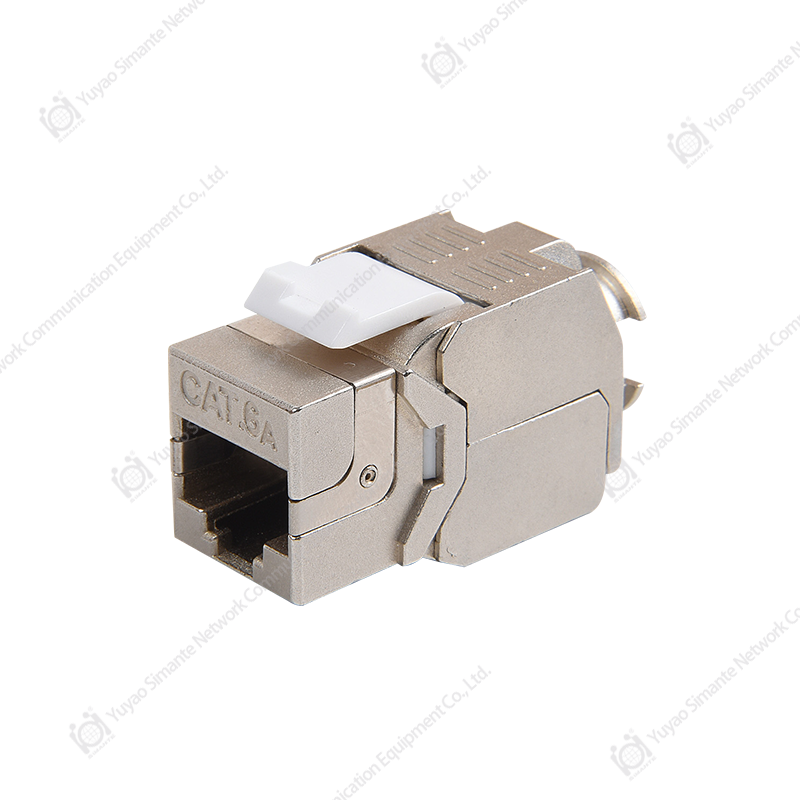
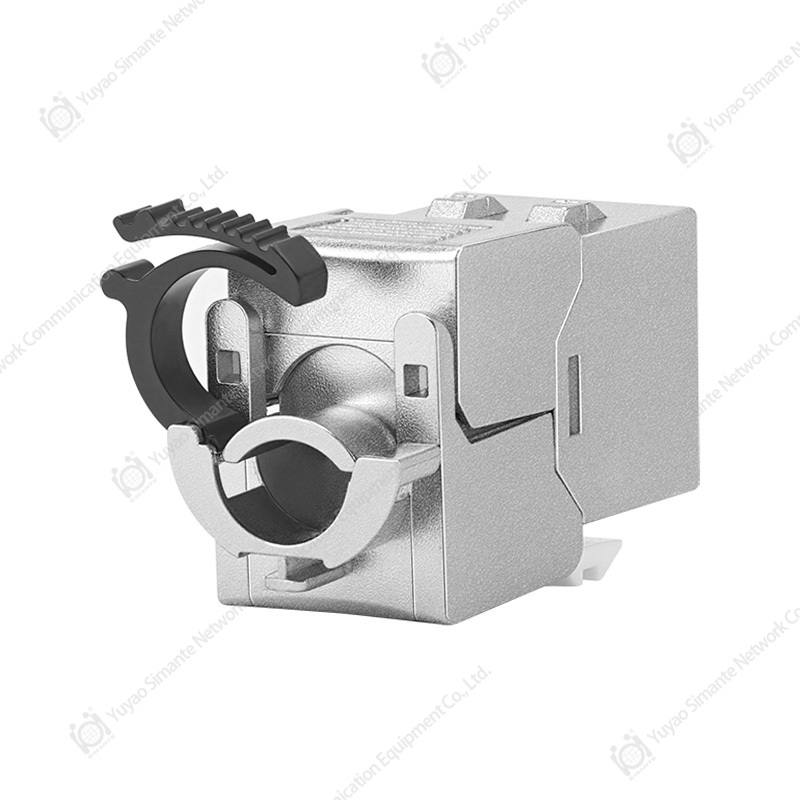
In modern structured cabling, the quality of a connection point can determine the stability, speed, and maintainability of an entire network. The SMT-1014H8C6A(WG) 90 Degree CAT6A Keystone Jack 110 IDC is designed for professional copper cabling systems that require reliable Category 6A performance, efficient installation, compact structure, and long-term electrical stability. As data networks continue to support higher bandwidth applications, including enterprise cloud access, IP surveillance, wireless access points, smart building controls, industrial automation, and high-density office connectivity, the role of the keystone jack becomes increasingly important.
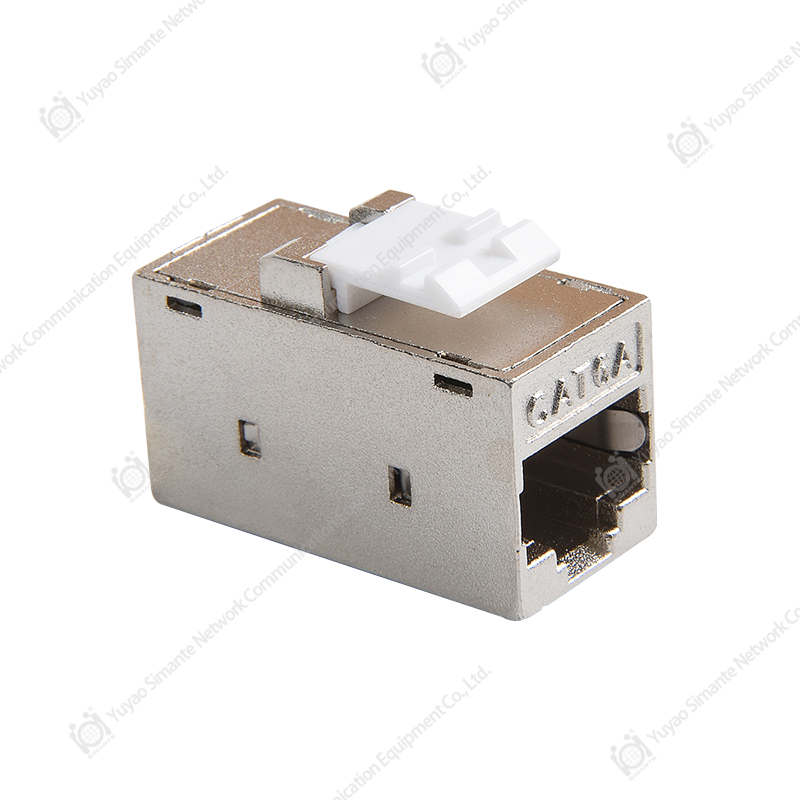
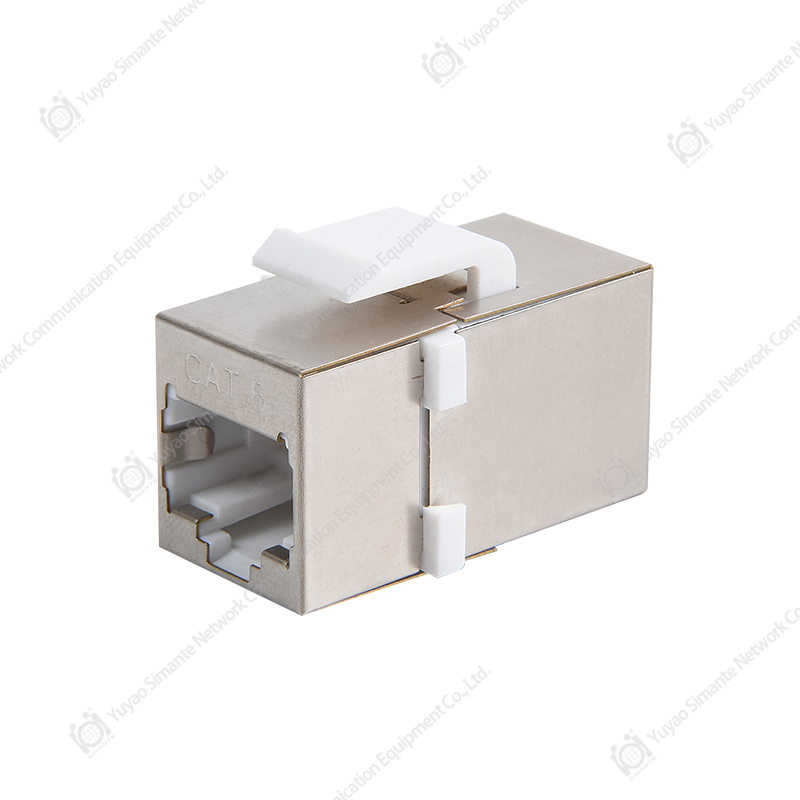
This 90 degree CAT6A keystone jack is engineered to meet Category 6A transmission requirements across a frequency range of 1 to 500 MHz. It supports T568A and T568B wiring sequences and is suitable for communication socket connections between network equipment and work areas. Its compact shape, embedded modular design, clear universal wiring label, and dependable 110 IDC termination structure make it a practical and performance-oriented component for professional installers, system integrators, distributors, and OEM customers.
Unlike ordinary network modules that only focus on basic connectivity, this CAT6A keystone jack emphasizes signal integrity, installation efficiency, mechanical durability, material reliability, environmental compliance, and compatibility with broader copper structured cabling solutions. It is backward compatible with CAT6, CAT5e, and lower-category cabling systems, allowing installers and end users to upgrade cabling infrastructure gradually while maintaining compatibility with existing network components.
SMT-1014H8C6A(WG) 90 Degree CAT6A Keystone Jack 110 IDC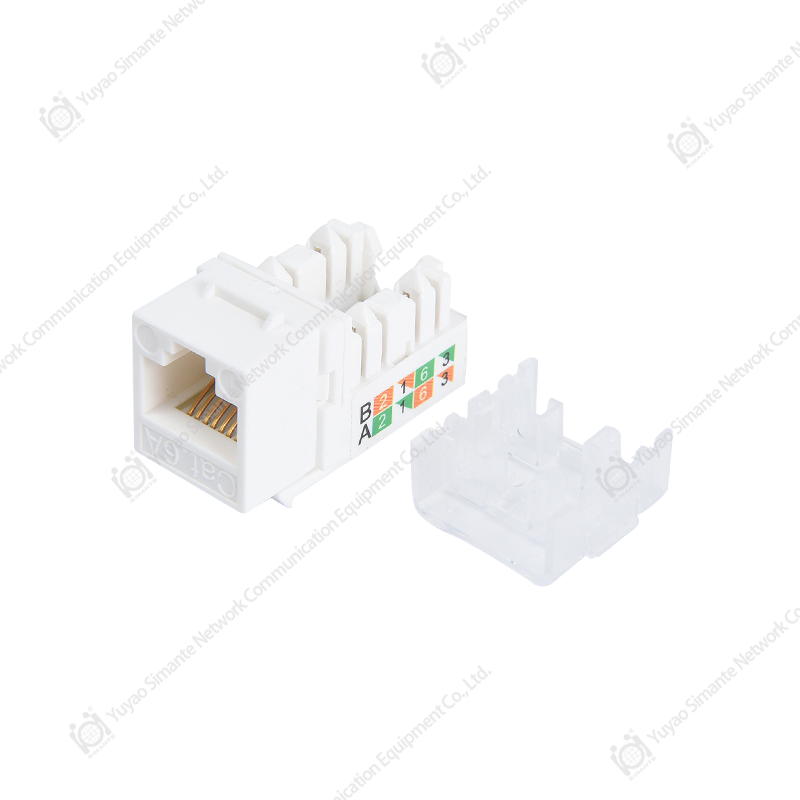
Product Overview
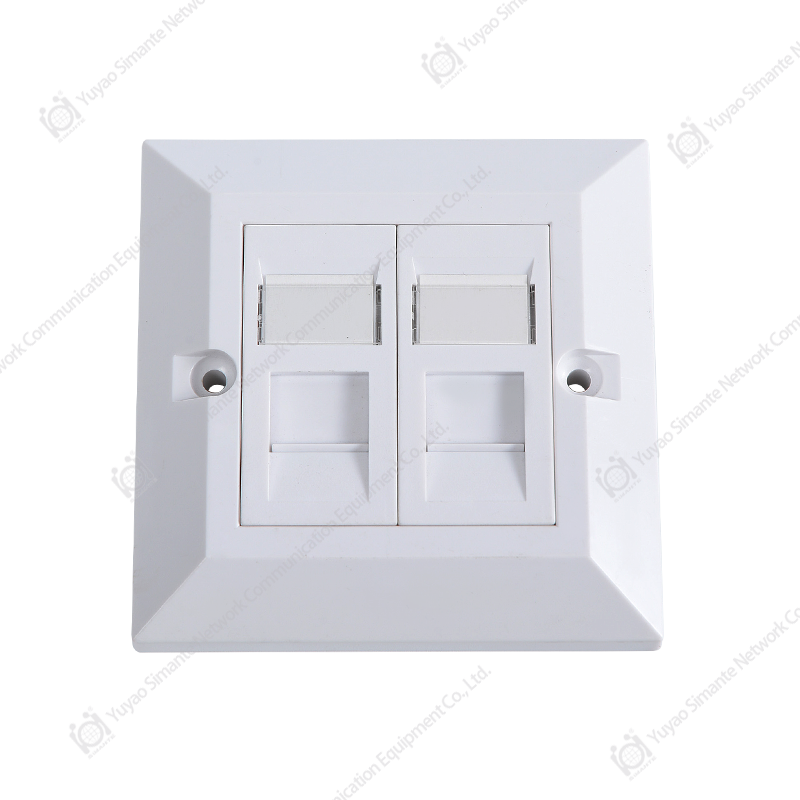
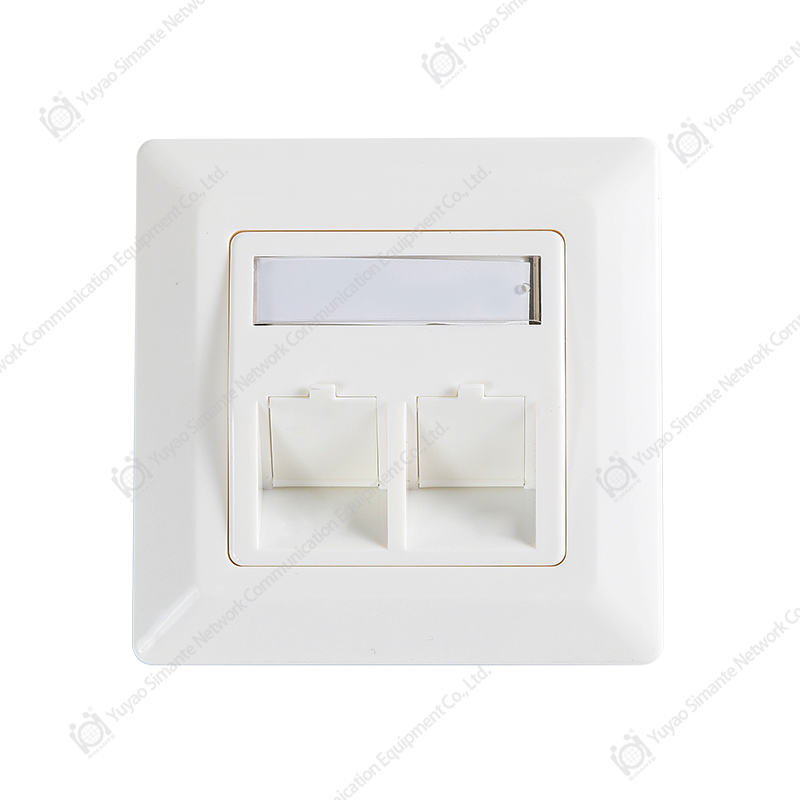
The SMT-1014H8C6A(WG) is a 90 degree CAT6A keystone jack with 110 IDC termination. It is developed for horizontal cabling and work area cabling applications on the same floor of a building. In a typical structured cabling architecture, this type of keystone jack is installed in wall plates, surface mount boxes, consolidation points, modular patch panels, and telecommunication outlets. It forms the interface between permanently installed horizontal twisted pair cable and patch cords used by terminal equipment.
Its RJ45 jack side connects with a network jumper, while the IDC side terminates the horizontal cabling. The contact pin system uses high and low dislocation technology to help reduce near-end crosstalk. This detail is essential for CAT6A performance because alien crosstalk, insertion loss, return loss, and near-end crosstalk become more challenging at higher frequencies. By improving internal contact geometry and keeping termination consistent, the module contributes to better transmission stability in demanding environments.
The product is made with phosphor bronze gold-plated contact pins, phosphor bronze nickel-plated IDC terminals, PC polycarbonate plastic, and FR4 PCB material. These material choices are important because a keystone jack is exposed to repeated plug insertions, wire terminations, mechanical stress, and environmental variation. A low-quality jack may appear functional during installation but can later cause intermittent network failures, speed negotiation problems, or increased bit error rates. This CAT6A keystone jack is designed to reduce such risks through stable materials and controlled manufacturing.
The 90 degree design is especially useful in installations where cable routing, bend radius control, and wall box depth are important. Compared with some straight rear-entry modules, a 90 degree configuration can help installers manage cable direction more conveniently in compact installation spaces. It can support cleaner cabinet layouts, more organized wall outlet wiring, and more efficient routing in distribution frames or patch panels.
Why CAT6A Keystone Jack Quality Matters
Category 6A cabling is widely used for 10 Gigabit Ethernet applications over copper twisted pair cabling. Even when a network does not immediately run at 10G speeds, using CAT6A-ready components helps future-proof an installation. However, the performance of a CAT6A channel depends on the quality of every component: cable, patch cord, patch panel, outlet, plug, and keystone jack. A weak termination point can become the limiting factor in the whole system.
Keystone jacks must maintain consistent contact resistance, stable impedance, controlled pair geometry, and reliable mechanical retention. At frequencies up to 500 MHz, small structural differences can affect transmission parameters. For this reason, the SMT-1014H8C6A(WG) places emphasis on the contact pin arrangement, PCB material, IDC reliability, and accurate wiring labels. These features help installers complete terminations quickly while reducing the chance of wiring errors or signal degradation.
In competitive markets, some low-cost jacks may use thinner contacts, inconsistent plating, lower-grade plastics, unclear wiring diagrams, weak IDC clamps, or loose module housings. Such shortcuts may reduce initial cost but create hidden risks. Professional cabling projects require components that can pass testing, remain stable after repeated use, and reduce maintenance costs over the service life of the network. This product is positioned for buyers who value dependable performance and manufacturing consistency.
Key Technical Characteristics
The SMT-1014H8C6A(WG) is built around a combination of electrical, mechanical, environmental, and material specifications intended for structured cabling use. It supports a frequency range of 1 to 500 MHz and operates at a working voltage of 125 V. Its withstand voltage is DC 1000 V, equivalent to AC 750 V, for one minute without breakdown or arcing. The initial insulation resistance is at least 200 MΩ, and after a constant damp heat test, it remains at least 100 MΩ.
Mechanically, the insertion force is not more than 20 N, while the pull-out force is not less than 20 N. The connector connection device effect is tested at 50 N for 60 ± 5 seconds. The IDC terminal is suitable for 23 to 26 AWG twisted pair cable. The jack is designed for 750 plug and socket insertion cycles and 250 wire termination cycles, making it suitable for long-term use in commercial, residential, industrial, and data communication environments.
| Item | Specification | Practical Benefit |
|---|---|---|
| Product Type | 90 Degree CAT6A Keystone Jack 110 IDC | Suitable for high-performance copper structured cabling |
| Transmission Category | Category 6A | Supports performance needs up to 500 MHz |
| Wiring Sequence | T568A and T568B | Compatible with common installation standards |
| Frequency Range | 1 to 500 MHz | Supports high-bandwidth network applications |
| Working Voltage | 125 V | Provides reliable electrical operation |
| Withstand Voltage | DC 1000 V or AC 750 V for 1 minute | Helps ensure insulation safety and stability |
| Insulation Resistance | Initial value at least 200 MΩ | Supports stable signal isolation |
| Damp Heat Insulation Resistance | At least 100 MΩ after test | Improves reliability in humid environments |
| IDC Wire Range | 23 to 26 AWG twisted pair | Compatible with common horizontal cabling |
| Plug Insertion Durability | 750 cycles | Suitable for repeated connection and maintenance |
| Wire Termination Durability | 250 cycles | Supports rework and long service requirements |
| Contact Material | Gold-plated phosphor bronze | Enhances conductivity and corrosion resistance |
| IDC Terminal Material | Nickel-plated phosphor bronze | Provides reliable wire clamping and durability |
| Plastic Material | PC polycarbonate | Offers strength and dimensional stability |
| PCB Material | FR4 | Supports stable circuit performance |
| Operating Temperature | -25°C to +70°C | Suitable for diverse installation environments |
| Environmental Compliance | ROHS compliant | Meets modern environmental requirements |
Advantages Over Ordinary Keystone Jacks
Stronger Transmission Performance
The most important advantage of this CAT6A keystone jack is its transmission capability. Category 6A systems require more precise electrical design than CAT5e or standard CAT6 systems. The module supports 1 to 500 MHz, which makes it suitable for high-speed copper cabling infrastructure. Its contact pin design uses high and low dislocation technology to help reduce near-end crosstalk. This design consideration gives the product a meaningful advantage over simpler contact structures that may not control pair interaction as effectively.
For installers, better transmission performance means a higher chance of passing field certification tests. For end users, it means a more stable network with fewer unexplained failures. For distributors and OEM partners, it means a product that can be confidently offered for professional projects where performance reputation matters.
Backward Compatibility for Flexible Upgrades
This module is backward compatible with CAT6, CAT5e, and lower-category systems. This is important because many buildings contain mixed-generation infrastructure. A customer may upgrade part of a network to CAT6A while still using existing equipment, patch cords, or lower-speed devices. A backward-compatible jack supports phased deployment and reduces unnecessary replacement cost.
Compared with highly specialized components that only perform well in a narrow application, this keystone jack can be integrated into a broader range of network projects. It is suitable for new installations, renovation projects, structured cabling upgrades, workstation outlets, and modular distribution frames.
Efficient 110 IDC Termination
The 110 IDC termination method is familiar to professional installers and supports reliable wire termination without requiring complex procedures. The IDC terminal clamps 23 to 26 AWG twisted pair cable, allowing the conductor to be seated securely. A stable IDC connection is essential because poor termination may cause intermittent faults that are difficult to diagnose later.
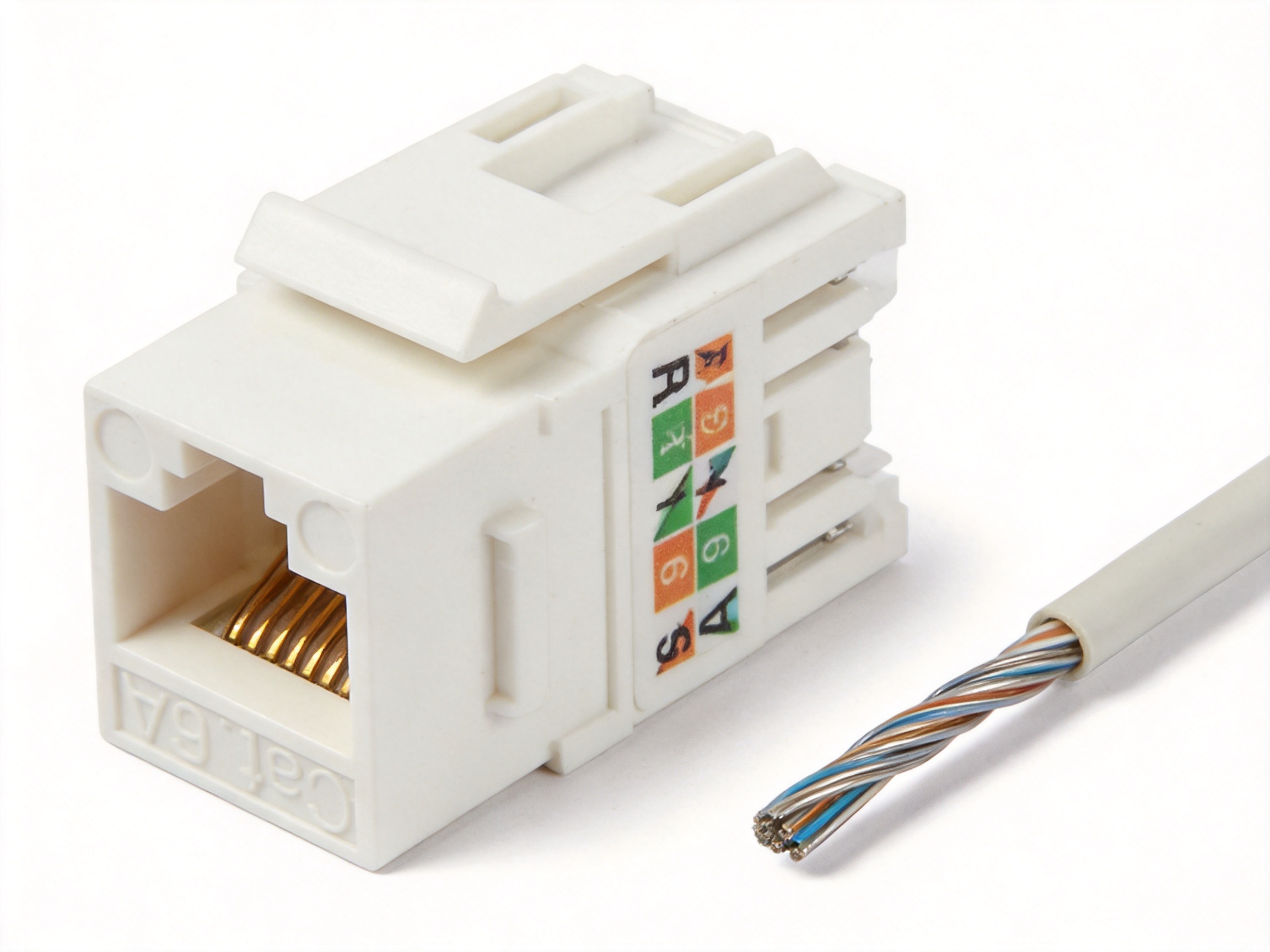
The clear universal wiring label on the module card wire helps reduce installation errors. Both T568A and T568B sequences are supported, making the product adaptable to different project specifications. In high-volume installations, even small improvements in label readability and termination convenience can save substantial labor time.
Compact Embedded Modular Design
The embedded module design allows the jack to be installed in distribution frames to form modular patch panels. This is valuable for data rooms, telecommunication rooms, enterprise networks, and structured cabling projects that require flexible layout and easy maintenance. A modular format allows installers to replace, expand, or reorganize ports more conveniently than fixed configurations.
The compact structure also improves usability in wall plates, data sockets, and surface mount applications. In crowded installation spaces, a compact jack can make the difference between a neat installation and a strained cable path. The 90 degree orientation supports more convenient cable routing and may help protect cable bend radius in certain environments.
Durable Materials for Long Service Life
The product uses gold-plated phosphor bronze for the contact pins. Gold plating improves corrosion resistance and contact reliability, while phosphor bronze provides good elasticity and mechanical performance. The IDC wire terminals are made of phosphor bronze with nickel plating, supporting stable clamping strength and resistance to environmental effects.
The housing uses PC polycarbonate, a material known for impact resistance and dimensional stability. FR4 PCB material supports stable electrical characteristics. Together, these materials help the jack maintain performance over time, even after repeated insertions, terminations, and environmental exposure.
Reliable Mechanical Durability
The jack is specified for 750 plug and socket insertion cycles and 250 wire terminations. This durability is significant in commercial and enterprise environments where ports may be reconfigured, tested, patched, or serviced many times during their life cycle. A low-durability jack may loosen or develop unreliable contact pressure after repeated use. This product is built to support real-world maintenance and operational demands.
The insertion force and pull-out force are controlled to balance usability and retention. An insertion force not more than 20 N helps users connect patch cords without excessive resistance, while a pull-out force not less than 20 N helps maintain secure engagement. This balance is a practical but often overlooked aspect of user experience and network reliability.
Application Scenarios
Enterprise Office Networks
In office environments, network outlets must support computers, VoIP phones, printers, wireless access points, conference systems, and other digital devices. A CAT6A keystone jack provides the capacity needed for current and future network upgrades. The compact form and clear wiring labels make it convenient for installation in work area outlets and patch panels.
The product’s backward compatibility is especially useful in offices that gradually migrate from CAT5e or CAT6 to CAT6A. Instead of replacing all devices at once, the infrastructure can support mixed deployment while preparing for higher bandwidth needs.
Data Rooms and Telecommunication Closets
Data rooms require organized, maintainable, and testable cabling. Because this jack can be installed in modular distribution frames, it is suitable for high-density copper cabling environments. The 90 degree design helps cable routing behind panels and can improve cable management when space is limited.
Mechanical durability is important in data rooms because patching changes are common. With 750 insertion cycles, the jack can support repeated connection activity while maintaining dependable contact performance.
Smart Buildings and Automation Systems
Smart buildings depend on reliable connectivity for building management systems, access control, lighting control, sensors, surveillance cameras, and intelligent terminals. Many of these systems require stable Ethernet connections, and some may use Power over Ethernet through the cabling channel. A high-quality CAT6A keystone jack contributes to system reliability by providing stable signal transmission and strong mechanical contact.
Because the product operates within a temperature range of -25°C to +70°C and is designed for humidity resistance, it is suitable for diverse building environments. Its ROHS compliance also supports modern project requirements for environmentally responsible materials.
Residential High-Speed Networks
Homes increasingly require structured cabling for streaming, gaming, home offices, security systems, wireless access point backhaul, and smart home devices. CAT6A cabling gives homeowners a future-ready infrastructure. The keystone jack’s compact design makes it suitable for wall plates and data sockets, while the T568A and T568B labels help installers complete consistent terminations.
Compared with consumer-grade connectivity products, this professional module offers better material quality, termination reliability, and long-term durability. This makes it a strong choice for premium residential cabling projects.
Industrial and Automation Equipment Connectivity
Industrial sites often include automation equipment, control cabinets, monitoring systems, and networked devices that require dependable copper connections. While environmental conditions vary by site, a jack with strong material selection, controlled insulation resistance, and a wide operating temperature range can support improved reliability compared with low-grade modules.
The combination of FR4 PCB, PC housing, gold-plated contacts, and nickel-plated IDC terminals helps the module withstand frequent use and maintain stable electrical contact. For automation-related cabling, reducing connection failures can directly reduce downtime and maintenance cost.
Manufacturing Strength Behind the Product
A high-performance keystone jack depends not only on design specifications but also on manufacturing discipline. Yuyao Simante Network Communication Equipment Co., Ltd. is a professional manufacturer of network cabling solutions and optical fiber products, integrating design, development, sales, and service. With nearly 20 years of industry service, the company has developed a mature system for product research, production management, quality testing, and customer support.
The company’s production strength is especially relevant for products such as CAT6A keystone jacks because small variations in plastic dimensions, terminal position, plating quality, PCB accuracy, and assembly pressure can affect final performance. Stable manufacturing processes help ensure that each batch meets consistent requirements.
Research and Development Capability
The company has more than 10 engineers and over 30 full-time technical personnel. This technical team supports product development, quality improvement, performance optimization, and customization projects. For structured cabling products, R&D capability is important because standards evolve, customer requirements vary, and market expectations continue to increase.
For a CAT6A keystone jack, the R&D process may involve material selection, structure design, contact layout, PCB design, mold optimization, crosstalk control, termination reliability, and installation convenience. The mature development system helps ensure that quality is built into the product from the design source rather than corrected only at the final inspection stage.
Advanced Production Equipment
The factory operates 10 regular and customized production lines. It is equipped with 10 fully automatic injection molding machines, 20 semi-automatic injection molding machines, and 8 automatic assembly machines. These resources support stable production capacity and improve consistency for high-volume orders.
Injection molding quality directly affects a keystone jack’s fit, latch function, terminal alignment, and installation compatibility. Automatic and semi-automatic molding capability allows better control of dimensions and surface quality. Automatic assembly machines help improve efficiency and reduce variation compared with purely manual assembly, especially for small precision components.
The company maintains a stable annual output of more than 9 million pieces. This production scale demonstrates the ability to support distributors, engineering projects, OEM orders, ODM cooperation, and long-term supply programs. For buyers, production stability means shorter lead times, more predictable delivery, and better support for recurring procurement.
Quality-Oriented Manufacturing Philosophy
The company is positioned toward the high-end market and therefore maintains strict product quality requirements. Quality control is not limited to appearance inspection; it includes production management and performance testing. For CAT6A keystone jacks, testing capability and process discipline are essential because network performance problems may not be visible by appearance.
By managing production strictly and supporting comprehensive product testing requirements, the manufacturer helps customers reduce project risk. This is especially valuable for customers in Europe, Australia, Africa, the Middle East, Southeast Asia, and other export markets where technical compliance, packaging consistency, and long-term reliability are important purchasing factors.
OEM and ODM Support
The company undertakes OEM and ODM projects, making it suitable for brands, distributors, and system providers that require customized packaging, labeling, product combinations, or product adjustments. The product information notes that customer-specified packaging is supported. This flexibility allows partners to align the keystone jack with their own market positioning and distribution needs.
OEM and ODM capability also reflects engineering and production flexibility. A manufacturer that can support custom projects must manage design communication, tooling, material selection, sample verification, mass production, packaging, and quality requirements. For customers looking to build a long-term supply chain, this capability is a major advantage.
Material Engineering and Surface Treatment
Gold-Plated Phosphor Bronze Contacts
The RJ45 contact pins use phosphor bronze with gold plating. This combination is common in high-quality network connectors because phosphor bronze offers spring properties and fatigue resistance, while gold plating enhances surface conductivity and oxidation resistance. The product supports a gold-plated layer thickness range of 3 to 50 microinches, allowing different customer requirements and market positioning.
Contact quality is critical because every plug insertion depends on stable metal-to-metal contact. Poor plating can lead to oxidation, contact resistance increase, and intermittent connectivity. Gold plating improves reliability, especially in environments where ports may remain connected for long periods or experience repeated patching.
Nickel-Plated Phosphor Bronze IDC Terminals
The IDC terminals are made of phosphor bronze with nickel plating. IDC technology works by cutting through the wire insulation and creating a gas-tight contact with the conductor. The terminal must maintain pressure over time while resisting corrosion and mechanical fatigue. Nickel plating helps protect the terminal surface, and phosphor bronze provides elastic strength.
A reliable IDC connection reduces troubleshooting problems. If a wire is not held properly, network performance can degrade due to increased resistance, pair imbalance, or intermittent contact. The product’s suitability for 23 to 26 AWG twisted pair cables aligns with common structured cabling applications.
PC Polycarbonate Housing
The use of PC polycarbonate supports mechanical strength, impact resistance, and dimensional stability. In a keystone jack, the plastic housing must hold internal contacts precisely, support latch functions, withstand installation pressure, and remain stable under temperature variation. Inferior plastics may deform, crack, or lose retention strength, especially in repeated installation or maintenance scenarios.
PC material contributes to a professional-grade feel and long-term reliability. For installers, a stable housing means easier insertion into face plates and patch panels. For end users, it means fewer broken modules and better connection security.
FR4 PCB Material
FR4 PCB material supports stable circuit behavior and mechanical strength. In CAT6A connectivity, the printed circuit board can influence electrical characteristics, pair balance, impedance, and crosstalk performance. Using appropriate PCB material is therefore a core part of signal integrity design.
Low-quality PCB material or inconsistent board production can affect transmission results. By using FR4, the module supports a more stable and professional internal structure suitable for high-frequency network transmission.
Environmental Reliability
The product meets ROHS requirements, supporting modern environmental standards by restricting certain hazardous substances. For international buyers, ROHS compliance is often an essential requirement for distribution and project acceptance. It also reflects responsible material control in manufacturing.
The jack is designed for operation in temperatures from -25°C to +70°C and humidity conditions up to 85% at 85°C ± 3°C. Its insulation resistance remains at least 100 MΩ after a constant damp heat test. These specifications indicate attention to real-world environmental conditions, including warm equipment rooms, humid climates, and long-term building use.
The product also includes salt spray test considerations. The salt solution pH before atomization is between 6.5 and 7.2 at 35°C ± 2°C, and the solution concentration is 5 ± 0.1% by mass. Continuous atomization is adopted, with a recommended duration of 48 hours. Such testing helps evaluate corrosion resistance and material stability in challenging environments.
Installation Benefits for Contractors
Contractors and installers value products that reduce time on site, minimize mistakes, pass certification tests, and require fewer callbacks. This 90 degree CAT6A keystone jack is designed with those practical needs in mind. Its universal wire sequence label is clearly marked, making accurate termination easier. Support for both T568A and T568B sequences ensures compatibility with common wiring specifications.
The compact module shape helps when working in wall plates, outlet boxes, patch panels, and distribution frames. The 110 IDC termination is familiar and efficient. The 90 degree cable entry supports organized cable routing and can be beneficial in confined spaces.
Compared with products that have unclear labeling or unstable wire seats, this module helps improve installation confidence. In large projects with hundreds or thousands of ports, avoiding even a small percentage of rework can save significant labor cost. A reliable module also improves the installer’s professional reputation because the completed network is more likely to pass testing and perform consistently.
Value for Distributors and System Integrators
Distributors need products that combine market demand, stable quality, competitive features, and dependable supply. CAT6A connectivity is an important category because more customers are moving toward higher bandwidth infrastructure. A 90 degree CAT6A keystone jack with 110 IDC termination, backward compatibility, ROHS compliance, and durable materials is suitable for a wide customer base.
System integrators benefit from using components that align with professional structured cabling standards and provide predictable performance. When integrators design networks for offices, factories, schools, hotels, residences, or public facilities, they must consider both technical performance and long-term maintenance. A consistent keystone jack simplifies system design and procurement.
The manufacturer’s ability to support OEM and ODM projects gives distributors and integrators more flexibility. They can request customer-specified packaging, combine the jack with face plates or patch panels, or develop private-label product lines. The factory’s production capacity and experience in export markets provide additional confidence for long-term cooperation.
Packaging, Storage, and Logistics
The product is packed in a special blister bag and then placed into a cardboard box. Product accessories are included at the same time. A label indicating the product model and quantity is affixed to the upper left corner of the front of the carton. This packaging method supports product identification, inventory control, and safe transportation.
The regular packing quantity is 10 boxes per carton, 50 pieces per box, and 500 pieces per carton. This standardized packing is practical for distributors, warehouses, engineering contractors, and bulk buyers. It allows efficient counting, storage, and shipment planning.
Packaged products should be stored in a warehouse where the ambient temperature is -5°C to +30°C, relative humidity is not more than 70%, and the surrounding air contains no acid, alkali, or other corrosive gases. The storage period is three years under proper conditions. Clear storage guidance helps customers protect product quality before installation.

Comparison With Common Competitor Products
When compared with ordinary keystone jacks, the SMT-1014H8C6A(WG) offers several practical advantages. First, it is designed for CAT6A performance up to 500 MHz, while many basic products only target CAT5e or CAT6 requirements. Second, its high and low dislocation contact technology helps reduce near-end crosstalk, which is especially important for high-frequency performance. Third, its material selection includes gold-plated phosphor bronze contacts, nickel-plated phosphor bronze IDC terminals, PC polycarbonate, and FR4 PCB.
Fourth, the product provides mechanical durability with 750 plug insertion cycles and 250 wire terminations. Fifth, it supports both T568A and T568B wiring labels, reducing installation limitations. Sixth, it is backward compatible with lower-category systems, giving customers flexibility during upgrades. Seventh, the 90 degree structure can support better cable routing in selected installation environments.
Competitor products may compete mainly on price, but professional buyers often consider total cost of ownership. A cheaper jack that fails certification, causes troubleshooting delays, or requires replacement may ultimately cost far more than a reliable module. In structured cabling, the installed labor cost often exceeds the component cost, so choosing a dependable component is economically sensible.
Standards and Compliance Considerations
The product is designed according to applicable specifications including YD/T 926.1-2009 general specification and YD/T 926.3-2009 sub-standard. It is also aligned with Category 6A transmission expectations and supports T568A and T568B wiring sequences. Compliance with relevant standards helps ensure compatibility and performance in structured cabling systems.
For project applications, customers should always match the jack with cables, patch cords, patch panels, and connectors of the same standard series. A cabling channel is only as strong as its weakest component. Using CAT6A-rated jacks with lower-grade cables or poor-quality patch cords may limit overall performance. Likewise, proper installation practices, including pair twist preservation, correct wire seating, bend radius control, and field testing, remain essential.
Role in a Complete Copper Structured Cabling System
A keystone jack is one part of a complete copper cabling system. The manufacturer’s broader product range includes keystone jacks, patch panels, wall face plates, data sockets, and related network cabling solutions. This product can be used with connectors of the same standard series to build a coordinated cabling channel.
In a typical system, horizontal cable runs from a telecommunications room to a work area outlet. At the outlet, the cable terminates into a keystone jack installed in a face plate or data socket. At the other end, the cable may terminate into a patch panel. Patch cords connect the outlet to end devices and the patch panel to switches. The quality of the keystone jack affects the channel’s electrical balance and mechanical reliability.
Using components from a professional manufacturer helps improve system consistency. When jacks, patch panels, and face plates are designed and produced with compatible dimensions and quality expectations, installation becomes more efficient and the final system becomes easier to maintain.
Testing and Quality Assurance
Quality assurance for a CAT6A keystone jack should include mechanical inspection, material verification, contact performance checks, termination reliability, appearance inspection, and electrical performance testing. The manufacturer’s quality-oriented approach supports comprehensive testing requirements from customers. This is important because professional buyers may require batch consistency, certification support, or customized testing standards.
Electrical testing may evaluate parameters such as contact resistance, insulation resistance, withstand voltage, near-end crosstalk, return loss, and frequency performance. Mechanical testing may evaluate insertion and extraction force, plug durability, IDC retention, latch function, and connector device force. Environmental testing may include damp heat and salt spray evaluation.
By investing in production management and testing, the manufacturer helps reduce product variation. For network cabling customers, consistent batches are essential. If one batch performs well and the next batch varies significantly, installation teams may face unexpected project risk. Mature production and inspection systems help avoid this problem.
Design Details That Improve User Experience
A strong product is not defined only by laboratory parameters. It must also be practical on job sites. The SMT-1014H8C6A(WG) includes several details that improve user experience. The wiring label is clearly marked, which helps technicians identify the correct wire sequence quickly. The module is compact, making it easier to fit into common installation accessories. The 90 degree layout supports more convenient cable routing in certain enclosures.
The IDC termination structure is suitable for common 23 to 26 AWG twisted pair cables. This range covers many horizontal cabling applications. The product’s modular format allows installation in patch panels and outlets, supporting flexible system design. Its durability ratings support repeated maintenance and testing.
These details may seem simple, but they matter in large installations. A clearer label reduces wiring errors. A compact shape reduces installation difficulty. A dependable latch reduces loose modules. A stable IDC reduces rework. Together, these details create measurable value for installers and end users.
Procurement Considerations
When selecting CAT6A keystone jacks, buyers should consider more than product appearance. Important factors include frequency performance, compatibility, material quality, contact plating, IDC structure, termination convenience, housing strength, test standards, packaging, supply capacity, and manufacturer experience. The SMT-1014H8C6A(WG) addresses these considerations with a balanced set of specifications and manufacturing support.
For distributors, consistent packaging and stable production capacity are important. For contractors, installation efficiency and test pass rate are critical. For system integrators, compatibility and long-term reliability matter. For OEM customers, customization capability and technical communication are essential. This product is suitable for all these buyer groups because it combines professional design with manufacturing scale.
Before ordering, customers may specify packaging requirements, confirm gold plating thickness needs, verify compatibility with matching connectors, and request samples for testing. For project use, it is recommended to test the full channel with the actual cable and patch cord combination to confirm performance under project conditions.
Company Strength and Global Market Support
Yuyao Simante Network Communication Equipment Co., Ltd. has built its business around network cabling solutions and optical fiber products. Its product portfolio serves structured cabling, network communication, smart home, automation equipment, and other fields. The company exports to Europe, Australia, Africa, the Middle East, Southeast Asia, and other regions, demonstrating experience with different market expectations and customer requirements.
Nearly 20 years of service have helped the company understand the needs of buyers from the beginning of online communication through product selection, customization, production, delivery, and after-sales support. The company’s engineering team, technical personnel, production lines, injection molding equipment, automatic assembly capability, and annual output capacity provide a strong foundation for reliable supply.
For customers seeking a long-term manufacturing partner, these strengths matter. A good supplier must do more than produce a single product. It must maintain stable quality, respond to market changes, support customization, manage delivery schedules, and provide technical assistance. The company’s combination of design, development, sales, and service helps create value across the entire procurement process.
Q&A Section
Q1: What is the SMT-1014H8C6A(WG) used for?
It is used as a CAT6A keystone jack in copper structured cabling systems. It connects horizontal twisted pair cabling to work area outlets, patch panels, wall plates, data sockets, and other modular cabling accessories.
Q2: Does the product support both T568A and T568B wiring?
Yes. The module supports both T568A and T568B wiring sequences. Its universal wire sequence label is clearly marked to help installers terminate cables accurately and efficiently.
Q3: Is it compatible with CAT6 or CAT5e systems?
Yes. It is backward compatible with CAT6, CAT5e, and lower-category systems. This makes it suitable for network upgrades and mixed infrastructure environments.
Q4: What cable size can the IDC terminal accept?
The IDC terminal is designed to clamp 23 to 26 AWG twisted pair cables, which are commonly used in horizontal structured cabling systems.
Q5: What makes this jack suitable for CAT6A performance?
It supports a frequency range of 1 to 500 MHz, uses a contact pin structure designed to reduce near-end crosstalk, and is built with materials such as gold-plated phosphor bronze contacts, nickel-plated IDC terminals, PC polycarbonate, and FR4 PCB.
Q6: What is the advantage of the 90 degree design?
The 90 degree structure can make cable routing more convenient in compact installation spaces, wall boxes, modular panels, and certain distribution frame layouts. It can also help installers manage cable direction more neatly.
Q7: How durable is the product?
The jack is designed for 750 plug and socket insertion cycles and 250 wire termination cycles. This supports long-term use, maintenance, testing, and network reconfiguration.
Q8: Is the product environmentally compliant?
Yes. The product meets ROHS requirements and is designed with environmental reliability considerations, including temperature, humidity, damp heat, and salt spray test conditions.
Q9: Can it be used in modular patch panels?
Yes. Its embedded modular design allows it to be installed on distribution frames to form modular patch panels, making it suitable for organized data room and telecommunications room installations.
Q10: Why choose this product over a lower-cost ordinary keystone jack?
This product offers CAT6A-level performance, stronger materials, reliable IDC termination, clear wiring labels, backward compatibility, mechanical durability, and support from an experienced manufacturer. These advantages can reduce installation errors, improve test pass rates, and lower long-term maintenance risk.
Conclusion
The SMT-1014H8C6A(WG) 90 Degree CAT6A Keystone Jack 110 IDC is a professional copper structured cabling component designed for high-performance, reliable, and efficient network installations. It supports Category 6A transmission requirements up to 500 MHz, offers backward compatibility with CAT6 and CAT5e systems, and provides convenient termination through a clearly labeled 110 IDC structure.
Its advantages include a compact embedded design, 90 degree cable routing convenience, gold-plated phosphor bronze contacts, nickel-plated IDC terminals, PC polycarbonate housing, FR4 PCB material, mechanical durability, ROHS compliance, and strong environmental performance. These features help it outperform ordinary keystone jacks that may lack the same level of signal integrity, material quality, and installation reliability.
Behind the product is a manufacturer with nearly 20 years of experience, strong R&D capability, advanced injection molding and assembly equipment, multiple production lines, large annual output, strict quality management, and OEM/ODM support. For distributors, contractors, system integrators, and network infrastructure buyers, this combination of product design and manufacturing strength creates long-term value.
As copper networks continue to support faster speeds, more devices, and more mission-critical applications, choosing the right keystone jack is an investment in network stability. This 90 degree CAT6A keystone jack provides the performance, reliability, and production backing required for modern structured cabling systems.
References
ANSI/TIA-568, Commercial Building Telecommunications Cabling Standard.
ISO/IEC 11801, Information Technology Generic Cabling for Customer Premises.
YD/T 926.1-2009, General Specification for Structured Cabling Systems.
YD/T 926.3-2009, Sub-Specification for Structured Cabling System Components.
IEC 60603-7 Series, Connectors for Electronic Equipment and Telecommunications Cabling.
ROHS Directive, Restriction of Hazardous Substances in Electrical and Electronic Equipment.