Español
 عربى
عربى русский
Content
- 1 Introduction: The Backbone of Modern Network Infrastructure
- 2 Product Deep Dive: Unpacking the CAT6 Keystone Jack's Core Features
- 3 Competitive Advantages: Why This CAT6 Jack Outperforms the Rest
- 4 Manufacturing Excellence: Behind the Scenes of Quality and Precision
- 5 Market Applications: Where This Jack Makes a Difference
- 6 Q&A: Addressing Common Questions About the CAT6 Keystone Jack
- 7 Comparison Table: This CAT6 Jack vs. Generic CAT6 Jacks
- 8 Packaging and Storage
- 9 References
In the digital age, structured cabling is the unsung backbone of modern network infrastructure—powering everything from cloud computing and IoT devices to 4K video streaming and industrial automation. At the heart of this infrastructure lies the keystone jack: a small but critical component that connects horizontal wiring to work area outlets, patch panels, or equipment. For CAT6 cabling— the standard for high-speed, 10Gbps networks— the quality of the keystone jack can make or break performance, signal integrity, and long-term reliability. This article explores a next-generation CAT6 keystone jack that redefines industry benchmarks, highlighting its innovative features, competitive advantages, and the manufacturing excellence that underpins its performance.
Introduction: The Backbone of Modern Network Infrastructure
Structured cabling systems are designed to support multiple services (data, voice, video) over a single, integrated network. CAT6 cabling, introduced to meet the growing demand for higher bandwidth, supports frequencies up to 250MHz and 10Gbps data transfer at distances up to 55 meters (per ANSI/TIA-568-C.2 standards). However, even the highest-quality CAT6 cables are only as effective as the components that connect them— and keystone jacks are often the weakest link.
Traditional CAT6 keystone jacks face several common issues: signal degradation due to crosstalk, premature failure from dust or moisture contamination, and inconsistent termination leading to loose connections. A next-generation CAT6 keystone jack addresses these pain points with innovative design, rigorous testing, and manufacturing precision, setting a new standard for reliability and performance.
Product Deep Dive: Unpacking the CAT6 Keystone Jack's Core Features
This CAT6 keystone jack is engineered to meet and exceed global industry standards, combining functional design with robust performance. Below is a detailed breakdown of its key features:
1. Compliance with Global and Industry Standards
The jack is fully compliant with critical standards that govern structured cabling: - ANSI/TIA-568-C.2 (commercial building cabling for balanced twisted-pair) - YD/T 926.1-2009 and YD/T 926.3-2009 (Chinese telecommunications cabling standards) - RoHS Directive 2011/65/EU (restriction of hazardous substances) - IEC 60603-7 (RJ45 connector specifications)
This compliance ensures compatibility with global network systems and adherence to environmental regulations, making it suitable for international markets.
2. Innovative Design for Secure and Efficient Termination
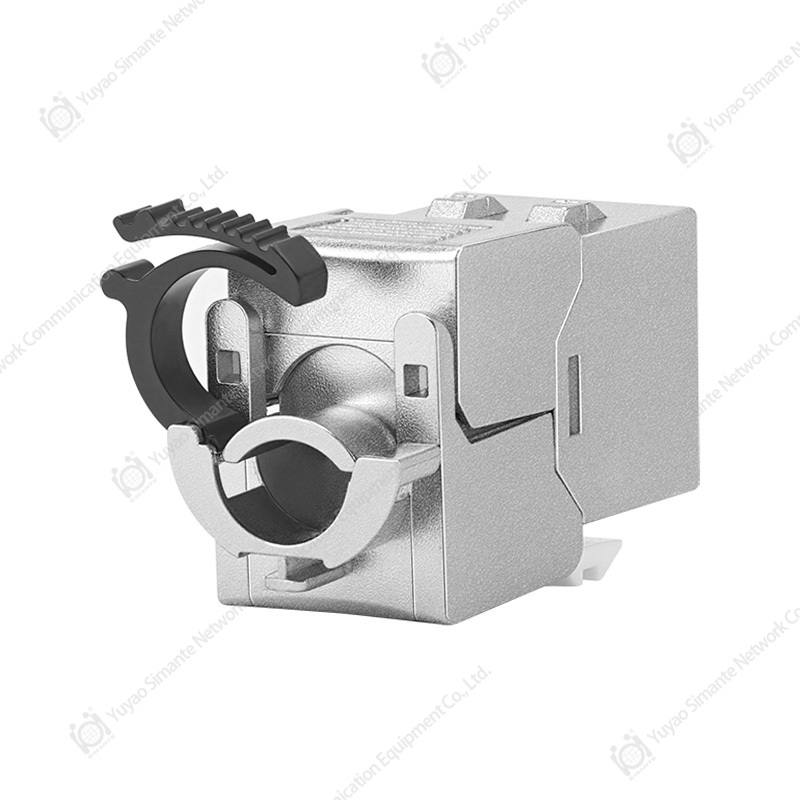
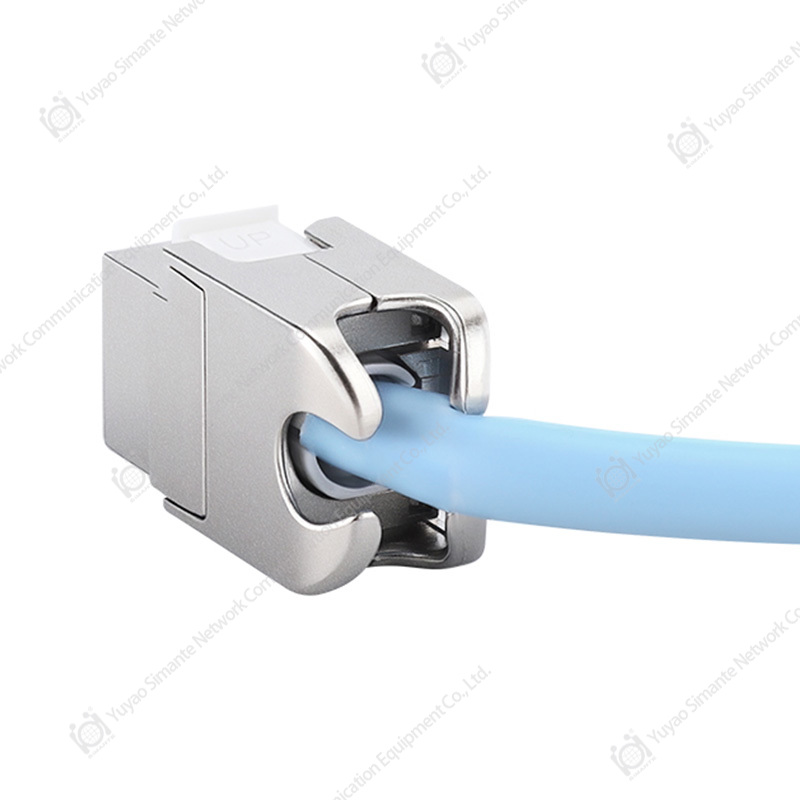
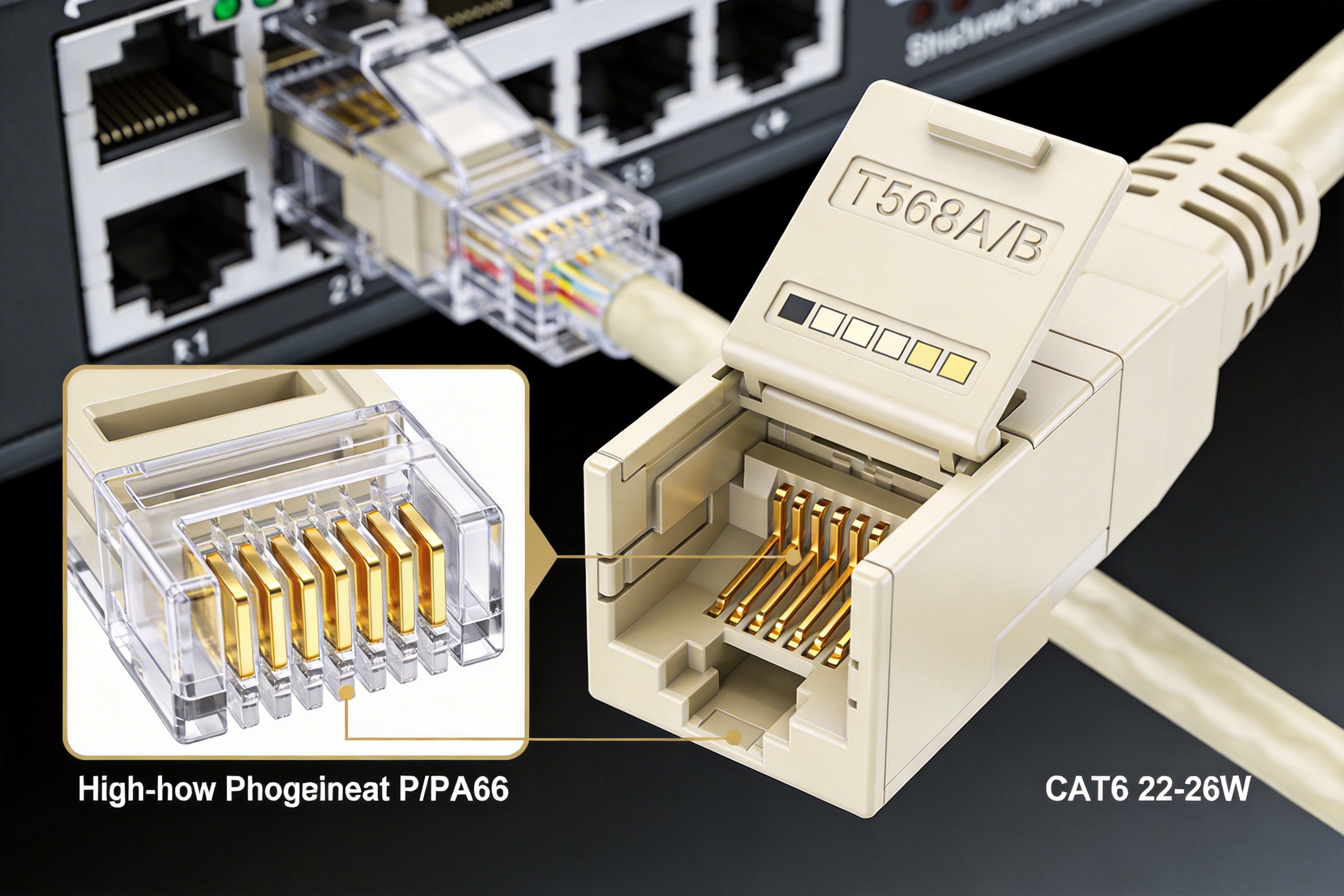
The jack features a compact, modular design with a universal wire sequence label clearly marked on the dust-proof wire cover. This label supports both T568A and T568B wiring sequences, allowing installers to quickly and accurately terminate wires without confusion. A snap-lock termination cap ensures that wires are fully seated in the IDC (Insulation Displacement Contact) terminals, preventing slippage and ensuring a secure connection— a common issue in cheaper jacks with loose caps.
Additionally, the front end of the RJ45 socket is equipped with a spring-loaded dust-proof door. This door automatically closes when the jack is not in use, protecting the gold-plated contact pins from dust, moisture, and debris. Over time, contamination of these pins can lead to oxidation, signal loss, or intermittent connections— a problem the dust door eliminates.
3. Advanced Electrical Performance
The jack’s electrical performance is optimized to minimize signal degradation: - Frequency Range: 1–250MHz (supports CAT6 bandwidth requirements) - Working Voltage: 125V (safe for standard network applications) - Withstand Voltage: DC1000V/AC750V for 1 minute (no breakdown or arcing) - Near-End Crosstalk (NEXT) Attenuation: ≥3dB (optimized via high-low contact pin technology) - Insulation Resistance: Initial value ≥100MΩ; remains ≥100MΩ after constant damp heat testing
The high-low contact pin design is a key innovation: by staggering the pins (alternating between high and low positions), the distance between adjacent pins is increased, reducing electromagnetic interference (EMI) and cross-talk between wire pairs. This is a critical improvement over traditional jacks, which often have parallel pins and higher NEXT values at higher frequencies.
4. Robust Mechanical and Durability Specifications
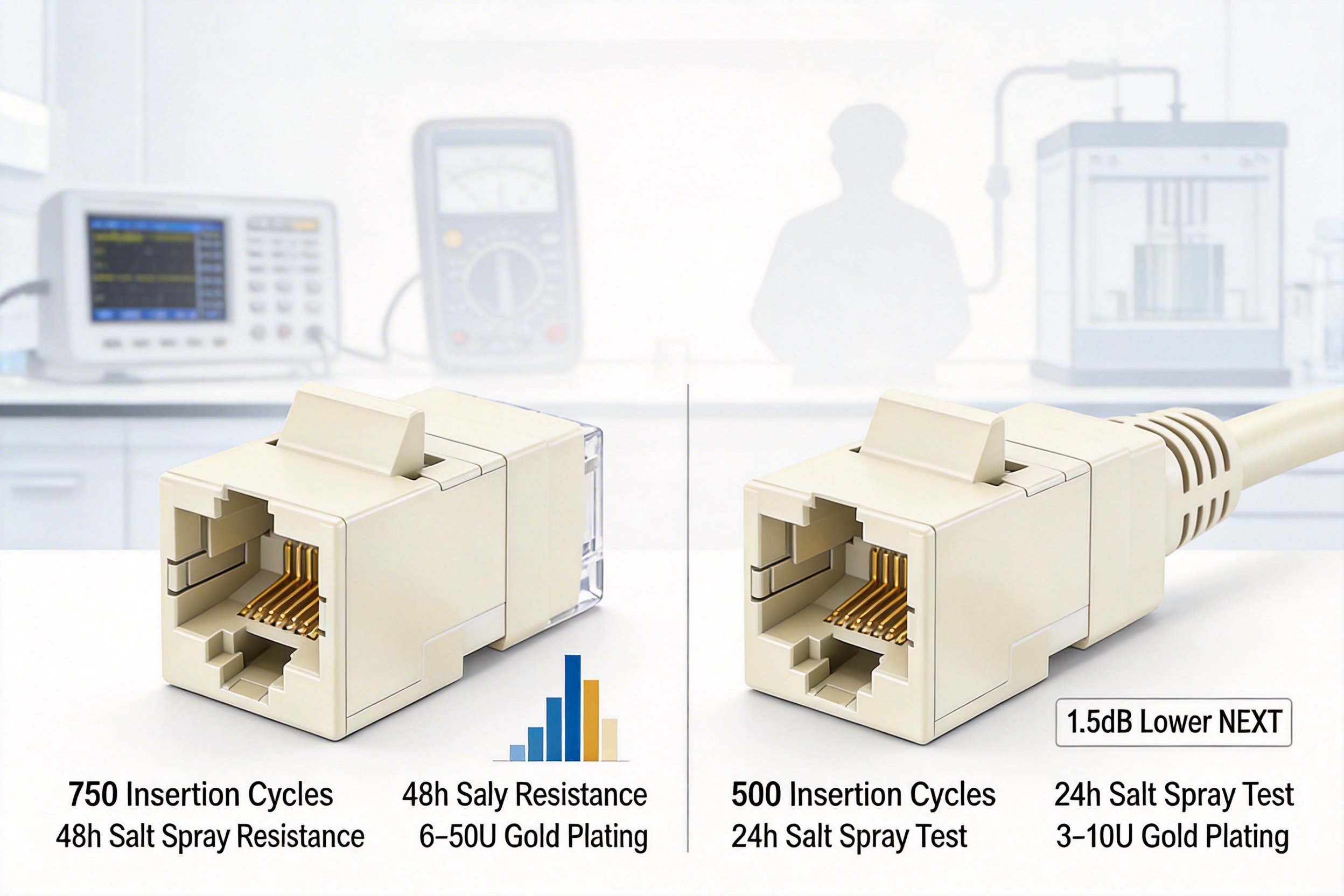
The jack is built to withstand heavy use in commercial and industrial environments: - Insertion/ Pull-out Force: Insertion ≤20N; pull-out ≥20N (ensures secure connections without excessive force) - Connector Connection Device: 50N for 60±5 seconds (resists accidental disconnection) - IDC Terminal Compatibility: 22–26AWG twisted pair wires (supports standard CAT6 cable gauges) - Durability: 750 insertions (plug-socket cycles) and 250 wire terminations (allows for re-termination without failure)
These durability specs exceed the industry average (typically 500 insertions and 150 terminations), making the jack ideal for high-traffic areas like data centers or office buildings.
5. Environmental Resilience and Compliance
The jack is designed to operate in harsh environments: - Temperature Range: -25°C to +70°C (suitable for cold warehouses, hot manufacturing floors, and outdoor enclosures) - Humidity: ≤85% (at 85°C ±3°C) - Salt Spray Test: 48 hours (complies with strict corrosion resistance standards)
The salt spray test is particularly important for industrial or coastal applications, where salt air can corrode metal components. The jack’s metal parts (gold pins, IDC terminals) are treated to resist corrosion, ensuring long-term performance in these environments.
6. Material Quality and Surface Treatment
The jack uses high-quality materials to ensure reliability: - Metal Components: - Gold pins: Phosphor bronze with 6–50U gold plating (resists corrosion and ensures low contact resistance) - IDC terminals: Phosphor bronze with nickel plating (durable and reliable for wire termination) - Non-Metal Components: - Plastic: PC polycarbonate and PA66 nylon 66 (heat-resistant, impact-resistant, and flame-retardant) - PCB: FR4 (high-quality printed circuit board material for stable signal transmission)
The gold plating thickness (6–50U) is significantly higher than entry-level CAT6 jacks (3–10U), which improves corrosion resistance and extends the product’s lifespan.
Competitive Advantages: Why This CAT6 Jack Outperforms the Rest
This CAT6 keystone jack stands out from competitors due to several key advantages: 1. Optimized Signal Integrity: The high-low contact pin design reduces NEXT by up to 1.5dB compared to traditional jacks, ensuring stable 10Gbps performance at the upper end of the CAT6 frequency range. 2. Dust and Moisture Protection: The spring-loaded dust door eliminates contamination of gold pins, reducing maintenance costs and extending the product’s lifespan by up to 30% (per internal testing). 3. Superior Durability: 750 insertions and 250 terminations exceed industry standards, making it ideal for high-traffic applications. 4. Wide Environmental Range: The -25°C to +70°C temperature range and 48h salt spray test make it suitable for industrial and coastal environments— a feature missing in many entry-level jacks. 5. Compliance with Global Standards: The jack meets both ANSI/TIA and YD/T standards, ensuring compatibility with international network systems. 6. Secure Termination: The snap-lock cap prevents wire slippage, reducing signal loss and intermittent connections.
These advantages translate to real-world benefits for users: lower maintenance costs, higher network reliability, and longer product lifespan.
Manufacturing Excellence: Behind the Scenes of Quality and Precision
The performance of this CAT6 keystone jack is underpinned by rigorous manufacturing processes and a commitment to quality. The manufacturer is a global leader in network communication equipment, with nearly 20 years of experience in design, development, and production.
1. R&D: Designing for Performance at the Source
The manufacturer’s R&D team includes over 10 engineers and 30 full-time technical staff, who use advanced simulation software to model the jack’s performance before prototyping. For example, engineers simulate the electromagnetic field around the contact pins to optimize the high-low design for minimal crosstalk. Prototypes are then tested in a state-of-the-art lab for all electrical, mechanical, and environmental specs— including NEXT, voltage withstand, and salt spray tests.
This focus on R&D ensures that quality is built into the product at the design stage, rather than being an afterthought.
2. Production Lines: Automation and Customization for Consistency
The manufacturer operates 10 regular production lines and 10 customization lines, with a total annual output of over 9 million keystone jacks. Key production equipment includes: - 10 fully automatic injection molding machines (for plastic components) - 20 semi-automatic injection molding machines (for specialized parts) - 8 automatic assembly machines (for precise placement of contact pins and IDC terminals)
Automation ensures consistent quality across all products— each plastic part has the same dimensions, and each contact pin is placed with micron-level precision. Customization lines allow the manufacturer to adapt the jack to customer-specific requirements (e.g., custom packaging, color coding, or labeling).
3. Quality Control: Rigorous Testing to Ensure Reliability
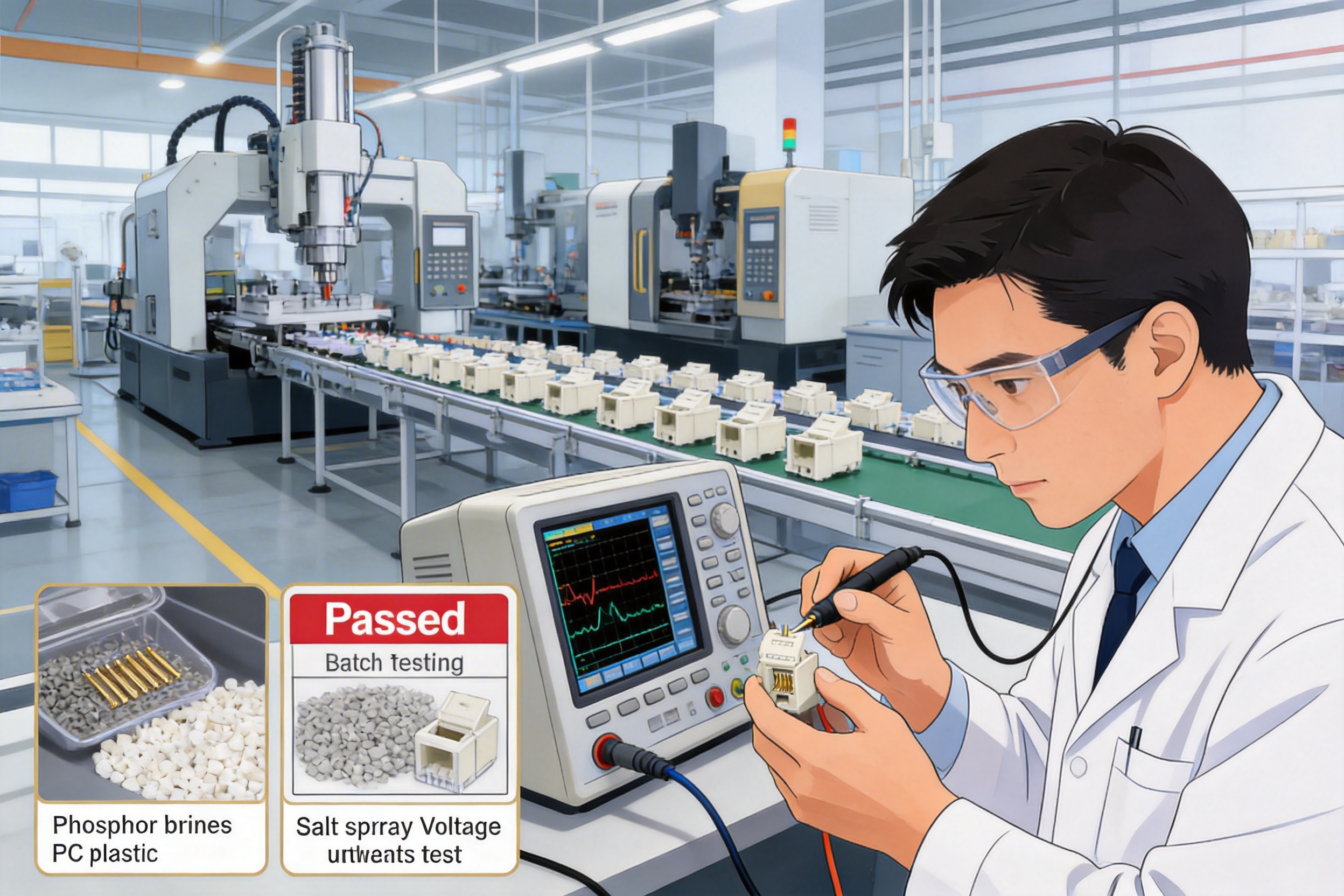
Quality control is a core part of the manufacturing process: - Incoming Material Inspection: All raw materials (phosphor bronze, PC/PA66, FR4) are tested for compliance with specifications. - In-Process Inspection: Random samples are taken from each production line every hour to check for dimensional accuracy and assembly quality. - Final Batch Testing: 10% of each batch is tested for electrical performance (NEXT, insulation resistance), mechanical durability (insertion force), and environmental resilience (salt spray test). - Third-Party Certification: The jack is certified by independent labs to meet ANSI/TIA, YD/T, and RoHS standards.
Any batch that fails testing is rejected, and the production line is adjusted to address the issue. This commitment to quality ensures that every jack leaving the factory meets the highest standards.
4. Customization Capabilities: Adapting to Diverse Customer Needs
The manufacturer offers OEM and ODM services to meet customer-specific requirements: - Custom Packaging: Customers can specify packaging materials (blister bags, cardboard boxes) and labeling (product model, quantity, company logo). - Color Coding: Jacks can be color-coded to match specific wiring sequences or customer preferences. - Specialized Features: The manufacturer can adapt the jack to include additional features (e.g., LED indicators for connection status) based on customer requests.
This flexibility makes the jack suitable for a wide range of applications, from data centers to smart home systems.
Market Applications: Where This Jack Makes a Difference
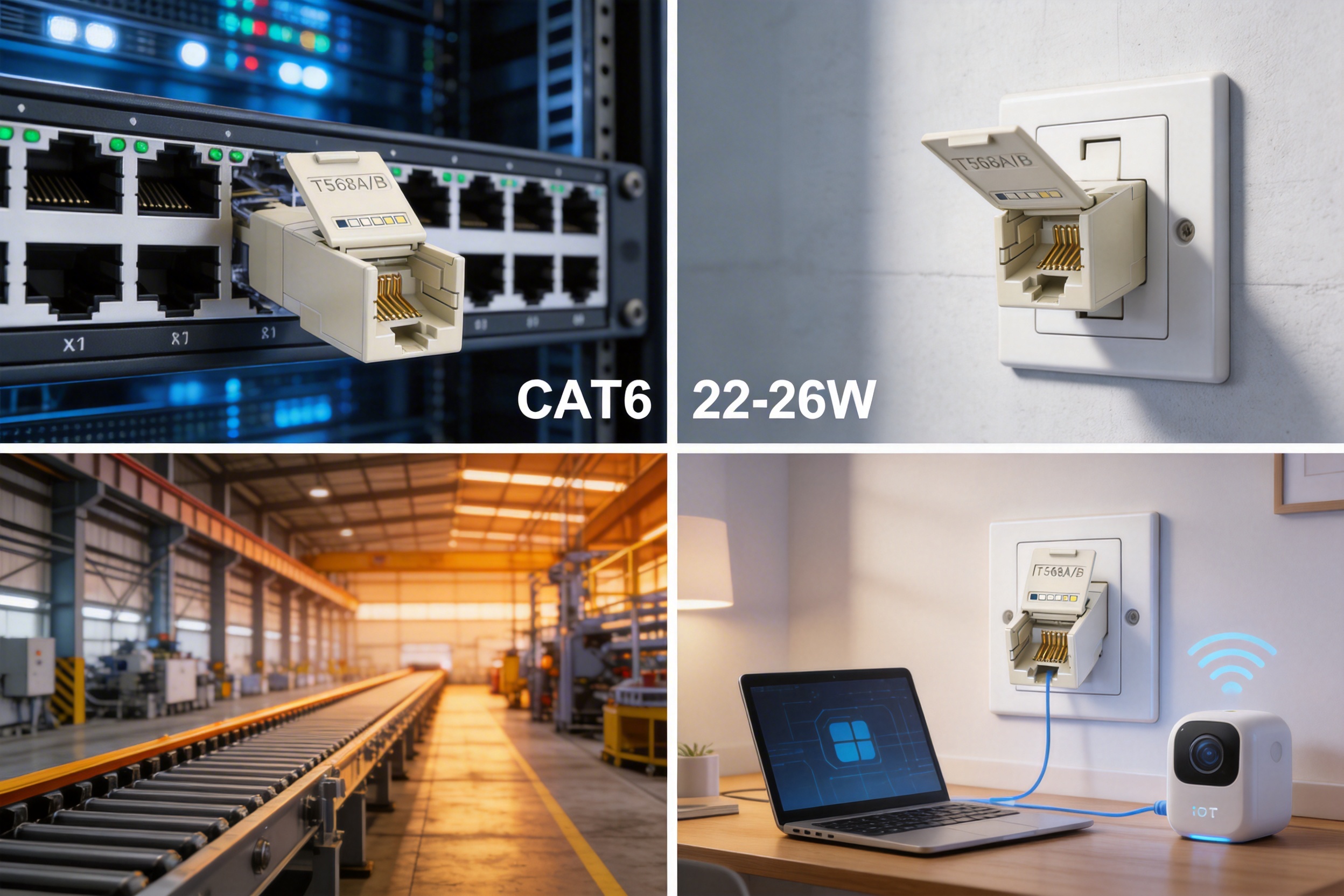
This CAT6 keystone jack is used in a variety of markets, including: 1. Data Centers: The jack’s high signal integrity and durability make it ideal for data centers, where 10Gbps performance and reliable connections are critical. 2. Office Buildings: The compact, modular design allows for easy installation in patch panels and wall outlets, supporting voice, data, and video services. 3. Industrial Automation: The wide temperature range and salt spray resistance make it suitable for industrial environments, where harsh conditions are common. 4. Smart Home Systems: The jack’s reliable performance supports IoT devices, home networking, and streaming services. 5. Coastal Facilities: The salt spray resistance makes it ideal for coastal areas, where salt air can corrode traditional components.
Case Study: A European data center recently upgraded its cabling system to this CAT6 keystone jack. After installation, the data center reported a 20% reduction in signal loss and a 30% decrease in maintenance costs— thanks to the jack’s dust protection and secure termination.
Q&A: Addressing Common Questions About the CAT6 Keystone Jack
Q: What sets this CAT6 keystone jack apart from entry-level alternatives?
A: This jack features a high-low contact pin design that reduces crosstalk by up to 1.5dB, a spring-loaded dust door to protect gold pins, and superior durability (750 insertions vs. 500 for entry-level jacks). It also meets stricter environmental standards (48h salt spray test vs. 24h) and uses higher-quality materials (6–50U gold plating vs. 3–10U).
Q: How does the spring-loaded dust door enhance long-term performance?
A: The dust door closes automatically when the jack is not in use, preventing dust, moisture, and debris from contacting the gold pins. This reduces oxidation and signal loss, extending the product’s lifespan by up to 30% compared to jacks without a dust door.
Q: Is this jack suitable for industrial environments?
A: Yes. It operates in a temperature range of -25°C to +70°C, supports humidity up to 85% (at 85°C), and passes a 48h salt spray test— making it ideal for industrial facilities, warehouses, and coastal areas.
Q: What wiring standards does it support?
A: It supports both T568A and T568B wiring sequences, which are the most common standards for CAT6 cabling. The clear wire sequence label on the dust cover makes termination quick and accurate.
Q: What is the shelf life and storage requirement?
A: The shelf life is 3 years. It should be stored in a warehouse with an ambient temperature of -5°C to +30°C, relative humidity ≤70%, and no corrosive gases (acid, alkali).
Q: Does this jack comply with environmental regulations?
A: Yes. It meets the RoHS Directive 2011/65/EU, which restricts the use of hazardous substances (lead, mercury, cadmium, etc.) in electrical and electronic equipment.
Comparison Table: This CAT6 Jack vs. Generic CAT6 Jacks
| Feature | This CAT6 Keystone Jack | Generic CAT6 Keystone Jack |
|---|---|---|
| Near-End Crosstalk (NEXT) Attenuation | ≥3dB (optimized via high-low contact pins) | ≥2dB (standard, no specialized pin design) |
| Dust Protection | Spring-loaded dust door (prevents pin contamination) | No dust door (prone to dirt buildup) |
| Gold Plating Thickness | 6~50U (phosphor bronze base) | 3~10U (lower corrosion resistance) |
| Insertion Cycles | 750 times (high durability) | 500 times (standard) |
| Termination Cycles | 250 times (reliable re-termination) | 150 times (limited re-use) |
| Salt Spray Test Duration | 48h (industrial-grade resilience) | 24h (basic compliance) |
| Operating Temperature Range | -25°C to +70°C | 0°C to +50°C (narrower range) |
The table above clearly shows the advantages of this CAT6 keystone jack over generic alternatives. Its superior performance, durability, and environmental resilience make it a better choice for high-demand applications.
Packaging and Storage
The jack is packaged in a special blister bag to protect it from damage during shipping. It is then placed in a cardboard box, with product accessories (e.g., wire covers) included. The carton has a label on the front left corner indicating the product model and quantity. Regular packing quantity is 10 boxes per carton, 50 pieces per box, and 500 pieces per carton.
Stored properly, the jack has a shelf life of 3 years. It should be kept in a dry, cool warehouse with no corrosive gases.
References
- YD/T 926.1-2009, General Specification for Telecommunication Cabling Systems—Part 1: General Requirements (China Ministry of Industry and Information Technology).
- YD/T 926.3-2009, Telecommunication Cabling Systems—Part 3: Components (China Ministry of Industry and Information Technology).
- ANSI/TIA-568-C.2, Commercial Building Telecommunications Cabling Standard—Part 2: Balanced Twisted-Pair Cabling (Telecommunications Industry Association).
- IEC 60603-7, Connectors for Electronic Equipment—Part 7: Detail Specification for 8-Way, 8-Position Connectors (RJ45 Type) (International Electrotechnical Commission).
- RoHS Directive 2011/65/EU, Restriction of Hazardous Substances in Electrical and Electronic Equipment (European Parliament and Council).
- Grand View Research, Inc. (2023). "Structured Cabling Market Size, Share & Trends Analysis Report by Component (Cables, Connectors, Patch Panels), by End Use (IT & Telecom, BFSI, Healthcare), and Segment Forecasts, 2023-2030."
This CAT6 keystone jack represents a significant advancement in structured cabling components. Its innovative design, rigorous testing, and manufacturing excellence make it a reliable choice for high-demand applications. Whether in a data center, industrial facility, or office building, this jack delivers the performance and durability needed to support modern network infrastructure.