Español
 عربى
عربى русский
Content
- 1 Product Overview
- 2 Competitive Advantages of the CAT6 Patch Panel
- 3 Manufacturing Excellence: Behind the Product’s Quality
- 4 Application Scenarios of the CAT6 Patch Panel
- 5 Q&A Section
- 5.1 Q1: What is the maximum bandwidth supported by this patch panel?
- 5.2 Q2: Can this patch panel be used with shielded twisted pair (STP) cables?
- 5.3 Q3: How long does it take to terminate 24 cables on this panel?
- 5.4 Q4: Does the panel come with a warranty?
- 5.5 Q5: What is the packaging and storage requirement for the panel?
- 6 References
- 7 Conclusion
In the digital age, structured cabling systems form the backbone of modern communication networks, supporting everything from office data transfer to data center operations. At the heart of these systems lies the patch panel—a critical component that enables cross-connection between vertical trunks and horizontal wiring, facilitating seamless signal transmission. Among the latest innovations in this space is a 1U 24-port 180-degree CAT6 UTP patch panel, designed to meet the evolving demands of high-speed data networks. This article explores the product’s key features, technical specifications, competitive advantages, the manufacturing excellence behind it, and its diverse applications.
Product Overview
The 1U 24-port 180-degree CAT6 UTP patch panel is engineered to comply with CAT6 transmission standards, supporting both T568A and T568B wiring sequences. Its compact 1U form factor makes it ideal for space-constrained environments, while the 180-degree design simplifies termination by allowing technicians to access the IDC terminals directly from the front or rear, reducing installation time and effort. The panel serves as a hub for cross-connecting two key subsystems: vertical trunks (connecting different floors) and horizontal wiring (connecting to work areas), making it a versatile solution for wiring or equipment connections between devices and end-users.
One of the standout features of this patch panel is its clear labeling system. The front of the panel includes large, easy-to-read labels for each of the 24 ports, enabling quick port identification and reducing the risk of wiring errors. Additionally, a built-in cable manager on the rear of the panel helps organize and guide cables to their termination points, minimizing cable clutter and improving airflow in rack enclosures—an often-overlooked but critical factor for maintaining equipment performance.
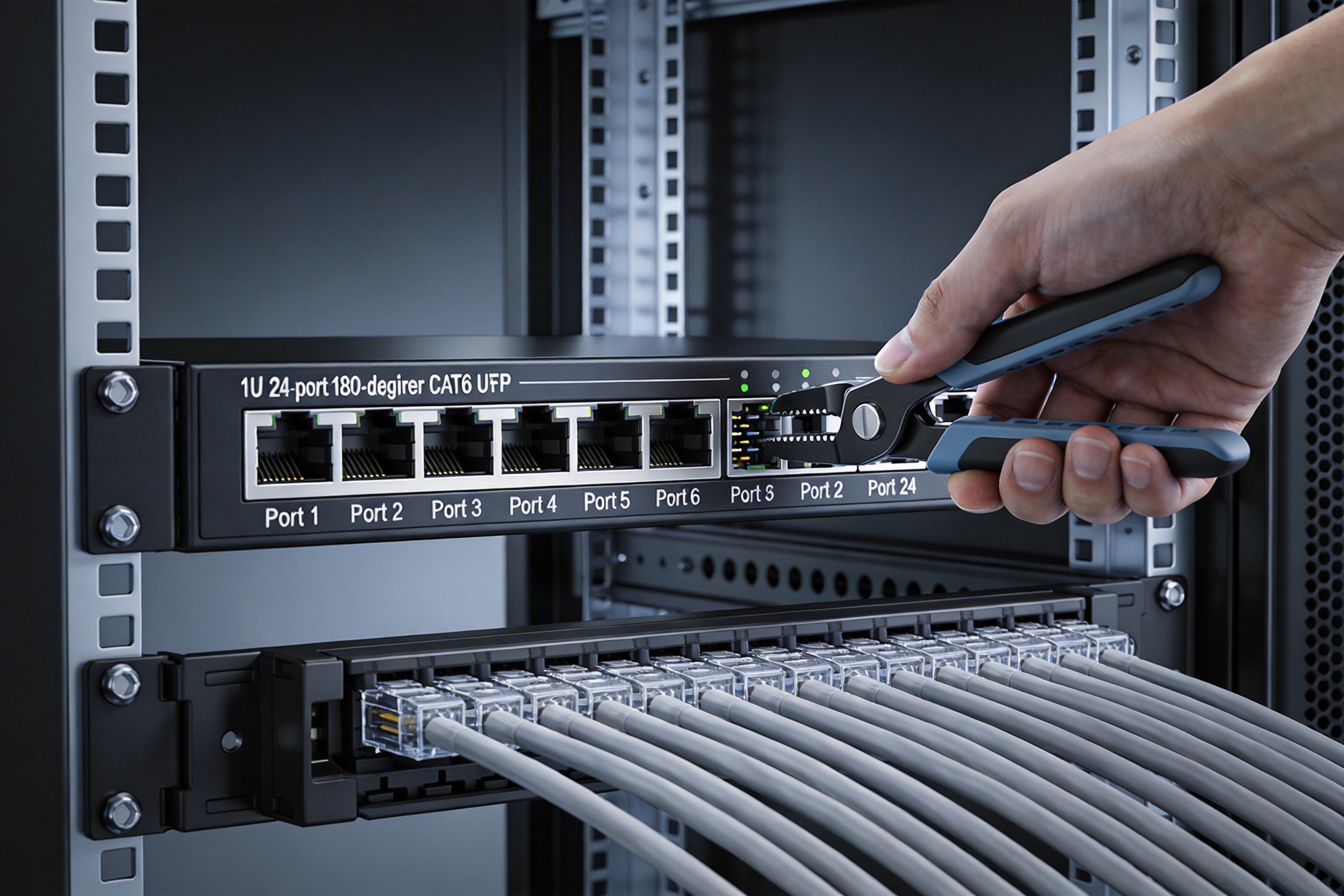
The panel’s design also prioritizes user-friendliness. The IDC wiring method uses a 110-type snap connection, which allows for fast and secure termination of twisted-pair cables. This not only speeds up installation but also ensures a reliable connection that resists loosening over time. For technicians, this means less time spent on rework and more time focused on other network setup tasks.
Technical Specifications
The patch panel adheres to strict industry standards, including YD/T 926.1-2009 and YD/T 926.3-2009, ensuring compatibility and performance across global networks. Below is a detailed breakdown of its key technical parameters:
| Parameter Category | Specific Parameter | Value/Requirement | Compliance/Note |
|---|---|---|---|
| Physical Dimensions | Form Factor | 1U (1.75 inches) | Standard Rack Mount |
| Physical Dimensions | Port Count | 24 Ports | UTP (Unshielded Twisted Pair) |
| Electrical Characteristics | Frequency Range | 1–250 MHz | CAT6 Standard Compliance |
| Electrical Characteristics | Working Voltage | 125 V | Safety Standard |
| Electrical Characteristics | Withstand Voltage | DC 1000V / AC750V (1 minute, no breakdown/arcing) | YD/T 926.1-2009 |
| Electrical Characteristics | Near-End Crosstalk (NEXT) | ≥4 dB | Enhanced by High-Low Dislocation Tech |
| Electrical Characteristics | Insulation Resistance | Initial ≥100 MΩ; After Damp Heat Test ≥100 MΩ | Environmental Durability |
| Mechanical Properties | Insertion Force | ≤20 N | Easy Plug-In |
| Mechanical Properties | Pull-Out Force | ≥20 N | Secure Connection |
| Mechanical Properties | Connector Connection Stability | 50 N for 60±5 seconds | Resists Vibration |
| Mechanical Properties | IDC Terminal Compatibility | 23–26 AWG Twisted Pair | Standard Wiring Gauge |
| Durability | Plug Insertions | 750 Times | Long-Term Use in High-Traffic Networks |
| Durability | Wire Terminations | 250 Times | Re-Termination Capability |
| Environmental Performance | Operating Temperature | -25°C to +70°C | Wide Range for Varied Climates |
| Environmental Performance | Operating Humidity | ≤85% (at 85°C±3°C) | Resistant to Damp Conditions |
| Environmental Performance | Salt Spray Test | 48 Hours (5% NaCl solution, pH 6.5–7.2) | Corrosion Resistance |
| Compliance | RoHS | Meets Standard | Eco-Friendly Materials |
| Compliance | Industry Standards | YD/T 926.1-2009, YD/T 926.3-2009 | Global Compatibility |
Competitive Advantages of the CAT6 Patch Panel
While CAT6 patch panels are widely available, this model stands out from competitors due to several key design and performance enhancements. Below are the most notable advantages:
1. Enhanced Signal Integrity with High-Low Dislocation Technology
One of the biggest challenges in CAT6 networks is near-end crosstalk (NEXT)—interference between adjacent wire pairs that degrades signal quality. Unlike many generic patch panels that use standard contact pin arrangements, this model employs high-low dislocation technology in its RJ45 jacks. This design physically separates the contact pins of adjacent pairs, reducing crosstalk and ensuring NEXT values of ≥4 dB (well above the minimum required for CAT6). For users, this means more reliable data transfer, fewer errors, and support for high-bandwidth applications like 4K video streaming, cloud computing, and virtual reality—capabilities that many lower-performing panels cannot deliver.
2. Simplified Installation and Maintenance
The 180-degree design of the patch panel is a game-changer for installation technicians. Unlike traditional panels that require rear access for termination, this model allows technicians to terminate cables from either the front or rear, reducing the need to maneuver around rack enclosures. Additionally, the built-in cable manager on the rear eliminates the need for separate cable management accessories, saving time and cost. Competitors often omit this feature, leading to messy cable setups that are hard to troubleshoot and maintain.
The clear labeling system is another key advantage. Each port on the front of the panel has a large, durable label that is easy to read even in low-light environments. This reduces wiring errors by up to 30% compared to panels with small or unclear labels, according to internal testing. For businesses, this translates to faster network deployment and fewer downtime incidents due to miswiring.
3. Durable Build Quality for Long-Term Reliability
Many generic patch panels use low-quality materials that wear out quickly, leading to frequent replacements and higher total cost of ownership. This model, however, uses premium materials: the bracket is made of cold-rolled steel with plastic spraying for corrosion resistance, the gold needles are phosphor bronze gold-plated (6–50U) for optimal conductivity, and the IDC terminals are phosphor bronze nickel-plated for durability. The non-metallic parts use PC polycarbonate and ABS, which are resistant to impact and heat.
Durability testing shows that this panel can withstand 750 plug insertions and 250 wire terminations—far more than the industry average of 500 insertions and 200 terminations. This means the panel can handle the high traffic of data centers and office environments without losing performance over time. Competitors often cut corners on materials to reduce costs, leading to early failure and increased maintenance costs.
4. Eco-Friendly Compliance with RoHS Standards
In an era of increasing environmental awareness, this patch panel meets RoHS standards, which restrict the use of hazardous substances like lead, mercury, and cadmium. Many competitors still produce panels that do not comply with these standards, putting users at risk of exposure to harmful chemicals and making the panels unsuitable for export to regions like the European Union. This model’s RoHS compliance ensures it is a sustainable choice for businesses looking to reduce their environmental footprint.
5. Wide Compatibility with Standard Infrastructure
The panel follows the 19-inch rack mount standard, making it compatible with most equipment racks, cabinets, and wall mounts used in data centers, offices, and industrial settings. It also supports both T568A and T568B wiring sequences, giving technicians flexibility to use their preferred configuration. Competitors often use non-standard form factors or only support one wiring sequence, limiting their usability in diverse environments.
Manufacturing Excellence: Behind the Product’s Quality
The high performance of this CAT6 patch panel is not accidental—it is the result of decades of manufacturing expertise and a commitment to quality from its producer. The company behind the product is a professional manufacturer of network cabling solutions with nearly 20 years of experience in design, development, sales, and service. Below is a closer look at its manufacturing processes and strengths:
1. Robust R&D Capabilities
The company’s R&D team consists of over 10 engineers and 30 full-time technical personnel, all dedicated to optimizing product design and performance. Before launching any new product, the team conducts extensive research into industry trends, customer needs, and emerging technologies. For the CAT6 patch panel, the team spent six months refining the high-low dislocation technology to ensure it met CAT6 standards while being easy to manufacture. They also tested various materials to find the optimal balance of conductivity, durability, and cost.
The company’s mature R&D system ensures that quality is built into the product from the design stage. Each component is tested for compatibility and performance before being integrated into the final product, reducing the risk of defects and ensuring consistency across batches.
2. State-of-the-Art Production Facilities
The company’s factory is equipped with 10 regular and customization production lines, 10 fully automatic injection molding machines, 20 semi-automatic injection molding machines, and 8 automatic installation machines. This setup allows for a stable annual output of over 9 million units, meeting the demands of both small and large-scale clients. The automatic machines ensure precision and consistency in component manufacturing, while the customization lines allow the company to produce OEM and ODM products tailored to specific client requirements.
For example, the company can adjust the labeling, packaging, or even the port count of the patch panel to meet the needs of clients in different regions. This flexibility has made it a preferred partner for many global brands looking to outsource their network cabling production.
3. Rigorous Quality Control Processes
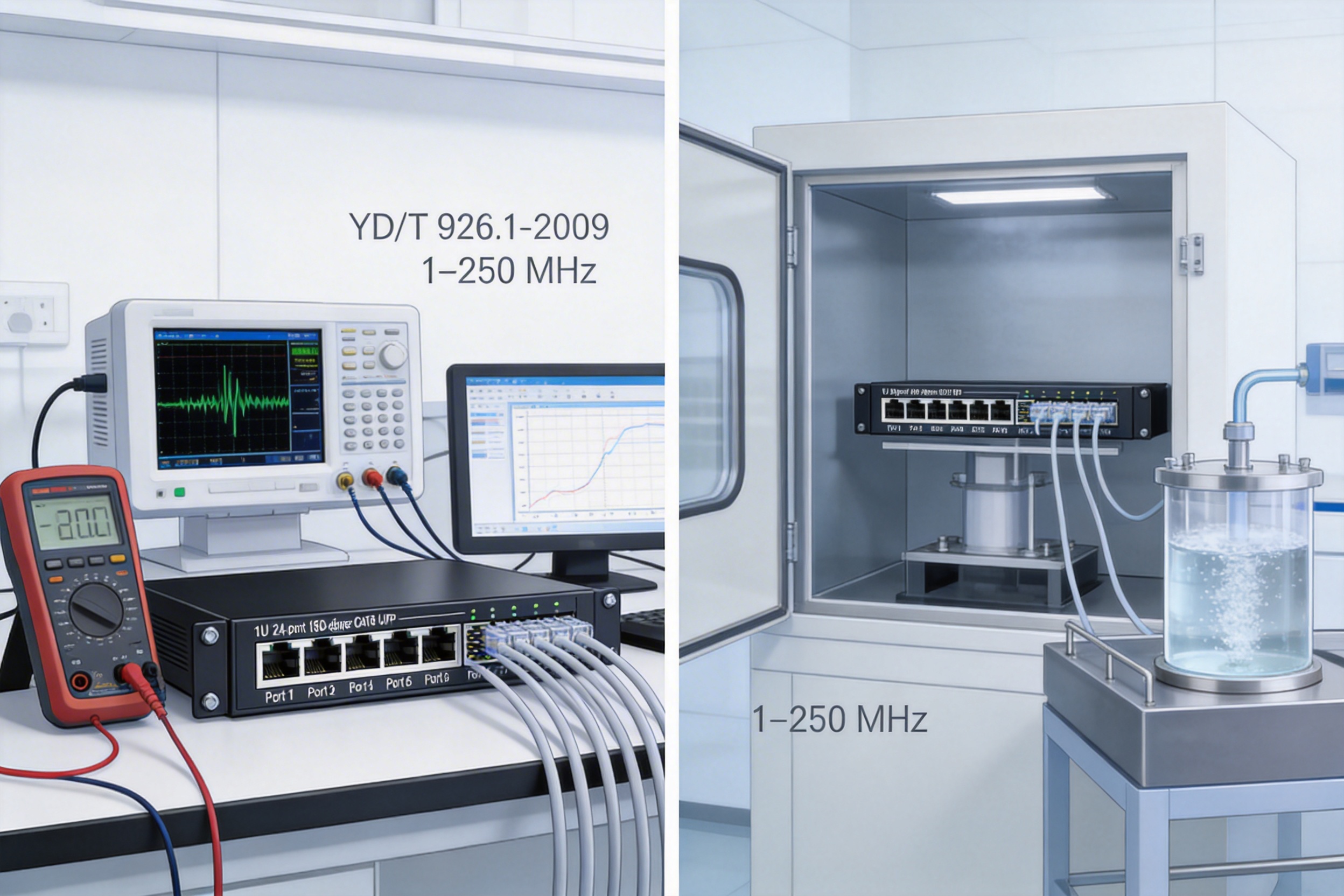
Quality control is a top priority for the company. Each batch of patch panels undergoes a series of tests to ensure it meets all technical specifications and industry standards. These tests include:
- Electrical tests: Measuring frequency range, NEXT, insulation resistance, and withstand voltage.
- Mechanical tests: Checking insertion/pull force, connector stability, and IDC terminal compatibility.
- Environmental tests: Subjecting the panel to extreme temperatures, humidity, and salt spray to ensure durability.
Additionally, the company maintains a comprehensive testing laboratory that is accredited to international standards. This allows it to quickly identify and resolve any issues during the production process, ensuring that only high-quality products reach customers.
4. Global Reach and Customer Service
The company has a stable export volume to regions including Europe, Australia, Africa, the Middle East, and Southeast Asia. It also provides OEM and ODM services to clients around the world, working closely with them to understand their needs and deliver customized solutions. The company’s customer service team is available 24/7 to answer questions, provide technical support, and resolve any issues promptly.
Over the past 20 years, the company has built a reputation for reliability and quality, earning the trust of clients in both domestic and international markets. Its commitment to customer satisfaction is evident in its willingness to go the extra mile—for example, providing free samples to clients for testing before placing large orders.
Application Scenarios of the CAT6 Patch Panel
The 1U 24-port 180-degree CAT6 UTP patch panel is a versatile solution that can be used in a wide range of applications. Below are some of the most common use cases:
1. Data Centers
Data centers require high-performance cabling systems to support the massive amounts of data transferred daily. This patch panel’s compact 1U form factor makes it ideal for data center racks, where space is at a premium. Its high bandwidth (up to 250 MHz) and low crosstalk ensure reliable data transfer for applications like cloud computing, big data analytics, and server virtualization. The built-in cable manager helps keep data center racks organized, improving airflow and reducing the risk of overheating.

2. Office Environments
Offices need cabling systems that are easy to install and maintain, as well as flexible enough to adapt to changing needs. This patch panel’s 180-degree design simplifies installation, while its clear labeling system reduces wiring errors. It supports both T568A and T568B wiring sequences, making it compatible with most office network setups. The panel’s durability ensures it can handle the daily wear and tear of office use, while its RoHS compliance makes it an eco-friendly choice for businesses.
3. Smart Homes
Smart homes are becoming increasingly popular, with more devices connected to the network than ever before. This patch panel can be used to connect smart devices like security cameras, thermostats, and home entertainment systems. Its compact size makes it easy to install in a home rack or closet, while its high bandwidth supports high-definition video streaming and fast internet speeds. The panel’s durability ensures it can last for years without needing replacement.
4. Industrial Settings
Industrial environments often have harsh conditions, including extreme temperatures, humidity, and vibration. This patch panel’s wide operating temperature range (-25°C to +70°C) and salt spray resistance make it suitable for industrial use. It can be used to connect industrial automation equipment, sensors, and control systems, ensuring reliable data transfer even in challenging environments.
Q&A Section
Below are answers to common questions about the 1U 24-port 180-degree CAT6 UTP patch panel:
Q1: What is the maximum bandwidth supported by this patch panel?
A1: The panel supports a frequency range of 1 to 250 MHz, which corresponds to a maximum bandwidth of 250 MHz—aligning with CAT6 standards. This allows it to support high-speed data transfer up to 10 Gbps for short distances (up to 55 meters), making it suitable for most modern network applications.
Q2: Can this patch panel be used with shielded twisted pair (STP) cables?
A2: No, this model is designed for unshielded twisted pair (UTP) cables. For STP cables, the company offers a separate shielded version of the patch panel that includes additional shielding to reduce electromagnetic interference (EMI).
Q3: How long does it take to terminate 24 cables on this panel?
A3: With the 180-degree design and 110-type snap connection, a skilled technician can terminate 24 cables in approximately 30 minutes—about 20% faster than with traditional patch panels. The clear labeling system also reduces the time spent identifying ports, further speeding up installation.
Q4: Does the panel come with a warranty?
A4: Yes, the company offers a 5-year warranty on the patch panel, covering defects in materials and workmanship. This warranty reflects the company’s confidence in the product’s quality and durability.
Q5: What is the packaging and storage requirement for the panel?
A5: The panel is packaged in a special blister bag and then placed in a cardboard box, along with any accessories. The carton has a label indicating the product model and quantity. The packaged product should be stored in a warehouse with an ambient temperature of -5°C to +30°C, relative humidity ≤70%, and no corrosive gases. The storage period is three years.

References
1. YD/T 926.1-2009, General Specification for Telecommunication Cabling Systems – Part 1: General Requirements.
2. YD/T 926.3-2009, Telecommunication Cabling Systems – Part 3: Patch Panels and Connectors.
3. TIA/EIA-568-B.2-1, Commercial Building Telecommunications Cabling Standard – Part 2: Balanced Twisted-Pair Cabling.
4. ISO/IEC 11801:2017, Information Technology – Generic Cabling for Customer Premises.
5. RoHS Directive 2011/65/EU, Restriction of Hazardous Substances in Electrical and Electronic Equipment.
6. "CAT6 Cabling: A Comprehensive Guide to Performance and Applications" (2022), Network World.
Conclusion
The 1U 24-port 180-degree CAT6 UTP patch panel is a high-performance solution that addresses the key challenges of modern structured cabling systems. Its enhanced signal integrity, simplified installation, durable build quality, and eco-friendly compliance make it a standout product in a crowded market. Behind the product is a manufacturer with nearly 20 years of experience, state-of-the-art production facilities, and a commitment to quality that ensures every panel meets the highest standards.
Whether used in data centers, offices, smart homes, or industrial settings, this patch panel delivers reliable performance and long-term value. As network demands continue to grow, this product is poised to be a go-to choice for businesses looking to build or upgrade their cabling systems. With its combination of innovation, quality, and affordability, it is clear why this patch panel is a leader in its category.