Español
 عربى
عربى русский
Content
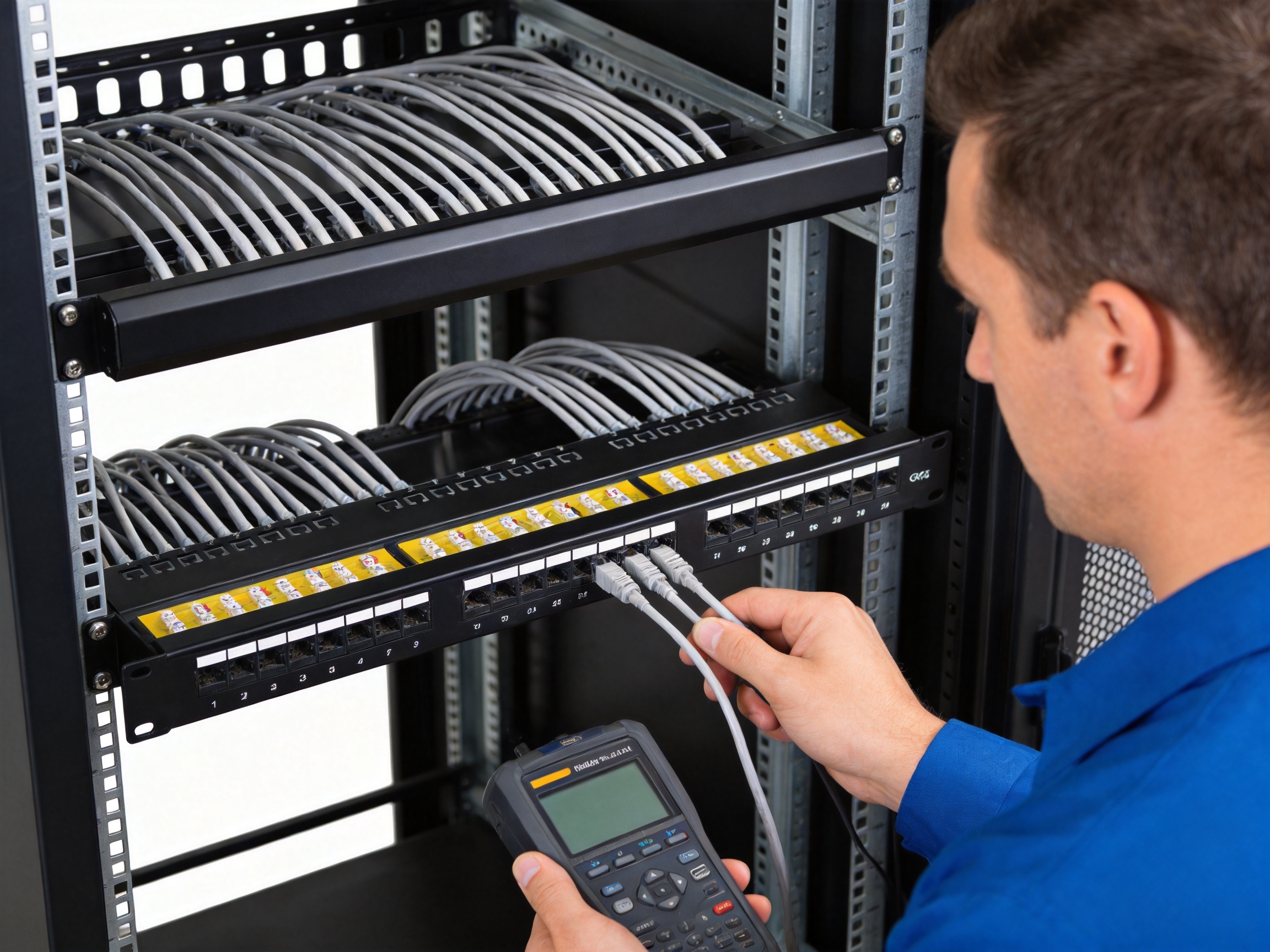
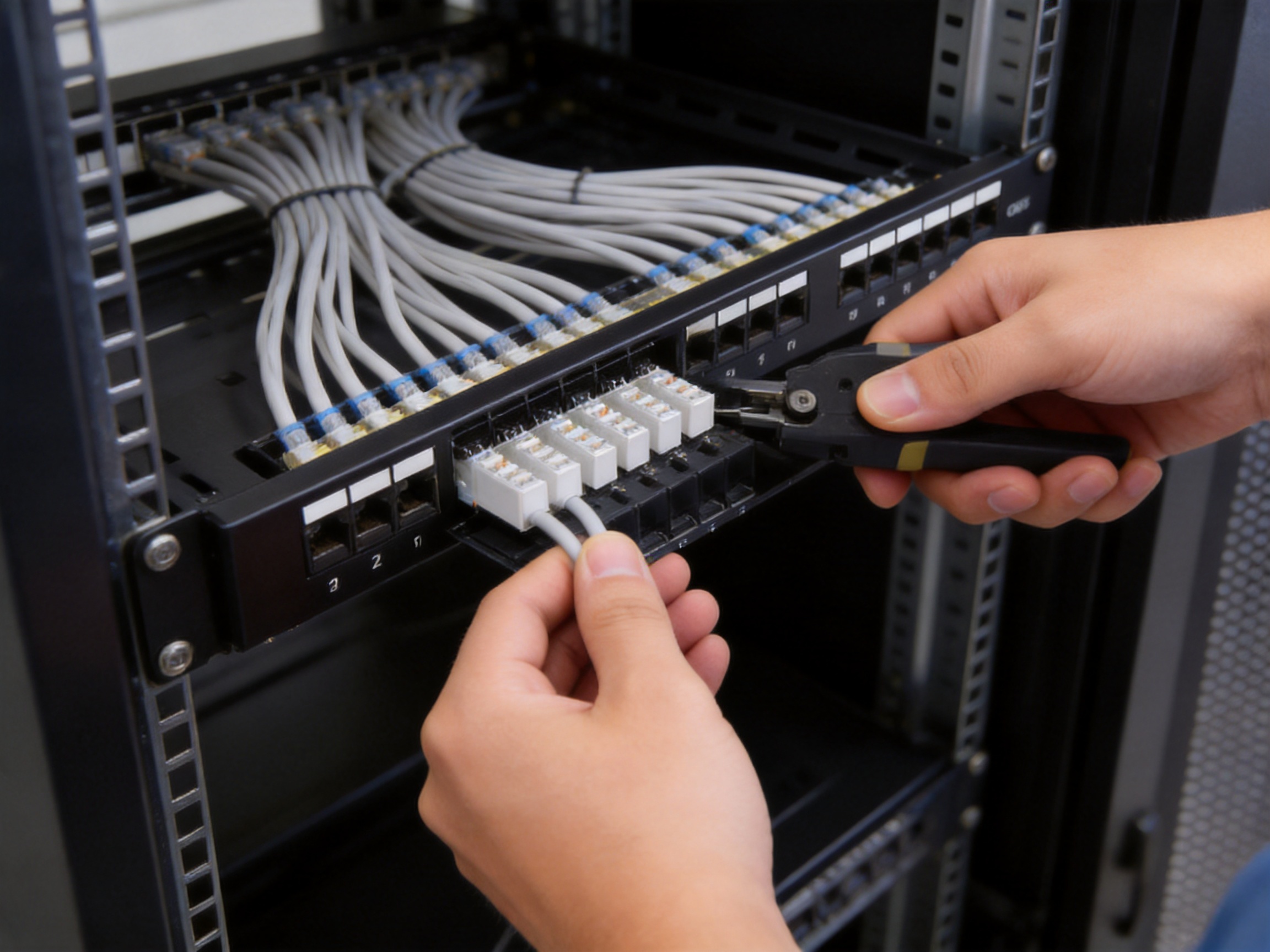
In modern structured cabling systems, the patch panel is more than a passive connection point. It is the operational center where horizontal cabling, equipment connections, jumper management, port identification, and long-term maintenance all meet. A well-designed CAT6 patch panel helps the network remain organized, stable, easy to expand, and easier to troubleshoot. The SMT-2030K24C6 1U 24 Port 90 Degree CAT6 Patch Panel is developed for professional copper cabling applications that require dependable transmission performance, compact installation, efficient termination, and durable mechanical construction.
This 1U 24-port patch panel is designed for standard 19-inch racks, cabinets, and wall-mount frames. It supports Category 6 transmission requirements, follows T568A and T568B wiring sequences, and provides a structured interface between horizontal cabling and network equipment. Its 90-degree design supports practical cable routing, while the rear cable management structure guides cables to the termination points in an orderly way. For installers, system integrators, data center technicians, and building network contractors, these details directly affect installation speed, wiring consistency, airflow, maintenance convenience, and long-term system reliability.
SMT-2030K24C6 1U24 Port 90 Degree CAT6 Patch Panel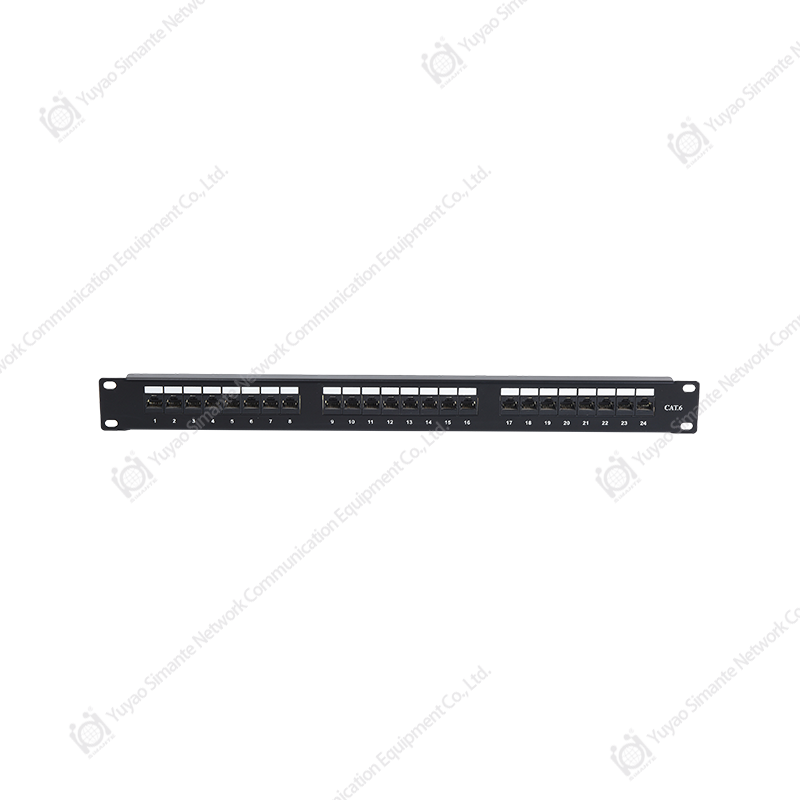
Product Overview
The SMT-2030K24C6 is a 1U 24-port CAT6 patch panel intended for copper structured cabling systems. It uses RJ45 ports on the front side for patch cord connection and IDC terminals on the rear side for horizontal cable termination. This structure makes it suitable for connecting the horizontal cabling subsystem with equipment rooms, telecom rooms, work areas, and network distribution points. It is commonly used in office buildings, commercial facilities, schools, hotels, data cabinets, security systems, smart building networks, and industrial communication environments where standardized copper cabling is required.
Its main function is to serve as a cross-connection hub between vertical trunk cabling and horizontal wiring. By centralizing cable terminations in a clear and accessible 19-inch rack-mounted unit, the patch panel helps simplify network management. Instead of directly connecting long horizontal cables to switches or active equipment, installers terminate building cables on the patch panel, then use shorter patch cords to connect to switches, routers, network video recorders, voice equipment, or other devices. This protects active equipment ports, reduces cable stress, and creates a more flexible network layout.
The panel supports Category 6 performance with a working frequency range from 1 MHz to 250 MHz. CAT6 cabling is widely used for Gigabit Ethernet and other network applications requiring stable bandwidth and reduced crosstalk. The product is built with phosphor bronze contact components, gold-plated pins, nickel-plated IDC terminals, FR4 printed circuit board material, and robust cold rolled steel brackets with plastic spraying. These materials are chosen to improve electrical contact quality, corrosion resistance, mechanical stability, and service life.
Key Product Specifications
| Item | Specification | Practical Value |
|---|---|---|
| Product Type | 1U 24-port 90-degree CAT6 patch panel | High port density in a compact rack space |
| Rack Compatibility | Standard 19-inch rack, cabinet, and wall mount | Flexible installation in common network environments |
| Wiring Standards | T568A and T568B supported | Compatible with mainstream structured cabling practices |
| Front Connection | RJ45 jack with patch cord | Convenient connection to active network equipment |
| Rear Termination | IDC termination for horizontal cabling | Stable and efficient field termination |
| Frequency Range | 1 MHz to 250 MHz | Meets CAT6 transmission application requirements |
| Working Voltage | 125 V | Suitable for standard low-voltage communication systems |
| Withstand Voltage | DC 1000 V or AC 750 V for 1 minute without breakdown or arcing | Improved electrical safety margin |
| IDC Wire Range | 23 to 26 AWG twisted pair cable | Compatible with common copper cabling sizes |
| Plug and Socket Durability | 750 insertion cycles | Reliable for repeated maintenance and reconnection |
| Wire Termination Durability | 250 termination cycles | Supports maintenance and rework needs |
| Operating Temperature | Minus 25 degrees C to plus 70 degrees C | Stable operation in varied installation environments |
| Environmental Compliance | Meets RoHS requirements | Supports responsible material control |
Designed for Professional CAT6 Transmission
Category 6 cabling performance depends not only on cable quality, but also on every connection point in the channel. Patch panels, keystone jacks, patch cords, and equipment ports all influence near-end crosstalk, return loss, insertion loss, and overall signal integrity. The SMT-2030K24C6 is designed to meet CAT6 transmission standards and support reliable data communication across the structured cabling channel. Its internal connection structure, contact material, printed circuit board design, and termination layout are developed to maintain stable electrical characteristics under practical field conditions.
The frequency range of 1 MHz to 250 MHz aligns with CAT6 performance expectations. This allows the patch panel to support common Ethernet applications in enterprise networks, building communication networks, and smart facility infrastructure. When used with cables, patch cords, and connectors of the same performance class, the panel helps create a consistent CAT6 channel. This is important because a single weak connection point can reduce the performance of an otherwise high-quality network.
The product also supports both T568A and T568B line sequences. This flexibility gives installers the freedom to match project requirements, regional practices, or existing cabling schemes. Clear universal color labeling on the patch panel supports accurate and fast termination, reducing the risk of pair reversal, split pairs, and sequence errors. In real projects, installation errors are one of the most common causes of network failure. Clear labeling and standardized termination guidance help reduce these errors before testing and commissioning.
90-Degree Structure for Cleaner Cable Routing
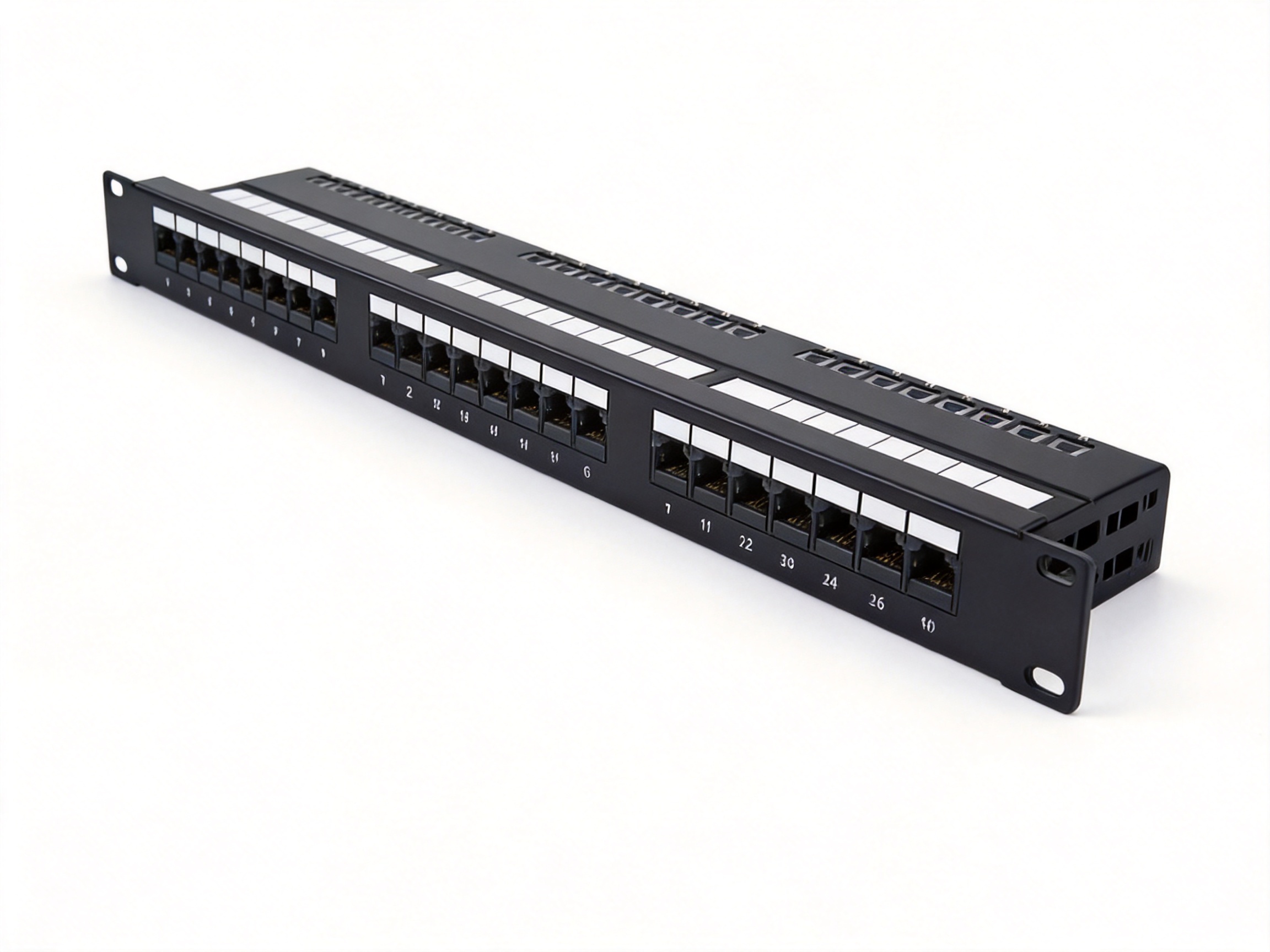
The 90-degree design is one of the important practical features of this patch panel. In crowded racks, cable bending, rear clearance, and airflow management all matter. A carefully arranged 90-degree termination structure can guide cables in a controlled direction and reduce chaotic cable buildup behind the panel. This helps installers maintain proper cable bend radius, reduce stress at the termination point, and create a cleaner cabinet layout.
Compared with poorly designed patch panels that leave horizontal cables unsupported or sharply bent, this product includes a rear cable manager that guides cables effectively toward the termination area. Proper cable guidance helps maintain pair geometry and reduces the mechanical force placed on IDC contacts. For CAT6 systems, maintaining cable geometry is especially important because excessive untwisting, compression, or bending may degrade electrical performance.
A neat rear cable layout also improves future maintenance. When each cable can be traced, separated, and secured, technicians can identify connections faster and make changes with less risk of disturbing neighboring ports. In office networks, data centers, surveillance systems, and smart building projects, network changes are frequent. An organized patch panel structure reduces service time and lowers the chance of accidental disconnection.
Compact 1U High-Density Rack Installation
Rack space is valuable, especially in equipment rooms and communication cabinets where switches, optical distribution frames, power distribution units, cable managers, and other equipment must share limited space. The 1U design of the SMT-2030K24C6 provides 24 ports in a compact form factor. This allows network designers to achieve high port density without consuming excessive vertical rack space.
The panel is compatible with standard 19-inch equipment racks, cabinets, and wall-mounted frames. This compatibility simplifies project planning because installers can integrate the panel into widely used network infrastructure without special adapters. The sturdy mounting design also improves installation efficiency. When a patch panel is rigid, accurately sized, and easy to secure, technicians can complete installation faster and with better alignment.
In competitive comparison, low-cost patch panels sometimes use thinner metal frames, weak mounting ears, or poorly finished surfaces. These weaknesses can result in bending during installation, unstable port alignment, and reduced durability after repeated operation. This product uses a cold rolled steel bracket with plastic spraying, giving the structure better strength, surface protection, and professional appearance. The stable frame helps protect internal connection points and keeps the RJ45 ports aligned across the front face.
Clear Port Identification and Maintenance Convenience
The front side of the 24 ports is marked with labels for convenient port identification. This is a simple feature, but its value becomes obvious after installation. In a live network cabinet, technicians need to identify user points, switch connections, camera lines, access control devices, wireless access points, or voice ports quickly. Clear port labeling reduces confusion, improves maintenance speed, and supports better