Español
 عربى
عربى русский
Content
- 1 Product Overview
- 2 Key Product Specifications
- 3 Designed for High-Density Connection Points
- 4 Clean Appearance with Concealed Screws
- 5 Easy Installation and Disassembly
- 6 High-Strength PC Plastic for Durability
- 7 RoHS Compliance and Environmental Responsibility
- 8 Wide Operating Temperature Range
- 9 Application Scenarios
- 10 Advantages Over Common Competitor Products
- 11 Manufacturing Strength Behind the Product
- 12 Advanced Injection Molding and Dimensional Stability
- 13 Quality Control from Design Source
- 14 Packaging and Storage Protection
- 15 Role in Copper and Fiber Structured Cabling Systems
- 16 Support for OEM and ODM Projects
- 17 Why Five Ports Matter in Modern Network Design
- 18 Installation Considerations
- 19 Maintenance and Long-Term Use
- 20 Commercial Value for Distributors and Contractors
- 21 Manufacturing Scale and Supply Reliability
- 22 Q&A Section
- 22.1 Q1: What is the main purpose of this five-port faceplate?
- 22.2 Q2: Why is the five-port design useful?
- 22.3 Q3: What makes the appearance different from traditional faceplates?
- 22.4 Q4: What material is used for the faceplate?
- 22.5 Q5: Is the product environmentally compliant?
- 22.6 Q6: What is the operating temperature range?
- 22.7 Q7: What accessories are included?
- 22.8 Q8: Can the product be used in both data and telephone applications?
- 22.9 Q9: Is customized packaging available?
- 22.10 Q10: What advantages does this product offer over many competitor faceplates?
- 23 Conclusion
- 24 References
- 25 Product: SMT-4304-120-5P Australia Faceplate Five Ports
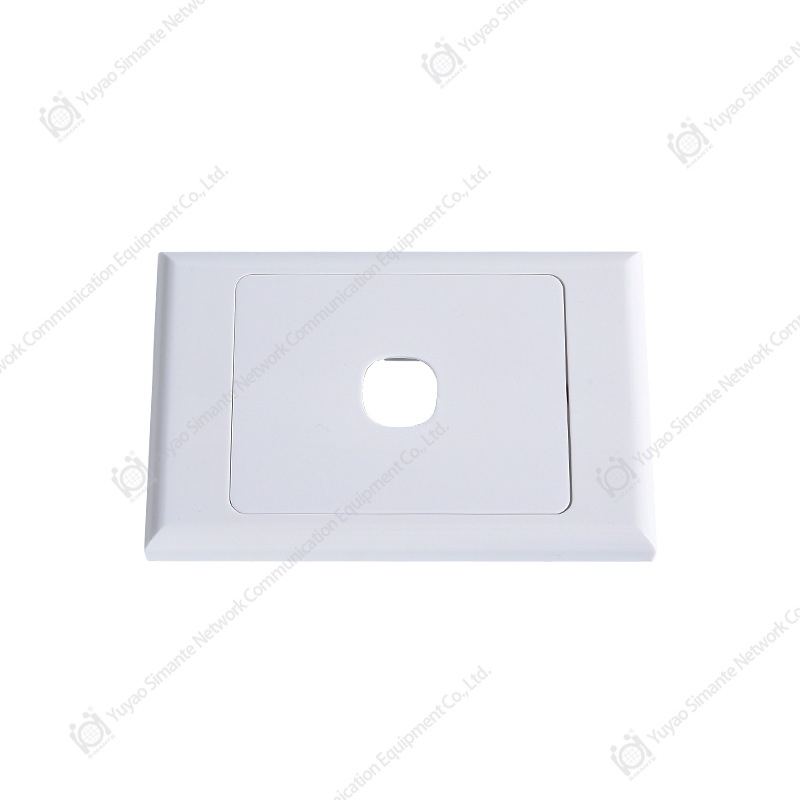
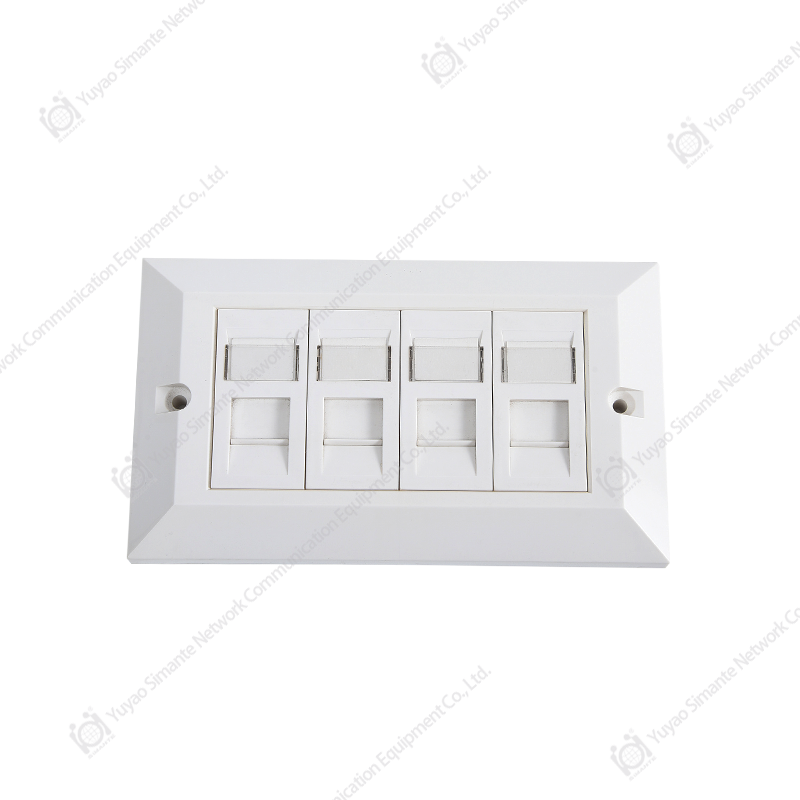
Modern structured cabling projects demand components that are practical, durable, clean in appearance, and easy to install in a wide variety of commercial, residential, and industrial environments. The SMT-4304-120-5P Australia Faceplate Five Ports is designed for these needs. As a wall-mounted five-port faceplate with an Australian-style interface, it provides a compact and organized termination point for information and telephone modules while supporting up to five connectors in one installation position.
SMT-4304-120-5P Australia Faceplate Five Ports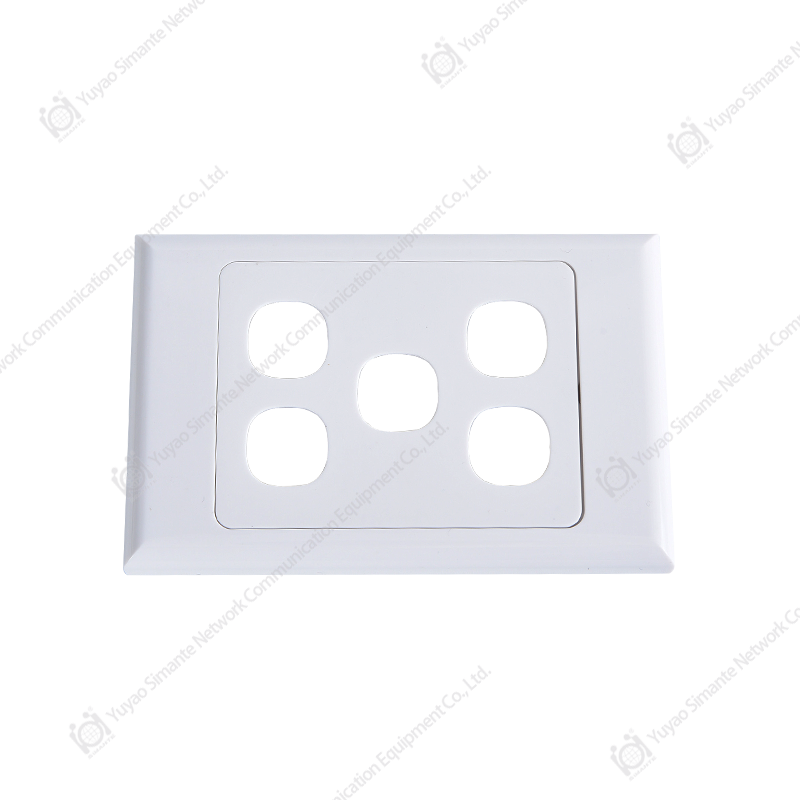
This product belongs to the 5 Port Faceplate category and is suitable for copper structured cabling systems, fiber-related network infrastructure, voice communication interfaces, data outlets, and integrated low-voltage cabling layouts. Its design focuses on usability, stability, visual cleanliness, and long-term reliability. With an embedded face frame, concealed surface screws, high-strength PC plastic construction, and compliance with RoHS environmental requirements, the faceplate is intended for projects where appearance and performance are both important.
The product is especially useful in environments where multiple connection points must be installed in a limited wall space. Instead of using multiple single-port or dual-port plates, this five-port configuration allows designers and installers to concentrate several services in one neat location. These services may include Ethernet data, telephone, voice, multimedia, security, automation, or other compatible information modules. The result is a tidier wall layout, reduced installation complexity, and improved space efficiency.
Product Overview
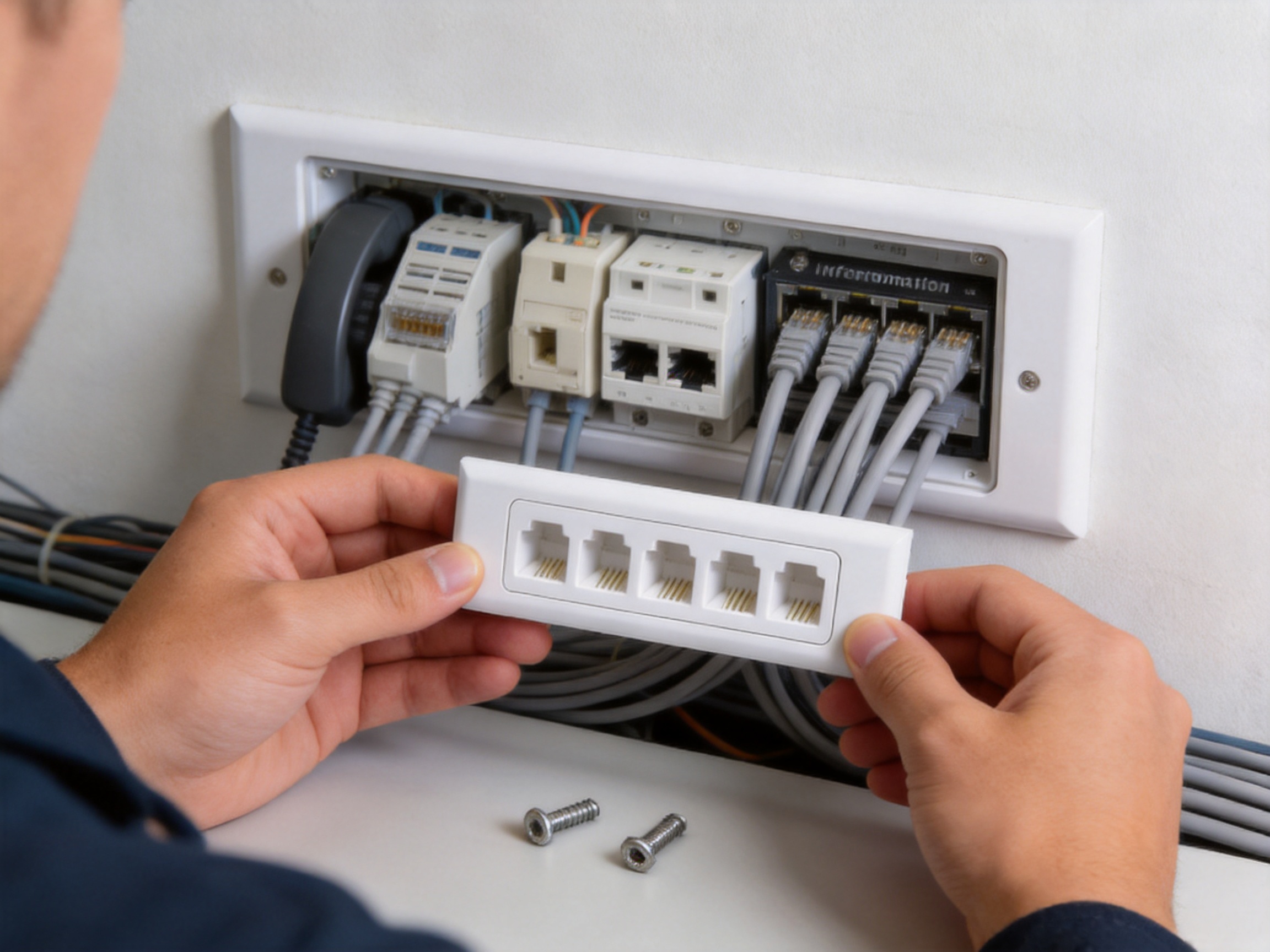
The SMT-4304-120-5P Australia Faceplate Five Ports is a wall-mounted faceplate designed for Australian-style interfaces. It can accommodate up to five compatible information or telephone modules. The product is supplied with two standard M3.5/M4 bolts, making it convenient for common installation conditions. Its embedded frame design hides visible screws from the surface, creating a clean and professional finish after installation.
In structured cabling, faceplates are often viewed as simple accessories, but they are highly visible and frequently touched parts of a network system. A poorly designed faceplate can create installation difficulty, loose module fitting, unattractive wall appearance, and maintenance inconvenience. This five-port faceplate addresses these issues through practical mechanical design and stable material selection.
The faceplate is made of high-strength PC plastic. Compared with ordinary low-grade plastic materials, PC plastic provides better impact resistance, collision resistance, and dimensional stability. This is important because wall outlets may be exposed to daily contact, accidental knocks, plug insertion, cable movement, and maintenance operations. A strong faceplate helps protect the modules inside and maintains a neat appearance over time.
Key Product Specifications
| Item | Description |
|---|---|
| Product Name | SMT-4304-120-5P Australia Faceplate Five Ports |
| Product Category | 5 Port Faceplate |
| Interface Style | Australian-style wall faceplate interface |
| Installation Type | Wall-mounted |
| Port Capacity | Up to 5 compatible connectors or modules |
| Suitable Modules | Information modules, telephone modules, and compatible network outlet modules |
| Standard Accessories | 2 M3.5/M4 bolts |
| Structure | Embedded face frame with no visible surface screws |
| Material | High-strength PC plastic |
| Environmental Compliance | Meets RoHS requirements |
| Operating Temperature | -25℃ to +70℃ |
| Storage Conditions | -5℃ to +30℃, relative humidity not more than 70%, no corrosive gases |
| Storage Period | Three years under proper storage conditions |
| Packaging | Special blister bag, cardboard box, accessories included, customer-specified packaging available |
Designed for High-Density Connection Points
One of the strongest advantages of this product is its five-port capacity. In many structured cabling projects, a wall location may need to support several services at the same time. For example, an office workstation may require two data ports, one voice port, one spare port, and one dedicated connection for equipment such as a printer, access control terminal, display system, or automation controller. A five-port faceplate gives installers the flexibility to organize these connections in one location.
Compared with a single-port or dual-port faceplate, a five-port model reduces the number of wall plates needed. This can simplify wall planning, lower installation time, and create a more unified appearance. In environments such as offices, training rooms, control rooms, hotels, apartments, laboratories, retail spaces, and smart home installations, connection density can become a major factor in layout efficiency. This product directly responds to that need.
The five-port design also helps future-proof the installation. Many network systems expand over time. A location that originally needs only two or three ports may later require additional network, voice, or control connections. By selecting a higher-capacity faceplate from the beginning, project planners can reserve extra positions for future modules and avoid unnecessary wall modifications.
Clean Appearance with Concealed Screws
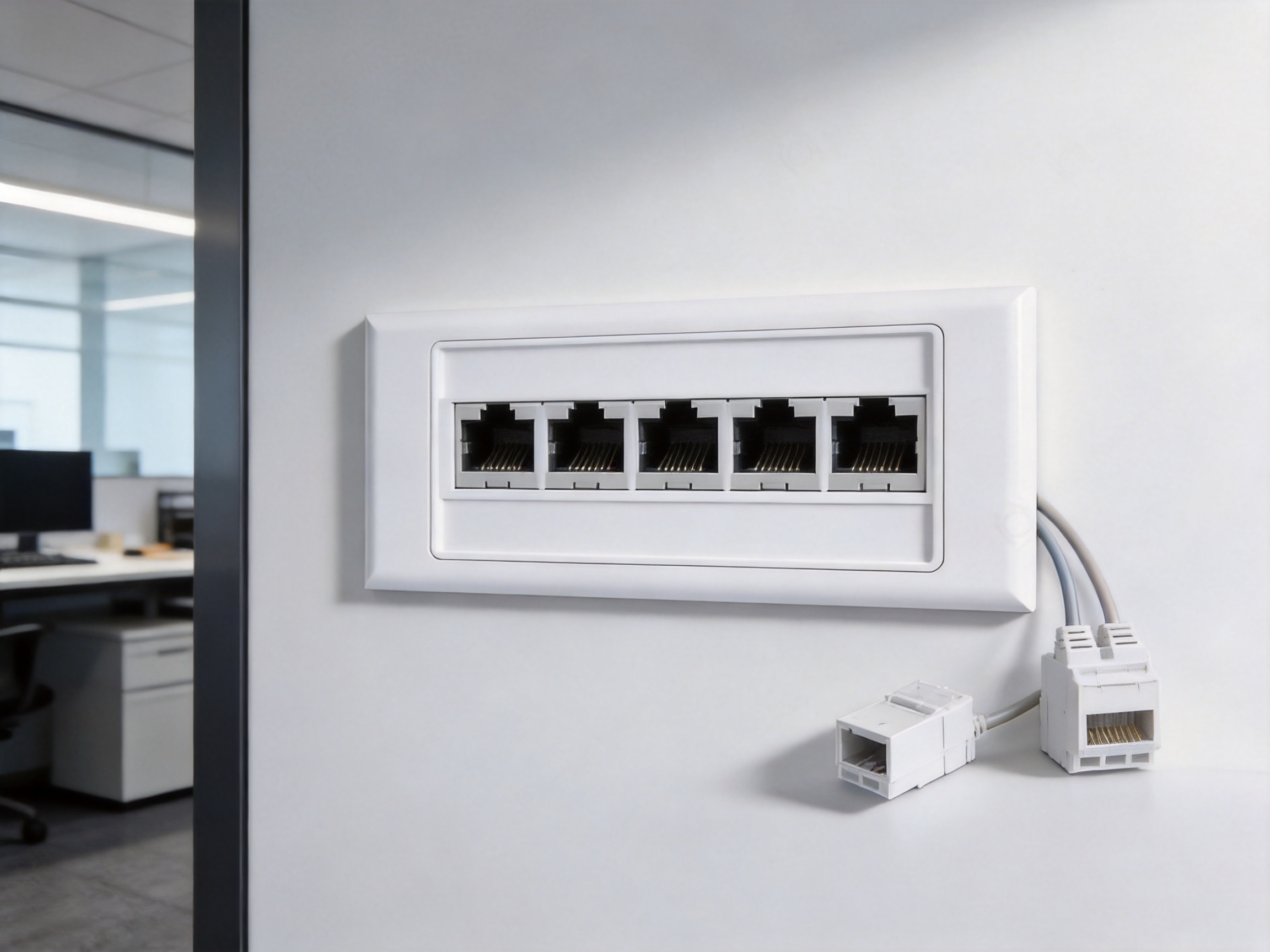
The embedded face frame is another important feature. The surface has no visible screws after installation, giving the outlet a simple and attractive look. In many modern interiors, visible screw heads can make a network outlet look less refined, especially in offices, hotels, meeting rooms, residential projects, retail spaces, and public buildings where design quality matters.
Concealed screw design improves not only appearance but also user experience. Without exposed screws on the surface, the front face looks smoother and cleaner. This makes the product more suitable for high-end environments where functional components must blend with interior decoration. It also helps reduce dust accumulation around screw recesses and gives the installation a more professional finish.
Many competing products rely on traditional visible-screw structures. While they may be functional, they often appear less polished after installation. The SMT-4304-120-5P faceplate provides a more modern solution by combining simple installation with a clean surface design. This balance of practicality and appearance is one reason it is suitable for projects that require both technical performance and architectural neatness.
Easy Installation and Disassembly
Installation efficiency is a critical concern for contractors and system integrators. A faceplate should not create unnecessary complexity at the final stage of cabling work. This product is designed for easy installation and disassembly. The embedded frame structure allows installers to complete the work conveniently while maintaining a hidden-screw appearance after assembly.
The inclusion of two standard M3.5/M4 bolts helps support typical mounting requirements. Installers do not need to search for special fasteners for common applications, which helps reduce preparation time. In large projects involving hundreds or thousands of outlets, small installation conveniences can produce significant labor savings.
Easy disassembly is equally important. Network outlets may need maintenance, module replacement, cable retermination, testing, or system upgrades. A faceplate that can be removed and reinstalled without excessive effort helps reduce downtime and protects the wall surface from unnecessary damage. The product’s practical construction supports these routine service needs.
High-Strength PC Plastic for Durability
The faceplate uses high-strength PC plastic, which is an important material choice. PC plastic is known for good mechanical strength, impact resistance, and dimensional stability. For wall-mounted network components, these properties are highly valuable because the product may be exposed to repeated contact, plug insertion forces, accidental impact, or cable movement.
Some lower-cost faceplates on the market may use materials that are more prone to deformation, brittleness, or surface damage. When a faceplate deforms, the module fit may become unstable, gaps may appear, and the overall appearance may decline. A stronger PC plastic body helps the product maintain its shape and function over a longer service period.
Impact resistance is especially useful in busy environments such as offices, schools, workshops, retail areas, warehouses, hospitals, and public buildings. Wall outlets can be struck by furniture, cleaning equipment, carts, or user activity. A faceplate with better anti-collision performance helps reduce replacement frequency and supports lower long-term maintenance costs.
The material also contributes to a stable surface appearance. A simple and beautiful surface is not only about initial design; it also depends on the product’s ability to resist everyday wear. By using high-strength PC plastic, the faceplate supports both mechanical performance and visual durability.
RoHS Compliance and Environmental Responsibility
The product meets RoHS environmental requirements. RoHS compliance is increasingly important in global supply chains, especially for network communication equipment, building infrastructure, and electrical accessories. It indicates that the product is designed with restrictions on certain hazardous substances in mind, helping customers meet environmental and regulatory expectations.
For contractors, distributors, and project owners, RoHS compliance can simplify procurement decisions. Many public, commercial, and international projects require materials that meet recognized environmental standards. By providing a faceplate that meets RoHS requirements, the manufacturer supports customers who need safer and more responsible product choices.
Environmental responsibility is not limited to material compliance. Durable products can also reduce waste by lowering replacement frequency. A strong faceplate that resists impact and deformation can remain in service longer, reducing the need for frequent disposal and reinstallation. This durability contributes to more sustainable infrastructure planning.
Wide Operating Temperature Range
The faceplate is designed for environmental performance within a temperature range of -25℃ to +70℃. This wide range supports use in many different conditions, including ordinary indoor spaces, equipment rooms, commercial buildings, and regions with significant temperature variation. While structured cabling outlets are often installed indoors, they may still be exposed to heat from equipment, seasonal temperature changes, or non-climate-controlled areas.
A product that maintains performance across a broad temperature range gives project designers greater confidence. Temperature-related deformation, brittleness, or instability can affect both appearance and module retention. The specified operating temperature range demonstrates attention to real-world application environments.
Compared with products that have unclear or narrow environmental specifications, this faceplate provides a more reliable choice for professional cabling projects. Clear environmental performance data helps installers and purchasers evaluate suitability before deployment.
Application Scenarios
The SMT-4304-120-5P Australia Faceplate Five Ports can be used in a wide variety of low-voltage and structured cabling applications. Its Australian-style interface and multi-port layout make it particularly suitable for projects where neat wall termination and high connection density are required.
In office buildings, the faceplate can serve workstations, conference rooms, reception areas, open-plan offices, and executive rooms. It allows several data and voice points to be installed together, supporting computers, IP phones, printers, conference devices, access points, and other networked equipment.
In residential and smart home projects, the faceplate can be used for network, telephone, automation, IPTV, and control connections. As homes become increasingly connected, a single wall point may need multiple services. A five-port plate helps maintain order and avoids scattered outlets.
In hotels and serviced apartments, clean appearance is especially important. Guest rooms, business centers, and management offices require reliable connectivity without compromising interior design. The concealed-screw surface and simple style make this product suitable for such environments.
In education and training facilities, the faceplate can be installed in classrooms, computer labs, lecture halls, and administrative offices. The high-strength PC plastic body helps withstand frequent use in active environments.
In industrial offices and control rooms, the faceplate can support networked terminals, telephones, monitoring equipment, and automation interfaces. Its impact-resistant structure and broad operating temperature range provide additional confidence in demanding spaces.
Advantages Over Common Competitor Products
This five-port faceplate offers several advantages over many common alternatives. The first is port density. Many standard faceplates provide one, two, or four ports. A five-port design offers additional capacity without requiring another wall plate. This is valuable when wall space is limited or when multiple services must be grouped together.
The second advantage is its concealed-screw appearance. Traditional faceplates with visible screws are functional but may not meet higher design expectations. The embedded frame structure provides a more refined surface, helping the product compete effectively in projects where aesthetics matter.
The third advantage is material quality. High-strength PC plastic provides better resistance to collision, impact, and deformation than many low-grade plastics. This can reduce damage during installation, use, and maintenance. It also supports a longer service life, which is important for both end users and project owners.
The fourth advantage is practical installation. The product is designed for easy installation and disassembly, and it includes standard bolts. This saves time during deployment and makes later maintenance more convenient. For contractors, a product that installs efficiently can help improve project scheduling and reduce labor pressure.
The fifth advantage is compliance and environmental performance. RoHS compliance and a specified temperature range provide clearer assurance for buyers. Products without such specifications may create uncertainty in regulated or demanding projects.
Finally, the product benefits from strong manufacturing support. It is produced by a company with extensive experience in network cabling solutions and optical fiber products, supported by engineering capability, production scale, injection molding resources, automated equipment, testing attention, and OEM/ODM service experience. This manufacturing background helps ensure consistency from design to mass production.
Manufacturing Strength Behind the Product
Yuyao Simante Network Communication Equipment Co., Ltd. is a professional manufacturer of network cabling solutions and optical fiber products, integrating design, development, sales, and service. With nearly 20 years of industry service, the company has developed experience in structured cabling components and understands the needs of distributors, contractors, system integrators, and OEM customers.
The company’s main product categories include keystone jacks, patch panels, wall faceplates, data sockets, and related network communication components. These products are widely used in structured cabling, network communication, smart home systems, automation equipment, and other fields. This broad product background is important because faceplates are not isolated accessories; they must work with modules, data outlets, cabling standards, installation methods, and project requirements.
The company has more than 10 engineers and over 30 full-time technical personnel. This technical team supports product development, design improvement, quality control, and product updates. For a faceplate product, engineering attention may involve dimensional accuracy, module compatibility, material selection, assembly structure, surface finish, packaging protection, and installation convenience.
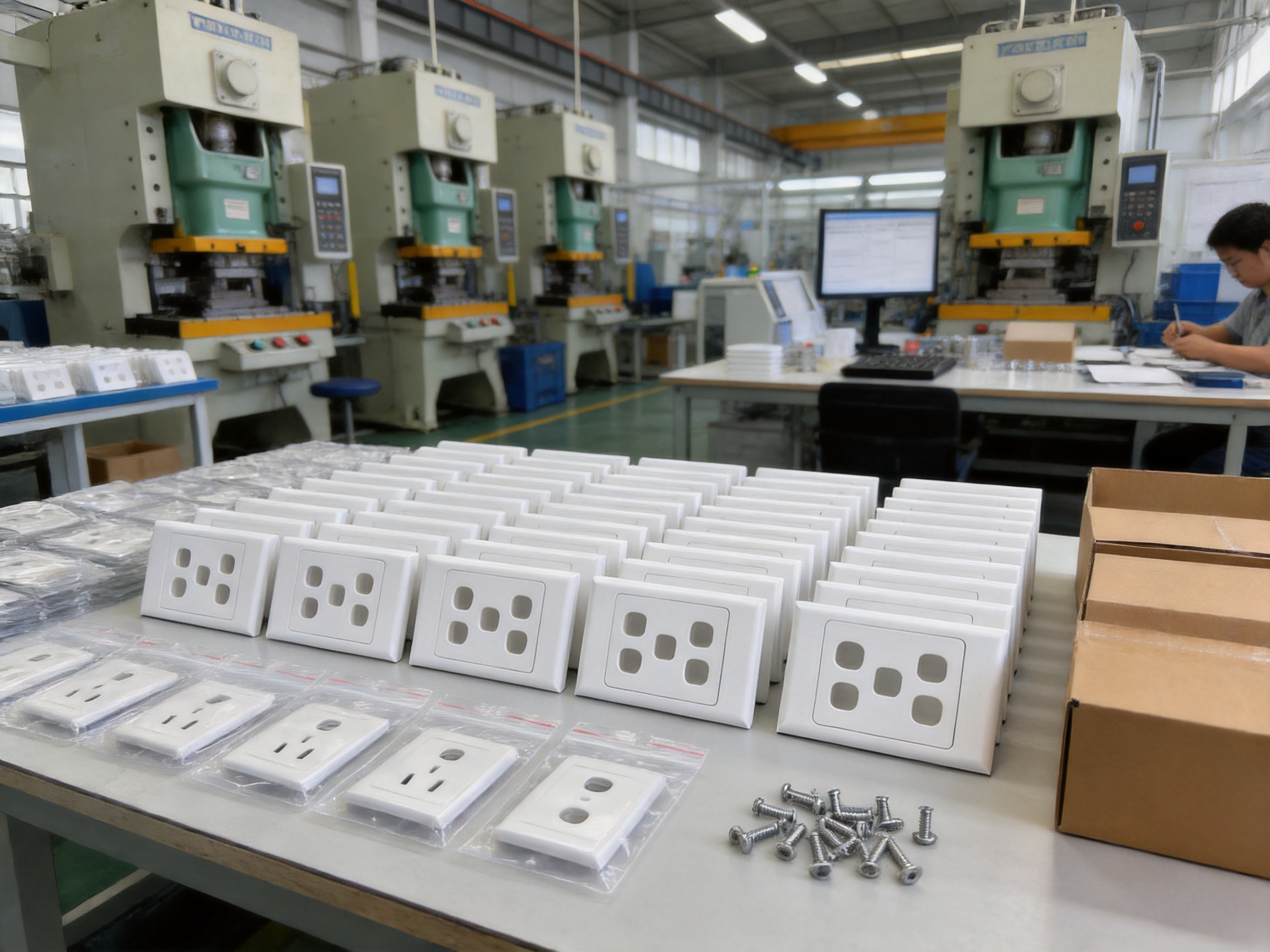
Manufacturing capability is another important strength. The factory has 10 regular and customization production lines, 10 fully automatic injection molding machines, 20 semi-automatic injection molding machines, and 8 sets of automatic installation machines. This equipment base supports stable production, customization capability, and consistent output. The company maintains a stable annual output of more than 9 million units, demonstrating scale and production organization.
Advanced Injection Molding and Dimensional Stability
Faceplate quality depends heavily on injection molding precision. Even small dimensional deviations can affect module fitting, frame alignment, surface flatness, and installation feel. A faceplate must hold modules securely while fitting the wall box or mounting structure correctly. Poor molding can result in loose ports, uneven surfaces, or visible gaps.
The company’s injection molding resources support stable production of plastic network components. Fully automatic and semi-automatic injection molding machines allow production capacity to be matched with order size and product complexity. Automatic processes help improve repeatability, while technical personnel can monitor parameters such as temperature, pressure, mold condition, cooling time, and material handling.
For the SMT-4304-120-5P faceplate, stable molding is especially important because the product has five module positions. Each port must maintain proper geometry so compatible modules can be installed cleanly. The embedded face frame must also align correctly to ensure no visible surface screws and a neat appearance after installation.
High-quality molding contributes to the product’s surface simplicity and beauty. A clean faceplate surface depends on a well-designed mold, controlled material flow, proper finishing, and stable production conditions. The result is a product that looks professional and performs reliably in the field.
Quality Control from Design Source
The company emphasizes quality stability from the design source. This approach is important because many product problems cannot be fully solved by final inspection alone. If the structure, material, or mold design is weak, defects may appear repeatedly during production or use. By focusing on design quality at the beginning, the company improves long-term product reliability.
For a five-port faceplate, design quality includes several details. The face frame must be easy to install and remove, yet stable after assembly. The port openings must be compatible with intended information and telephone modules. The screw and bolt positions must match installation requirements. The plastic material must resist impact and deformation. The surface must remain clean and visually appealing.
Quality control may also include appearance inspection, dimensional checking, assembly testing, packaging inspection, and performance-related checks. Customers in high-end markets often require consistent product quality, and the company’s attention to testing helps meet these expectations.
Because the manufacturer serves export markets including Europe, Australia, Africa, the Middle East, and Southeast Asia, product consistency is important across different project requirements and customer expectations. Export experience also supports familiarity with international procurement needs, packaging expectations, and documentation requirements.
Packaging and Storage Protection
Packaging is an important part of product quality. A well-designed faceplate can still be damaged if packaging is inadequate during transportation or storage. This product is placed into a special blister bag and then into a cardboard box. Product accessories are included at the same time, and a label indicating the product model and quantity is pasted on the carton. This helps support organized inventory, distribution, and project-site management.
Proper packaging helps protect the surface from scratches, dust, and impact during handling. For a visible wall component, surface condition matters. Installers and end users expect the product to arrive clean and ready for installation. Blister packaging also helps separate the product from accessories or other items that may cause abrasion.
The packaged products should be stored in a warehouse where the ambient temperature is -5℃ to +30℃, relative humidity is not more than 70%, and the surrounding air contains no acid, alkali, or other corrosive gases. Under these proper storage conditions, the storage period is three years.
Clear storage requirements are useful for distributors, wholesalers, contractors, and project warehouses. They help maintain product quality before installation. The availability of customer-specified packaging is also valuable for OEM, ODM, and brand distribution projects. Different markets may require different labels, packaging quantities, or carton marks, and customization helps support these needs.
Role in Copper and Fiber Structured Cabling Systems
Although the faceplate itself is a physical mounting accessory, it plays a meaningful role in both copper and fiber structured cabling environments. In copper systems, it can house compatible information modules such as network data jacks and telephone modules. In fiber-related or mixed infrastructure environments, wall outlets may be used as part of a broader cabling architecture that includes copper data, fiber backbone, and terminal connection points.
Structured cabling systems rely on organization. Cables, patch panels, keystone jacks, data sockets, wall plates, and management components must work together. A neat faceplate provides the final user-facing interface. It transforms hidden cabling infrastructure into accessible connection points for daily operation.
In professional installations, the wall outlet is often the only part of the cabling system that ordinary users see. This makes faceplate quality important for user perception. A clean, solid, well-aligned outlet communicates professionalism. A loose or unattractive outlet can make even a technically strong cabling system appear poorly installed. The SMT-4304-120-5P faceplate helps support a professional final impression.
Support for OEM and ODM Projects
Many distributors and system brands require customized products to match their market positioning. The manufacturer has experience undertaking OEM and ODM projects, making this faceplate suitable for customers who need private labeling, customer-specified packaging, or project-based modifications.
OEM and ODM capability is supported by the company’s engineering team, production lines, injection molding capacity, and product development experience. For faceplate products, customization may involve packaging design, label content, color requirements, material preferences, module compatibility adjustments, or other project specifications. The ability to respond to such needs gives customers greater flexibility.
For wholesalers and network solution providers, working with a manufacturer that can supply related products such as keystone jacks, patch panels, wall faceplates, and data sockets can simplify sourcing. A unified supplier can help maintain consistent quality, appearance, compatibility, and packaging across a product range.
Why Five Ports Matter in Modern Network Design
The demand for network connectivity continues to grow. Workstations may use multiple devices, meeting rooms may require several AV and network interfaces, and smart homes may include data, voice, security, entertainment, and automation connections. In this environment, a faceplate with only one or two ports may quickly become insufficient.
A five-port wall plate provides a practical middle ground between compact design and high capacity. It offers more flexibility than standard low-port options while still maintaining a clean wall-mounted format. This makes it valuable for projects where connection demand is high but wall space must remain organized.
Additional port capacity can also improve planning efficiency. Instead of installing multiple plates in a row, designers can consolidate ports into one faceplate. This can make cable labeling easier, reduce visual clutter, and simplify user access. When paired with proper cable management behind the wall, a five-port faceplate can become a clean and functional service point.
Installation Considerations
To achieve the best installation result, installers should confirm compatibility with the intended information or telephone modules before installation. The faceplate is designed for Australian-style interface applications and can support up to five connectors, but module selection should match project specifications.
Installers should ensure the wall box or mounting position is suitable and that cable bend radius and termination space are properly managed behind the faceplate. Overcrowding behind the plate should be avoided, especially when using all five ports. Good cable organization helps prevent stress on modules and improves long-term reliability.
The supplied M3.5/M4 bolts should be used according to the installation condition. The embedded face frame should be assembled carefully to maintain the clean, screwless surface appearance. During disassembly, installers should avoid using excessive force that could scratch the surface or damage clips.
After installation, each module should be tested according to the project’s cabling requirements. For data applications, this may include continuity testing, wire map checking, or performance testing depending on the cable category and project standard. For telephone or other low-voltage modules, appropriate functional checks should be performed.
Maintenance and Long-Term Use
The product is designed for convenient disassembly, which supports maintenance and future changes. If a module needs replacement, an additional port needs activation, or a cable requires inspection, the faceplate can be removed and reinstalled. This is especially useful in commercial buildings where network layouts change over time.
To maintain appearance, the surface can be cleaned with appropriate non-corrosive cleaning methods. Harsh chemicals should be avoided, especially substances that may affect plastic surfaces. The product should not be exposed to acid, alkali, or corrosive gases during storage, and similar care is beneficial during use.
Because the faceplate is made from high-strength PC plastic, it is resistant to common impact and deformation risks. However, like all installed components, it should be protected from excessive force, improper tools, or unsuitable environmental exposure. Correct installation and normal use will help preserve its function and appearance.
Commercial Value for Distributors and Contractors
For distributors, the product offers a practical addition to structured cabling portfolios. It addresses demand for Australian-style wall outlets, multi-port layouts, and clean hidden-screw appearance. Its combination of high port capacity, PC plastic construction, RoHS compliance, and bulk packaging suitability makes it attractive for stock and project supply.
For contractors, the product supports efficient installation and professional project delivery. A wall plate that is easy to install, easy to disassemble, and visually clean helps contractors reduce site issues. The five-port capacity also helps meet modern connectivity requirements without increasing wall plate quantity.
For project owners, the product provides long-term value through durability, neat appearance, and connection flexibility. It can reduce the need for future wall modifications and support changing network requirements. In buildings where technology needs evolve, having spare port positions can be a practical advantage.
Manufacturing Scale and Supply Reliability
Supply reliability is an important factor in structured cabling projects. Delays in small components such as faceplates can affect final installation schedules. A manufacturer with stable production capacity and organized packaging can better support project timelines.
The company’s annual output of more than 9 million units reflects strong production capability. Its combination of regular and customization production lines helps serve both standard product orders and specialized customer requirements. Automatic and semi-automatic equipment provides flexibility, while technical personnel support production control and product improvement.
For customers who need repeated orders, consistent quality and stable supply are essential. The company’s long-term export experience and production base help support continuous cooperation. This is especially important for distributors serving multiple regions or contractors managing phased construction projects.
Q&A Section
Q1: What is the main purpose of this five-port faceplate?
The main purpose is to provide a neat wall-mounted termination point for up to five compatible information or telephone modules. It is suitable for structured cabling, network communication, voice systems, and integrated low-voltage applications.
Q2: Why is the five-port design useful?
The five-port design allows multiple services to be grouped in one wall location. It saves wall space, reduces visual clutter, and provides extra capacity for future expansion compared with single-port or dual-port faceplates.
Q3: What makes the appearance different from traditional faceplates?
The product uses an embedded face frame, so no screws are visible on the surface after installation. This creates a cleaner and more modern appearance than traditional exposed-screw designs.
Q4: What material is used for the faceplate?
The faceplate is made of high-strength PC plastic. This material provides anti-collision performance, impact resistance, and resistance to deformation, helping the product remain stable and attractive during long-term use.
Q5: Is the product environmentally compliant?
Yes. The product meets RoHS environmental requirements, supporting use in projects where restricted substance compliance is important.
Q6: What is the operating temperature range?
The specified environmental performance temperature range is -25℃ to +70℃. This broad range supports use in many indoor and controlled installation environments.
Q7: What accessories are included?
The product is supplied with two standard M3.5/M4 bolts, supporting common installation requirements.
Q8: Can the product be used in both data and telephone applications?
Yes. It is suitable for information and telephone modules with an Australian-style interface, depending on module compatibility and project requirements.
Q9: Is customized packaging available?
Yes. Customer-specified packaging is supported, which is useful for OEM, ODM, distribution, and project-based requirements.
Q10: What advantages does this product offer over many competitor faceplates?
Its advantages include five-port capacity, concealed-screw design, high-strength PC plastic construction, RoHS compliance, broad temperature performance, easy installation and disassembly, and support from a manufacturer with strong engineering and production capabilities.
Conclusion
The SMT-4304-120-5P Australia Faceplate Five Ports is a practical, durable, and visually refined solution for modern structured cabling projects. Its five-port capacity helps meet growing connectivity demands while reducing wall clutter. Its embedded face frame hides surface screws and creates a clean appearance suitable for professional interiors. Its high-strength PC plastic body improves impact resistance and deformation resistance, supporting reliable long-term use.
Beyond the product itself, the manufacturing strength behind it adds significant value. Yuyao Simante Network Communication Equipment Co., Ltd. brings nearly 20 years of experience in network cabling solutions and optical fiber products, supported by engineering resources, technical personnel, injection molding equipment, automated installation machines, production lines, and export experience. This background helps ensure stable quality, supply capability, and support for OEM and ODM projects.
For distributors, contractors, system integrators, and project owners seeking an Australian-style five-port wall faceplate, this product offers a balanced combination of capacity, appearance, durability, compliance, and manufacturing reliability. It is not merely a wall accessory; it is a visible and functional part of a complete cabling system, designed to support organized connectivity in offices, homes, hotels, education facilities, control rooms, and many other environments.
References
ISO/IEC 11801, Information Technology: Generic Cabling for Customer Premises.
ANSI/TIA-568, Commercial Building Telecommunications Cabling Standard.
IEC 60603 Series, Connectors for Electronic Equipment.
RoHS Directive, Restriction of Hazardous Substances in Electrical and Electronic Equipment.
BICSI Telecommunications Distribution Methods Manual, Structured Cabling Design and Installation Guidance.