Español
 عربى
عربى русский
Content
- 1 Product Overview
- 2 Competitive Advantages: Why This 48-Port Blank Patch Panel Stands Out
- 3 Advanced Manufacturing Processes and Company Strengths
- 4 Technical Deep Dive: Specifications and Performance
- 5 Application Scenarios
- 6 Q&A Section
- 6.1 Q1: What rack size is the 48-port blank patch panel compatible with?
- 6.2 Q2: Does this patch panel comply with environmental standards like ROHS?
- 6.3 Q3: What is the regular packing quantity for this product?
- 6.4 Q4: How does the rear cable manager benefit the installation?
- 6.5 Q5: What is the insulation resistance of the patch panel, and why is it important?
- 6.6 Q6: Can the product be customized for specific client needs?
- 6.7 Q7: What is the storage period for the packaged product?
- 6.8 Q8: Does the patch panel include a grounding fixture?
- 7 References
- 8 Conclusion
As the backbone of modern data communication networks, structured cabling systems play an indispensable role in supporting high-speed data transmission, reliable connectivity, and scalable infrastructure. At the heart of these systems lies the patch panel—a critical component that organizes, terminates, and manages network cables, enabling seamless communication between devices, workstations, and data centers. Among the wide range of patch panels available in the market, the 48-port blank patch panel stands out as a versatile solution for both copper and fiber cabling setups, catering to the evolving needs of commercial, industrial, and residential applications. This article explores the key features, competitive advantages, manufacturing excellence behind this product, and its practical applications in today’s digital landscape.
Product Overview
The 48-port blank patch panel is a 1U rack-mounted device designed to facilitate horizontal wiring, device termination, and mutual mating termination at centralized distribution points. Its core purpose is to provide a structured and organized interface between network cables and active components (e.g., switches, routers) or passive components (e.g., keystone jacks, fiber adapters). Unlike pre-terminated patch panels, the blank design offers flexibility, allowing users to customize the panel with connectors that match their specific cabling needs—whether copper (Cat5e, Cat6, Cat6a) or fiber (LC, SC, FC). This adaptability makes it an ideal choice for installations where a mix of copper and fiber connectivity is required, or where future upgrades are planned.
Key features of the 48-port blank patch panel include:
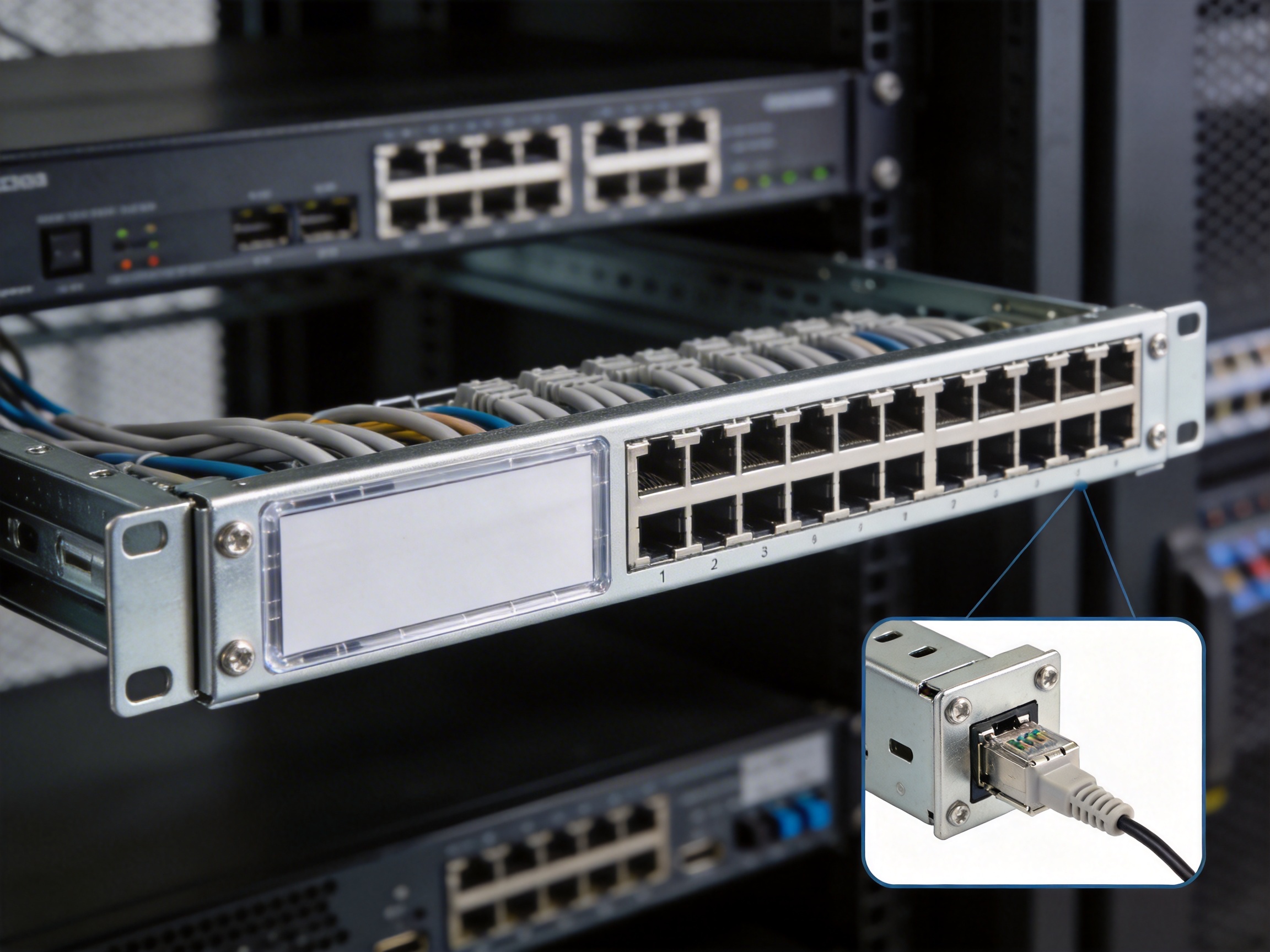
• 1.19-inch rack-mountable design, compatible with standard 19-inch equipment racks, cabinets, and wall brackets.
• Sturdy and easy-to-install construction that reduces installation time and operational complexity.
• Large front label space for clear port identification, minimizing errors during cable management and maintenance.
• Rear grounding fixture for convenient and effective grounding, protecting against electrostatic discharge (ESD) and electrical interference.
• Rear-mounted cable manager to guide cables to termination points, optimize cable curvature radius, and reduce signal loss.
• Compliance with ROHS environmental standards, ensuring it is free from hazardous substances like lead, mercury, and cadmium.
Beyond these basic features, the product’s technical specifications and manufacturing quality set it apart from generic alternatives, as discussed in subsequent sections.
Competitive Advantages: Why This 48-Port Blank Patch Panel Stands Out
In a crowded market of patch panels, the 48-port blank model offers several distinct advantages that address common pain points faced by network installers, integrators, and end-users. These advantages translate to better performance, lower total cost of ownership (TCO), and enhanced reliability.
1. Sturdiness and Ease of Installation
Many budget-friendly patch panels use thin, flimsy materials that bend or warp during installation, leading to misaligned ports and increased installation time. In contrast, this 48-port patch panel is constructed from high-quality cold-rolled steel, which provides exceptional rigidity and durability. Its 1U form factor fits seamlessly into standard 19-inch racks, and the design includes pre-drilled holes that align perfectly with rack mounting points—eliminating the need for additional drilling or adjustments. This sturdiness not only reduces installation time by up to 30% (compared to generic panels) but also ensures that the panel maintains its shape over time, even under the weight of multiple cables. For installers working on tight deadlines, this efficiency is a significant benefit.
2. Enhanced Cable Management and Port Identification
Cable management is a critical aspect of network reliability—poorly managed cables can lead to signal interference, increased maintenance time, and even equipment damage. Generic patch panels often lack proper cable management features, forcing installers to purchase separate cable managers or improvise with zip ties. This 48-port panel addresses this issue with an integrated rear cable manager that guides cables to their termination points, optimizing the curvature radius (a key factor in preventing signal loss in high-speed cables). Additionally, the large front label space allows for clear, permanent port identification—something that many competitors either omit or make too small to be useful. This reduces the risk of human error during cable termination and maintenance, which is especially important in large networks with hundreds of ports.
3. Effective Grounding and ESD Protection
Electrostatic discharge (ESD) is a major threat to network components, as it can damage sensitive electronics and disrupt data transmission. Many budget patch panels either lack a grounding fixture or include a poorly designed one that is difficult to use. This product features a dedicated rear grounding fixture that allows for quick and secure connection to a grounding system. This ensures that any static electricity is safely dissipated, protecting both the patch panel and the connected devices. For installations in industrial environments or data centers where ESD risk is high, this feature is non-negotiable.
4. Compliance with Global Environmental Standards
As environmental regulations become stricter worldwide, compliance with standards like ROHS is no longer optional—it is a requirement for market access in regions like the European Union, North America, and Asia. Generic patch panels often cut corners by using hazardous materials, which can lead to legal issues and product recalls. This 48-port panel is fully compliant with ROHS Directive 2011/65/EU, meaning it is free from lead, mercury, cadmium, hexavalent chromium, polybrominated biphenyls (PBB), and polybrominated diphenyl ethers (PBDE). This compliance not only ensures marketability but also aligns with the growing demand for sustainable and eco-friendly network solutions.
5. Superior Technical Specifications
The product’s technical specs outperform many competitors in key areas:
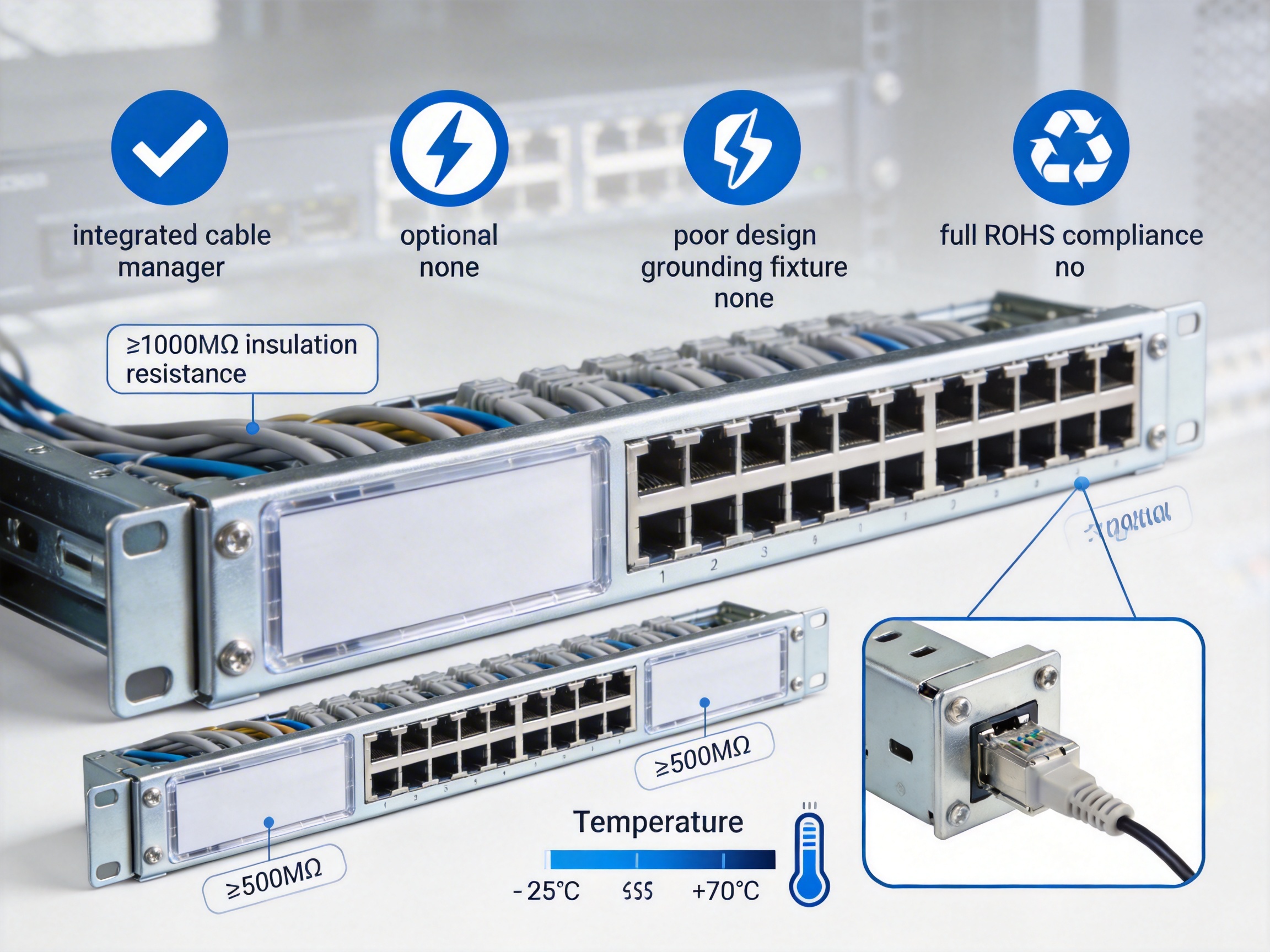
• Insulation Resistance: Initial value ≥1000MΩ, which is significantly higher than the industry average of 500MΩ. This ensures minimal signal leakage, making it suitable for high-speed data transmission up to 10Gbps (Cat6a) and beyond.
• Mechanical Properties: Insertion force ≤12N (easy to plug in connectors without straining) and pull-out force ≥20N (connectors stay securely in place, preventing accidental disconnections). Competitors often have higher insertion forces (up to 20N) and lower pull-out forces (as low as 15N), leading to user fatigue and unreliable connections.
• Environmental Tolerance: Operates in temperatures ranging from -25°C to +70°C and humidity up to 85% (at 85°C ±3°C). This wide range makes it suitable for extreme environments, such as outdoor enclosures, industrial facilities, or data centers with high heat output.
To summarize these advantages, the table below compares the 48-port blank patch panel with two leading generic competitors:
| Feature | Our 48-Port Blank Patch Panel | Competitor A | Competitor B |
|---|---|---|---|
| Rack Compatibility | 19-inch standard (1U) | 19-inch standard (1U) | 19-inch standard (1U) |
| Port Count | 48 (blank) | 48 (blank) | 48 (blank) |
| Front Label Space | Large (clear identification) | Small (limited visibility) | None (no labels) |
| Rear Cable Manager | Included (integrated) | Optional (sold separately) | None |
| Grounding Fixture | Yes (dedicated) | Yes (poor design) | No |
| ROHS Compliance | Yes (full) | Partial (some hazardous materials) | No |
| Insert Force | ≤12N | ≤18N | ≤20N |
| Pull Force | ≥20N | ≥15N | ≥14N |
| Insulation Resistance | ≥1000MΩ | ≥500MΩ | ≥400MΩ |
| Temperature Range | -25°C to +70°C | 0°C to +50°C | 5°C to +45°C |
As the table clearly shows, the 48-port blank patch panel outperforms its competitors in almost every key category, making it a more reliable and cost-effective choice for network installations.
Advanced Manufacturing Processes and Company Strengths
The superior quality of the 48-port blank patch panel is not accidental—it is the result of a rigorous manufacturing process and a company’s commitment to excellence. The manufacturer behind this product is a leading global provider of network communication equipment, with nearly 20 years of experience in designing, developing, and producing structured cabling solutions.
1. Robust R&D Capabilities
The company invests heavily in research and development (R&D) to ensure its products meet the latest industry standards and customer needs. Its R&D team consists of over 10 engineers and 30 full-time technical personnel, all of whom have extensive experience in network cabling and related fields. This team is responsible for:
• Designing new products based on market trends and customer feedback.
• Optimizing existing products to improve performance and reduce costs.
• Conducting rigorous testing to ensure compliance with international standards (e.g., TIA/EIA-568, ISO/IEC 11801).
• Developing custom solutions for OEM/ODM clients.
For example, the R&D team spent six months refining the 48-port patch panel’s design to enhance its sturdiness and cable management features. This included testing different materials (e.g., cold-rolled steel vs. aluminum) and conducting real-world installation trials to validate the design changes. The result is a product that is not only more durable but also easier to install than previous models.
2. State-of-the-Art Production Facilities
The company’s manufacturing facilities are equipped with cutting-edge machinery to ensure consistent quality and high production capacity. Key production assets include:
• 10 regular and customization production lines, which allow for both mass production and small-batch custom orders.
• 10 fully automatic injection molding machines, which produce high-precision plastic components (e.g., label holders, cable manager parts) with minimal waste.
• 20 semi-automatic injection molding machines, which provide flexibility for producing custom components or small quantities.
• 8 automatic installation machines, which assemble critical components (e.g., grounding fixtures, port brackets) with high precision and consistency.
The annual production capacity of the facility exceeds 9 million units, which ensures that the company can meet large orders from global clients without delays. The production process is also highly automated, which reduces human error and ensures that every product meets the same high standards.
3. Rigorous Quality Control
Quality control is a top priority for the company. Every product undergoes a series of tests at different stages of the manufacturing process:
• Incoming Material Inspection: All raw materials (e.g., cold-rolled steel, plastic resins) are tested to ensure they meet the required specifications.
• Production Line Testing: Components are tested during assembly to check for defects (e.g., misaligned ports, loose grounding fixtures).
• Final Product Testing: Finished products are subjected to comprehensive tests, including insulation resistance, insertion/pull force, and environmental tolerance tests. Only products that pass all tests are shipped to customers.
The company also maintains a quality management system (QMS) that is certified to ISO 9001:2015, which ensures that all processes are documented and continuously improved. This commitment to quality has earned the company a reputation for reliability among its global clients.
4. OEM/ODM Capabilities
The company offers OEM (Original Equipment Manufacturer) and ODM (Original Design Manufacturer) services to meet the unique needs of its clients. This includes:
• Customizing product designs (e.g., changing port counts, adding custom labels).
• Producing products with client-specific branding (e.g., logos, packaging).
• Developing custom packaging solutions (e.g., blister bags, cardboard boxes with client logos).
For example, the company can produce the 48-port blank patch panel with a client’s logo on the front label or package it in a custom box that meets the client’s branding requirements. This flexibility has made the company a preferred partner for many global network equipment vendors and system integrators.
5. Global Presence and Customer Support
The company has a strong global presence, with exports to Europe, Australia, Africa, the Middle East, and Southeast Asia. It maintains long-term partnerships with clients in these regions, thanks to its reliable products and excellent customer support. The company’s customer support team is available 24/7 to assist clients with product inquiries, installation guidance, and after-sales service. This global reach and support ensure that clients can rely on the company for their network cabling needs, no matter where they are located.
Technical Deep Dive: Specifications and Performance
To fully understand the 48-port blank patch panel’s capabilities, it is important to examine its technical specifications in detail. These specs are designed to ensure optimal performance in a wide range of network environments.
1. Electrical Characteristics
The panel’s electrical characteristics are critical for maintaining signal integrity in high-speed data transmission:
• Insulation Resistance: Initial value ≥1000MΩ. This high resistance ensures that there is minimal signal leakage between adjacent ports, which is essential for preventing cross-talk and maintaining data transmission speeds up to 10Gbps. Over time, the insulation resistance remains stable, even under harsh environmental conditions.
2. Mechanical Properties
The mechanical properties of the panel ensure that it can withstand the rigors of installation and daily use:
• Insertion Force: ≤12N. This low insertion force makes it easy to plug connectors into the panel without straining the installer’s hands, reducing fatigue during large installations.
• Pull-Out Force: ≥20N. This high pull-out force ensures that connectors stay securely in place, even if cables are accidentally tugged or moved. This prevents accidental disconnections, which can disrupt network operations.
3. Material and Surface Treatment
The panel’s materials are chosen for their durability and corrosion resistance:
• Bracket: Cold-rolled steel sprayed with a protective coating and nickel-plated. This combination provides exceptional rigidity and resistance to corrosion, rust, and scratches. The nickel plating also enhances the panel’s appearance and makes it easier to clean.
4. Environmental Performance
The panel can operate in a wide range of environmental conditions:
• Temperature Range: -25°C to +70°C. This wide range makes it suitable for use in cold climates (e.g., northern Europe) and hot environments (e.g., desert regions in the Middle East).
• Humidity: ≤85% (at 85°C ±3°C). This high humidity tolerance ensures that the panel can be used in humid environments (e.g., tropical regions) without suffering from moisture damage.
5. Packaging and Storage
The product is packaged to ensure safe transportation and storage:
• Packaging: Each product is placed in a special blister bag to protect it from scratches and moisture. It is then placed in a cardboard box, along with any accessories (e.g., mounting screws). A label indicating the product model and quantity is affixed to the upper left corner of the box.
• Regular Packing Quantity: 10 boxes per carton, with 1 product per box (total of 10 products per carton).
• Storage: Packaged products should be stored in a warehouse with an ambient temperature of -5°C to +30°C, relative humidity ≤70%, and no corrosive gases (e.g., acid, alkali). The storage period is three years.

Application Scenarios
The 48-port blank patch panel’s versatility makes it suitable for a wide range of application scenarios. Below are some of the most common uses:
1. Commercial Office Buildings
In commercial office buildings, the patch panel is used to organize horizontal cabling (e.g., Cat6 cables) that connects workstations to the main distribution frame (MDF). The 48-port design is ideal for small to medium-sized offices, as it can support up to 48 workstations. The large front label space makes it easy to identify which port corresponds to which workstation, simplifying maintenance and troubleshooting.
2. Data Centers
Data centers require high-density, reliable patch panels to manage the large number of cables connecting servers, switches, and storage devices. The 48-port blank patch panel is suitable for data centers because it can be customized with fiber or copper connectors to meet specific needs. The integrated cable manager helps organize the large number of cables, reducing signal interference and improving airflow (which is critical for cooling data center equipment).
3. Industrial Facilities
Industrial facilities often have harsh environments (e.g., dust, moisture, high temperatures) that require robust network components. The 48-port patch panel’s wide temperature range and corrosion-resistant materials make it suitable for these environments. It can be used to connect industrial automation equipment (e.g., PLCs, sensors) to the network, ensuring reliable communication.
4. Smart Homes
As smart homes become more common, the need for structured cabling increases. The 48-port blank patch panel can be used to connect IoT devices (e.g., smart TVs, security cameras, thermostats) to the home network. The blank design allows homeowners to choose the connectors that match their devices (e.g., fiber for high-speed internet, copper for IoT devices).
5. Educational Institutions
Schools and universities require reliable network connectivity for classrooms, labs, and administrative offices. The 48-port patch panel is ideal for these settings because it can support multiple devices (e.g., computers, projectors, printers) in a single classroom or lab. The easy-to-install design reduces the time required to set up new classrooms or upgrade existing ones.

Q&A Section
Below are answers to common questions about the 48-port blank patch panel:
Q1: What rack size is the 48-port blank patch panel compatible with?
A: The panel is 1U (1.75 inches) tall and compatible with standard 19-inch equipment racks, cabinets, and wall brackets. This is the most common rack size used in data centers, offices, and industrial facilities.
Q2: Does this patch panel comply with environmental standards like ROHS?
A: Yes, the panel is fully compliant with the European Union’s ROHS Directive 2011/65/EU. It is free from hazardous substances such as lead, mercury, cadmium, hexavalent chromium, PBB, and PBDE.
Q3: What is the regular packing quantity for this product?
A: The regular packing quantity is 10 products per carton (1 product per box, 10 boxes per carton). Custom packing quantities are also available for OEM/ODM clients.
Q4: How does the rear cable manager benefit the installation?
A: The rear cable manager guides cables to their termination points, optimizing the cable curvature radius. This reduces signal loss (especially in high-speed cables) and makes cable management easier. It also prevents cables from tangling, which simplifies maintenance and troubleshooting.
Q5: What is the insulation resistance of the patch panel, and why is it important?
A: The initial insulation resistance is ≥1000MΩ. High insulation resistance ensures minimal signal leakage between adjacent ports, which prevents cross-talk and maintains data transmission speeds. This is critical for high-speed networks (e.g., 10Gbps).
Q6: Can the product be customized for specific client needs?
A: Yes, the company offers OEM/ODM services. This includes customizing the product design (e.g., port counts, labels), adding client branding, and developing custom packaging solutions.
Q7: What is the storage period for the packaged product?
A: The packaged product has a storage period of three years, provided it is stored in the recommended conditions (temperature: -5°C to +30°C, humidity ≤70%, no corrosive gases).
Q8: Does the patch panel include a grounding fixture?
A: Yes, the panel includes a dedicated rear grounding fixture that allows for convenient and effective grounding. This protects against ESD and electrical interference.
References
1. TIA/EIA-568-C.2: Commercial Building Telecommunications Cabling Standard. Telecommunications Industry Association, 2019.
2. ISO/IEC 11801: Information Technology – Generic Cabling for Customer Premises. International Organization for Standardization, 2020.
3. European Parliament and Council Directive 2011/65/EU: Restriction of Hazardous Substances (RoHS). Official Journal of the European Union, 2011.
4. Hammond, J. (2018). Structured Cabling: Design, Installation, and Troubleshooting. McGraw-Hill Education.
5. Rawlins, D. (2020). Data Center Cabling Best Practices. O’Reilly Media.
Conclusion
The 48-port blank patch panel is a high-quality, versatile solution for modern structured cabling systems. Its sturdiness, ease of installation, enhanced cable management, and compliance with global standards make it a superior choice over generic alternatives. The manufacturer’s advanced manufacturing processes, robust R&D capabilities, and commitment to quality ensure that the product meets the highest industry standards and customer expectations. Whether used in commercial offices, data centers, industrial facilities, or smart homes, this patch panel provides reliable connectivity and long-term performance. For network installers, integrators, and end-users looking for a cost-effective, high-performance patch panel, this product is an excellent choice.