Español
 عربى
عربى русский
Content
- 1 Product Overview: A 1U 24-Port CAT6 Patch Panel Built for Practical Network Deployment
- 2 Why the Patch Panel Matters in a CAT6 Cabling System
- 3 Key Technical Characteristics
- 4 Advantages Over Ordinary Patch Panels
- 5 Installation Efficiency and Field-Friendly Design
- 6 Electrical Performance Considerations
- 7 Mechanical Strength and Durability
- 8 Material Selection for Long-Term Value
- 9 Environmental Performance and Compliance
- 10 Manufacturing Strength Behind the Product
- 11 Quality Stability From Design to Delivery
- 12 Applications in Structured Cabling Projects
- 13 How the Product Supports Lower Total Cost of Ownership
- 14 Comparison With Common Low-End Alternatives
- 15 Best Practices for Installation
- 16 Company Capability for OEM, ODM, and Custom Projects
- 17 Q&A: Common Questions About the 1U 24-Port CAT6 UTP Patch Panel
- 17.1 Q1: What is the main purpose of this CAT6 patch panel?
- 17.2 Q2: Is the patch panel compatible with standard racks?
- 17.3 Q3: Does it support both T568A and T568B wiring?
- 17.4 Q4: What cable sizes can be terminated on the IDC terminals?
- 17.5 Q5: What makes this product better than a basic low-cost patch panel?
- 17.6 Q6: Why is the rear cable manager important?
- 17.7 Q7: Can this patch panel be used in office networks?
- 17.8 Q8: What materials are used in the contacts?
- 17.9 Q9: Is the product environmentally compliant?
- 17.10 Q10: Does the manufacturer support customized orders?
- 18 Conclusion: A Practical CAT6 Patch Panel for Professional Cabling Systems
- 19 References
- 20 Product: SMT-2043D24C6 1U24 Port 180 Degree CAT6 UTP Patch Panel
In modern structured cabling, the patch panel is more than a passive connection point. It is the organized center of copper network distribution, the place where horizontal cabling, equipment cords, switches, work-area links, and future network changes meet. A well-designed CAT6 patch panel improves installation speed, protects signal integrity, simplifies maintenance, and helps network managers build a system that remains clear and serviceable for years. The SMT-2043D24C6 1U 24 Port 180 Degree CAT6 UTP Patch Panel is designed for exactly this role: compact rack-mounted copper cabling management with CAT6 performance, practical termination features, and durable materials suited for professional network installations.
This 24-port CAT6 UTP patch panel supports category 6 transmission requirements and is intended for use in data cabling systems where dependable RJ45 connectivity and organized cable termination are critical. It is suitable for equipment rooms, work-area distribution, small and medium data cabinets, office network upgrades, building floor wiring, smart building systems, automation networks, and other structured cabling applications. With a 1U form factor, 19-inch rack compatibility, front port labeling, rear cable management, and IDC termination compatible with common 110 and Krone-style methods, the product provides an efficient balance between density, installation convenience, and long-term usability.
Unlike many basic patch panels that focus only on low cost, this model emphasizes a complete installation experience. The 180-degree design offers direct rear termination, making the cabling path clear and easy to understand. The front label area supports accurate port identification, while the rear cable manager helps guide cables to the termination point and reduce unnecessary bending or tension. The product uses phosphor bronze contacts, gold-plated contact pins, nickel-plated IDC terminals, FR4 PCB material, and a cold rolled steel bracket with plastic spraying. These material choices contribute to mechanical stability, electrical reliability, and a professional appearance in rack installations.
Yuyao Simante Network Communication Equipment Co., Ltd. manufactures network cabling and optical fiber products with a strong focus on structured cabling components. Its product range includes keystone jacks, patch panels, wall face plates, data sockets, and related cabling accessories. With nearly two decades of service, multiple production lines, experienced engineers, full-time technical personnel, injection molding capability, automatic assembly equipment, OEM and ODM experience, and stable export activity across multiple regions, the company brings practical manufacturing strength to this CAT6 patch panel. The result is a product designed not only to satisfy technical expectations but also to support stable supply, customization, and consistent quality.
SMT-2043D24C6 1U24 Port 180 Degree CAT6 UTP Patch Panel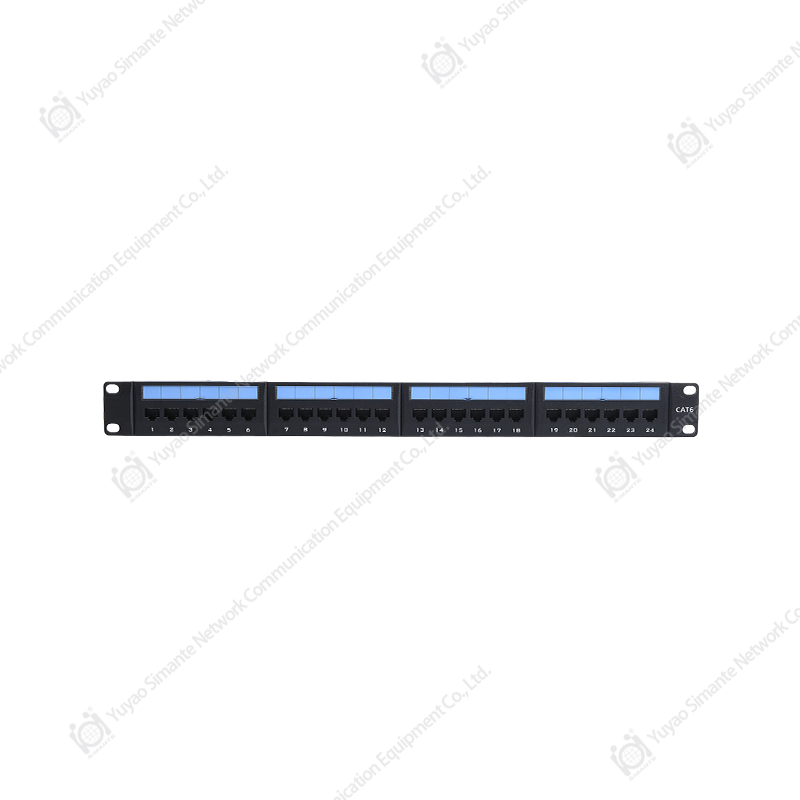
Product Overview: A 1U 24-Port CAT6 Patch Panel Built for Practical Network Deployment
The SMT-2043D24C6 is a 1U, 24-port, 180-degree CAT6 unshielded twisted pair patch panel. It is designed for 19-inch rack mounting and can be installed in compatible equipment racks, cabinets, and wall-mount frames. The 1U height allows installers to maximize rack space while still providing 24 RJ45 ports in a clean and accessible front-facing arrangement. For network rooms where every rack unit matters, this compact format helps preserve space for switches, cable managers, fiber equipment, power distribution, and future expansion.
The product is categorized as a CAT6 patch panel and supports a frequency range of 1 to 250 MHz. Category 6 cabling is widely used for Gigabit Ethernet applications and can also support higher-speed short-distance implementations depending on the overall cabling channel design, cable quality, installation practice, and equipment conditions. In structured cabling, the patch panel must maintain electrical continuity and control crosstalk, insertion behavior, insulation, and contact quality. This model is built around RJ45 jacks on the front and IDC terminals on the rear, allowing field cables to be punched down and equipment jumpers to be connected from the front.
A notable feature is its compatibility with both T568A and T568B wiring schemes. These two line sequence standards are common in structured cabling. Supporting both gives installers flexibility when matching existing site requirements or customer specifications. The patch panel includes universal color-coded wiring labels, which help reduce termination errors and support faster installation. In projects where multiple technicians are working simultaneously, clear color labeling can reduce confusion and ensure consistent wiring practice across the rack.
The product also supports IDC wiring compatible with 110-type and Krone-type connection methods. This is valuable because many installers are already equipped with punch-down tools and working habits associated with these common systems. Compatibility reduces training time, avoids special tooling requirements, and makes the panel easier to integrate into established installation workflows. The IDC terminals support 23 to 26 AWG twisted-pair cable, which covers common solid copper cabling sizes used in CAT6 horizontal wiring.
Why the Patch Panel Matters in a CAT6 Cabling System
A structured cabling system is only as strong as its weakest connection. Horizontal cables may be high quality, switches may be advanced, and patch cords may be certified, but if the patch panel introduces poor contact, excessive crosstalk, confusing labeling, or weak cable support, the entire channel can become difficult to manage. Patch panels play several essential roles: they provide a fixed termination point for horizontal cables, allow flexible patching to active equipment, improve cable organization, reduce wear on building cables, and create a professional maintenance interface.
In a commercial building, network changes are frequent. Users move desks, access points are added, cameras are relocated, workstations are upgraded, and network segmentation may change. Without a patch panel, technicians may need to access horizontal cable terminations directly or repeatedly disturb permanent links. A patch panel protects the fixed cabling by allowing changes through patch cords rather than through repeated field cable retermination. This lowers long-term maintenance risk and helps preserve the integrity of installed cabling.
The 24-port density is especially practical. Many small and medium network cabinets are organized around 24-port switches. A 24-port patch panel can align naturally with a 24-port switch, enabling neat one-to-one patching. Larger installations can stack multiple panels and switches in a logical layout. The front labels on this patch panel support port mapping, making it easier to identify which outlet, room, workstation, or device corresponds to each port. This directly reduces troubleshooting time when a user reports a network issue or when equipment needs to be reassigned.
The 1U rack-mounted form factor also supports clean airflow and rack organization. By keeping terminations compact and standardized, installers can place horizontal or vertical cable managers in predictable positions. A clean rack is not only visually professional; it improves service speed, reduces accidental disconnections, and helps technicians trace connections confidently. For facility managers and IT teams, that organization translates into lower operational friction over the life of the network.
Key Technical Characteristics
The following table summarizes important technical and structural information for the SMT-2043D24C6 patch panel.
| Item | Specification | Practical Value |
|---|---|---|
| Product Type | 1U 24-port CAT6 UTP patch panel | High-density copper cabling termination in a standard rack space |
| Mounting | 19-inch rack mount compatible | Fits standard equipment racks, cabinets, and wall-mount frames |
| Port Interface | RJ45 front ports with rear IDC termination | Convenient patch cord connection and stable horizontal cable termination |
| Wiring Standards | T568A and T568B supported | Flexible installation for different project standards |
| Frequency Range | 1 to 250 MHz | Suitable for CAT6 structured cabling performance requirements |
| Wire Compatibility | 23 to 26 AWG twisted-pair cable | Works with common horizontal copper cabling sizes |
| Contact Material | Phosphor bronze with gold plating | Supports reliable electrical contact and durability |
| IDC Terminal | Phosphor bronze, nickel plated | Provides stable punch-down connection performance |
| Bracket Material | Cold rolled steel with plastic spraying | Improves structural strength and surface protection |
| Plastic Materials | PC polycarbonate and ABS | Provides insulating structure and molded component stability |
| PCB Material | FR4 | Supports stable circuit structure and insulation performance |
| Plug Insertion Durability | 750 insertion cycles | Suitable for repeated patch cord operation during service life |
| Wire Termination Durability | 250 terminations | Supports installation and maintenance flexibility |
| Operating Environment | -25°C to +70°C, humidity up to 85% | Suitable for a wide range of indoor network environments |
| Environmental Requirement | ROHS compliant | Supports modern material compliance expectations |
Advantages Over Ordinary Patch Panels
The biggest advantage of this patch panel is that it combines several practical installation features into one compact product. Many low-cost panels may offer 24 ports, but they often compromise on labeling space, rear cable support, contact materials, termination convenience, or rack stability. The SMT-2043D24C6 is designed as a more complete structured cabling component. Its front labels, rear cable manager, dual wiring standard support, 110 and Krone-compatible IDC design, and robust material selection create a stronger user experience during installation and maintenance.
The 180-degree termination layout is especially useful in projects that require clear rear cable routing. With direct rear access, cables can be guided from the back of the cabinet to the IDC area in a straightforward path. This reduces twisting and complex cable routing, especially when combined with the rear cable manager. Proper cable guidance matters because excessive bending, pulling, or tangled cable bundles can affect long-term reliability and make future maintenance difficult. A patch panel that encourages neat cable routing helps installers create a more professional and durable network cabinet.
Another competitive advantage is the use of high and low dislocation technology in the contact pin design. This construction is intended to reduce near-end crosstalk, a key concern in high-frequency twisted-pair systems. Crosstalk occurs when signals from one pair or channel interfere with another, and controlling it is essential for stable data transmission. While complete channel performance depends on all components and installation quality, a patch panel designed with crosstalk reduction in mind gives installers a better foundation for compliant cabling.
The gold-plated phosphor bronze contact pins also distinguish the product from lower-grade alternatives. Gold plating helps provide stable contact quality and resistance to oxidation at the mating interface. Phosphor bronze is widely used in connector contacts because it combines conductivity, elasticity, and mechanical resilience. The specified gold-plating thickness range of 6 to 50 microinches gives procurement teams options aligned with project grade, cost requirements, or customer specifications. This flexibility can be valuable for OEM and ODM programs or for markets with different performance expectations.
The cold rolled steel bracket with plastic spraying provides mechanical strength and surface protection. In a rack environment, panels are handled during installation, secured by screws, and may carry the strain of multiple terminated cables. A weak frame can bend or deform, creating alignment problems and reducing the professional appearance of the cabinet. A sturdy steel bracket helps the panel remain stable after installation and supports long-term port alignment.
Compared with generic panels that provide minimal markings, this model includes front labels and a large label area for customer port identification. Clear identification may seem simple, but it is one of the most important real-world features. During troubleshooting, technicians need to identify ports quickly. During expansion, they need to know which ports are available. During audits, IT managers need accurate documentation. A patch panel with visible and practical labeling reduces human error and supports better network administration.
Installation Efficiency and Field-Friendly Design
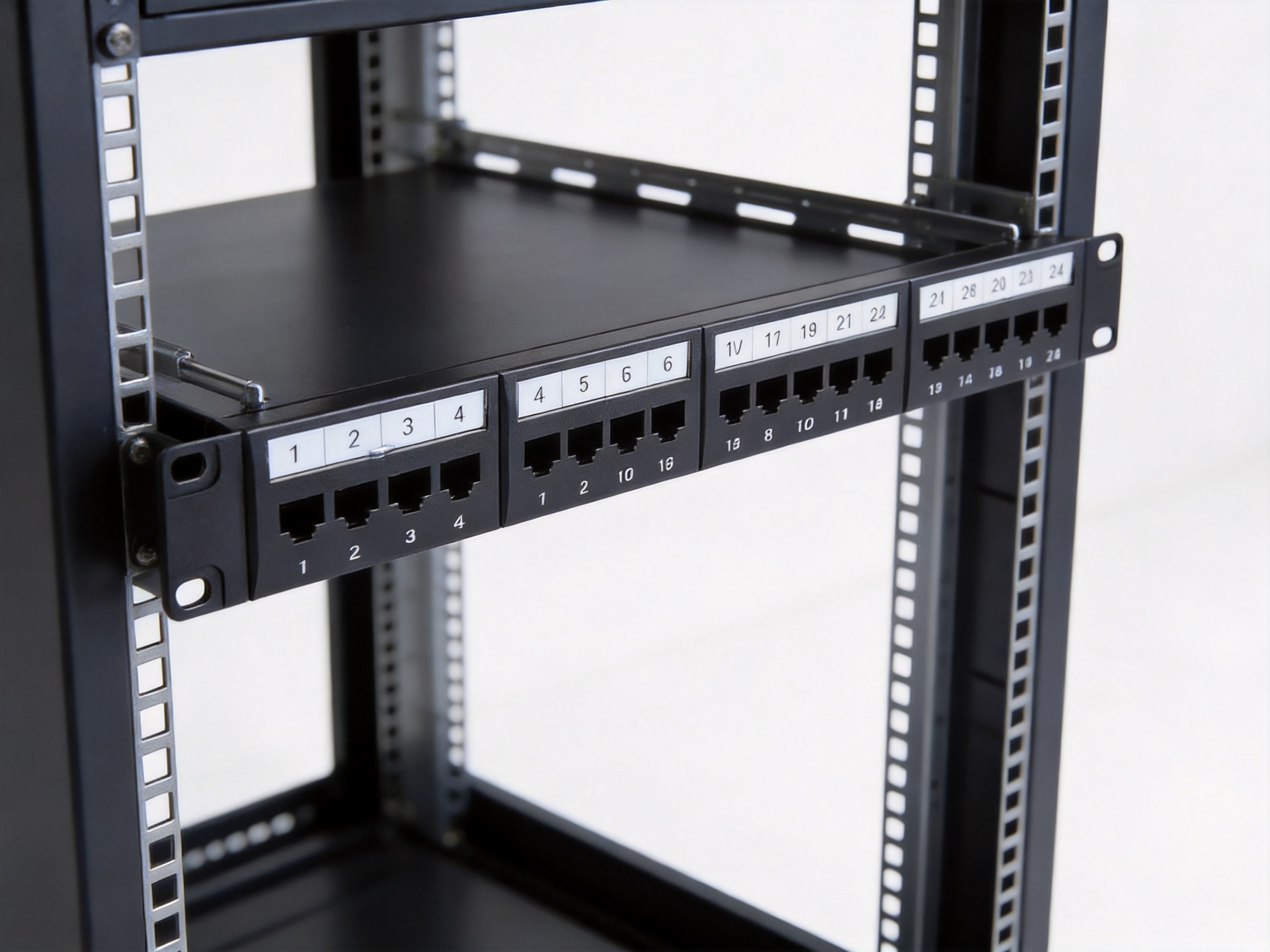
Professional installers value products that reduce time on site without sacrificing quality. The SMT-2043D24C6 supports faster installation through its rack-mount standard design, clearly marked port area, color-coded line sequence label, and IDC compatibility. Because the panel conforms to standard 19-inch rack installation practice, it can be mounted quickly in widely used cabinets and frames. The sturdy structure helps technicians secure the product without special adjustments or uncertain alignment.
The universal color label for T568A and T568B termination helps technicians terminate pairs correctly. Miswiring is one of the most common causes of network problems after installation. Even a single reversed pair or split pair can cause failed certification or unstable data transmission. By presenting the wiring sequence clearly at the termination area, the patch panel reduces the likelihood of wiring mistakes and supports consistent workmanship across multiple panels.
IDC termination is a proven method in structured cabling. The conductor is pressed into a metal contact slot, displacing insulation and creating electrical contact with the copper conductor. For this design to work reliably, the IDC contact material, geometry, and cable compatibility must be appropriate. The panel’s IDC terminals are designed for 23 to 26 AWG twisted pair and are made from nickel-plated phosphor bronze. This combination supports stable clamping and repeated termination cycles.
The rear cable manager is another important installation feature. After cables are punched down, they need support. If cables hang directly from IDC points, strain may gradually affect terminations, especially if the cabinet is disturbed or if cable bundles are moved. A cable manager helps guide cables to the termination point, supports bend control, and improves the appearance of the rear of the rack. In well-managed installations, rear cable support can be the difference between a cabinet that remains orderly and one that becomes difficult to service after the first upgrade.
Electrical Performance Considerations
CAT6 systems are designed to operate at higher frequencies than earlier categories such as CAT5e. At these frequencies, cable geometry, connector design, pair separation, contact alignment, PCB layout, and termination quality all influence performance. The SMT-2043D24C6 is specified for a frequency range of 1 to 250 MHz, aligning with category 6 structured cabling expectations. It supports a working voltage of 125 V and a withstand voltage of DC 1000 V or AC 750 V for one minute without breakdown or arcing, according to the product technical data.
Insulation resistance is specified with an initial value of at least 100 MΩ and at least 100 MΩ after constant damp heat testing. This matters because insulation quality helps prevent leakage paths between conductive parts, especially in environments where humidity may vary. Strong insulation performance supports stable electrical behavior and reduces risk in long-term operation.
Near-end crosstalk attenuation is an important parameter in balanced twisted-pair cabling. The product documentation specifies near-end crosstalk attenuation performance and notes the use of contact pin dislocation technology to reduce crosstalk. In practice, installers should always evaluate the complete channel, including horizontal cable, patch cords, connectors, work-area outlets, and installation method. However, using a patch panel designed for CAT6 performance gives the system a more reliable foundation than using a lower-category or poorly constructed panel.
The RJ45 jack with jumper connection on the front and IDC termination on the rear creates a familiar and efficient interface. Patch cords can be inserted and removed as network assignments change, while fixed horizontal cables remain protected at the rear. The specified plug and socket insertion durability of 750 cycles supports regular operational use. The specified wire termination durability of 250 times also gives installers and maintenance teams flexibility in situations where retermination is required.
Mechanical Strength and Durability
Mechanical reliability is just as important as electrical performance. A patch panel may remain in service for many years, and during that time it may experience cable movement, patch cord changes, rack maintenance, transportation vibration before installation, and environmental variation. The SMT-2043D24C6 includes several design and material choices that support durability.
The insertion force is specified as not more than 20 N, while the pull-out force is not less than 20 N. This balance is important because connectors should be easy enough to insert without excessive force but secure enough to remain in place during normal use. A patch panel that requires too much insertion force can frustrate technicians and may increase the risk of damaging patch cords. A connector that releases too easily can cause intermittent disconnection. A controlled mating force helps create a dependable user experience.
The connector connection device is specified to withstand 50 N for 60 ± 5 seconds. This indicates attention to the mechanical strength of the connection assembly. In field environments, accidental pulls or cable movement can occur. While proper cable management should always be used, the product’s mechanical specifications help support resilience.
The steel bracket contributes to rack stability. Cold rolled steel is commonly used in rack-mounted equipment because it offers strength and dimensional consistency. The plastic-sprayed surface improves appearance and helps protect the metal surface. Meanwhile, non-metallic parts made from PC polycarbonate and ABS provide the molded structure and insulation required for connector assemblies. PC is known for toughness, while ABS offers good processability and stable molded part performance. Using both materials allows the design to balance strength, manufacturability, and cost.
Material Selection for Long-Term Value
Product reliability often begins with material choice. The SMT-2043D24C6 uses phosphor bronze for the gold-plated contact pins and nickel-plated phosphor bronze for IDC card wire terminals. Phosphor bronze has strong spring properties, which help connector contacts maintain pressure over repeated mating cycles. In RJ45 connectors, contact pressure is essential for low-resistance electrical connection. If contacts lose elasticity, intermittent faults can occur, especially when cables are moved.
Gold plating improves the mating interface by resisting corrosion and providing stable conductivity. In network cabinets, humidity, airborne contaminants, and time can affect exposed metals. Gold-plated contacts help maintain signal reliability over repeated insertions. The product’s gold-plating thickness range allows different project or customer requirements to be met. For higher-duty use, thicker gold plating may be specified; for cost-sensitive installations, an appropriate lower range may be used while still maintaining the benefits of gold-plated contact surfaces.
Nickel plating on IDC terminals contributes to surface protection and durability. IDC terminals need to pierce insulation and clamp the conductor securely. The terminal material and plating must support both mechanical cutting action and long-term contact stability. When combined with proper 23 to 26 AWG solid twisted-pair cable and correct punch-down technique, the IDC structure provides dependable permanent-link termination.
The use of FR4 PCB material is also important. FR4 is a widely used glass-reinforced epoxy laminate known for electrical insulation, dimensional stability, and mechanical strength. In patch panel connector modules, PCB material may influence signal paths and insulation properties. A reliable PCB substrate helps support consistent product performance and manufacturing repeatability.
Environmental Performance and Compliance
The patch panel is designed to meet ROHS environmental requirements, reflecting the need for responsible material selection in modern electronics and cabling products. ROHS compliance is important for buyers serving international markets, public projects, enterprise procurement, and customers with environmental standards. It helps reduce the presence of restricted hazardous substances and supports responsible supply chain management.
The specified operating temperature range of -25°C to +70°C makes the product suitable for a wide range of indoor network environments. Although most patch panels are installed in temperature-controlled rooms, real-world conditions can vary. Equipment closets, industrial buildings, unconditioned spaces, and regional climate differences may expose cabling components to temperature variation. A wide temperature range provides additional confidence.
Humidity tolerance is specified up to 85% at a stated test condition. Humidity resistance is relevant because moisture can affect insulation, metal surfaces, and long-term reliability. The product documentation also includes salt spray test conditions, including pH range, sodium chloride concentration, continuous atomization, and recommended duration. Salt spray evaluation is commonly used to assess corrosion resistance of metal parts or surface treatments. While indoor patch panels are not normally exposed to salt spray directly, such testing reflects attention to material durability and surface protection.
Manufacturing Strength Behind the Product
A patch panel’s quality depends not only on its design but also on the manufacturing system that produces it. Yuyao Simante Network Communication Equipment Co., Ltd. has developed as a professional manufacturer of network cabling solutions and optical fiber products. The company integrates design, development, sales, and service, allowing product feedback and customer requirements to be reflected in ongoing improvement. With nearly 20 years of industry service, it has accumulated practical experience in structured cabling applications and international customer expectations.
The company’s engineering resources are a major advantage. More than 10 engineers and over 30 full-time technical personnel support product design, process improvement, quality control, and product updates. For components such as patch panels, small details matter: contact geometry, plastic housing accuracy, IDC slot consistency, PCB alignment, labeling clarity, metal frame flatness, and packaging protection all affect the customer experience. A strong technical team helps control these details from the design source rather than relying only on final inspection.
The manufacturing capability includes 10 regular and customization production lines, 10 fully automatic injection molding machines, 20 semi-automatic injection molding machines, and 8 automatic assembly machines. This combination supports both scale and flexibility. Automatic equipment improves consistency and output efficiency, while customization lines support OEM and ODM orders for customers who need special packaging, labeling, gold-plating requirements, regional standards, or product variations. The company maintains an annual output of more than 9 million units across its product range, indicating stable manufacturing capacity.
Injection molding capability is particularly relevant to patch panel quality. RJ45 housings, IDC supports, wire guide structures, and label components require accurate molding. Poor molding can create misalignment, loose fit, weak retention, or inconsistent termination geometry. By operating its own injection molding equipment, the manufacturer can better control tooling, materials, process parameters, and inspection. This vertical capability supports both quality stability and delivery reliability.
Automatic installed and assembly machines also improve consistency. Connector products require repetitive assembly steps, and manual variation can affect contact positioning or housing fit. Automation helps reduce variation, increase production speed, and maintain repeatable product quality. For customers purchasing patch panels in volume, this repeatability is essential because every panel in a project should perform and install consistently.
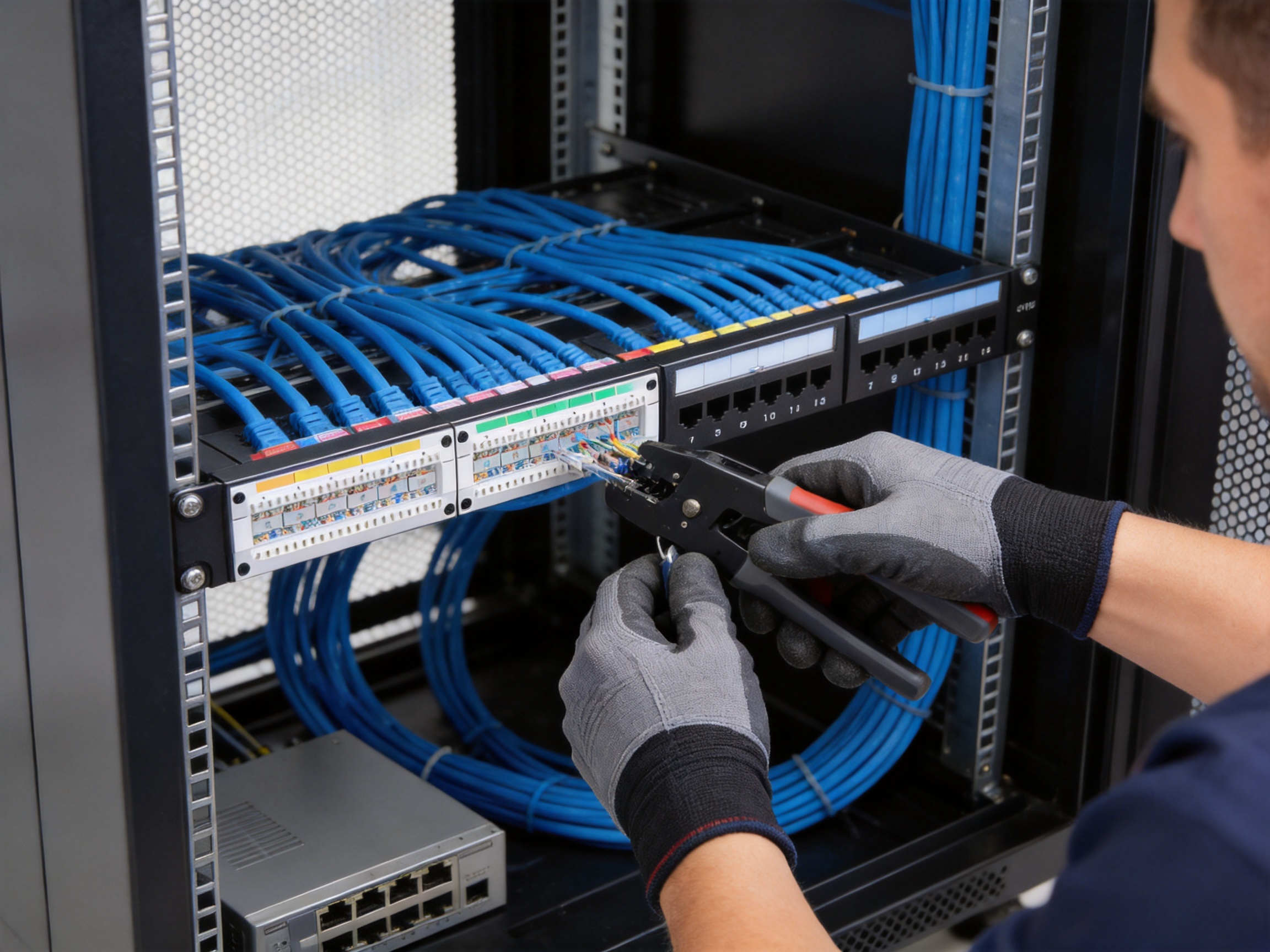
Quality Stability From Design to Delivery
The company emphasizes quality stability at the design source. This approach is important because inspection alone cannot fully compensate for weak design or unstable processes. In a CAT6 patch panel, performance is influenced by contact spacing, internal pair arrangement, PCB routing, termination geometry, material properties, and assembly precision. If these are correctly designed and controlled during manufacturing, the final product is more likely to meet expectations consistently.
Quality control also includes the ability to meet customers’ comprehensive testing requirements. Enterprise buyers, distributors, and OEM customers may request electrical testing, mechanical durability checks, material verification, environmental compliance documentation, or packaging inspection. A manufacturer familiar with such requirements can reduce procurement risk and support smoother project approval. This is especially valuable for customers exporting to Europe, Australia, Africa, the Middle East, Southeast Asia, and other regions where different market expectations may apply.
Packaging is another part of quality delivery. The product is placed into a special blister bag and then into a cardboard box, with accessories included and labeling indicating model and quantity. Standard packaging information notes 10 boxes per carton, one piece per box, and 10 pieces per carton. Proper packaging protects the panel during transport, reduces surface damage, prevents accessory loss, and simplifies warehouse handling. Storage requirements include an ambient temperature of -5°C to +30°C, relative humidity not more than 70%, and no acid, alkali, or corrosive gases in the surrounding air, with a storage period of three years.
Applications in Structured Cabling Projects
The SMT-2043D24C6 patch panel can be used in many network cabling environments. In office buildings, it can terminate horizontal cables from workstations, meeting rooms, printers, wireless access points, IP phones, and other network endpoints. In schools, it can organize connections for classrooms, computer labs, administrative offices, and surveillance systems. In hotels, it can support guest room networks, front desk systems, wireless access points, and service area connections. In smart buildings, it can serve data links for automation equipment, access control, monitoring devices, and control panels.
The product is also suitable for equipment rooms where multiple subsystems connect. Its series description notes its role in cross-connection between vertical trunk and horizontal wiring subsystems. In structured cabling architecture, vertical backbone cabling connects floors or distribution areas, while horizontal cabling extends to work areas. Patch panels create a manageable transition point, enabling organized cross-connection and equipment assignment. This is essential for buildings that may evolve over time.
For small server rooms and network cabinets, the 1U 24-port format offers a straightforward way to create a neat rack. A common layout may place the patch panel above or below a 24-port switch with a horizontal cable manager between them. Short patch cords can then connect ports in an orderly manner. This reduces cable clutter and makes the cabinet easier to understand. For larger networks, multiple panels can be installed in sequence, with labeling aligned to floor plans or outlet numbering systems.
How the Product Supports Lower Total Cost of Ownership
Purchase price is only one part of network cabling cost. Installation labor, troubleshooting time, rework, maintenance, downtime, and future changes often cost more than the component itself. A patch panel designed for fast termination, clear labeling, stable contact, and good cable management can reduce total cost over the life of the network.
Clear T568A and T568B labels reduce termination errors, which lowers rework. Rear cable management reduces stress on terminations, which lowers maintenance risk. Front labeling reduces troubleshooting time, which improves IT efficiency. Durable RJ45 contacts support repeated patching, which improves long-term usability. Rack compatibility reduces installation complexity. Material stability reduces failure risk. Together, these advantages make the product more valuable than a low-cost panel that may appear similar at first glance.
For distributors and system integrators, consistent manufacturing quality also reduces after-sales issues. A product that installs smoothly and performs reliably helps protect the installer’s reputation. For OEM and ODM customers, the manufacturer’s customization capability can support brand-specific packaging, labeling, or technical requirements. This flexibility adds commercial value beyond the physical product.
Comparison With Common Low-End Alternatives
Low-end patch panels may use thinner frames, less durable contacts, unclear labeling, limited cable support, or inconsistent IDC terminals. These differences may not be obvious in a product photo, but they become apparent during installation and service. A weak frame may bend when mounted. Poor IDC terminals may fail to grip conductors consistently. Inadequate labels may cause port identification mistakes. Poor rear organization may leave cables unsupported. Low-quality contacts may oxidize or lose spring force sooner.
The SMT-2043D24C6 addresses these risks with a stronger combination of structural and electrical design. The cold rolled steel bracket provides a stable rack foundation. Gold-plated phosphor bronze contacts support reliable mating. Nickel-plated IDC terminals support stable wire termination. PC, ABS, and FR4 materials support insulation and assembly integrity. T568A/T568B color labels reduce wiring mistakes. Rear cable management supports cable guidance. These details create a practical performance advantage over products that focus only on minimum specifications.
Another difference is the manufacturer’s integrated production and engineering support. A trading-only supplier may have limited control over tooling, materials, process variation, and customization. A manufacturer with injection molding, assembly, technical staff, and production lines can respond more effectively to quality issues, special requirements, and product improvements. For buyers who need reliable supply and long-term cooperation, this manufacturing foundation matters.
Best Practices for Installation
To gain the best performance from any CAT6 patch panel, installers should follow structured cabling best practices. First, select compatible CAT6 UTP cable with conductor size within the supported 23 to 26 AWG range. Second, maintain pair twist as close as practical to the IDC termination point. Excessive untwisting can increase crosstalk and degrade performance. Third, follow either T568A or T568B consistently throughout the project unless a specific cross-connection requirement exists. Mixed standards without documentation can cause confusion.
Fourth, use the correct punch-down tool and proper force. An IDC connection depends on correct conductor seating. Under-termination may cause intermittent contact, while excessive force or incorrect tooling can damage terminals. Fifth, route cables through the rear cable manager to reduce strain and maintain bend radius. Sixth, label every port according to the project documentation. The front label area should correspond to floor plans, outlet IDs, room numbers, or switch assignments. Seventh, test completed links with appropriate cable certification or verification equipment according to project requirements.
Good installation practice protects the investment in the patch panel and the entire cabling channel. Even a well-designed panel can underperform if cable pairs are untwisted too far, conductors are placed in the wrong sequence, cables are bent sharply, or terminations are not fully seated. The product’s field-friendly features make best practices easier to follow, but trained workmanship remains essential.

Company Capability for OEM, ODM, and Custom Projects
Many buyers require more than a standard catalog product. They may need custom packaging, private labeling, specific gold-plating thickness, project documentation, accessory combinations, or product adjustments for regional markets. Yuyao Simante Network Communication Equipment Co., Ltd. undertakes OEM and ODM projects and has the production infrastructure to support customization. This is important for distributors, brand owners, system integrators, and project suppliers who need products aligned with their market identity or technical requirements.
The company’s production lines include both regular and customization capacity, allowing it to support standard demand while also handling tailored orders. Its engineering and technical personnel can participate in design review, product update, and quality improvement. For customers, this means the relationship can extend beyond simple purchasing. It can become a cooperative development process focused on market needs, cost targets, packaging preferences, and performance expectations.
Stable export activity in Europe, Australia, Africa, the Middle East, and Southeast Asia also indicates experience with diverse customer requirements. Different markets may emphasize different certifications, packaging formats, language labels, price structures, or performance levels. A manufacturer serving multiple regions is more likely to understand these variations and provide practical support.
Q&A: Common Questions About the 1U 24-Port CAT6 UTP Patch Panel
Q1: What is the main purpose of this CAT6 patch panel?
A1: Its main purpose is to terminate and organize CAT6 UTP horizontal cabling in a structured cabling system. It provides 24 RJ45 front ports for patch cords and rear IDC terminals for fixed cable termination, allowing flexible connection between network equipment and work-area cabling.
Q2: Is the patch panel compatible with standard racks?
A2: Yes. It is designed for standard 19-inch rack mounting and fits compatible equipment racks, network cabinets, and wall-mount frames. Its 1U height helps save rack space while providing 24 ports.
Q3: Does it support both T568A and T568B wiring?
A3: Yes. The patch panel supports both T568A and T568B wiring sequences and includes color-coded labeling to help installers terminate cables accurately.
Q4: What cable sizes can be terminated on the IDC terminals?
A4: The IDC terminals are suitable for 23 to 26 AWG twisted-pair cable, which covers common cable sizes used in CAT6 horizontal cabling.
Q5: What makes this product better than a basic low-cost patch panel?
A5: It offers a stronger overall installation package, including a sturdy cold rolled steel bracket, gold-plated phosphor bronze contacts, nickel-plated IDC terminals, clear front labeling, rear cable management, T568A/T568B support, and manufacturing quality backed by experienced production capability.
Q6: Why is the rear cable manager important?
A6: The rear cable manager guides cables to the termination area, reduces strain on IDC connections, supports bend control, and keeps the back of the rack organized. This improves long-term reliability and makes future maintenance easier.
Q7: Can this patch panel be used in office networks?
A7: Yes. It is well suited for office networks, equipment rooms, floor distribution cabinets, schools, hotels, smart buildings, and other environments requiring organized copper data cabling.
Q8: What materials are used in the contacts?
A8: The contact pins are made from phosphor bronze with gold plating, and the IDC terminals are phosphor bronze with nickel plating. These materials support reliable contact, durability, and stable termination performance.
Q9: Is the product environmentally compliant?
A9: The product is designed to meet ROHS requirements, supporting modern environmental compliance expectations for cabling components.
Q10: Does the manufacturer support customized orders?
A10: Yes. The manufacturer supports OEM and ODM projects and has regular and customization production lines, engineering staff, injection molding equipment, and assembly capability to support customer-specific requirements.
Conclusion: A Practical CAT6 Patch Panel for Professional Cabling Systems
The SMT-2043D24C6 1U 24 Port 180 Degree CAT6 UTP Patch Panel is a practical and well-rounded solution for copper structured cabling. It combines CAT6 transmission support, 24-port rack density, T568A and T568B compatibility, 110 and Krone-compatible IDC termination, front labeling, rear cable management, durable materials, and professional manufacturing support. These features make it suitable for installers and project buyers who need more than a basic connection panel.
Its advantages are most visible in real working environments. Clear labeling reduces mistakes. Rear cable guidance improves organization. Gold-plated contacts support stable RJ45 mating. Nickel-plated IDC terminals provide dependable wire termination. A cold rolled steel bracket ensures rack stability. PC, ABS, and FR4 materials support structure and insulation. The 1U format saves rack space while maintaining 24-port capacity. Together, these details help create a cleaner, more reliable, and easier-to-maintain network cabinet.
Behind the product is a manufacturer with nearly 20 years of experience in network cabling solutions and optical fiber products. With engineering resources, technical personnel, injection molding capability, automatic assembly equipment, multiple production lines, high annual output, export experience, and OEM/ODM support, Yuyao Simante Network Communication Equipment Co., Ltd. provides the manufacturing foundation required for stable product quality and reliable supply. For structured cabling projects that demand dependable components, efficient installation, and long-term serviceability, this CAT6 patch panel is a strong choice.
References
ANSI/TIA-568.2-D, Balanced Twisted-Pair Telecommunications Cabling and Components Standard.
ISO/IEC 11801, Information Technology: Generic Cabling for Customer Premises.
YD/T 926.1-2009, Generic Cabling System for Telecommunications.
YD/T 926.3-2009, Generic Cabling System Technical Requirements for Connecting Hardware.
IEC 60603-7, Connectors for Electronic Equipment: Detail Specification for 8-Way Connectors.
RoHS Directive Technical Guidance for Restricted Substances in Electrical and Electronic Equipment.