Español
 عربى
عربى русский
Content
- 1 Product Overview
- 2 Why CAT3 Still Matters in Structured Cabling
- 3 180 Degree Design and Its Installation Advantages
- 4 Toolless Termination: Faster, Cleaner, and More Consistent
- 5 Key Product Advantages Over Ordinary Competitor Jacks
- 6 Technical and Practical Feature Summary
- 7 Application Scenarios
- 8 Role in a Complete Copper Cabling System
- 9 Manufacturing Strength Behind the Product
- 10 Advanced Production Processes
- 11 Quality Stability from the Design Source
- 12 OEM and ODM Value for Distributors and Project Buyers
- 13 Comparison with Conventional Punch-Down CAT3 Jacks
- 14 Design Details That Matter in the Field
- 15 Material and Structural Considerations
- 16 Installation Best Practices
- 17 Benefits for Contractors
- 18 Benefits for System Integrators
- 19 Benefits for Distributors and Wholesalers
- 20 How the Product Supports Long-Term Maintenance
- 21 Quality Control and Testing Expectations
- 22 Cost-Effectiveness Without Sacrificing Practical Reliability
- 23 Global Market Suitability
- 24 Purchasing Considerations
- 25 Company Strength and Customer Value
- 26 Q&A Section
- 26.1 What is the SMT-1023T4C3 180 degree CAT3 toolless keystone jack used for?
- 26.2 What does 180 degree mean in this keystone jack?
- 26.3 Why choose a toolless keystone jack?
- 26.4 Is CAT3 still useful today?
- 26.5 How does this product compare with ordinary punch-down CAT3 jacks?
- 26.6 Can this jack be used in wall plates and patch panels?
- 26.7 Is it suitable for high-speed Ethernet?
- 26.8 What manufacturing strengths support the product quality?
- 26.9 Can the product be customized for OEM or ODM projects?
- 26.10 What should buyers check before ordering?
- 27 Conclusion
- 28 References
In structured cabling, the smallest components often determine the long-term stability of the entire communication system. A keystone jack may appear simple, but it is the connection point where cable performance, installation efficiency, contact reliability, and maintenance convenience come together. The SMT-1023T4C3 180 degree CAT3 toolless keystone jack is designed for voice-grade copper cabling applications where dependable termination, neat installation, and consistent production quality are essential. As a CAT3 keystone jack, it is especially suitable for telephone, voice, PBX, low-speed data, and legacy communication infrastructure that requires practical performance rather than unnecessary over-specification.
This article introduces the product from the perspective of application value, technical design, competitive advantages, manufacturing strength, quality control, and procurement considerations. It also explains why a well-engineered CAT3 toolless jack still has a strong place in modern structured cabling projects, especially in commercial buildings, residential systems, hotel networks, office voice systems, and communication distribution panels.
Product Overview
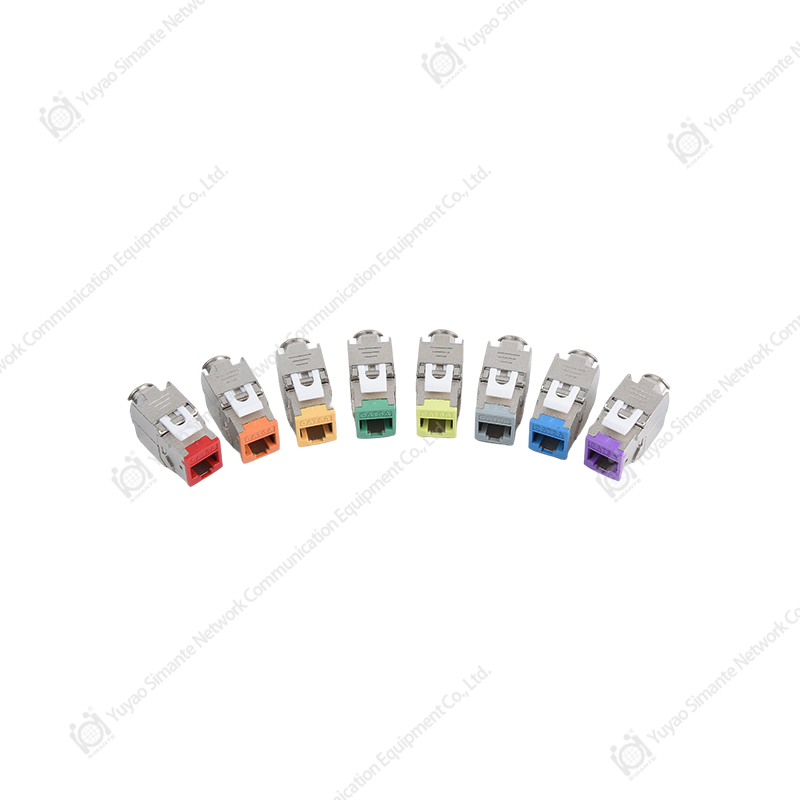
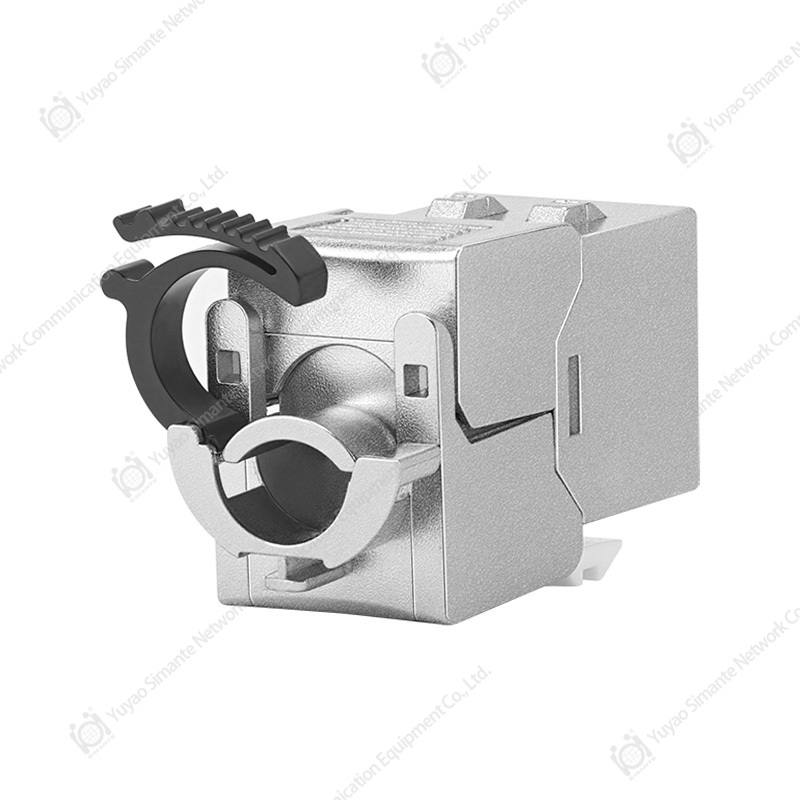
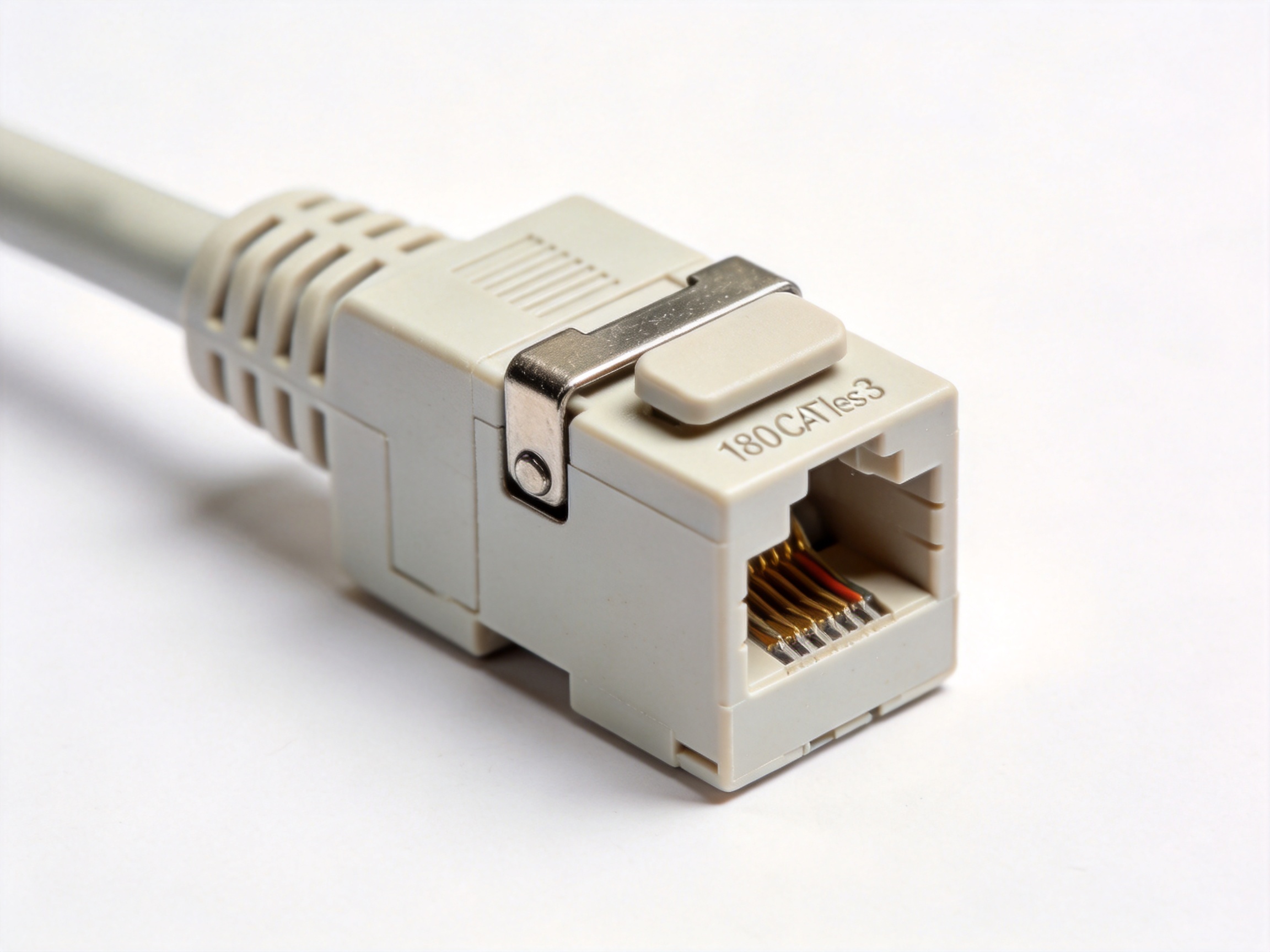
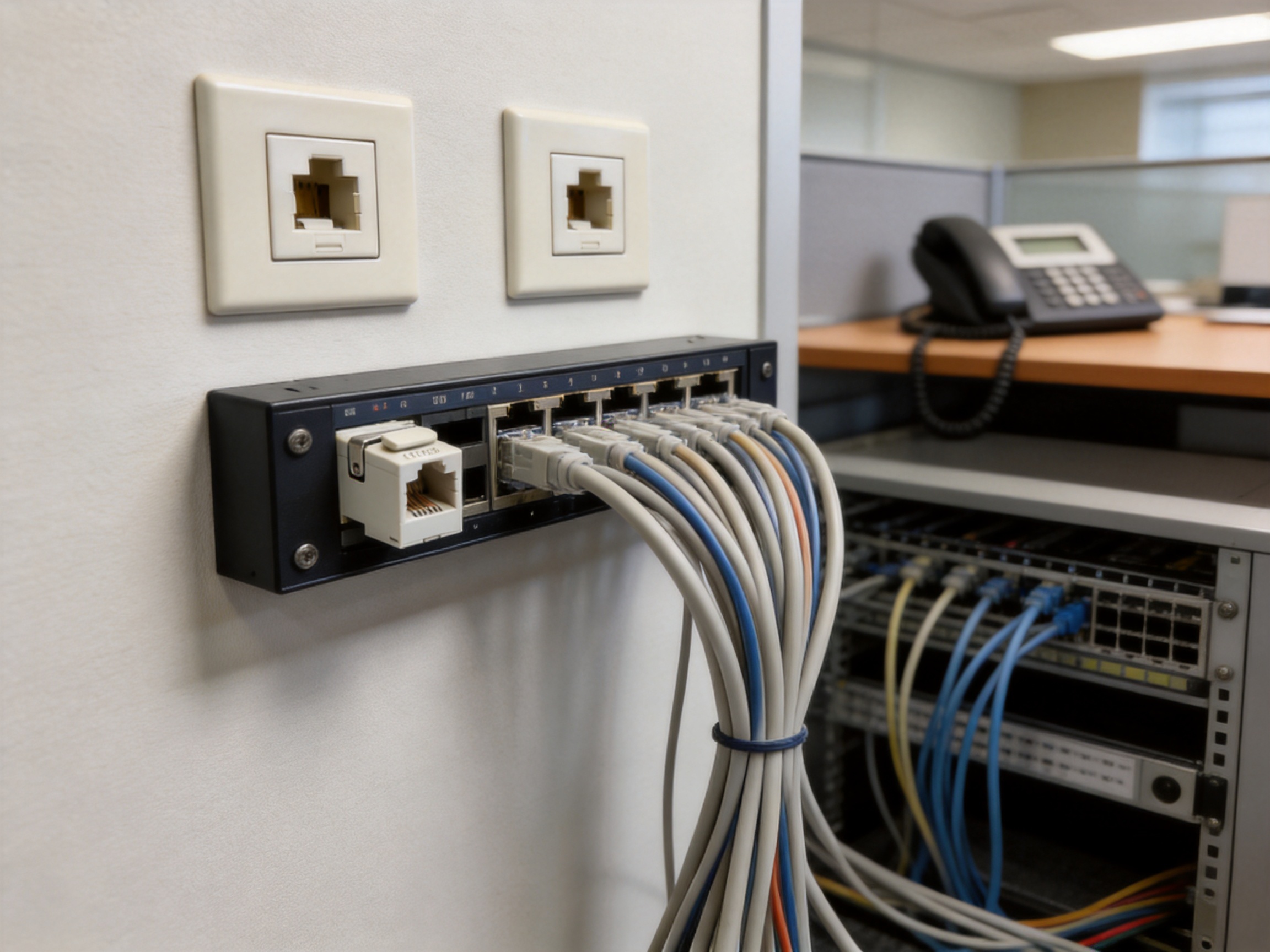
The SMT-1023T4C3 180 degree CAT3 toolless keystone jack is a copper system component used in structured cabling installations. It belongs to the CAT3 Keystone Jack product category and is designed to support reliable voice and basic communication connections. Its 180 degree design allows cable entry from the rear in a straight termination direction, which is convenient for many wall plate, patch panel, surface mount box, and modular outlet applications.
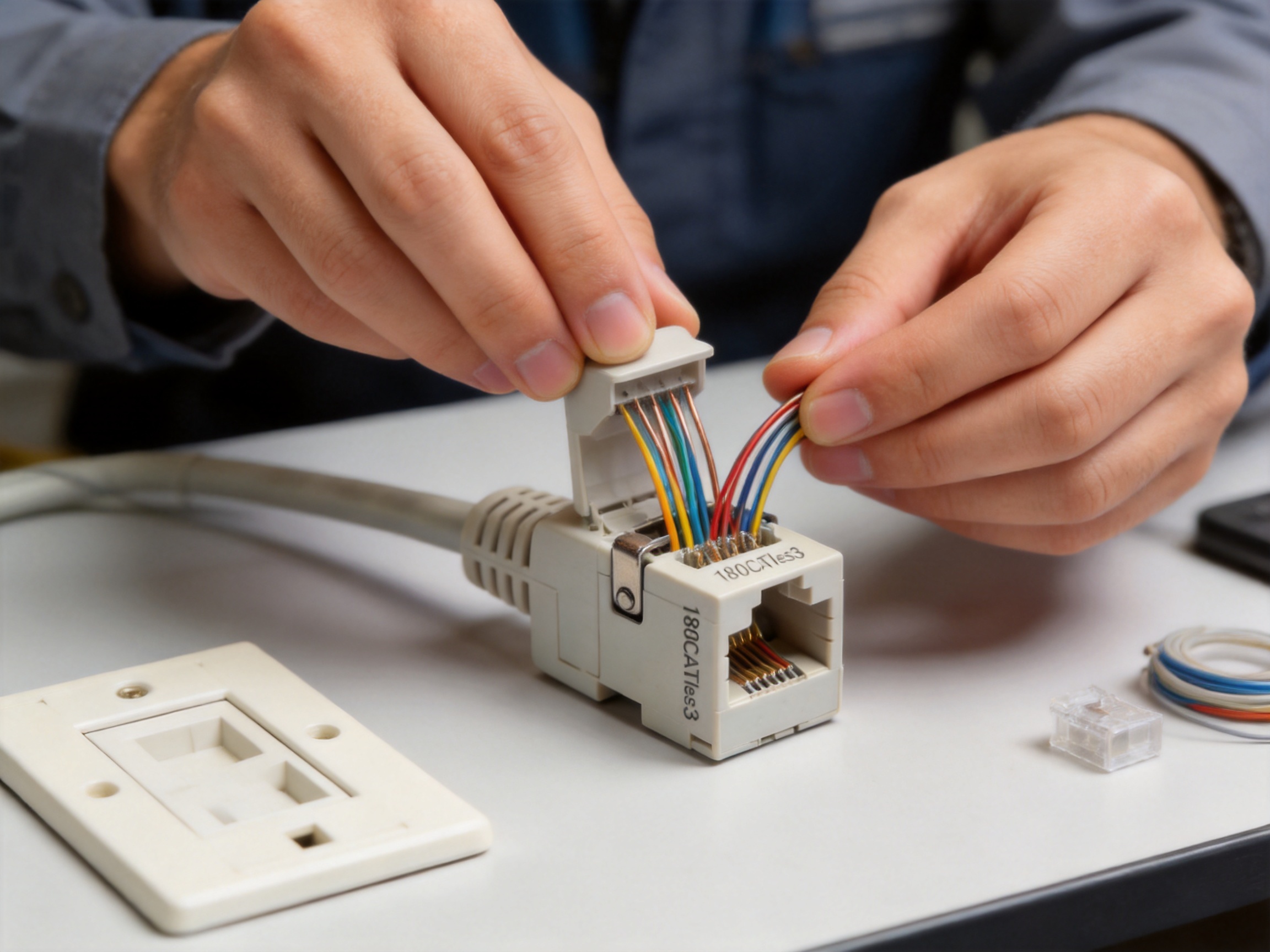
The toolless feature is one of the most important benefits of this product. Traditional keystone jacks often require a punch-down tool to seat conductors into IDC contacts. A toolless keystone jack simplifies this process by allowing the installer to position the wires according to the color code and close the termination cap to complete the connection. This can reduce installation time, lower the skill threshold for consistent termination, and help minimize damage caused by improper punch-down force.
For voice and telephone installations, CAT3 remains a practical and cost-effective cabling category. While higher categories such as CAT5e, CAT6, and CAT6A are often used for high-speed Ethernet, CAT3 is still widely suitable for analog telephone lines, digital voice systems, security communication circuits, intercom wiring, and certain low-bandwidth control signals. Using a CAT3 keystone jack in these situations can avoid unnecessary cost while still meeting the functional requirements of the project.
Why CAT3 Still Matters in Structured Cabling
Technology moves quickly, but structured cabling projects must always balance performance, budget, installation conditions, and long-term maintenance. Not every cable run requires gigabit or multi-gigabit bandwidth. Many buildings continue to operate voice networks, alarm circuits, access control wiring, hotel room telephone systems, elevator communication systems, and office extension lines. These systems may need stable connectivity more than high data throughput.
CAT3 cabling is traditionally specified for frequencies up to 16 MHz and is associated with voice and 10 Mbps Ethernet applications. In many modern projects, CAT3 components are selected not because they are the highest category available, but because they match the actual communication need. A correctly chosen CAT3 keystone jack can reduce material cost, simplify stock management, and prevent overspending on performance levels that will not be used.
The SMT-1023T4C3 focuses on this practical requirement. It is not positioned as a high-frequency data jack for demanding network backbones. Instead, it is a reliable termination interface for voice-grade copper cabling. That clear positioning is an advantage: the product is engineered for practical installation, stable mechanical connection, and efficient deployment in systems where CAT3 performance is appropriate.
180 Degree Design and Its Installation Advantages
The 180 degree configuration refers to the cable termination direction. In a 180 degree keystone jack, the cable typically enters from the back of the jack in line with the front connection interface. This design is widely preferred in many structured cabling layouts because it creates an orderly cable path and helps installers maintain a clean rear management area.
Compared with some angled termination designs, a 180 degree jack can be easier to install in patch panels and certain wall outlet environments where rear cable routing is straight. It helps reduce unnecessary cable twisting and makes conductor arrangement more direct. For voice wiring, where multiple ports may be installed in dense panels or office distribution areas, this can improve the visual order and serviceability of the installation.
The product’s 180 degree layout also supports fast identification and access during maintenance. When a technician opens a panel or outlet, straight cable entry can make it easier to trace cables, inspect terminations, and replace a module if needed. A small improvement in cable organization can save significant time across large installations with hundreds or thousands of voice ports.
Toolless Termination: Faster, Cleaner, and More Consistent
One of the defining advantages of the SMT-1023T4C3 is its toolless termination structure. In many field installations, termination quality varies from one technician to another. Traditional punch-down methods require correct tool selection, proper blade orientation, and appropriate insertion force. If the force is too light, the conductor may not seat properly. If the force is too heavy or the blade is misused, the conductor, IDC contact, or plastic housing can be damaged.
A toolless jack helps standardize the process. The installer arranges the wires according to the termination guide, places them into the contact slots, and closes the cap or cover mechanism to press the conductors into position. This method can reduce dependency on separate tools and supports faster installation in confined spaces, such as wall boxes, floor boxes, telecommunications rooms, and renovation sites.
For contractors, labor efficiency is a major cost factor. Even if each termination saves only a small amount of time, the total savings become meaningful in large projects. A building with hundreds of voice outlets may require hundreds of terminations. A toolless CAT3 jack helps make that process more predictable, especially when multiple installers are working on the same project.
Toolless termination also benefits maintenance teams. When a voice line needs to be moved, replaced, or repaired, the technician can access the jack more easily without carrying a punch-down tool for every task. This convenience is particularly useful in facilities such as hotels, hospitals, schools, office buildings, and industrial sites where communication outlets may be serviced regularly.
Key Product Advantages Over Ordinary Competitor Jacks
The CAT3 keystone jack market includes many simple products, but differences in design and production quality can strongly affect installation experience and long-term reliability. The SMT-1023T4C3 offers advantages in several practical areas: toolless operation, stable termination, organized cable entry, production consistency, and compatibility with structured cabling accessories.
First, the toolless structure provides a cleaner termination process than many low-cost punch-down alternatives. It helps reduce installer fatigue and avoids the need for repeated punching, especially in projects with dense voice distribution. This is valuable for both professional installers and building maintenance teams.
Second, the 180 degree layout offers straightforward rear cable entry. Some competing products may have designs that are awkward in tight panel environments or require excessive bending near the termination point. Excessive bending can put stress on conductors and create messy cable routing. The straight-entry design of this jack supports better cable management and easier inspection.
Third, product consistency matters. A keystone jack must fit securely into wall plates, patch panels, and modular frames. If the latch dimensions are inconsistent, installers may encounter loose fitting, difficult insertion, or broken clips. A manufacturer with stable injection molding capability and quality inspection processes can deliver more uniform housings and more reliable snap-in performance.
Fourth, contact stability is essential. A voice connection may not require high bandwidth, but it must remain connected through years of plugging, unplugging, vibration, and environmental changes. Inferior jacks may use weak contact structures or inconsistent IDC alignment, leading to intermittent noise, poor line quality, or service calls. A properly manufactured jack reduces these risks.
Finally, the product benefits from manufacturing experience in copper and fiber structured cabling components. A supplier that understands keystone jacks, patch panels, face plates, data sockets, and optical fiber products can support more complete cabling system procurement. This is an advantage over trading-only suppliers or factories with limited product categories.
Technical and Practical Feature Summary
| Feature | Practical Meaning | Benefit for Installers and Projects |
|---|---|---|
| CAT3 category | Designed for voice-grade and basic communication applications | Cost-effective choice for telephone, PBX, and low-speed systems |
| 180 degree termination | Cable enters from the rear in a straight direction | Supports neat routing in panels, outlets, and distribution areas |
| Toolless design | Termination can be completed without a punch-down tool | Improves installation speed and reduces tool dependency |
| Keystone format | Modular design for common wall plates and panels | Flexible use in structured cabling systems |
| Stable housing construction | Precision-molded body and secure fitting structure | Helps maintain reliable installation and long service life |
| Suitable for OEM and ODM projects | Can support customer-specific requirements | Useful for distributors, system integrators, and branded product lines |
Application Scenarios
The SMT-1023T4C3 180 degree CAT3 toolless keystone jack can be used in many structured cabling environments where voice and basic copper communication connections are needed. In office buildings, it can serve desk telephone outlets, conference room voice ports, reception communication points, and back-office extension lines. Even in offices with advanced Ethernet infrastructure, separate voice cabling may still exist for specific systems or legacy equipment.
In hotels, CAT3 voice cabling remains common for guest room telephones, service phones, lobby communication points, and internal operation lines. Hotel installations often require large numbers of similar ports, so the efficiency of a toolless jack can provide meaningful labor savings. The ability to maintain clean terminations also supports easier room maintenance and faster troubleshooting.
In residential and smart home environments, CAT3 jacks can be used for telephone outlets, intercom systems, and certain low-speed communication connections. A modular keystone format makes it easy to integrate the jack into wall plates alongside data, coaxial, audio, or fiber modules, depending on the design of the home network.
In public buildings such as schools, hospitals, libraries, government offices, and transportation facilities, voice-grade cabling may be needed for emergency phones, administrative extensions, and service communication points. Reliability and ease of maintenance are important in these environments because communication downtime can affect daily operation.
In industrial and automation-related environments, CAT3 components may be used for certain control or communication circuits where bandwidth demand is limited. In these cases, the physical stability of the connection and the quality of the termination are often more important than high-speed data performance.
Role in a Complete Copper Cabling System
A keystone jack does not work alone. It is part of a larger copper cabling channel that may include horizontal cable, patch panels, wall plates, surface boxes, patch cords, cable management accessories, and distribution frames. If one component is weak, the entire channel can suffer. This is why selecting a reliable keystone jack is important even for voice-grade systems.
In a typical installation, a cable is routed from a telecommunications room to a work area outlet. The cable is terminated at the rear of the keystone jack, and the front interface accepts the plug from a telephone, modem, low-speed device, or patch cord. The connection must remain stable over time despite repeated use, building movement, dust, temperature variation, and service changes.
The SMT-1023T4C3 supports this role by providing a modular connection point that can be installed in standardized mounting hardware. Its toolless termination helps produce a consistent connection at the rear, while the keystone format supports flexible front-end placement. The result is a practical component that helps complete a neat, manageable, and serviceable copper cabling system.
Manufacturing Strength Behind the Product
The quality of a keystone jack depends heavily on manufacturing capability. Yuyao Simante Network Communication Equipment Co., Ltd. is a professional manufacturer of network cabling solutions and optical fiber products, integrating design, development, sales, and service. With nearly 20 years of service experience, the company has built expertise in structured cabling components and understands the practical requirements of global customers.
The company’s product range includes keystone jacks, patch panels, wall face plates, data sockets, and related network cabling products. This broad product experience is important because keystone jack design must consider compatibility with other components. A jack must fit a wall plate properly, align in a patch panel, and support a clean cabling layout. A manufacturer that produces multiple system components has a more complete understanding of how each part functions in real installations.
The company has more than 10 engineers and over 30 full-time technical personnel. This technical team contributes to product design, quality improvement, tooling optimization, manufacturing process control, and product updates. For a product like a CAT3 toolless keystone jack, engineering details can include housing structure, cap movement, IDC alignment, latch dimensions, material selection, and assembly sequence.
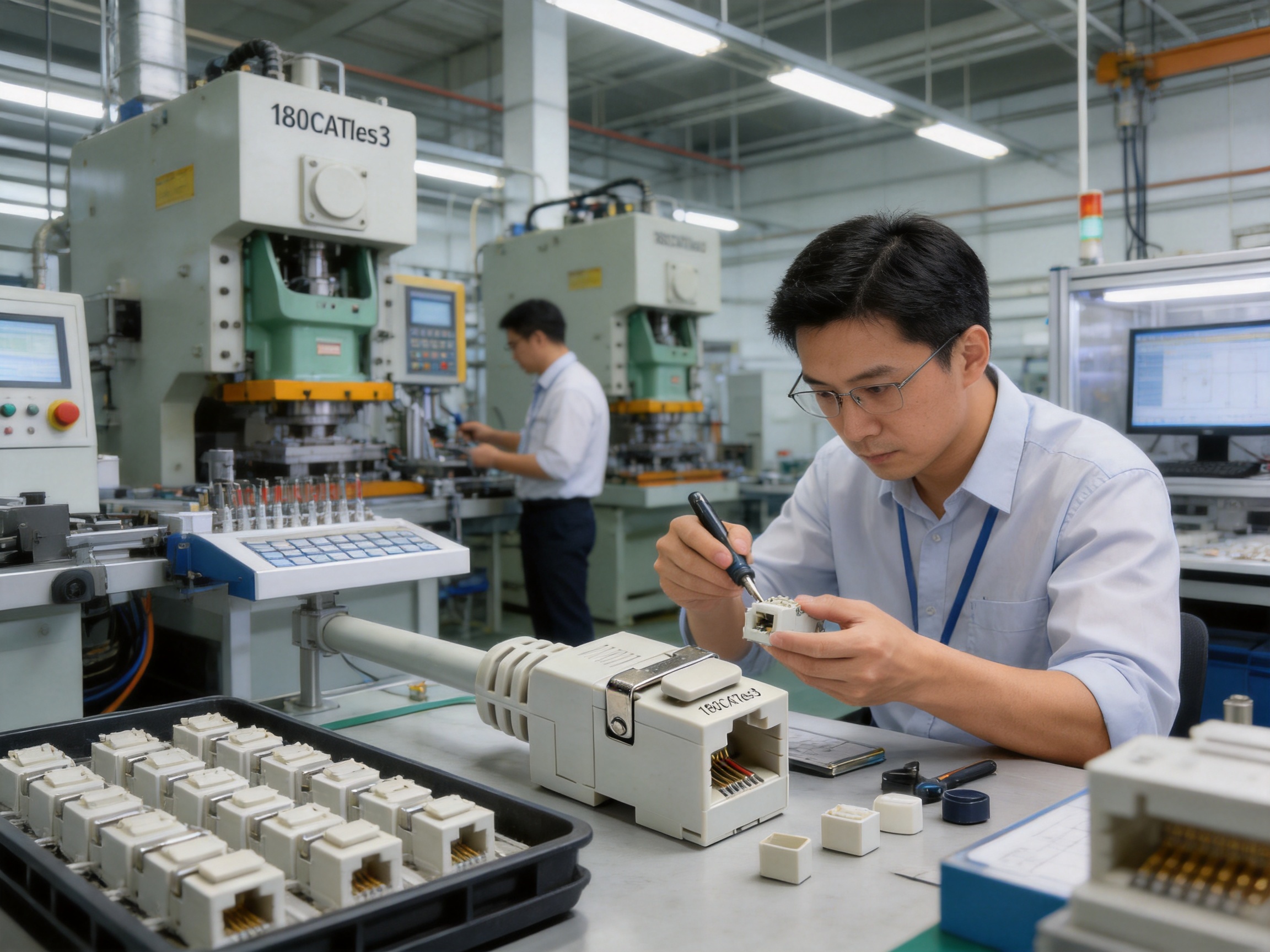
Manufacturing resources also strengthen product consistency. The factory operates 10 regular and customization production lines, 10 fully automatic injection molding machines, 20 semi-automatic injection molding machines, and 8 automatic installation machines. These capabilities support stable annual output of more than 9 million pieces. High-volume production experience is especially relevant for keystone jacks because buyers often require large quantities with consistent dimensions and reliable performance.
Advanced Production Processes
The production of a keystone jack involves several key stages, and each stage affects the finished product. The process generally begins with product design and tooling development. Engineers consider the target application, dimensional compatibility, installation method, mechanical strength, and user experience. For a toolless keystone jack, the mechanism must close smoothly and apply proper force to the conductors without damaging them.
Injection molding is one of the most important manufacturing steps. The plastic housing must be dimensionally accurate because even small deviations can affect keystone fit, latch reliability, cap movement, and contact alignment. The use of fully automatic and semi-automatic injection molding machines allows the factory to maintain efficient production while controlling repeatability. Stable molding conditions help reduce defects such as warpage, flash, sink marks, and inconsistent clip dimensions.
Contact and terminal assembly is another critical stage. The metal contacts must be positioned correctly to ensure reliable electrical connection. In IDC-style termination, the contact slot must cut or displace insulation properly and grip the conductor with suitable pressure. If the contact geometry is inaccurate, the result may be weak connection, high resistance, noise, or intermittent service. Automatic installation machines can help improve assembly consistency and reduce variation caused by manual handling.
After assembly, the product requires inspection. Visual inspection may check housing appearance, latch condition, color coding, cap alignment, and overall structure. Functional inspection may confirm mechanical operation, fitting stability, and termination reliability. For customers with specific quality requirements, performance testing and customized inspection standards can be supported. The company’s emphasis on testing helps meet comprehensive customer expectations.
Packaging is also part of product quality. Good packaging helps protect jacks during shipping, storage, and site handling. For distributors and OEM customers, packaging may also need to support labeling, part identification, and efficient warehouse management. A manufacturer with OEM and ODM experience can adapt packaging and product presentation to different market requirements.
Quality Stability from the Design Source
Quality stability begins before mass production. A well-designed keystone jack must be simple enough for efficient manufacturing and strong enough for repeated use. The design must also anticipate field conditions: installers may work quickly, cables may be bent, panels may be crowded, and users may plug and unplug devices many times over the product’s life.
The company’s mature research and development system supports quality at the design source. This means potential problems can be addressed early through engineering review, prototype evaluation, tooling adjustment, and process planning. Instead of relying only on final inspection, the product is improved before and during production so that consistent quality is built into the manufacturing process.
For the SMT-1023T4C3, design-source quality may influence several user-facing details. The termination cap should open and close reliably. The wire guide should be understandable. The plastic housing should resist cracking under normal installation force. The keystone latch should hold securely in compatible mounting hardware. The contact structure should provide stable conductor grip. These details are what separate a dependable jack from an ordinary low-cost component.
High-end market orientation also affects quality expectations. When a manufacturer serves markets in Europe, Australia, Africa, the Middle East, and Southeast Asia, it must adapt to different project standards, buyer requirements, and installation habits. Stable export experience encourages stronger process control, clearer documentation, and better responsiveness to customer feedback.
OEM and ODM Value for Distributors and Project Buyers
Many buyers of structured cabling components are not simply purchasing isolated products. They may be building a product line, supplying a government project, supporting an electrical contractor, or creating a private-label cabling system. For these customers, OEM and ODM capability is valuable.
OEM support may include customized labeling, packaging, color options, model references, and production according to customer specifications. ODM support may involve design adjustments, product development collaboration, or customized structures for specific market needs. A factory with engineering capability, production lines, molding resources, and assembly capacity is better positioned to support such requirements.
The SMT-1023T4C3 can be part of a broader procurement package that includes patch panels, wall face plates, data sockets, and other copper cabling components. Working with one experienced manufacturer can simplify sourcing, improve component compatibility, reduce communication complexity, and support consistent quality across the system.
For distributors, a reliable CAT3 toolless keystone jack can fill an important market segment. Even when high-speed network products attract attention, voice and basic communication products remain steady demand items. A dependable supplier helps distributors serve contractors who require both advanced data products and practical voice cabling components.
Comparison with Conventional Punch-Down CAT3 Jacks
Conventional punch-down CAT3 jacks can be effective when installed correctly, but they depend heavily on the installer’s tool and technique. In a controlled environment with skilled technicians, this may not be a problem. However, real job sites often include time pressure, limited space, changing teams, and uneven working conditions. Toolless termination offers a way to simplify the process.
With a punch-down jack, the installer must hold the jack, arrange the conductors, position the punch-down tool, apply force, and trim excess wire. If the jack is located inside a crowded wall box or panel, the process can become inconvenient. A toolless jack reduces these steps by using the product’s own closing mechanism to seat the conductors.
Toolless designs can also help protect the product from damage caused by incorrect punch-down blade orientation. A common field mistake is using the cutting side of the blade incorrectly or striking at an angle. This can damage contacts or cut conductors improperly. By reducing reliance on such tools, the SMT-1023T4C3 improves termination consistency.
From a project management perspective, toolless products can help standardize installation quality across different teams. This does not eliminate the need for training, but it makes the process easier to repeat. For large deployments, repeatability is a major advantage.
Design Details That Matter in the Field
Installers often judge a keystone jack by how it feels during use. Does it snap into the plate firmly? Does the cap close smoothly? Are the wire positions clear? Does the body feel stable? Does the termination remain secure after cable dressing? These practical details influence product reputation more than many specification sheets.
The SMT-1023T4C3 is designed for practical installation. The 180 degree body supports straight cable entry, which is often preferred in voice distribution and modular outlet applications. The toolless termination method supports a fast workflow. The keystone form factor supports integration with common structured cabling hardware.
For maintenance, the product’s modularity is important. If a jack is damaged or a port must be changed, a keystone module can often be removed and replaced without replacing the entire wall plate or panel. This supports lower maintenance cost and faster service restoration.
For installers working on repeat projects, consistency is especially valuable. A jack that fits and terminates the same way every time reduces frustration. This is one reason manufacturing precision and process control are meaningful competitive advantages, even for a component that may seem simple at first glance.
Material and Structural Considerations
Although the provided product information does not list specific materials, keystone jack performance generally depends on suitable plastic housing materials and reliable metal contacts. The housing must provide insulation, mechanical support, and dimensional stability. The contact components must provide conductivity and reliable conductor engagement.
A quality housing should withstand normal installation force and maintain its shape during storage and use. Poor molding quality can lead to loose caps, brittle clips, uneven fitting, or misaligned contacts. In structured cabling, such defects may not appear immediately but can cause service issues after installation.
The termination structure must also hold conductors securely. Voice circuits may be less demanding than high-speed data circuits, but they are still sensitive to poor contact, oxidation, and looseness. A stable IDC connection helps maintain clear voice transmission and reduces crackling, dropouts, or intermittent line faults.
Because the product is toolless, the mechanical action of the cap or cover is particularly important. It must apply sufficient pressure to seat the conductors while remaining easy enough for technicians to operate. This balance requires careful design and production control.
Installation Best Practices
To obtain the best results from the SMT-1023T4C3 180 degree CAT3 toolless keystone jack, installers should follow proper cabling practices. Even a high-quality jack can perform poorly if the cable is damaged, conductors are placed incorrectly, or excessive force is applied during cable management.
Before termination, the installer should confirm that the cable type matches the intended application. The jacket should be stripped carefully without nicking the insulated conductors. Conductors should be arranged according to the jack’s color guide or project wiring plan. For voice applications, consistency across the project is essential because miswiring can cause service confusion and troubleshooting delays.
When closing the toolless cap, the installer should ensure that all conductors are properly seated in their channels. The cap should be closed firmly according to the product design. After termination, excess cable strain should be avoided. The cable should be dressed neatly, with an appropriate bend radius, and secured in a way that does not pull directly on the termination.
After installation, testing is recommended. Voice lines can be checked for continuity, correct pairing, and service performance. In larger projects, documentation should record port location, cable destination, and panel assignment. Clear labeling helps future maintenance and reduces the chance of accidental disconnection.
Benefits for Contractors
Contractors value products that reduce installation time, minimize rework, and perform reliably after handover. The SMT-1023T4C3 supports these priorities through its toolless termination method and practical 180 degree configuration. Faster termination can help contractors meet project deadlines, especially when voice outlets are numerous.
Reduced tool dependency is another benefit. On a busy site, tools can be misplaced, shared among workers, or used incorrectly. A toolless jack does not remove every installation requirement, but it makes the termination process more self-contained. This can be especially useful for maintenance teams or smaller contractors who need flexibility.
Product consistency also reduces risk. If every jack fits the face plate properly and terminates predictably, installers can work faster and with more confidence. Fewer defective or inconsistent parts mean fewer delays, fewer callbacks, and better customer satisfaction.
Benefits for System Integrators
System integrators often need to deliver complete solutions rather than individual components. They may combine voice cabling, data cabling, security systems, smart building controls, and fiber infrastructure. A CAT3 toolless keystone jack can be one part of that complete package.
The manufacturer’s broader product portfolio supports integrators who prefer coordinated sourcing. Keystone jacks, patch panels, wall face plates, and data sockets are commonly used together. When these products come from an experienced cabling manufacturer, there is a better chance of practical compatibility and consistent appearance.
For integrators working across multiple regions, export experience is also important. A supplier familiar with international markets can better understand packaging expectations, documentation needs, product consistency requirements, and communication standards. This can reduce procurement risk.
Benefits for Distributors and Wholesalers
Distributors need products that are easy to explain, easy to stock, and reliable enough to build repeat business. The SMT-1023T4C3 has a clear value proposition: it is a CAT3 toolless keystone jack for voice-grade structured cabling, with a 180 degree design for neat installation. This clear positioning helps sales teams match the product to customer needs.
The product can serve contractors who need dependable voice modules, maintenance companies that repair existing cabling, and project buyers who require cost-effective communication outlets. Because CAT3 remains relevant in many facilities, stocking a reliable toolless CAT3 jack can help distributors cover a practical market segment.
OEM and ODM availability further strengthens distributor value. Private-label packaging, customized product references, or coordinated product lines can help distributors differentiate themselves in competitive markets. A manufacturer with stable production capacity can support ongoing supply rather than one-time availability.
How the Product Supports Long-Term Maintenance
Long-term maintenance is often overlooked during initial product selection. A low-cost jack may seem attractive at purchase, but if it creates service problems later, the total cost becomes higher. Service calls, troubleshooting time, user complaints, and replacement labor can exceed the savings from buying a cheaper component.
The SMT-1023T4C3 supports maintenance by using a modular keystone format and a toolless termination structure. If a port must be inspected, the technician can access the module and review the termination without relying on complex tools. The 180 degree cable entry can also make rear-side inspection more straightforward in suitable panels and wall outlets.
In facilities with frequent changes, such as offices with shifting departments or hotels with periodic renovations, serviceability is important. A cleanly installed keystone system allows technicians to identify and manage ports more efficiently. A stable jack helps reduce intermittent faults that are difficult and time-consuming to diagnose.
Quality Control and Testing Expectations
Quality control for keystone jacks should include both mechanical and electrical considerations. Mechanical checks may include housing dimensions, latch strength, cap function, contact placement, and visual appearance. Electrical checks may include continuity and termination reliability. Depending on the customer’s requirements, additional testing can be performed to confirm product suitability.
The company emphasizes strict production management and product performance testing. This is especially important for export customers who need stable quality across batches. A cabling component must not only work as a sample; it must remain consistent across large-volume orders.
For buyers, this manufacturing approach reduces uncertainty. When a factory has technical personnel, production lines, molding equipment, automatic installation machines, and testing experience, it is better able to maintain repeatability. This is an important advantage over small suppliers that may rely heavily on manual assembly or inconsistent outsourcing.
Cost-Effectiveness Without Sacrificing Practical Reliability
Cost-effectiveness does not mean choosing the cheapest product. It means choosing the component that provides the right performance, durability, installation efficiency, and supply reliability for the application. The SMT-1023T4C3 is cost-effective because it matches CAT3 voice-grade needs while offering modern installation convenience through toolless termination.
Using a higher-category jack for every voice outlet may not always be necessary. In projects where the requirement is clearly voice or basic communication, a CAT3 jack can control material cost. At the same time, selecting a toolless design helps reduce labor time. This combination of appropriate category and efficient installation supports a strong total value proposition.
Compared with low-end CAT3 jacks, the product’s manufacturing background adds value through better consistency, engineering support, and quality control. Buyers are not only purchasing a small plastic and metal module; they are purchasing the reliability of a controlled manufacturing process.
Global Market Suitability
The company maintains stable export volume in Europe, Australia, Africa, the Middle East, and Southeast Asia. These regions include diverse cabling practices and project environments. Some markets emphasize strict documentation and consistency, while others prioritize rugged practicality and cost control. A product that can serve multiple regions must be adaptable and consistently manufactured.
The SMT-1023T4C3 is suitable for international buyers who need a practical CAT3 voice cabling solution. Its keystone format is familiar in many markets, and its toolless operation is easy to communicate to installers. For distributors, this makes the product easier to introduce into existing cabling portfolios.
International projects also benefit from supplier communication. The company’s experience in online communication with customers helps support project discussions, quotation processes, customization needs, and after-sales service. This matters because cabling projects often require accurate product matching and timely delivery.
Purchasing Considerations
Before purchasing the SMT-1023T4C3, buyers should confirm the intended application. If the project requires high-speed Ethernet, a higher category keystone jack may be more suitable. If the project requires voice, PBX, telephone, intercom, or low-speed communication connections, a CAT3 keystone jack can be a practical choice.
Buyers should also confirm compatibility with the selected wall plates, patch panels, or mounting frames. Keystone products are modular, but dimensional standards and regional preferences may vary. Working with an experienced supplier can help ensure correct matching.
For large orders, buyers may request samples for installation testing. Sample evaluation should include fit, termination feel, wire guide clarity, cap operation, and continuity testing. If private labeling or custom packaging is needed, the buyer should discuss OEM or ODM requirements early so that production and packaging can be planned efficiently.
Project buyers should also consider documentation and labeling. Clear part numbers, packaging labels, and installation instructions can improve job-site efficiency. For distributors, product presentation and inventory coding are important for warehouse and sales operations.
Company Strength and Customer Value
Yuyao Simante Network Communication Equipment Co., Ltd. positions itself as a manufacturer focused on network cabling solutions and optical fiber products. The company integrates design, development, sales, and service, which allows it to support customers from initial communication through production and delivery. This integrated capability is valuable for buyers who need more than a standard catalog item.
Nearly 20 years of service experience provides accumulated knowledge of customer expectations, market trends, and practical installation needs. The company’s engineering and technical personnel support continuous quality improvement and product updates. Its production equipment and manufacturing lines support both regular production and customized projects.
The company’s main products are widely used in structured cabling, network communication, smart home, automation equipment, and related fields. This broad application experience helps ensure that products are developed with real installation requirements in mind. For the SMT-1023T4C3, this means the product is not only designed as a standalone jack but also as part of a complete cabling ecosystem.
Customer value is created through stable quality, professional communication, customization capability, and reliable supply. In competitive cabling markets, these strengths help buyers reduce risk and build long-term cooperation.
Q&A Section
What is the SMT-1023T4C3 180 degree CAT3 toolless keystone jack used for?
It is used for voice-grade and basic copper communication connections in structured cabling systems. Typical applications include telephone outlets, PBX systems, intercom wiring, hotel room phones, office voice ports, and low-speed communication circuits.
What does 180 degree mean in this keystone jack?
It refers to the rear cable entry and termination direction. A 180 degree jack allows the cable to enter from the back in a straight orientation, which can support neat cable routing in wall plates, patch panels, and modular outlets.
Why choose a toolless keystone jack?
A toolless jack can be terminated without a punch-down tool. This helps improve installation speed, reduce tool dependency, and make termination more consistent across different installers.
Is CAT3 still useful today?
Yes. CAT3 remains useful for voice, telephone, PBX, intercom, and certain low-speed communication applications. It is often a cost-effective choice when high-speed Ethernet performance is not required.
How does this product compare with ordinary punch-down CAT3 jacks?
Compared with ordinary punch-down jacks, this toolless model can reduce installation steps and lower the chance of damage caused by incorrect punch-down tool use. Its 180 degree design also supports orderly cable entry and easier cable management in many installations.
Can this jack be used in wall plates and patch panels?
Yes, it is a keystone-style module designed for structured cabling accessories such as wall plates, patch panels, and compatible mounting frames. Buyers should confirm compatibility with their selected hardware before bulk purchase.
Is it suitable for high-speed Ethernet?
It is a CAT3 product, so it is intended for voice-grade and basic communication applications. For high-speed Ethernet, buyers should consider higher category jacks such as CAT5e, CAT6, or CAT6A according to project requirements.
What manufacturing strengths support the product quality?
The manufacturer has experienced engineers and technical personnel, multiple regular and customization production lines, automatic and semi-automatic injection molding machines, automatic installation machines, and an annual output capacity of more than 9 million pieces. These strengths support stable production and consistent quality.
Can the product be customized for OEM or ODM projects?
Yes. The manufacturer undertakes OEM and ODM projects and can support customers with customized requirements such as labeling, packaging, and product-related adjustments according to project needs.
What should buyers check before ordering?
Buyers should confirm application category, compatibility with wall plates or panels, wiring requirements, sample performance, packaging needs, and any OEM or ODM customization details.
Conclusion
The SMT-1023T4C3 180 degree CAT3 toolless keystone jack is a practical and efficient component for voice-grade structured cabling systems. Its value lies in matching the right performance level to the right application. For telephone, PBX, intercom, hotel communication, office voice, and low-speed copper communication systems, it provides a cost-effective alternative to over-specified high-category components.
The product’s 180 degree design supports orderly cable routing, while its toolless termination helps improve installation speed and consistency. These features make it attractive to contractors, maintenance teams, distributors, system integrators, and project buyers. Compared with ordinary low-cost CAT3 jacks, it offers stronger value through practical design, manufacturing consistency, and supplier support.
Behind the product is a manufacturer with nearly 20 years of experience in network cabling solutions and optical fiber products. Engineering capability, technical personnel, injection molding resources, automatic installation equipment, multiple production lines, and strong output capacity all contribute to stable quality. The company’s ability to support OEM and ODM projects further increases its value for international buyers and distributors.
In structured cabling, reliability is built from every connection point. A well-designed CAT3 toolless keystone jack may be small, but it plays an important role in keeping voice and basic communication systems organized, serviceable, and dependable. For projects that require efficient installation, practical performance, and consistent supply, the SMT-1023T4C3 is a strong choice in the CAT3 keystone jack category.
References
ANSI/TIA-568, Commercial Building Telecommunications Cabling Standard.
ISO/IEC 11801, Information Technology Generic Cabling for Customer Premises.
BICSI Telecommunications Distribution Methods Manual.
IEC 60603 Series, Connectors for Electronic Equipment.
Manufacturer product and company information supplied for SMT-1023T4C3 180 degree CAT3 toolless keystone jack.