Español
 عربى
عربى русский
Content
- 1 Product Overview
- 2 Why CAT6A Shielded Connectivity Matters
- 3 Key Advantages Over Common Competing Connectors
- 4 Technical Specification Summary
- 5 Toolless Termination and Installation Efficiency
- 6 Shielding Performance and EMC Protection
- 7 Electrical Reliability for High-Speed Data Transmission
- 8 Mechanical Strength and Service Life
- 9 Material Selection and Surface Treatment
- 10 Application Scenarios
- 11 Compliance and Standards-Oriented Design
- 12 Packaging, Storage, and Inventory Reliability
- 13 Manufacturing Strength Behind the Product
- 14 Quality Control and Testing Culture
- 15 OEM and ODM Value for Global Customers
- 16 Comparison With Ordinary Connectors
- 17 Installation Considerations
- 18 Long-Term Value for Contractors, Distributors, and End Users
- 19 Role in a Complete Copper and Fiber Structured Cabling Portfolio
- 20 Frequently Asked Questions
- 20.1 What is the SMT-3016T8C6A-FTP connector used for?
- 20.2 Does the connector support both T568A and T568B wiring?
- 20.3 Why is the toolless design important?
- 20.4 What does 360-degree shielding mean?
- 20.5 What frequency range does the connector support?
- 20.6 What cable sizes are compatible with the IDC terminal?
- 20.7 How durable is the connector?
- 20.8 What materials are used in the connector?
- 20.9 Is the product RoHS compliant?
- 20.10 What are the recommended storage conditions?
- 20.11 Can the product be customized for OEM or ODM projects?
- 20.12 What makes the manufacturer suitable for long-term cooperation?
- 21 Conclusion
- 22 References
- 23 Product: SMT-3016T8C6A-FTP CAT6A Toolless Shielded Male Connector
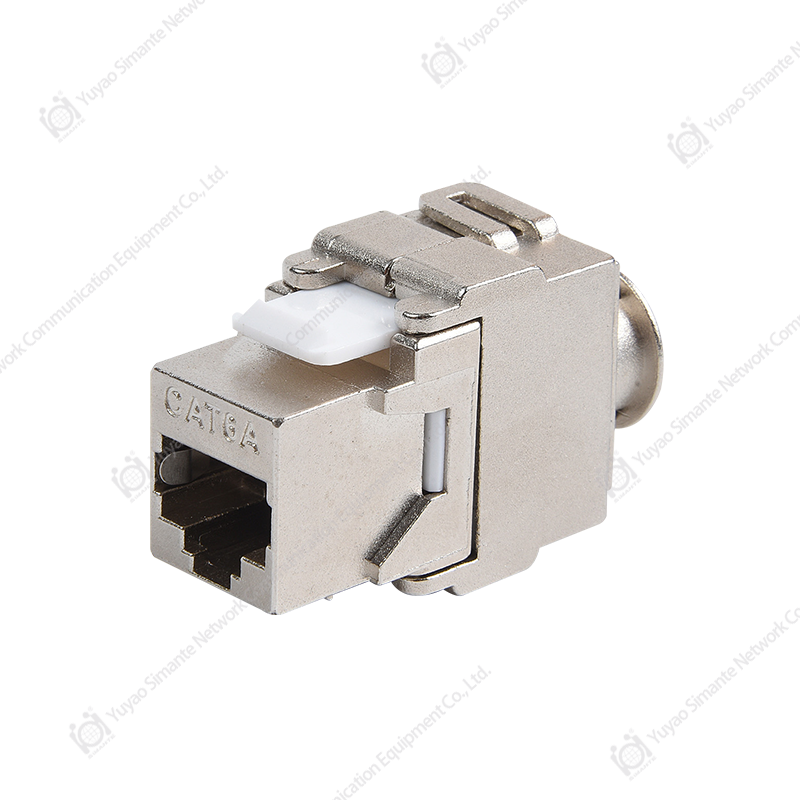
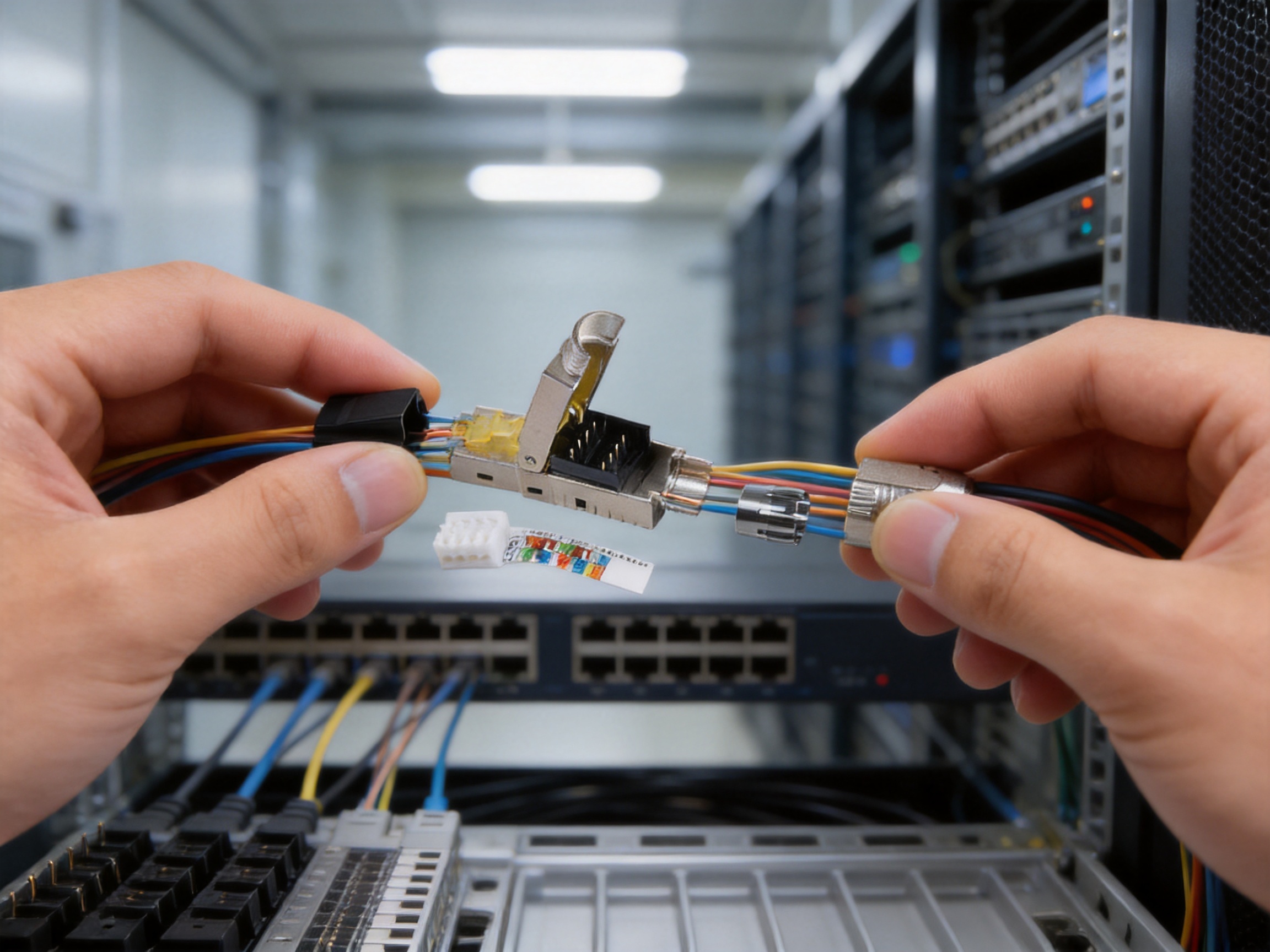
In modern structured cabling, the quality of each connection point directly affects bandwidth stability, transmission reliability, installation efficiency, and long-term network maintenance costs. The SMT-3016T8C6A-FTP CAT6A Toolless Shielded Male Connector is designed for professional copper cabling systems that require fast field termination, dependable shielding, and stable electrical performance in demanding data environments. As a CAT6A FTP male connector, it supports high-frequency transmission up to 500 MHz and is intended for structured cabling applications that require compliance with category 6A transmission expectations, T568A and T568B wiring sequences, and robust electromagnetic interference protection.
This connector is suitable for equipment connections, work area connections, horizontal cabling termination, and cross-connection environments where reliable RJ45 interface performance is essential. Its compact structure, clearly marked wiring color labels, shielded housing, and tool-free termination method make it a practical choice for installers, contractors, system integrators, and network infrastructure distributors. Compared with ordinary unshielded or tool-dependent connectors, this model offers stronger installation convenience, better EMC protection, and more stable performance consistency across large-scale cabling deployments.
Beyond the product itself, the value of the connector is strengthened by the manufacturing background behind it. Yuyao Simante Network Communication Equipment Co., Ltd. is a professional manufacturer of network cabling solutions and optical fiber products, integrating design, development, production, sales, and service. With nearly two decades of industry experience, a mature research and development system, more than 10 engineers, over 30 full-time technical personnel, multiple regular and customized production lines, automatic and semi-automatic injection molding equipment, automatic assembly equipment, and an annual output capacity exceeding 9 million pieces, the company provides the production reliability required by global cabling markets.
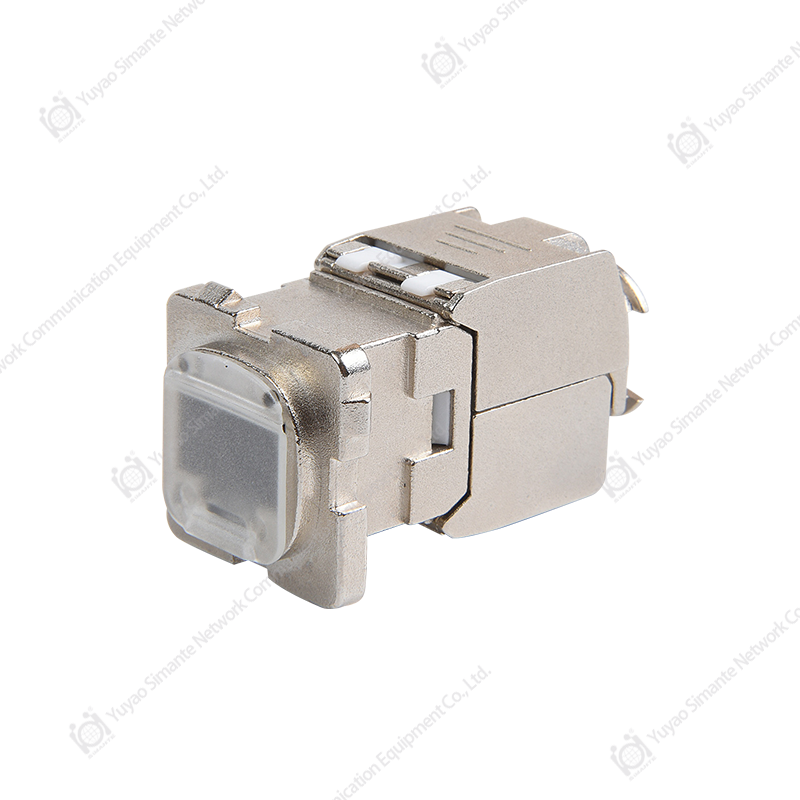
SMT-3016T8C6A-FTP CAT6A Toolless Shielded Male Connector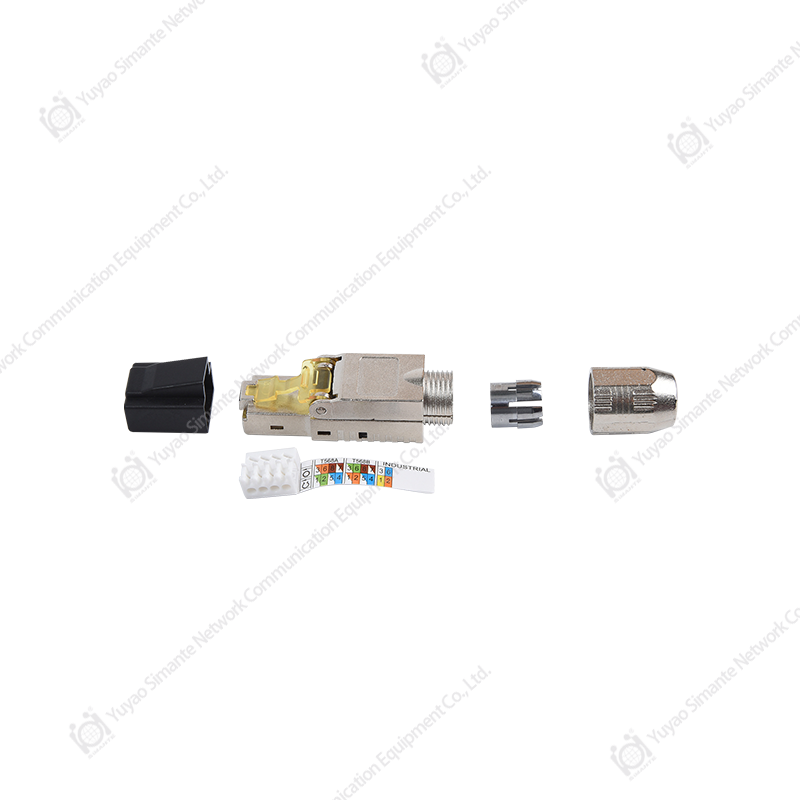
Product Overview
The SMT-3016T8C6A-FTP CAT6A Toolless Shielded Male Connector is a copper structured cabling component designed to provide stable high-speed network connection in shielded category 6A systems. It belongs to the male connector category and is intended for use with copper twisted pair cables and compatible copper jumpers. Its purpose is to form a reliable interface between cabling equipment and terminal equipment, adapters, patching points, work area outlets, or device-side network connections.
As network demand continues to increase in offices, data centers, intelligent buildings, security systems, industrial control environments, smart homes, and automation equipment, connectors must do more than simply complete a circuit. They must support high-frequency data transmission, resist interference, maintain contact pressure, provide mechanical durability, simplify installation, and reduce error rates during termination. This product addresses these requirements with a tool-free wiring method, compact form factor, 360-degree shielding shell design, and clear color sequence labels for T568A and T568B wiring.
Category 6A cabling is commonly selected for 10 Gigabit Ethernet applications over copper cabling channels. Although the actual performance of a network depends on the entire channel, including cable, patch cords, jacks, connectors, patch panels, installation quality, grounding, and environmental conditions, the connector remains a critical part of the signal path. A poor connector can introduce return loss, insertion loss, near-end crosstalk, intermittent contact, grounding problems, and difficult troubleshooting. A well-designed CAT6A FTP connector helps preserve channel integrity and supports predictable network performance.
The product is engineered for a frequency range of 1 to 500 MHz. It has a working voltage of 125 V and withstand voltage performance of DC 1000 V or AC 750 V for one minute without breakdown or arcing. Its insulation resistance is specified with an initial value of at least 200 megohms and at least 100 megohms after constant damp heat testing. These characteristics reflect the connector’s suitability for professional network cabling environments where electrical reliability and environmental stability are important.
Mechanically, the connector is designed for practical field use. The insertion force is not more than 20 N, while the pull-out force is not less than 20 N. The connection device can withstand 50 N for 60 plus or minus 5 seconds. The IDC terminal is compatible with 23 to 26 AWG twisted pair conductors, making it appropriate for common structured cabling cable sizes. Durability is specified at 750 insertion cycles for plug and socket operation and 250 wire termination cycles, helping installers and users achieve long service life under repeated maintenance or reconfiguration conditions.
Why CAT6A Shielded Connectivity Matters
Structured cabling infrastructure is expected to remain in service for many years, often supporting multiple generations of active equipment. While switches, routers, wireless access points, cameras, servers, and endpoint devices may be replaced more frequently, the passive cabling system is usually expected to support future bandwidth requirements with minimal rework. Selecting the right connector at the beginning of a project can reduce upgrade difficulty and improve lifecycle value.
CAT6A cabling was developed to provide improved high-frequency performance compared with earlier categories. It is especially important in applications requiring 10 Gigabit Ethernet, dense device connectivity, power and data integration, or reduced alien crosstalk sensitivity. In shielded systems, a connector must preserve continuity of the shielding layer and contribute to an effective grounding path when installed correctly. The SMT-3016T8C6A-FTP connector is designed around a 360-degree shielding structure that helps reduce the impact of electromagnetic interference and supports more stable transmission in noisy environments.
Electromagnetic interference can come from power cables, motors, fluorescent lighting, elevators, industrial machinery, wireless equipment, high-density server rooms, and building automation systems. In an unshielded or poorly shielded connection, interference can enter the cable channel at weak points, especially around connector terminations where pair geometry is disturbed. A shielded male connector with all-around shell coverage helps protect this vulnerable area and supports reliable network operation.
In competitive cabling markets, many low-cost connectors focus primarily on basic mechanical connection. However, high-performance cabling requires more precise material selection, contact plating, internal geometry control, shielding design, termination reliability, and quality inspection. The SMT-3016T8C6A-FTP connector is positioned for users who need a practical combination of performance, installation speed, and dependable manufacturing quality.
Key Advantages Over Common Competing Connectors
One of the most important advantages of the SMT-3016T8C6A-FTP connector is its tool-free termination method. Traditional connectors often require specialized crimping tools, precise manual trimming, and significant installer experience. Tool-dependent installation can lead to inconsistent pressure, conductor misalignment, and termination errors, especially during large projects or field repairs. A tool-free design simplifies the process, reduces dependency on special tools, and supports faster installation.
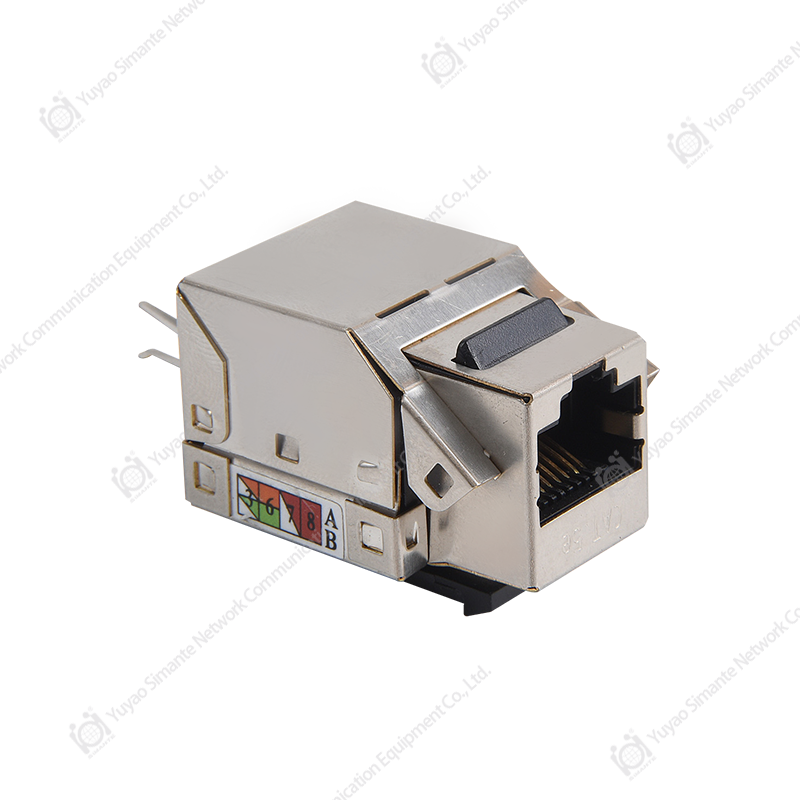
The second major advantage is its clear T568A and T568B color sequence labeling. Wiring sequence errors remain a common cause of failed network testing and service delays. When a connector includes clearly visible sequence markings, installers can terminate conductors more accurately and efficiently. This is particularly valuable in projects involving multiple installation teams, mixed skill levels, tight schedules, or difficult working spaces.
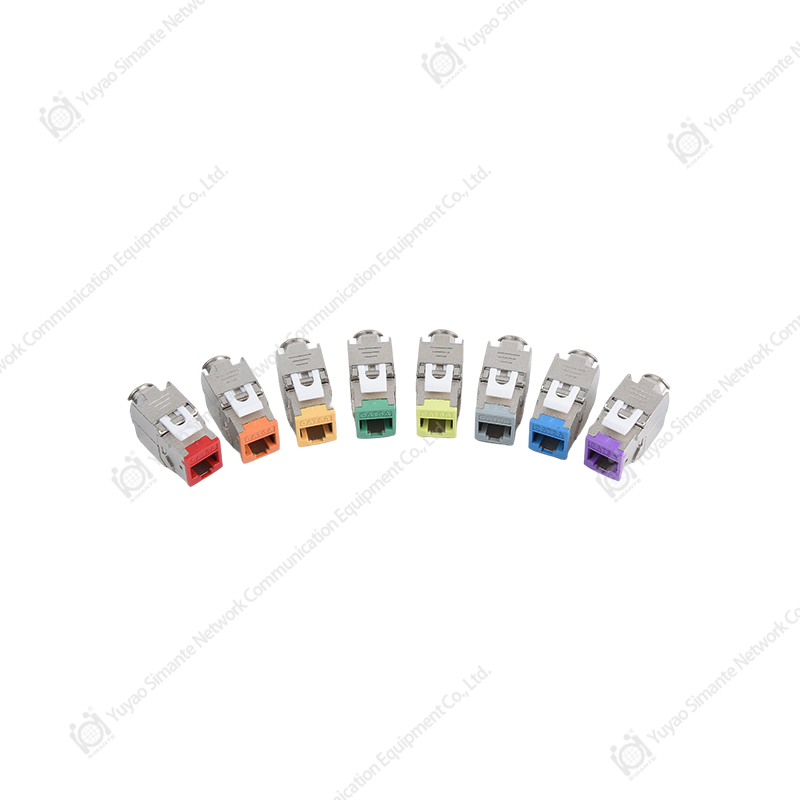
The third advantage is the 360-degree shielding shell. Some competing products may provide partial shielding or shielding structures that are difficult to assemble consistently. This connector uses an all-around shielding shell design to help prevent EMC electromagnetic interference. The rear cover of the shielding cover is fixed with a non-screw design, making installation faster and reducing the risk of missing screws, over-tightening, or uneven assembly.
The fourth advantage is durability. A rated 750 plug and socket insertion cycles support repeated plugging and unplugging during maintenance, network upgrades, or equipment relocation. A rated 250 wire termination cycles demonstrates confidence in the termination mechanism. For distributors and contractors, these durability figures support customer satisfaction because the product is less likely to fail prematurely under normal use.
The fifth advantage is material quality. Metal components include cold rolled steel with plastic spraying for bracket-related assemblies, brass gold-plated contacts for gold needles, and nickel-plated phosphor bronze for IDC card wire terminals. Non-metallic materials include PC polycarbonate and PBT, both widely used in electrical and network components for strength, dimensional stability, and heat resistance. PCB material is FR4, a common and reliable substrate for electrical applications. Gold plating thickness is available in the range of 3 to 50 microinches, supporting different market and customer requirements.
The sixth advantage is environmental compliance and operating range. The product meets RoHS requirements and supports operation across a temperature range of minus 25 to plus 70 degrees Celsius with humidity up to 85 percent under specified conditions. These specifications make it suitable for a broad variety of indoor network installations, including commercial buildings, equipment rooms, intelligent facilities, and controlled industrial environments.
Technical Specification Summary
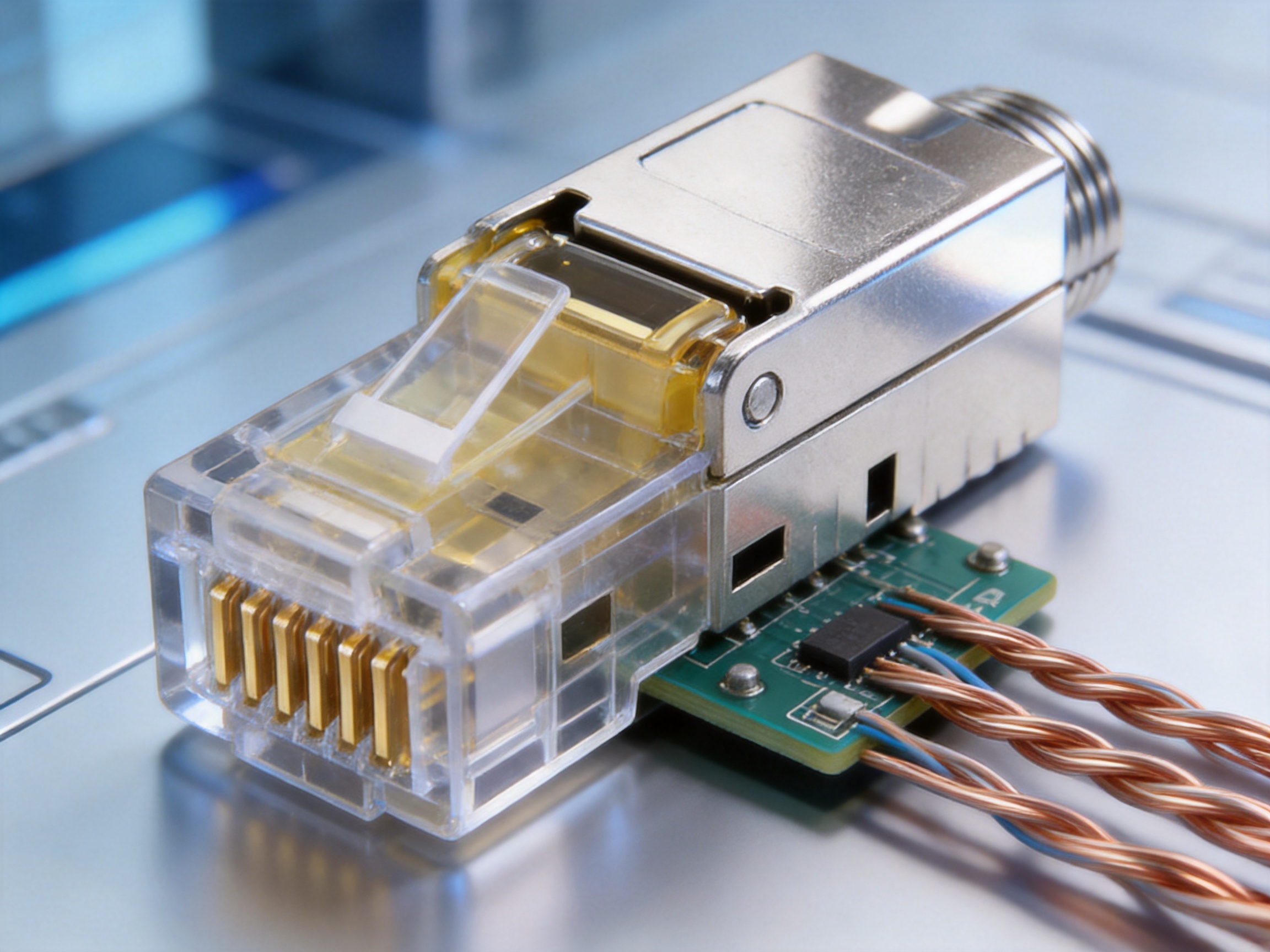
The following table summarizes major parameters and practical benefits of the SMT-3016T8C6A-FTP CAT6A Toolless Shielded Male Connector.
| Item | Specification | Practical Benefit |
|---|---|---|
| Product type | CAT6A FTP toolless shielded male connector | Supports high-performance copper structured cabling connections |
| Wiring sequence | T568A and T568B | Compatible with common structured cabling termination standards |
| Frequency range | 1 to 500 MHz | Suitable for category 6A high-frequency transmission requirements |
| Working voltage | 125 V | Provides stable operation within specified network connector conditions |
| Withstand voltage | DC 1000 V or AC 750 V for 1 minute | Demonstrates insulation strength and safety margin |
| Insulation resistance | Initial value at least 200 megohms; after damp heat test at least 100 megohms | Supports reliable electrical isolation in varied conditions |
| Insertion force | Not more than 20 N | Allows smooth plugging without excessive force |
| Pull-out force | Not less than 20 N | Helps maintain secure connection during use |
| Connector device effect | 50 N for 60 plus or minus 5 seconds | Improves mechanical confidence during installation and operation |
| IDC conductor range | 23 to 26 AWG twisted pair | Compatible with common structured cabling cable sizes |
| Plug and socket durability | 750 insertion cycles | Suitable for repeated maintenance and equipment changes |
| Wire termination durability | 250 termination cycles | Supports stable field termination and rework flexibility |
| Shielding design | 360-degree shielding shell | Helps reduce EMC electromagnetic interference |
| Metal materials | Cold rolled steel, brass with gold plating, nickel-plated phosphor bronze | Balances strength, conductivity, corrosion resistance, and contact stability |
| Plastic materials | PC polycarbonate and PBT | Provides mechanical durability and dimensional stability |
| PCB material | FR4 | Supports reliable electrical construction |
| Environmental compliance | RoHS compliant | Meets modern environmental material expectations |
| Operating temperature | Minus 25 to plus 70 degrees Celsius | Suitable for diverse installation environments |
| Storage condition | Minus 5 to plus 30 degrees Celsius, relative humidity not more than 70 percent | Supports organized warehousing and long-term inventory management |
Toolless Termination and Installation Efficiency
Installation speed is one of the strongest reasons to choose a toolless connector. In large structured cabling projects, even a small reduction in termination time per connector can result in significant labor savings. When multiplied across hundreds or thousands of termination points, tool-free installation can help contractors complete projects faster, improve schedule control, and reduce the cost of rework.
The tool-free method also improves accessibility. Network technicians often work in tight spaces, behind equipment racks, above ceilings, inside cabinets, or in already occupied buildings where convenient tool use is limited. A connector that does not require a dedicated crimping process can simplify field service, emergency repairs, and endpoint changes.
Another practical advantage is consistency. With traditional connectors, termination quality can vary depending on tool calibration, operator technique, blade sharpness, hand pressure, and conductor positioning. Toolless connector designs are intended to guide the conductors and apply termination pressure through a controlled mechanical structure. While proper preparation and installation discipline are still necessary, the product design helps reduce variability.
The connector’s support for both T568A and T568B sequences is also important. Different regions, customers, building standards, and legacy systems may use different wiring patterns. A connector that supports both makes inventory management easier and provides installers with flexibility. Clear labeling on the connector helps avoid pair reversal and split-pair errors that can otherwise cause poor test results.
Shielding Performance and EMC Protection
Shielding is increasingly important in network cabling because modern buildings contain more electrical and electronic systems than ever before. High-density wireless access points, access control systems, LED lighting drivers, security cameras, intelligent sensors, elevators, power distribution units, and industrial automation devices can all contribute to electromagnetic noise. As networks carry more data at higher speeds, the tolerance for signal disturbance becomes lower.
The SMT-3016T8C6A-FTP connector uses a 360-degree all-around shielding shell design to help prevent EMC electromagnetic interference. This design is superior to simple partial shielding because it covers the connector termination area more completely. The termination point is often where shielding continuity is most vulnerable, so a comprehensive shell structure helps maintain better protection across the connection.
The rear cover of the shielding cover uses a non-screw fixing design. This is a practical engineering feature because screws can complicate installation, fall into difficult spaces, become loose over time, or require additional tools. A non-screw structure helps accelerate assembly while reducing field installation risks. For contractors working under project deadlines, this design can improve productivity and reduce minor but costly interruptions.
In shielded cabling systems, correct grounding and bonding practices are essential. A shielded connector can provide the physical foundation for interference protection, but the entire channel must be designed and installed properly. When used with compatible shielded cables, patch cords, panels, and grounding practices, this connector contributes to a more robust high-frequency cabling channel.
Electrical Reliability for High-Speed Data Transmission
Electrical performance is central to any network connector. A connector must maintain stable conductor contact, minimize impedance discontinuity, limit crosstalk, and provide insulation strength. The specified frequency range of 1 to 500 MHz corresponds with the requirements of category 6A systems and helps support high-speed data applications when installed as part of a compliant channel.
The working voltage of 125 V and withstand voltage of DC 1000 V or AC 750 V for one minute without breakdown and arcing reflect reliable insulation behavior. Although Ethernet data signals operate at much lower levels, withstand voltage testing provides confidence in material quality, spacing, and insulation design. It is especially relevant for products distributed into professional markets where formal quality expectations are common.
Insulation resistance is specified at an initial value of at least 200 megohms and at least 100 megohms after constant damp heat testing. This demonstrates that the connector is designed to retain electrical isolation even after exposure to challenging humidity conditions. In real installations, humidity can fluctuate due to seasonal conditions, air conditioning operation, building ventilation, and equipment room environments. Stable insulation resistance helps preserve signal integrity and safety.
Near-end crosstalk attenuation is also part of the product’s electrical characteristics. Crosstalk occurs when signal energy from one pair couples into another pair. At high frequencies, crosstalk control depends on careful pair management, termination geometry, contact design, and PCB layout if applicable. A connector that is designed for category 6A performance helps reduce the chance that the termination point becomes the weak link in the cabling channel.
Mechanical Strength and Service Life
Network cabling components must survive more than laboratory testing. They must handle installer contact, repeated plugging, cable movement, rack maintenance, cleaning, equipment replacement, and occasional field stress. Mechanical specifications therefore matter as much as electrical performance.
The connector’s insertion force is not more than 20 N, allowing practical hand operation without excessive resistance. At the same time, the pull-out force is not less than 20 N, helping maintain a secure connection. The balance between easy insertion and stable retention is important because a connector that is too tight can be inconvenient and may damage ports, while one that is too loose may cause intermittent contact.
The connector connection device is specified to withstand 50 N for 60 plus or minus 5 seconds. This provides additional confidence in the connector’s structural integrity. The IDC terminal is designed for 23 to 26 AWG twisted pair cables, which covers a broad range of typical solid or compatible structured cabling conductors used in professional installations.
Durability of 750 plug and socket insertion cycles makes the connector suitable for environments where equipment may be moved or reconfigured. In offices, laboratories, training centers, data rooms, and testing environments, connectors may be unplugged more frequently than in fixed installations. A high insertion cycle rating helps preserve long-term reliability. The 250 wire termination cycle rating is also valuable for contractors and maintenance teams because it indicates a robust termination structure.
Material Selection and Surface Treatment
The quality of a connector depends heavily on its materials. Low-grade plastics can deform, crack, or lose dimensional accuracy. Poor metal plating can oxidize, increase contact resistance, or reduce signal consistency. Weak terminal materials can lose spring force. The SMT-3016T8C6A-FTP connector uses a material combination intended to support electrical stability and mechanical durability.
Brass gold-plated contact pins provide good conductivity and corrosion resistance. Gold plating is widely used in network connectors because it resists oxidation and helps maintain low contact resistance over repeated mating cycles. The available gold-plated layer thickness range of 3 to 50 microinches allows product configuration according to customer requirements, performance level, and market positioning.
IDC card wire terminals use nickel-plated phosphor bronze. Phosphor bronze is valued for spring properties and fatigue resistance, making it suitable for terminals that must maintain pressure on conductors. Nickel plating contributes to corrosion resistance and surface durability. Together, these materials support stable IDC termination and long-term contact quality.
Plastic materials include PC polycarbonate and PBT. PC offers impact resistance and toughness, while PBT provides dimensional stability, heat resistance, and electrical insulation properties. These engineering plastics are commonly used in professional electrical components because they help maintain accurate geometry under stress and temperature variation. FR4 PCB material further supports reliable electrical construction.
Cold rolled steel with plastic spraying is specified for bracket-related metal parts in the product family and associated structured cabling assemblies. The use of treated steel demonstrates attention to mechanical strength and corrosion protection in the broader connectivity system. For customers sourcing a full structured cabling ecosystem, consistent material standards across connectors, patch panels, and accessories contribute to system reliability.
Application Scenarios
The SMT-3016T8C6A-FTP CAT6A Toolless Shielded Male Connector can be used in a wide range of copper structured cabling applications. It is suitable for equipment area connections, work area connections, horizontal cabling endpoints, cross-connection hubs, and field termination scenarios where a shielded RJ45-style connection is required.
In office buildings, it can support high-speed desktop connections, wireless access point links, VoIP phones, network printers, meeting room systems, and security devices. As more offices adopt cloud platforms, video conferencing, wireless densification, and intelligent workplace systems, cabling components must support reliable bandwidth and minimize downtime.
In equipment rooms and telecommunications spaces, the connector can help simplify patching and device-side termination. Its compact structure supports organized cabling management, while the shielded design improves reliability in environments containing multiple active devices, power supplies, and cable bundles.
In smart home and automation applications, the connector can support stable copper cabling for control systems, IP cameras, access control panels, audio-video distribution, and intelligent networked devices. Homes and residential buildings increasingly use structured cabling as a foundation for digital lifestyles, and reliable connectors reduce maintenance complexity.
In industrial or semi-industrial environments, shielded connectivity is especially useful. While this product should be installed within its specified environmental conditions, its shielding design and wide operating temperature range make it suitable for controlled environments where electromagnetic noise may be present. Examples include automation control rooms, machine monitoring systems, and facility management networks.
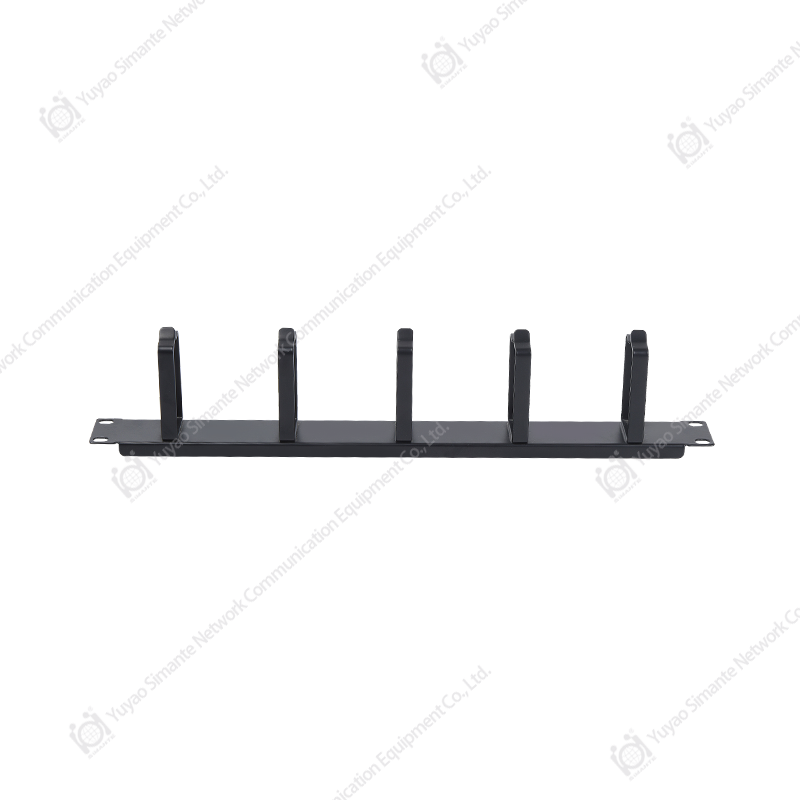
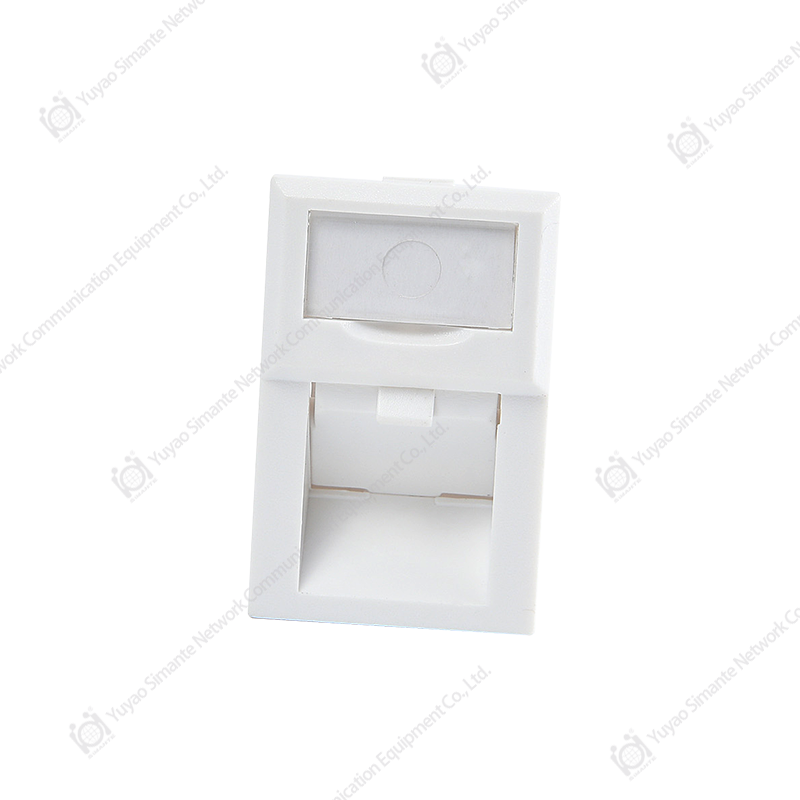
For system integrators, the connector is practical for customized solutions. It can be paired with connectors of the same standard series and used as part of a copper structured cabling solution that includes keystone jacks, patch panels, wall face plates, data sockets, patch cords, and other compatible components.
Compliance and Standards-Oriented Design
Standards matter in structured cabling because they provide a common language for performance, compatibility, and installation expectations. The product is described as meeting category 6A transmission standards and aligning with T568A and T568B line sequences. It also refers to applicable specifications including YD/T 926.1-2009 as a general specification and YD/T 926.3-2009 as a sub-standard.
Compliance-oriented design helps customers reduce project risk. When components are built around recognized cabling requirements, they are easier to specify, test, and integrate into professional installations. This is particularly important for government buildings, education campuses, hospitals, commercial towers, data centers, and enterprise projects where documentation and performance verification are required.
RoHS compliance also adds value. Modern procurement policies increasingly require components to meet environmental material restrictions. Products that meet RoHS expectations are better suited for international markets and customers with sustainability-focused purchasing policies.
The product’s salt spray test requirements show attention to environmental durability. The test uses a salt solution with a pH value between 6.5 and 7.2 at 35 plus or minus 2 degrees Celsius, prepared with sodium chloride and distilled or deionized water at a concentration of 5 plus or minus 0.1 percent by mass. Continuous atomization is recommended for 48 hours, with precautions to prevent impurities such as oil and dust, as well as jet air temperature and humidity conditions, from affecting the test. Such testing helps evaluate corrosion resistance and surface treatment quality.
Packaging, Storage, and Inventory Reliability
Good packaging is part of product quality. The connector is packaged in a special blister bag and then placed into a cardboard box with accessories. Labels indicating the product model and quantity are affixed on the upper left corner of the front of the carton. Regular packing is described as 10 boxes per carton, one piece per box, and 10 pieces per carton.
For distributors and project contractors, clear packaging and labeling reduce warehouse confusion and improve order accuracy. When multiple connector types, categories, shielding types, and accessories are stored together, model identification becomes essential. Proper packaging also protects the product during transport and storage, helping ensure that connectors arrive at the installation site in usable condition.
Storage conditions are specified as an ambient temperature from minus 5 to plus 30 degrees Celsius, relative humidity not more than 70 percent, and surrounding air free from acid, alkali, and other corrosive gases. Under these conditions, the storage period is three years. These instructions help distributors, contractors, and end users maintain product quality before installation.
Manufacturing Strength Behind the Product
A connector’s performance depends not only on its design but also on the manufacturer’s ability to produce it consistently. Yuyao Simante Network Communication Equipment Co., Ltd. has developed capabilities that support stable quality and large-scale supply. The company specializes in network cabling solutions and optical fiber products, integrating design, development, sales, and service.
With nearly 20 years of service experience, the company understands the practical needs of customers in structured cabling, network communication, smart home, automation equipment, and related industries. This experience helps the company design products that are not only technically compliant but also installer-friendly and commercially practical.
The company’s research and development system is a key strength. More than 10 engineers and over 30 full-time technical personnel contribute to design improvement, quality enhancement, and product updates. In connectivity manufacturing, design details such as contact geometry, plastic molding accuracy, shield fit, IDC pressure, latch strength, and assembly tolerance all affect final performance. A strong technical team helps control these details from the design source.
The factory is equipped with 10 regular and customization production lines, 10 fully automatic injection molding machines, 20 semi-automatic injection molding machines, and 8 automatic installed machines. This equipment base supports both stable mass production and customized orders. The annual output capacity of more than 9 million pieces demonstrates the ability to serve distributors, OEM customers, ODM customers, and large project requirements.
Advanced injection molding capability is especially important for network connectors. Plastic parts must be dimensionally accurate so that terminals align correctly, shells fit securely, cable retention works properly, and the connector mates smoothly with sockets. Fully automatic and semi-automatic injection molding equipment allows the company to maintain production flexibility while supporting consistent part quality.
Automatic assembly equipment also contributes to quality and efficiency. Manual assembly can be effective for small batches or custom products, but automatic assembly improves repeatability, reduces labor variation, and supports higher production volumes. For connectors where small dimensional differences can affect performance, controlled assembly processes are a significant advantage.
Quality Control and Testing Culture
The company positions itself toward the high-end market, which leads to higher requirements for product quality. Quality control is not limited to final inspection; it begins with product design, material selection, tooling, injection molding, metal processing, plating, assembly, and performance testing. This systematic approach is important because network connectors are small components with large consequences. A single unreliable connector can cause network downtime, failed acceptance testing, or costly troubleshooting.
Performance testing is a major advantage for customers. The company supports comprehensive testing requirements, helping customers verify that products meet the necessary application expectations. For structured cabling components, testing may include electrical performance, mechanical durability, insertion and extraction force, insulation resistance, withstand voltage, environmental exposure, and visual inspection.
Quality stability at the design source is particularly valuable. If a product is designed with insufficient tolerance control, later inspection cannot fully solve the problem. By applying research and development expertise early, the company reduces the likelihood of unstable manufacturing outcomes. This is a meaningful advantage over competitors that rely mainly on low-cost production without strong engineering support.
The company’s stable export volume to Europe, Australia, Africa, the Middle East, and Southeast Asia also reflects its ability to meet varied market expectations. Different regions may emphasize different standards, packaging styles, labeling requirements, plating levels, or customization needs. A manufacturer with global experience is better prepared to support distributors and OEM partners in multiple markets.
OEM and ODM Value for Global Customers
Many customers in the structured cabling industry require more than standard products. They may need customized packaging, private labeling, different gold plating thickness, special color requirements, modified accessories, regional documentation, or product series matching. Yuyao Simante Network Communication Equipment Co., Ltd. undertakes both OEM and ODM projects, making it suitable for customers who want to build their own product lines or differentiate their offerings.
OEM service allows customers to source reliable products under their own brand identity. ODM service goes further by supporting product development and customization based on market demand. For distributors, installers, and solution providers, this flexibility can create competitive advantage. Rather than purchasing generic items from multiple suppliers, customers can develop a consistent cabling product portfolio with compatible appearance, packaging, and performance positioning.
The SMT-3016T8C6A-FTP connector is well suited to such customization because it belongs to a product category that is widely used across markets but often requires specification adaptation. Gold plating thickness, packaging format, labeling, and accessories may be adjusted according to customer requirements. The company’s production capacity and technical team help support these customization needs while maintaining quality control.
Comparison With Ordinary Connectors
Compared with ordinary unshielded connectors, this CAT6A FTP shielded connector provides stronger electromagnetic interference protection. In environments where cable bundles run near power lines, machinery, active devices, or electrical noise sources, shielding can help maintain signal reliability. Ordinary unshielded connectors may be sufficient for basic networks, but they are less suitable where shielded cabling is required or where interference risk is high.
Compared with traditional crimp connectors, the toolless structure improves installation convenience. A traditional plug may require precise crimping tools, careful conductor trimming, and more operator skill. If the tool is worn, poorly calibrated, or incorrectly used, connection quality can suffer. The toolless design helps reduce these problems and supports more consistent field termination.
Compared with connectors using screw-fixed shielding covers, the non-screw rear cover improves installation speed and reduces small-part management problems. Screws can be lost, stripped, or over-tightened. A non-screw structure offers a simpler and more installer-friendly approach.
Compared with lower-grade connectors using minimal plating or weaker terminal materials, this product’s brass gold-plated contacts and nickel-plated phosphor bronze IDC terminals support better contact reliability and corrosion resistance. The use of PC, PBT, and FR4 also indicates attention to material stability.
Compared with suppliers lacking strong manufacturing infrastructure, this product benefits from a company with engineering teams, injection molding equipment, automatic assembly equipment, production capacity, and international market experience. This reduces procurement risk for buyers who need stable long-term supply rather than one-time low-cost sourcing.
Installation Considerations
To obtain the best performance from the connector, installers should follow proper structured cabling practices. Cable preparation should be clean and accurate, with the outer jacket and shielding handled carefully. Excessive untwisting of pairs should be avoided because pair geometry affects crosstalk and return loss. The correct T568A or T568B sequence should be selected according to the project requirement and maintained consistently across the channel.
When using shielded cabling, the cable shield should be properly connected to the connector shielding structure according to installation guidelines. Shield continuity and grounding are essential for effective EMC performance. A shielded connector alone cannot compensate for poor grounding or inconsistent shield termination across the system.
The connector should be used with compatible cables in the specified 23 to 26 AWG range. Using conductors outside the recommended range may affect IDC contact reliability. Installers should also avoid damaging the insulation, over-bending the cable near the connector, or placing excessive strain on the termination point.
After installation, professional testing is recommended. For category 6A systems, certification testing of the full channel or permanent link helps verify performance. Testing can identify wiring errors, crosstalk issues, return loss problems, length concerns, and other installation defects before the network is placed into service.

Long-Term Value for Contractors, Distributors, and End Users
For contractors, the connector provides labor efficiency, lower tool dependency, clear termination guidance, and durable performance. These features help reduce installation errors and support faster project completion. Contractors benefit not only from product price but also from reduced rework, fewer failed tests, and improved customer satisfaction.
For distributors, the product offers a strong market position because it combines CAT6A performance, shielding, toolless installation, and reliable manufacturing support. Its regular packaging and customization options support both standard inventory and private-label programs. The company’s production scale helps maintain supply stability for recurring orders.
For end users, the connector contributes to a more reliable network infrastructure. A high-quality connector may not be the most visible part of a network, but it can significantly affect uptime and maintenance cost. Reliable physical-layer connectivity supports better performance for business applications, video systems, wireless networks, automation platforms, and data services.
For OEM and ODM customers, the connector provides a strong base product that can be integrated into a broader structured cabling portfolio. With manufacturing customization, customers can build differentiated product offerings without developing every component from the beginning.
Role in a Complete Copper and Fiber Structured Cabling Portfolio
Although this article focuses on the SMT-3016T8C6A-FTP CAT6A Toolless Shielded Male Connector, it is important to understand its role within a wider cabling system. Yuyao Simante Network Communication Equipment Co., Ltd. manufactures network cabling solutions and optical fiber products, including keystone jacks, patch panels, wall face plates, data sockets, and related structured cabling components. This broad product range allows customers to source matched components from one supplier.
A complete structured cabling solution often includes copper and fiber systems. Copper cabling is widely used for horizontal network connections, work area outlets, PoE devices, access points, cameras, and equipment connections. Fiber cabling is used for backbone links, long-distance transmission, high-bandwidth interconnection, and data center applications. A supplier capable of supporting both copper and fiber systems can help customers simplify procurement and maintain solution consistency.
The connector’s compatibility with same-standard series components is important. Structured cabling performance depends on the combined behavior of cables, connectors, panels, and cords. When components are selected from a coherent series and installed according to standards, the system is more likely to deliver stable performance.
Frequently Asked Questions
What is the SMT-3016T8C6A-FTP connector used for?
It is used for CAT6A FTP copper structured cabling connections where a shielded male connector is required. Typical applications include equipment connections, work area connections, horizontal cabling termination, network device links, and field termination in shielded cabling systems.
Does the connector support both T568A and T568B wiring?
Yes. The connector is designed in line with T568A and T568B wiring sequences, and its clear color labeling helps installers complete accurate termination.
Why is the toolless design important?
The toolless design helps reduce installation time, minimizes dependency on specialized crimping tools, and improves termination consistency. It is especially useful for large projects, field repairs, and installations in confined spaces.
What does 360-degree shielding mean?
It means the connector uses an all-around shielding shell structure to help protect the termination area from electromagnetic interference. This is beneficial in shielded cabling systems and electrically noisy environments.
What frequency range does the connector support?
The specified frequency range is 1 to 500 MHz, which aligns with category 6A high-frequency transmission requirements.
What cable sizes are compatible with the IDC terminal?
The IDC terminal is designed to clamp 23 to 26 AWG twisted pair conductors, which are commonly used in structured cabling applications.
How durable is the connector?
The plug and socket insertion durability is specified at 750 cycles, and the wire termination durability is specified at 250 cycles. These ratings support long-term use and maintenance flexibility.
What materials are used in the connector?
The connector uses brass gold-plated contacts, nickel-plated phosphor bronze IDC terminals, engineering plastics such as PC polycarbonate and PBT, and FR4 PCB material. These materials support conductivity, corrosion resistance, insulation, and mechanical stability.
Is the product RoHS compliant?
Yes. The product meets RoHS environmental requirements, making it suitable for markets and projects that require restricted hazardous substance compliance.
What are the recommended storage conditions?
The packaged product should be stored at minus 5 to plus 30 degrees Celsius, with relative humidity not more than 70 percent, and away from acid, alkali, and other corrosive gases. Under these conditions, the storage period is three years.
Can the product be customized for OEM or ODM projects?
Yes. The manufacturer supports OEM and ODM projects, including customer-specified packaging and other customization requirements depending on project needs.
What makes the manufacturer suitable for long-term cooperation?
The manufacturer has nearly 20 years of industry experience, more than 10 engineers, over 30 full-time technical personnel, multiple regular and customized production lines, automatic and semi-automatic injection molding machines, automatic assembly equipment, and an annual output capacity exceeding 9 million pieces.
Conclusion
The SMT-3016T8C6A-FTP CAT6A Toolless Shielded Male Connector is a high-value component for professional copper structured cabling systems. It combines category 6A transmission capability, 1 to 500 MHz frequency support, tool-free termination, T568A and T568B wiring compatibility, 360-degree shielding, durable mechanical performance, reliable insulation characteristics, and quality material selection. These features make it a strong alternative to ordinary connectors that may lack shielding, require specialized tools, offer weaker contact materials, or provide less consistent field installation performance.
Its advantages are not limited to product design. The manufacturing strength behind the connector provides additional confidence for contractors, distributors, OEM customers, ODM customers, and end users. Yuyao Simante Network Communication Equipment Co., Ltd. brings nearly two decades of experience, a professional engineering team, technical personnel, advanced injection molding capacity, automatic assembly capability, stable annual output, quality-focused processes, and international market experience. This combination of product performance and manufacturing reliability creates practical value across the entire supply chain.
For projects requiring fast installation, shielded CAT6A performance, reliable termination, and long-term network stability, this connector is a dependable choice. It supports modern network infrastructure needs while helping reduce installation complexity and procurement risk. In a market where connection quality directly influences data performance, choosing a well-designed and well-manufactured connector is an investment in network reliability.
References
ISO/IEC 11801, Information Technology: Generic Cabling for Customer Premises.
ANSI/TIA-568, Telecommunications Cabling Standard for Commercial Buildings.
YD/T 926.1-2009, Generic Cabling System for Telecommunications.
YD/T 926.3-2009, Cabling Components and Related Performance Requirements.
IEC 60603 Series, Connectors for Electronic Equipment.
RoHS Directive, Restriction of Hazardous Substances in Electrical and Electronic Equipment.
Ethernet Alliance, Technical Perspectives on Copper Cabling and High-Speed Ethernet Infrastructure.