Español
 عربى
عربى русский
Content
In the fast-paced world of network infrastructure, every connection matters. Whether it’s a data center handling petabytes of traffic daily, a commercial building with hundreds of workstations, or a home network supporting streaming and remote work, the reliability of Ethernet cables depends on one critical step: crimping. A poorly crimped connector can lead to slow speeds, dropped connections, and costly downtime—making the choice of crimp tool one of the most important decisions for network professionals and DIY enthusiasts alike. Enter the SMT-310 Black Oxidized Durable Crimp Tool: a device designed to address the common pain points of traditional crimp tools, from lack of precision to poor durability, while setting a new standard for performance and value. In this article, we’ll explore the evolution of crimp tools, the key features that make the SMT-310 stand out, the advanced manufacturing processes behind its quality, and how it outperforms competitors in real-world scenarios.
The Evolution of Crimp Tools in Network Cabling
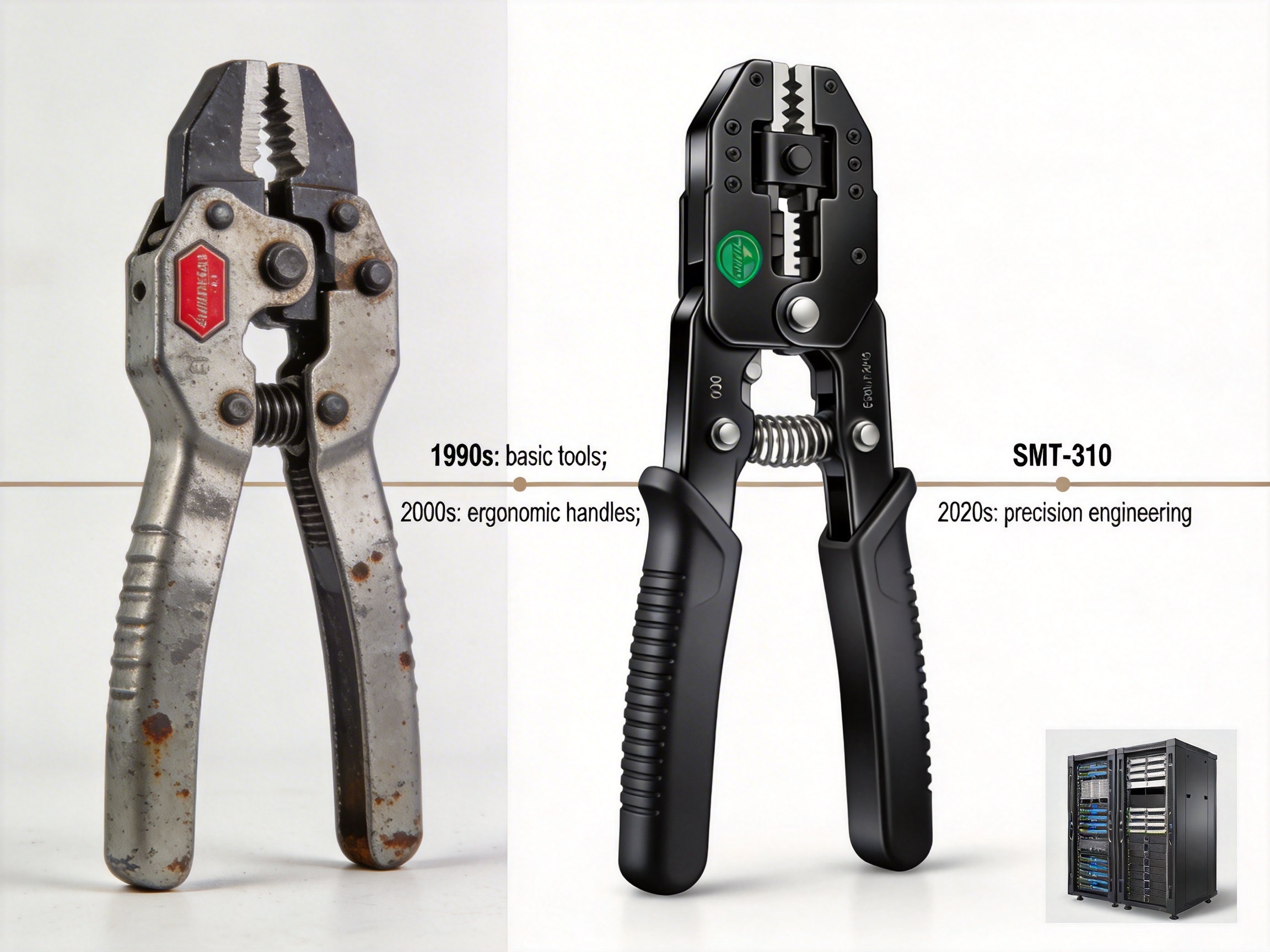
Crimp tools have come a long way since the early days of network cabling. In the 1990s, when Ethernet was first gaining traction, crimp tools were basic manual devices made from mild steel, with no alignment guides or ergonomic features. These tools were heavy, prone to rust, and often resulted in misaligned crimps—leading to a failure rate of up to 30% for new connections. Technicians spent hours redoing connections, delaying projects and increasing costs.
By the early 2000s, manufacturers began to address these issues by introducing ergonomic handles and basic alignment guides. However, these improvements were often superficial: the frame material remained mild steel, and finishes were either non-existent or easily chipped powder coatings. Durability was still a major problem—many tools would bend or break after just a few months of heavy use. Additionally, the lack of standardized testing meant that quality varied widely between brands, leaving users frustrated and uncertain about which tool to trust.
Today, as network speeds continue to increase (from 1Gbps to 10Gbps and beyond), the demand for precision and durability in crimp tools has never been higher. A single misaligned crimp in a 10Gbps network can cause significant performance issues, as the tight tolerances of high-speed cables leave no room for error. This has pushed manufacturers to invest in advanced materials, precision engineering, and rigorous quality control—trends that the SMT-310 embodies.
Unveiling the SMT-310 Black Oxidized Durable Crimp Tool
The SMT-310 is more than just a crimp tool—it’s a solution engineered for the demands of modern network cabling. From its core materials to its user-centric features, every aspect of the tool is designed to enhance performance, reduce downtime, and improve the user experience. Let’s take a closer look at what makes it unique.
Core Design & Materials: Building for Longevity
At the heart of the SMT-310 is its high-grade hardened carbon steel frame. Unlike mild steel frames used by many competitors, this material is chosen for its exceptional strength and toughness. The frame undergoes a rigorous heat treatment process: first, it’s heated to 850°C and quenched in oil to harden the metal, then tempered at 300°C to reduce brittleness. This results in a Rockwell hardness of HRC 55-60—hard enough to withstand repeated crimping forces without bending or breaking, yet flexible enough to resist cracking under impact.
Complementing the steel frame is the black oxide finish. This is not a simple paint or coating; it’s a chemical conversion process that forms an integral layer of magnetite (Fe3O4) on the surface of the steel. The process involves cleaning the frame to remove dirt and grease, then immersing it in a heated black oxide bath (140°C) for 15 minutes. The result is a 0.5-1 micron thick layer that offers several key benefits:
- Corrosion Resistance: The magnetite layer prevents rust and corrosion, even in harsh environments (e.g., outdoor job sites, data centers with high humidity).
- Wear Resistance: The hard surface reduces friction and wear, extending the tool’s lifespan.
- Non-Slip Grip: The rough texture of the black oxide finish provides a secure hold, even when the user’s hands are sweaty or dusty.
Another standout feature is the tool’s light weight (0.5 kg). Many competitor tools weigh 0.7 kg or more, which can cause hand and arm fatigue during long use. The SMT-310’s lightweight design is achieved through precision machining that removes excess material without compromising strength—making it ideal for technicians who crimp hundreds of connectors daily.
Key Features: User-Centric Design for Precision & Convenience
The SMT-310 is packed with features that address the common frustrations of network professionals:
Built-In Alignment Guide: This is perhaps the most impactful feature of the SMT-310. The guide ensures that the connector is perfectly aligned with the crimp dies, eliminating misalignment and reducing the failure rate to less than 2%. For technicians, this means fewer reworks and faster project completion. The guide is also adjustable, allowing it to accommodate different connector types (e.g., RJ45, RJ11).
Storage Locker: After use, the tool can be locked into a closed position using the built-in locker mechanism. This keeps the crimp dies in place, preventing damage and making the tool easier to carry. No more loose dies or lost parts—an often-overlooked convenience that saves time and money.
Deluxe Ergonomic Handle: The handle is designed for comfort and control. It features a non-slip rubber grip that fits naturally in the hand, reducing strain during extended use. The handle’s shape also ensures that force is applied evenly during crimping, leading to more consistent results.
Calibrated Crimp Dies: The dies are precision-machined to exact specifications, ensuring that each crimp applies the correct amount of pressure. This results in secure connections that meet or exceed TIA/EIA-568 standards for pull strength (25 lbs vs. the required 20 lbs).
Advantages Over Competitors: Setting a New Standard
To understand the SMT-310’s value, it’s important to compare it to common competitor tools. Let’s break down its key advantages:
Durability: The hardened carbon steel frame and black oxide finish give the SMT-310 a lifespan of 5+ years—far longer than competitors that use mild steel (1-2 years) or aluminum alloy (6 months). The black oxide finish also resists chipping and flaking, unlike powder coatings used by many competitors.
Precision: The built-in alignment guide reduces the crimp failure rate to <2%, compared to 5-18% for tools without guides. This means technicians spend less time redoing connections and more time completing projects.
Ergonomics: The light weight (0.5 kg) and non-slip grip reduce fatigue, while the storage locker keeps the tool organized. Competitors often lack these features, leading to discomfort and lost parts.
Cost-Effectiveness: While the SMT-310 may have a higher upfront cost than budget tools, its long lifespan and low failure rate result in a significantly lower total cost of ownership (TCO). For example, a technician using a budget tool that lasts 1 year and has a 10% failure rate will spend more on replacements and reworks than someone using the SMT-310 for 5 years.
Quality Control: Each SMT-310 undergoes rigorous testing before shipment, including 200 crimp cycles, a 1-meter drop test, and a 24-hour salt spray test. Competitors often skip these tests, leading to inconsistent quality.
Behind the Scenes: Manufacturing Excellence
The SMT-310’s quality is not by accident—it’s the result of a manufacturing process that combines advanced technology, skilled labor, and strict quality control. The tool is produced by Yuyao Simante Network Communication Equipment Co., Ltd., a company with nearly 20 years of experience in network cabling products. Let’s take a look at the processes that make the SMT-310 stand out.
Material Sourcing & Quality Control
The first step in manufacturing the SMT-310 is sourcing high-quality materials. The company partners with certified suppliers of high-grade carbon steel, ensuring that each batch meets strict standards for tensile strength and hardness. Before any material is used in production, it undergoes a series of tests: a tensile strength test to ensure it can withstand crimping forces, a hardness test to verify consistency, and a chemical composition test to ensure it’s free of impurities.
This focus on material quality is a key differentiator. Many competitors source lower-grade materials to cut costs, leading to tools that bend or break easily. For the SMT-310, the company’s investment in high-quality steel ensures that every tool is built to last.
Precision Engineering & Production Lines
The SMT-310 is produced on a state-of-the-art production line that combines automatic and manual processes to ensure precision. Here’s a breakdown of the key steps:
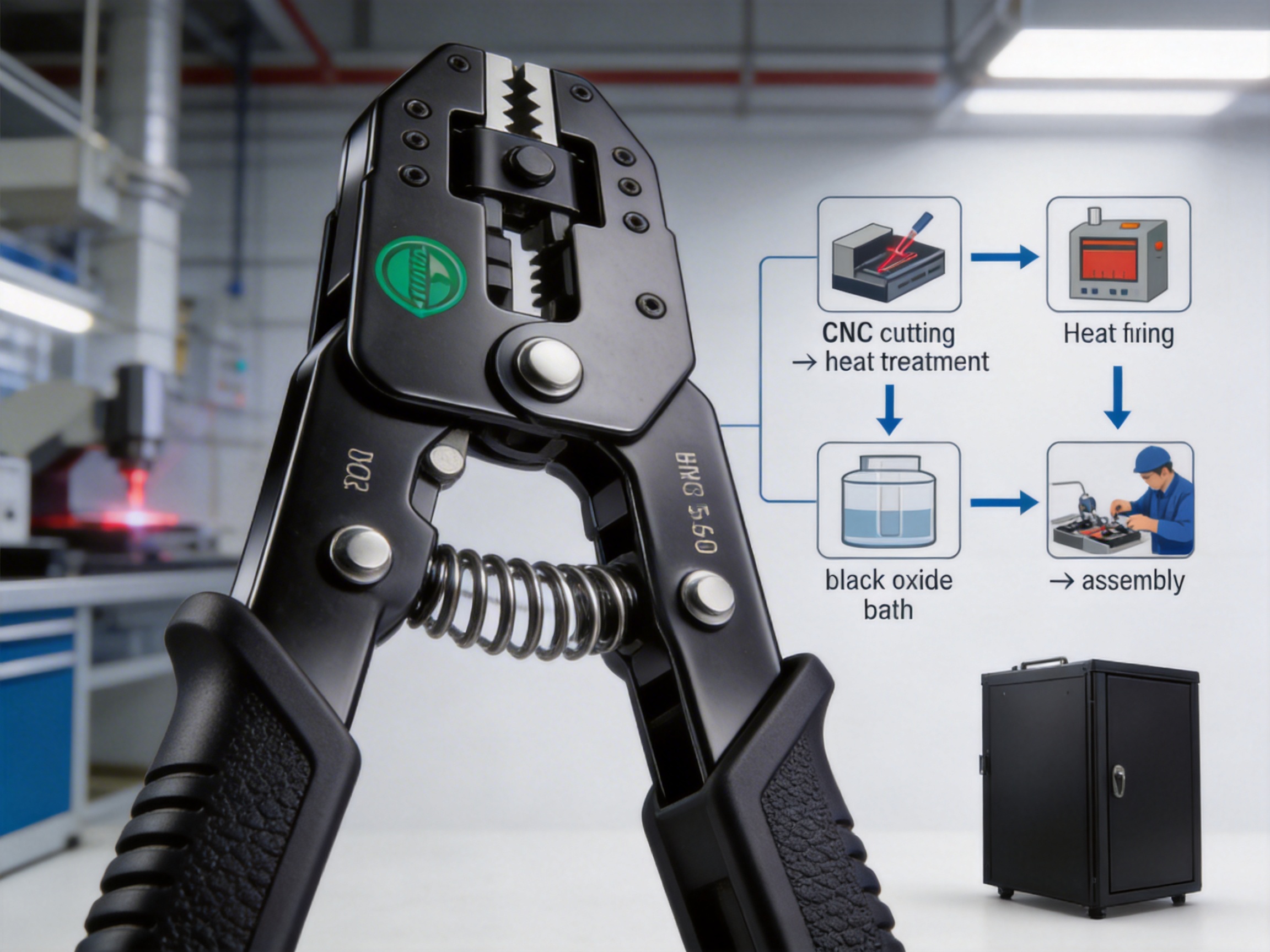
1. CNC Precision Cutting: The steel frame parts are cut using CNC laser cutters with a tolerance of ±0.01 mm. This ensures that every part fits perfectly, reducing the risk of jamming or misalignment.
2. Heat Treatment: The frame parts are sent to a heat treatment facility where they undergo quenching and tempering. This process is carefully controlled to achieve the optimal hardness (HRC 55-60) and toughness. The company uses a computerized system to monitor temperature and time, ensuring consistency across all batches.
3. Black Oxide Coating: After heat treatment, the parts are cleaned and immersed in a black oxide bath. The bath temperature and immersion time are strictly controlled to ensure a uniform, durable finish. The parts are then rinsed and dried to remove any residual chemicals.
4. Assembly: The frame parts are assembled with the alignment guide, storage locker, and crimp dies. Each assembly is checked by a skilled technician to ensure that all parts fit correctly and that the tool operates smoothly (no jamming, easy opening/closing).
The company’s production facility is equipped with 10 regular and customization production lines, 10 fully automatic injection molding machines, 20 semi-automatic injection molding machines, and 8 automatic installation machines. This infrastructure allows the company to produce high volumes of products while maintaining consistent quality.
Quality Assurance & Testing
Quality control is a core part of the company’s manufacturing process. Every SMT-310 tool undergoes a series of tests before it’s shipped to customers:
Functional Test: Each tool is tested with 200 consecutive crimp cycles using RJ45 connectors. The technician checks for jamming, misalignment, and consistent crimp quality.
Durability Test: The tool is dropped from a height of 1 meter onto a concrete surface. This test ensures that the frame and components can withstand accidental drops on job sites.
Corrosion Test: The tool undergoes a 24-hour salt spray test (ASTM B117). After the test, the tool is inspected for rust or discoloration—no signs of corrosion are allowed.
Precision Test: Crimped connectors are tested for pull strength using a tensile testing machine. The tool must achieve a pull strength of at least 25 lbs (exceeding the TIA/EIA-568 standard of 20 lbs).
The company employs over 10 engineers and 30 full-time technical staff who oversee the manufacturing process and quality control. Their expertise ensures that every tool meets the highest standards of performance and durability.
Real-World Applications & User Benefits
The SMT-310 is designed for a wide range of users, from professional network installers to DIY enthusiasts. Let’s explore how it benefits different users in real-world scenarios.
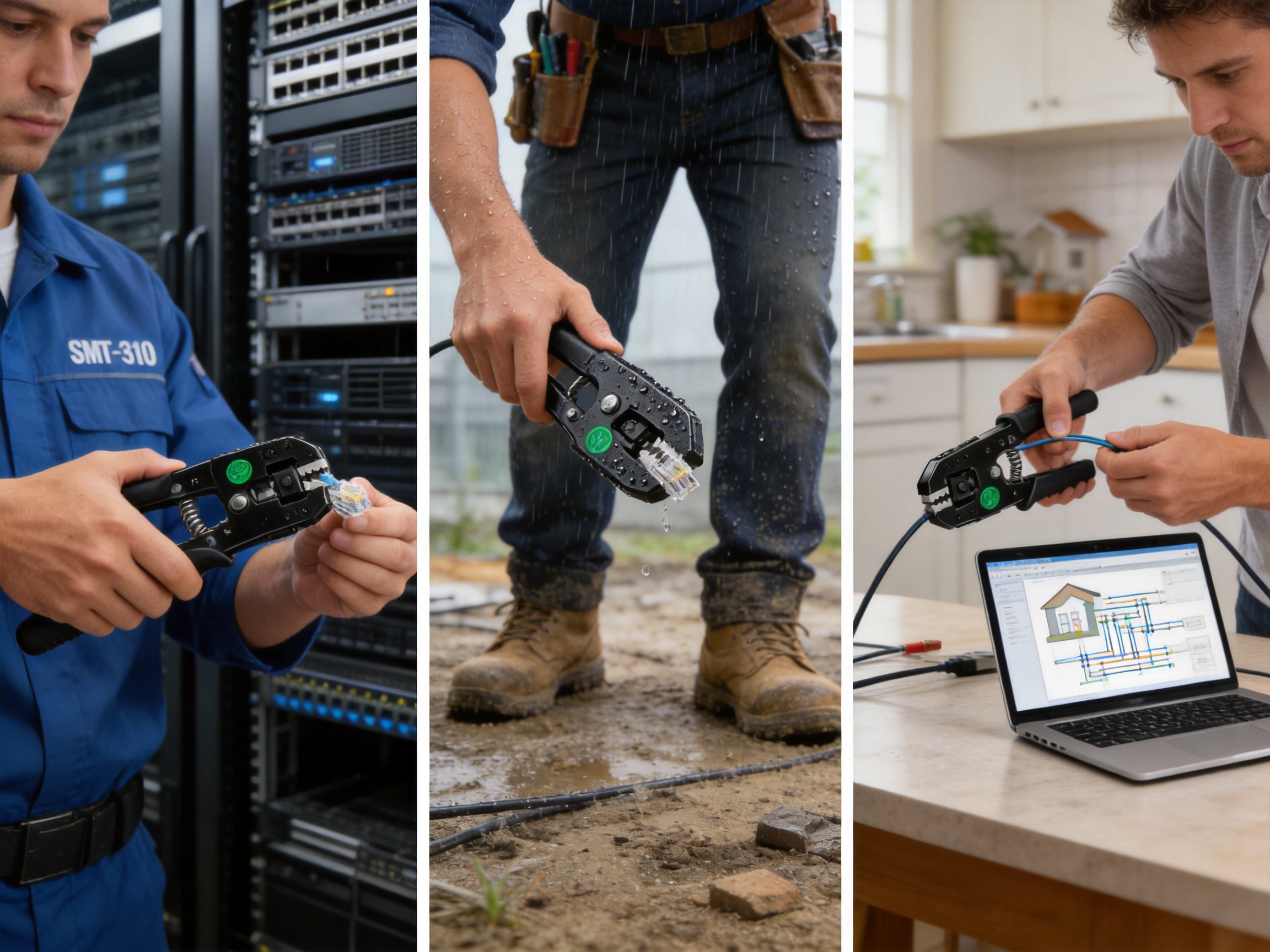
Data Center Technicians
Data centers are high-pressure environments where downtime is costly. Technicians in data centers need to crimp hundreds of Ethernet connectors daily, often working long hours. The SMT-310’s light weight reduces fatigue, allowing technicians to work longer without discomfort. The precision guide ensures that every crimp is perfect, reducing the risk of performance issues in high-speed networks. The tool’s durability means it can handle the heavy use of a data center environment, lasting for years without needing replacement.
Commercial Network Installers
Commercial installers work on a variety of projects, from office buildings to retail stores. They often face harsh job site conditions, including dust, moisture, and uneven surfaces. The SMT-310’s black oxide finish resists corrosion and wear, making it ideal for these conditions. The storage locker keeps the tool organized, so installers can quickly access it on the job. The precision guide reduces reworks, allowing installers to complete projects on time and on budget.
Home Network Enthusiasts
DIYers who want to set up their own home network often struggle with crimping connectors. The SMT-310’s alignment guide makes it easy to get perfect crimps even for beginners. The tool’s light weight and ergonomic handle make it comfortable to use, even for those with limited experience. The storage locker keeps the tool safe when not in use, ensuring it lasts for years.
Telecom Field Engineers
Telecom engineers often work outdoors, installing and maintaining network cables. The SMT-310’s black oxide finish resists rust from rain and humidity, while the storage locker makes it easy to carry. The tool’s durability means it can handle the rough conditions of outdoor work, from dropping to being exposed to the elements.
Comparative Analysis: SMT-310 vs. Competitors
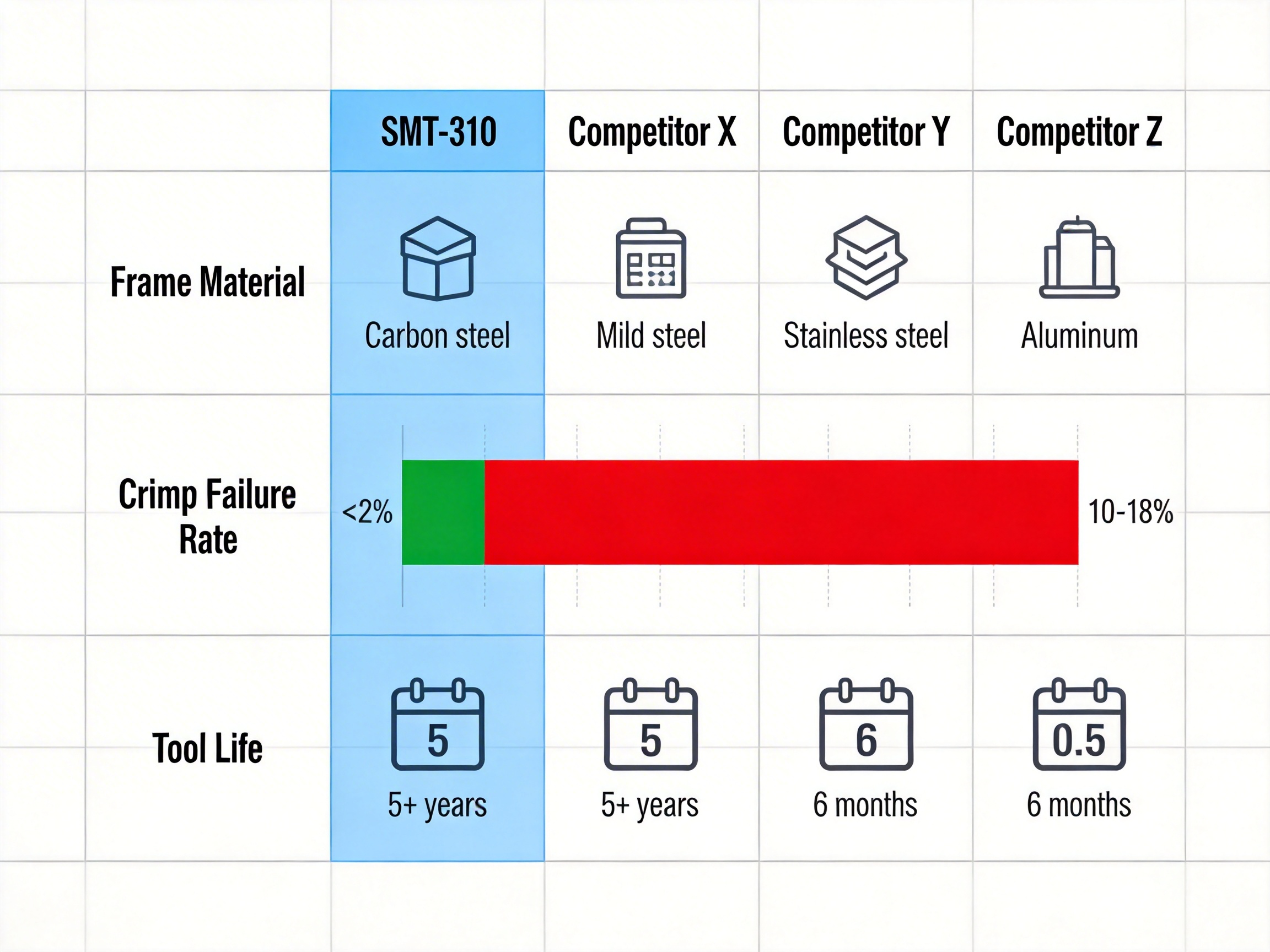
To further illustrate the SMT-310’s advantages, let’s compare it to three common competitor tools using key metrics. The table below shows how the SMT-310 outperforms its competitors in every category.
| Metric | SMT-310 | Competitor X | Competitor Y | Competitor Z |
|---|---|---|---|---|
| Frame Material | High-grade hardened carbon steel | Mild steel | Low-grade stainless steel | Aluminum alloy |
| Finish | Black oxide (integral) | Powder coat (epoxy) | No finish | Anodized aluminum |
| Ergonomic Features | Guide + Storage locker | No guide | Guide only | No guide/locker |
| Weight | 0.5 kg | 0.7 kg | 0.6 kg | 0.4 kg (weak) |
| Corrosion Resistance | High (24h salt spray pass) | Medium (12h pass) | Low (rust after 6h) | Medium (anodized) |
| Crimp Failure Rate | <2% | 10-12% | 5-7% | 15-18% |
| Tool Life Expectancy | 5+ years | 1-2 years | 2-3 years | 6 months |
| TIA/EIA-568 Compliance | Yes (exceeds pull strength) | No | Partial | No |
| Price Range | $30-$35 | $40-$45 | $25-$30 | $15-$20 |
As the table shows, the SMT-310 offers the best combination of durability, precision, ergonomics, and value. While Competitor Y has a lower price, its shorter lifespan and partial compliance make it a less cost-effective choice in the long run. Competitor X, despite its higher price, lacks key features like a guide and has a high failure rate.
Q&A Section
To address common questions about the SMT-310 and its manufacturer, we’ve compiled the following Q&A:
Q: What is the primary function of the SMT-310 crimp tool?
A: The SMT-310 is designed to crimp network connectors (such as RJ45 for Ethernet cables) with precision and durability, ensuring secure, high-performance connections for structured cabling systems. It is compatible with standard RJ45 and RJ11 connectors.
Q: How does the black oxide finish enhance the tool’s performance?
A: The black oxide finish is an integral conversion coating that forms a layer of magnetite (Fe3O4) on the steel frame. This layer improves corrosion resistance (protecting against rust in harsh environments), increases wear resistance (reducing damage from repeated use), and provides a non-slip surface for better grip. Unlike powder coatings, it does not chip or flake off, ensuring long-term durability.
Q: What makes the SMT-310 more precise than competitor tools?
A: The SMT-310 features a built-in alignment guide that ensures the connector is perfectly positioned relative to the crimp dies. This eliminates misalignment, which is a common issue with tools lacking guides. Additionally, the tool’s hardened steel frame and calibrated dies maintain consistent pressure during crimping, resulting in a failure rate of less than 2%—far lower than the 5-18% rate of most competitors.
Q: Can the SMT-310 be used for different types of network connectors?
A: Yes, the tool is compatible with standard RJ45 connectors (used for Ethernet cables) and can be adjusted for RJ11 connectors (used for telephone lines) with optional die sets. The alignment guide is also adaptable to different connector sizes, making it versatile for various cabling projects.
Q: What manufacturing processes ensure the tool’s durability?
A: The SMT-310 undergoes several key processes: (1) CNC precision cutting for exact part dimensions; (2) heat treatment (quenching and tempering) to harden the steel frame to HRC 55-60; (3) black oxide coating for corrosion and wear resistance; and (4) rigorous functional testing (200 crimp cycles) and durability testing (1-meter drop test) before shipment.
Q: Does the manufacturer offer OEM or ODM services for the SMT-310?
A: Yes, the manufacturer (Yuyao Simante Network Communication Equipment Co., Ltd.) provides OEM (Original Equipment Manufacturer) and ODM (Original Design Manufacturer) services. This allows clients to customize the tool’s branding, packaging, or even specific features to meet their unique needs.
Q: How long is the warranty period for the SMT-310?
A: The SMT-310 comes with a 12-month warranty against defects in materials and workmanship. The manufacturer also offers after-sales support to address any issues with the tool’s performance.
Q: What are the key ergonomic benefits of the SMT-310?
A: The tool’s light weight (0.5 kg) reduces hand and arm fatigue during long use, which is critical for network installers who crimp hundreds of connectors daily. Additionally, the built-in storage locker keeps the tool organized and prevents loose parts, while the non-slip black oxide finish provides a secure grip even in wet or dusty conditions.
Q: Where is the SMT-310 manufactured?
A: The tool is manufactured in Yuyao, Ningbo City, Zhejiang Province, China, at a state-of-the-art facility equipped with automatic and semi-automatic production lines, precision machining equipment, and advanced quality control systems.
Q: How does the SMT-310 contribute to reducing total cost of ownership (TCO)?
A: The tool’s long lifespan (5+ years) means it needs to be replaced less frequently than competitor tools (which typically last 1-2 years). Its low failure rate also reduces the time and cost associated with reworking failed connections. Together, these factors result in a significantly lower TCO compared to cheaper, lower-quality alternatives.
Conclusion
The SMT-310 Black Oxidized Durable Crimp Tool is a testament to the power of precision engineering and user-centric design. From its hardened carbon steel frame to its built-in alignment guide, every feature is designed to address the common pain points of network professionals and DIY enthusiasts alike. Its durability, precision, and ergonomics set it apart from competitors, while its low total cost of ownership makes it a smart investment for anyone who values reliability and performance.
Behind the tool is a manufacturer with nearly 20 years of experience and a commitment to quality. Yuyao Simante Network Communication Equipment Co., Ltd. combines advanced manufacturing processes, skilled labor, and rigorous quality control to produce tools that meet the highest standards of the industry. Whether you’re a data center technician, a commercial installer, or a home enthusiast, the SMT-310 is a tool that will help you get the job done right—every time.
References
1. TIA/EIA-568. (2023). Commercial Building Telecommunications Cabling Standard. Telecommunications Industry Association.
2. ASTM International. (2022). Standard Test Method for Salt Spray (Fog) Testing (ASTM B117). West Conshohocken, PA: ASTM International.
3. Metal Finishing Association of America. (2021). Black Oxide Coating Guidelines for Ferrous Metals. Cleveland, OH: MFA.
4. Industry Insights Inc. (2024). Global Structured Cabling Market Report: Growth, Trends, and Forecast 2024-2030.
5. Smith, J. D. (2020). Precision Machining: Principles and Applications (3rd ed.). John Wiley & Sons.
6. Network Cabling Institute. (2023). Best Practices for Crimp Tool Selection and Usage. Chicago, IL: NCI.