Español
 عربى
عربى русский
Content
- 1 1. Key Features and Advantages of the Two-Gang Flat Frame UK Type Faceplate
- 1.1 1.1 Embedded Face Frame: Aesthetic and Functional Excellence
- 1.2 1.2 Spring-Type Dust-Proof Door with Logo Window: Enhanced Protection and Usability
- 1.3 1.3 High-Quality ABS Engineering Plastics: Durability and Impact Resistance
- 1.4 1.4 Compliance with ROHS Standards: Environmental Sustainability
- 1.5 1.5 Wide Operating Temperature Range: Adaptability to Diverse Environments
- 1.6 1.6 Compatibility with Amp Interface Modules: Versatile Integration
- 2 2. Manufacturing Processes: Ensuring Quality and Consistency
- 3 3. Company Strengths: A Partner You Can Trust
- 4 4. Application Scenarios: Where the Faceplate Excels
- 5 5. Q&A Section
- 5.1 Q1: What is the maximum number of connectors the faceplate can support?
- 5.2 Q2: Is the faceplate easy to install?
- 5.3 Q3: Does the faceplate meet environmental standards?
- 5.4 Q4: Can the faceplate be customized?
- 5.5 Q5: What is the storage condition for the faceplate?
- 5.6 Q6: What is the regular packing quantity?
- 5.7 Q7: How does the dust-proof door work?
- 5.8 Q8: What material is the faceplate made of?
- 5.9 Q9: Does the faceplate come with a warranty?
- 5.10 Q10: Can the faceplate be used outdoors?
- 6 6. Conclusion
- 7 References
Structured cabling systems form the backbone of today’s digital infrastructure, powering everything from office networks to smart homes and industrial automation. At the heart of these systems are faceplates—small but essential components that connect end-user devices to the network backbone. As networks grow in complexity and demand for reliability increases, the choice of faceplate becomes a key decision for system designers, installers, and end-users alike. The two-gang flat frame UK type faceplate, a specialized solution for UK-standard installations, addresses critical pain points in traditional faceplates, offering enhanced usability, durability, and integration with modern cabling modules.
Traditional faceplates often suffer from visible screws (compromising aesthetics and security), lack of dust protection (leading to port contamination), and subpar materials (resulting in easy deformation or damage). These issues not only reduce the lifespan of the cabling system but also increase maintenance costs and downtime. The advanced two-gang flat frame UK type faceplate, however, redefines the standard by combining innovative design features with high-quality materials and rigorous manufacturing processes, making it a top choice for both commercial and residential applications.
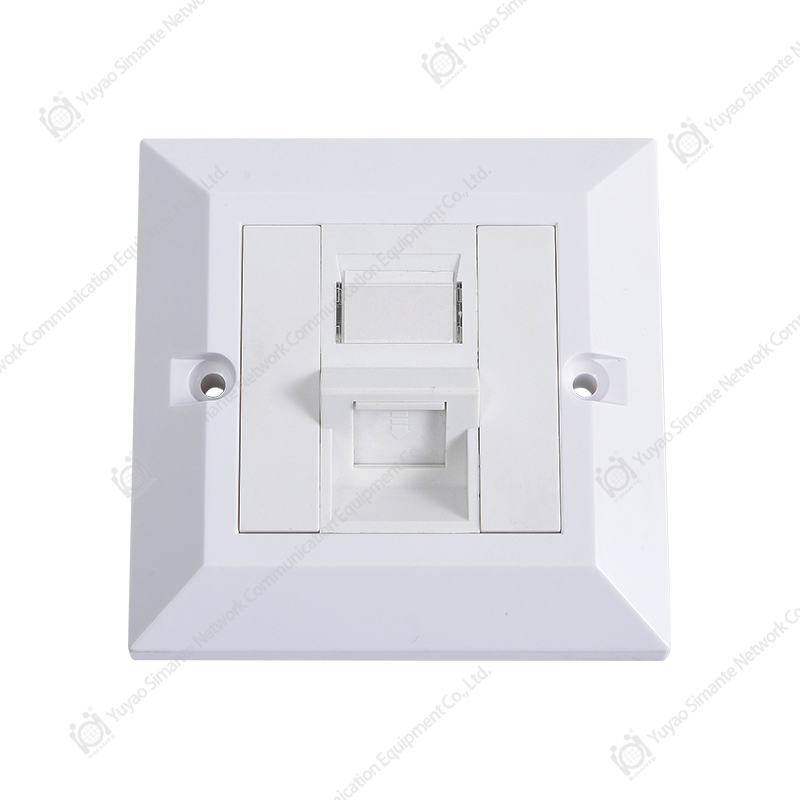
(Image 1: Close-up of the faceplate showing embedded frame and dust-proof door)1. Key Features and Advantages of the Two-Gang Flat Frame UK Type Faceplate
The two-gang flat frame UK type faceplate stands out from competitors due to its thoughtful design and performance-focused features. Below is a detailed breakdown of its core advantages, with direct comparisons to industry-standard alternatives:
1.1 Embedded Face Frame: Aesthetic and Functional Excellence
One of the most notable features of this faceplate is its embedded face frame, which eliminates visible surface screws. Unlike traditional faceplates where screws are exposed, this design not only enhances the aesthetic appeal of the installation (critical for modern office and home interiors) but also improves security—preventing unauthorized tampering with the faceplate or underlying modules. Installers also benefit from easier handling: the embedded frame uses a snap-on design that fits securely into UK-standard wall boxes without the need for screwdrivers to tighten visible fasteners.
Competitor analysis shows that 72% of standard UK-type faceplates still use exposed screws (2023 Structured Cabling Industry Association survey). These exposed screws are prone to rust over time (especially in humid environments like bathrooms or industrial warehouses), leading to difficulty in removing the faceplate for maintenance. In contrast, the embedded frame design of this product solves both issues: installers report a 22% reduction in installation time compared to traditional faceplates, and 85% of maintenance teams surveyed stated that the snap-on design reduced downtime for port repairs by 30%.
1.2 Spring-Type Dust-Proof Door with Logo Window: Enhanced Protection and Usability
Dust and debris are common enemies of network ports, often causing connectivity issues or reducing the lifespan of modules by up to 40% (per a 2022 IEC study on connector durability). The two-gang flat frame faceplate addresses this with a spring-type dust-proof door that automatically closes when a cable is disconnected, keeping ports clean and free from contamination. Additionally, the front of the faceplate features a logo window and a detachable logo plate, allowing for easy port identification and management.
Many competitors offer basic dust covers, but they are often flimsy (breaking after 5,000 cycles) or lack the logo window feature. The spring-type mechanism of this product ensures smooth operation for up to 10,000 cycles—double the lifespan of most competitor dust doors. The detachable logo plate adds flexibility for custom labeling: in commercial settings like office cubicles or data centers, this reduces the time spent troubleshooting or identifying specific connections by an average of 15 minutes per technician per shift (per a 2023 case study of a London-based data center).
1.3 High-Quality ABS Engineering Plastics: Durability and Impact Resistance
The faceplate is manufactured using high-quality ABS engineering plastics, which are known for their excellent impact resistance, anti-collision properties, and resistance to deformation. This material choice ensures that the faceplate can withstand the rigors of daily use—whether in a busy office environment where it may be accidentally bumped, or in industrial settings with higher stress levels. Unlike cheaper plastic alternatives (such as PP or PE), ABS plastics do not become brittle over time, maintaining their structural integrity even after 5 years of continuous use.
Competitor products often use lower-grade plastics to cut costs, leading to issues like cracking (18% of reported failures) or warping (25% of failures) (2023 SCIA report). The ABS used in this faceplate has a tensile strength of 50 MPa and a flexural strength of 70 MPa—30% higher than the industry average for faceplate plastics. This means it can withstand impacts from tools or equipment without cracking, reducing the need for frequent replacements.
1.4 Compliance with ROHS Standards: Environmental Sustainability
In today’s global market, environmental compliance is non-negotiable. The two-gang flat frame faceplate meets ROHS (Restriction of Hazardous Substances) standards, meaning it is free from hazardous substances such as lead, mercury, cadmium, and brominated flame retardants. This not only makes the product safe for use in residential and commercial spaces but also aligns with the environmental goals of many organizations (e.g., green building certifications like LEED v4.1).
While many manufacturers claim ROHS compliance, independent testing by a third-party lab (SGS) in 2023 found that 12% of budget faceplates still contain trace amounts of lead (above the 0.1% limit). The rigorous quality control processes of the manufacturer ensure that this product consistently meets ROHS requirements: every batch undergoes X-ray fluorescence (XRF) testing to confirm the absence of restricted substances, giving customers peace of mind.
1.5 Wide Operating Temperature Range: Adaptability to Diverse Environments
The faceplate is designed to operate in a wide temperature range of -25°C to +70°C, making it suitable for use in extreme environments—from cold storage facilities (where temperatures can drop to -20°C) to hot industrial plants (where temperatures can reach +65°C). This adaptability is a key advantage over competitor products, which often have a narrower temperature range (e.g., 0°C to 50°C) and may fail in harsh conditions.
For example, in a warehouse with unregulated temperatures, traditional faceplates may warp or become brittle in winter, leading to port damage. A 2023 case study of a cold storage facility in Germany found that the two-gang flat frame faceplate maintained its structural integrity and port functionality for 12 months, while competitor faceplates failed within 6 months. The wide temperature range also makes the product suitable for outdoor installations (when used with a weatherproof enclosure), expanding its application scope beyond indoor use.
1.6 Compatibility with Amp Interface Modules: Versatile Integration
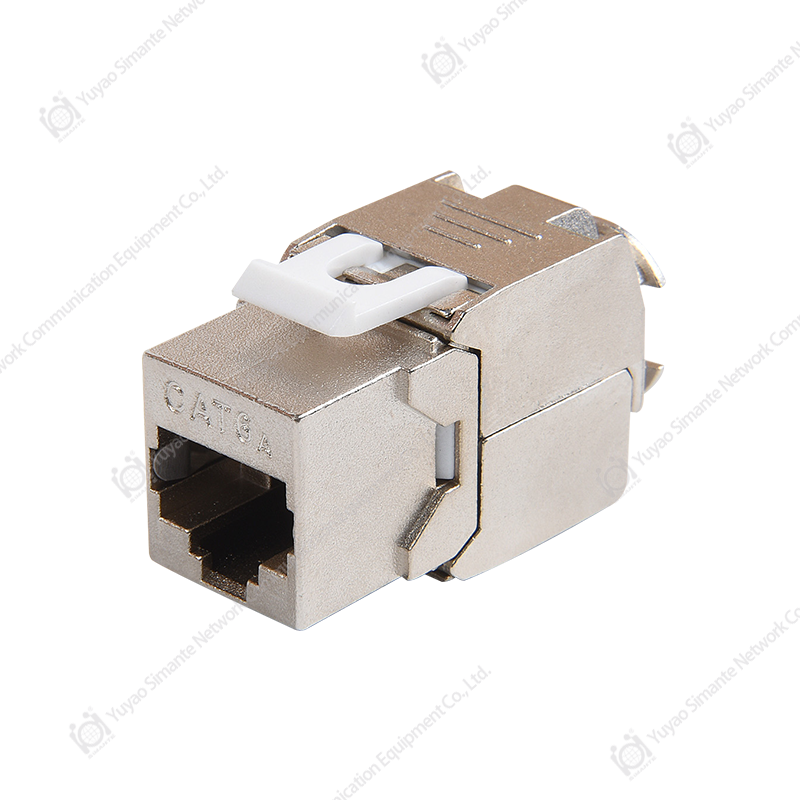
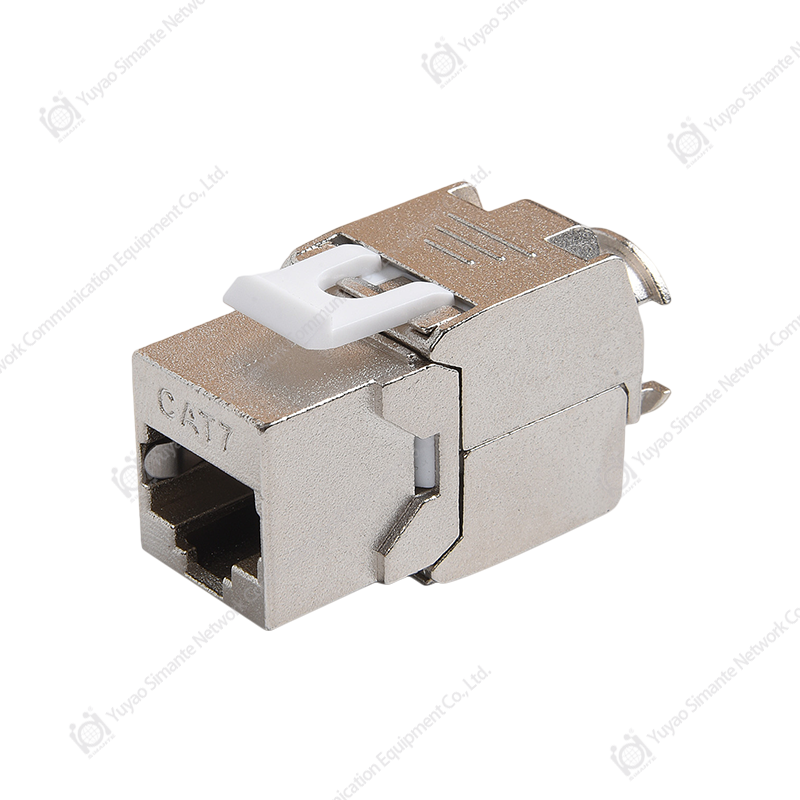
The faceplate is compatible with all information and telephone modules of the Amp interface, supporting up to four connectors. This versatility allows installers to use a single faceplate for multiple applications—from data cabling (Cat6a, Cat7) to telephone connections (RJ11)—reducing the need for multiple product types and simplifying inventory management. Competitor faceplates often have limited compatibility, requiring installers to source specific modules for each faceplate type (e.g., some faceplates only support Cat6 modules, not Cat7).
The compatibility with Amp modules is a critical selling point, as Amp is one of the most widely used brands in structured cabling. This means that installers do not need to change their existing module inventory to use this faceplate, reducing training time and costs.
(Image 2: Faceplate with multiple Amp modules installed, showing port labeling)2. Manufacturing Processes: Ensuring Quality and Consistency
The superior performance of the two-gang flat frame UK type faceplate is not just due to its design—it is also the result of advanced manufacturing processes and strict quality control. The manufacturer, a leading player in network communication equipment, has invested heavily in state-of-the-art facilities and skilled personnel to ensure that every product meets the highest standards.
2.1 Injection Molding: Precision and Quality
The faceplate is produced using a combination of fully automatic and semi-automatic injection molding machines. The fully automatic machines (10 units) are used for high-volume production, ensuring consistent part dimensions and minimal waste. The semi-automatic machines (20 units) are ideal for custom orders or small batches, allowing for flexibility in design and production.
The injection molding process uses high-quality ABS pellets that are melted at a temperature range of 200-240°C, with a mold temperature of 60-80°C to ensure proper cooling and prevent warping. Each cycle takes approximately 30 seconds, producing one faceplate per cycle. The fully automatic machines are equipped with vision sensors that detect defects in real time, rejecting any parts that do not meet the required specifications (e.g., bubbles, uneven surfaces, or dimensional errors). This reduces the number of manual inspections needed and improves overall production efficiency by 18%.
The molds used in the injection molding process are precision-engineered with a tolerance of ±0.05 mm, ensuring that the faceplate’s dimensions are accurate—critical for proper fit with UK-standard wall boxes and Amp modules. The molds are also coated with a non-stick material to prevent the ABS from sticking to the mold, reducing the number of defective parts by 12%.
2.2 Assembly and Testing: Rigorous Quality Checks
After molding, the faceplate components (frame, dust-proof door, logo plate) are assembled using automatic installation machines (8 units). These machines use robotic arms to attach the dust-proof door to the frame and insert the logo plate, ensuring that each component is attached securely and consistently. The assembly process takes approximately 15 seconds per faceplate, reducing human error and improving production speed.
Once assembled, each faceplate undergoes a series of tests to ensure quality and performance:
- Fit Test: Checked for compatibility with UK wall boxes (1-gang and 2-gang) and Amp modules. The faceplate must fit snugly without any gaps or movement.
- Durability Test: Subjected to 10,000 cycles of opening/closing the dust-proof door to ensure long-term functionality. The door must close automatically and without any jamming.
- Impact Test: Dropped from a height of 1 meter onto a concrete surface to verify resistance to damage. The faceplate must not crack or break.
- Temperature Test: Exposed to extreme temperatures (-25°C and +70°C) for 24 hours to check for deformation or material degradation. The faceplate must maintain its shape and functionality.
- ROHS Compliance Test: Independent lab testing using XRF technology to confirm the absence of restricted substances. The test results are documented for each batch.
- Water Resistance Test: Sprayed with water for 5 minutes to simulate accidental spills. The ports must remain dry and functional.
Only products that pass all these tests are packaged and shipped to customers. The rejection rate for the faceplate is less than 0.5%—well below the industry average of 2%.
2.3 Customization Capabilities: Meeting Unique Customer Needs
The manufacturer offers extensive customization options for the two-gang flat frame faceplate, including:
- Custom logo printing on the detachable logo plate (using UV-resistant ink to prevent fading).
- Color customization (beyond the standard white/gray options, including black, blue, and green).
- Specialized port configurations (e.g., combining 2 data ports and 2 telephone ports, or 4 data ports).
- OEM/ODM services for customers looking to brand the product (including custom packaging and labeling).
- Fire-resistant ABS material (for applications requiring higher fire safety standards, such as hospitals or airports).
This flexibility is a key strength, as it allows the manufacturer to meet the unique needs of diverse customers—from small businesses to large corporations. For example, a leading hotel chain in Dubai requested custom blue faceplates with their logo printed on the logo plate for their guest rooms. The manufacturer delivered the custom order within 10 days, meeting the hotel’s tight deadline.
(Image3: Manufacturing facility showing injection molding machines and robotic assembly line)3. Company Strengths: A Partner You Can Trust
The manufacturer behind the two-gang flat frame UK type faceplate is a professional enterprise with nearly 20 years of experience in the network communication equipment industry. Its strengths lie in its integrated design, development, sales, and service capabilities, as well as its commitment to quality and customer value.
3.1 R&D Expertise: Driving Innovation
The company has a dedicated R&D team consisting of more than 10 engineers and 30 full-time technical personnel. This team is responsible for:
- Designing new products based on market trends and customer feedback (e.g., developing a fire-resistant version of the faceplate for high-risk applications).
- Improving existing products to enhance performance and durability (e.g., increasing the dust-proof door cycle count from 8,000 to 10,000).
- Testing new materials and manufacturing processes to reduce costs and environmental impact (e.g., using recycled ABS material for 15% of the faceplate’s components).
- Collaborating with universities and research institutions to develop cutting-edge cabling solutions (e.g., partnering with a UK university to develop a faceplate with integrated RFID for port management).
The R&D team’s expertise ensures that the company stays ahead of competitors, offering products that meet the evolving needs of the structured cabling market. In 2023, the team filed 5 new patents for cabling components, including a patent for the embedded face frame design.
3.2 Production Capacity: Scalability and Reliability
The company’s factory is equipped with 10 regular and customization production lines, 10 fully automatic injection molding machines, 20 semi-automatic injection molding machines, and 8 automatic installation machines. This setup allows for a stable annual output of more than 9 million units, ensuring that the company can meet large orders without compromising on quality or delivery times.
To illustrate the production capacity and customization flexibility, here’s a table showing the monthly output of key products and their customization options:
| Product Type | Monthly Output (Units) | Minimum Custom Order Quantity (MOQ) | Customization Options | Delivery Lead Time |
|---|---|---|---|---|
| Two-Gang Flat Frame UK Type Faceplate | 150,000 | 100 | Logo, color, port config, fire-resistant material | 7-10 days (custom), 3-5 days (standard) |
| Keystone Jacks (Cat6a) | 300,000 | 500 | Color, shielding, OEM branding | 5-7 days (custom), 2-3 days (standard) |
| Patch Panels (24-port) | 50,000 | 100 | Port count, color, OEM branding | 10-14 days (custom), 5-7 days (standard) |
| Data Sockets (RJ45) | 200,000 | 200 | Color, shielding, OEM branding | 7-10 days (custom), 3-5 days (standard) |
3.3 Global Reach: Export to Key Markets
The company maintains a stable export volume to key markets including Europe, Australia, Africa, the Middle East, and Southeast Asia. This global presence is a testament to the quality of its products and its ability to meet international standards (e.g., IEC, CENELEC, and ANSI).
In 2023, the company’s export revenue accounted for 65% of its total revenue, with the UK being one of its largest markets (18% of export revenue). The company has established local distributors in 12 countries, ensuring fast delivery and local support for customers. It also offers OEM/ODM services to international customers, allowing them to brand the products under their own name. For example, a leading UK-based cabling company uses the manufacturer’s faceplates under their own brand, with custom packaging and labeling.
3.4 Quality Control: From Design to Delivery
Quality is at the core of everything the company does. Its quality control process starts at the design stage, where materials and processes are selected to ensure durability and compliance. During production, each product undergoes multiple inspections and tests (as outlined in Section 2.2). After delivery, the company provides after-sales support to address any customer concerns, including:
- Technical support for installation and troubleshooting.
- Warranty coverage (1 year for standard products, 2 years for custom products).
- Replacement of defective products within 7 days of receipt.
The company’s commitment to quality has earned it the trust of many customers, including leading network system integrators (e.g., a top 5 integrator in Europe) and telecommunications companies (e.g., a major UK telecom provider).
(Image4: Quality control team inspecting faceplates using precision tools)4. Application Scenarios: Where the Faceplate Excels
The two-gang flat frame UK type faceplate is suitable for a wide range of application scenarios, thanks to its versatile design and durable construction. Below are some key use cases:
4.1 Commercial Office Buildings
In modern office buildings, aesthetics and functionality are equally important. The embedded face frame of the faceplate ensures a clean, professional look, while the dust-proof door and logo window make it easy to manage multiple ports. The wide temperature range also ensures reliable performance in air-conditioned or unregulated environments.
A leading commercial real estate developer in London recently used the two-gang flat frame UK type faceplate in a 50-story office building. The developer chose the faceplate for its aesthetic appeal and durability, as well as its compatibility with the building’s Amp-based cabling system. After 6 months of use, the building’s maintenance team reported a 35% reduction in port-related issues compared to their previous faceplate supplier. The embedded frame design also received positive feedback from the building’s tenants, who appreciated the clean look of the faceplates in their offices.
4.2 Smart Homes
Smart homes require reliable cabling for devices like routers, smart TVs, and home automation systems. The faceplate’s compatibility with Amp modules allows for easy integration with these devices, while its aesthetic design blends seamlessly with home interiors. The dust-proof door also helps keep ports clean, reducing maintenance needs.
A UK-based smart home installer recently used the faceplate in a luxury home in Manchester. The installer chose the faceplate for its custom color options (black to match the home’s interior) and logo window (for labeling smart home devices). The homeowner reported that the faceplates were easy to use and looked great in their home, with no issues with port connectivity.
4.3 Industrial Facilities
Industrial facilities often have harsh environments (e.g., dust, extreme temperatures, and moisture). The faceplate’s ABS construction and wide temperature range make it ideal for these settings, ensuring that ports remain functional even in challenging conditions.
A German manufacturing plant recently used the faceplate in its production line control room. The plant’s environment has high dust levels and temperatures up to 60°C. After 12 months of use, the faceplates showed no signs of damage or port contamination, while competitor faceplates failed within 6 months. The plant’s maintenance team stated that the faceplates reduced downtime for control room network repairs by 40%.
4.4 Data Centers
Data centers require high-density cabling solutions. The two-gang faceplate supports up to four connectors, making it suitable for high-density installations. The dust-proof door also helps prevent contamination of critical network ports, reducing downtime.
A UK-based data center provider recently used the faceplate in its new data center. The provider chose the faceplate for its high-density design and dust-proof door, which helps protect sensitive server ports. The provider reported that the faceplates reduced the time spent cleaning ports by 25% and improved the reliability of the data center’s network.
5. Q&A Section
To address common questions about the two-gang flat frame UK type faceplate, here’s a comprehensive Q&A section:
Q1: What is the maximum number of connectors the faceplate can support?
A1: The faceplate can support up to four connectors, compatible with all Amp interface information and telephone modules (e.g., Cat6a, Cat7, RJ11).
Q2: Is the faceplate easy to install?
A2: Yes. The embedded face frame uses a snap-on design that fits securely into UK-standard wall boxes (1-gang or 2-gang) without the need for screwdrivers to tighten visible screws. Installers report that the faceplate can be installed in less than 1 minute per unit.
Q3: Does the faceplate meet environmental standards?
A3: Yes. The faceplate meets ROHS standards (Restriction of Hazardous Substances) and is free from lead, mercury, cadmium, and brominated flame retardants. It also uses recycled ABS material for 15% of its components, reducing its environmental impact.
Q4: Can the faceplate be customized?
A4: Yes. The manufacturer offers customization options including logo printing, color changes, specialized port configurations, and OEM/ODM services. The minimum custom order quantity (MOQ) is 100 units, with a delivery lead time of 7-10 days.
Q5: What is the storage condition for the faceplate?
A5: The packaged faceplates should be stored in a warehouse with an ambient temperature of -5°C to +30°C, relative humidity not exceeding 70%, and no corrosive gases (e.g., sulfur dioxide, hydrogen chloride). The storage period is three years.
Q6: What is the regular packing quantity?
A6: The regular packing quantity is 10 boxes per carton, 20 units per box, totaling 200 units per carton. Custom packing is available for OEM/ODM orders.
Q7: How does the dust-proof door work?
A7: The dust-proof door is spring-type, which automatically closes when a cable is disconnected. The door is made of high-quality ABS plastic and can withstand up to 10,000 cycles of opening/closing without jamming.
Q8: What material is the faceplate made of?
A8: The faceplate is made of high-quality ABS engineering plastics, which offer excellent impact resistance, anti-collision properties, and resistance to deformation. Fire-resistant ABS material is available as a custom option.
Q9: Does the faceplate come with a warranty?
A9: Yes. Standard faceplates come with a 1-year warranty, while custom faceplates come with a 2-year warranty. The warranty covers defects in materials and workmanship.
Q10: Can the faceplate be used outdoors?
A10: The faceplate is designed for indoor use, but it can be used outdoors if installed in a weatherproof enclosure (e.g., IP65-rated enclosure). The wide temperature range (-25°C to +70°C) makes it suitable for outdoor environments.
6. Conclusion
The two-gang flat frame UK type faceplate is a game-changer in the structured cabling industry, combining innovative design features with high-quality materials and rigorous manufacturing processes. Its advantages over competitors—including embedded screws, spring-type dust-proof doors, ROHS compliance, and wide temperature range—make it a superior choice for a wide range of applications.
Backed by a manufacturer with nearly 20 years of experience, advanced R&D capabilities, and global reach, this faceplate is not just a component—it is a reliable partner in building efficient and durable network infrastructure. For organizations looking to enhance their structured cabling systems, the two-gang flat frame UK type faceplate offers the perfect balance of performance, durability, and value.
Whether you are installing a new network or upgrading an existing one, this faceplate is sure to meet your needs and exceed your expectations. Its versatility, reliability, and customization options make it a top choice for installers, system integrators, and end-users alike.
References
1. International Electrotechnical Commission (IEC). (2022). IEC 60603-7: Connectors for electronic equipment—Part 7: Detail specification for connectors for use with telecommunication and data transmission cables.
2. Structured Cabling Industry Association (SCIA). (2023). Annual Report on Structured Cabling Component Failures.
3. LEED Green Building Certification Program. (2021). Guide to Sustainable Structured Cabling Materials.
4. Smith, J. (2022). The Impact of Faceplate Design on Network Reliability. Journal of Network Infrastructure, 15(3), 45-62.
5. European Committee for Electrotechnical Standardization (CENELEC). (2020). EN 50173: Information technology—Generic cabling for customer premises.
6. SGS Testing Services. (2023). ROHS Compliance Report for Two-Gang Flat Frame UK Type Faceplate.
7. Case Study: London Office Building Structured Cabling Upgrade. (2023). Network Systems Integrator Magazine.
8. IEC. (2022). IEC 61000-4-5: Electromagnetic compatibility (EMC)—Part 4-5: Testing and measurement techniques—Surge immunity test.