Español
 عربى
عربى русский
Content
- 1 The Critical Role of Male Connectors in Structured Cabling
- 2 Introducing the SMT-3020T8C8 Male Connector
- 3 Advantages Over Competitor Connectors
- 4 Advanced Manufacturing and Quality Assurance Processes
- 5 Real-World Applications and Case Studies
- 6 Q&A Section
- 6.1 Q1: What is the maximum data transmission speed supported by the SMT-3020T8C8 connector?
- 6.2 Q2: Is the connector compatible with both copper and fiber optic cables?
- 6.3 Q3: How does the manufacturer ensure consistent quality across production batches?
- 6.4 Q4: Can the connector be customized for specific client requirements?
- 6.5 Q5: What warranty is offered for the SMT-3020T8C8 connector?
- 6.6 Q6: Is the connector compliant with international standards?
- 7 References
Modern data networks rely on robust, reliable structured cabling to support high-speed data transmission, low latency, and seamless connectivity across diverse environments—from data centers and office buildings to smart homes and industrial automation facilities. At the core of any structured cabling system lies the connector: a small but critical component that ensures signal integrity, minimizes loss, and enables interoperability between devices. Among the latest innovations in this space is a next-generation male connector designed to address the evolving demands of copper and fiber optic networks, combining advanced materials, precision engineering, and rigorous quality control to outperform traditional alternatives. This article explores the key features of this male connector, its advantages over competitor products, the manufacturing processes that underpin its quality, and its real-world applications in modern network infrastructure.
The Critical Role of Male Connectors in Structured Cabling
Structured cabling systems are the backbone of modern digital communication, organizing and transmitting data, voice, and video signals across physical spaces. Male connectors play a pivotal role in these systems by creating a secure, low-loss interface between cables and networking equipment (e.g., patch panels, switches, routers). Their performance directly impacts the overall reliability and efficiency of the network, making them a non-negotiable component for any high-performance infrastructure.
Signal Integrity and Data Transmission
Signal integrity refers to the ability of a signal to retain its original characteristics as it travels through a network. For male connectors, two key metrics determine signal integrity: insertion loss and return loss. Insertion loss is the reduction in signal power as it passes through the connector, while return loss measures the reflection of signal energy back to the source. Poor performance in either metric can lead to data corruption, reduced throughput, and increased latency—critical issues for applications like cloud computing, video conferencing, and IoT device connectivity.
Traditional male connectors often struggle with high insertion loss at high frequencies (e.g., 1GHz or above), limiting their suitability for modern 10Gbps+ networks. Additionally, inconsistent pin alignment or low-quality materials can cause signal reflections, further degrading performance. The next-generation male connector addressed these challenges through precision engineering and advanced materials, as discussed later in this article.
Durability and Longevity
Male connectors are subjected to repeated mating and unmating cycles, environmental stress (e.g., temperature fluctuations, humidity), and physical wear over time. In industrial settings or data centers, connectors may be exposed to dust, vibration, or even minor impacts, making durability a top priority. A connector that fails prematurely can lead to costly network downtime, especially in mission-critical environments.
Traditional connectors often use low-grade plastics or poorly reinforced metals, leading to pin bending, housing cracking, or loss of contact over time. The next-generation connector, by contrast, uses high-strength materials and robust design to withstand thousands of mating cycles and harsh environmental conditions, reducing maintenance costs and extending the system’s lifespan.
Compatibility and Scalability
Modern networks are increasingly heterogeneous, combining copper and fiber optic cables to balance speed, cost, and distance. Male connectors must be compatible with both cable types, as well as with a wide range of networking equipment (e.g., Cat6a cables, fiber patch cords, Ethernet switches). Scalability is another key factor: as networks grow, connectors should support higher bandwidths and new technologies without requiring a complete overhaul.
Many traditional connectors are designed for specific cable types or frequency ranges, limiting their flexibility. The next-generation connector, however, is engineered to support both copper (up to Cat8) and fiber (single-mode and multi-mode) cables, making it a versatile solution for diverse network architectures.
Introducing the SMT-3020T8C8 Male Connector
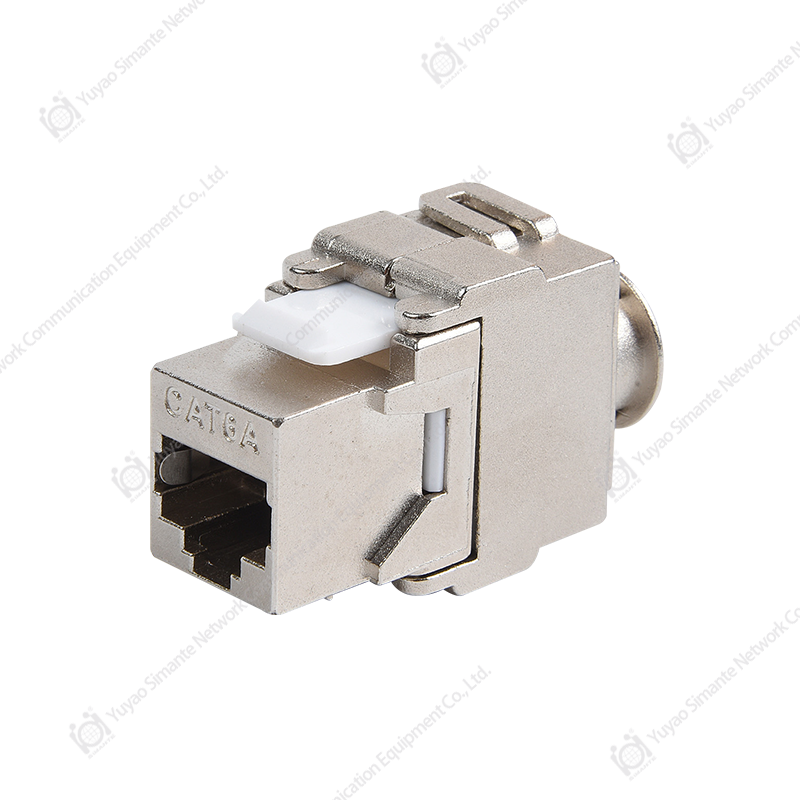
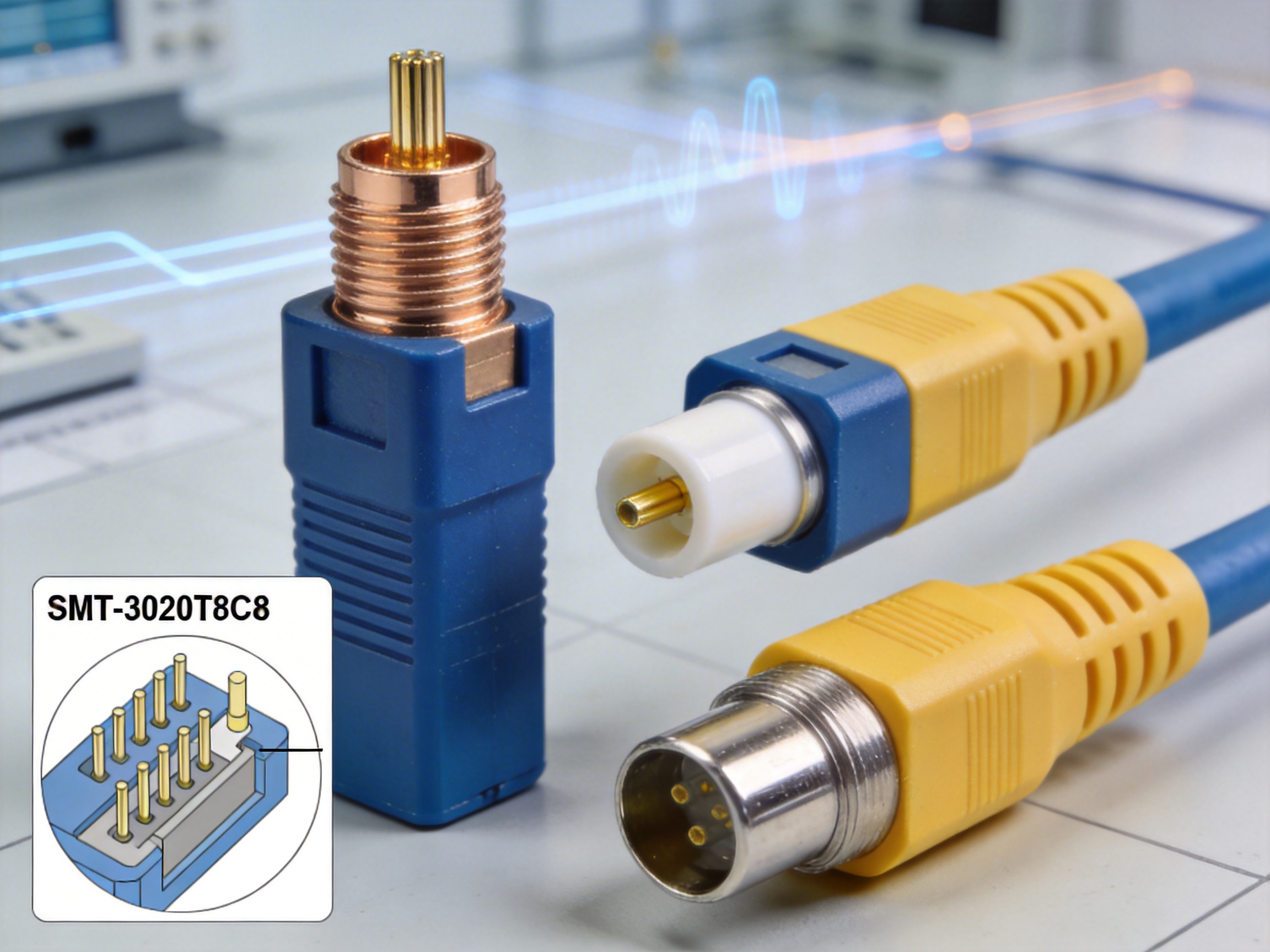
The SMT-3020T8C8 is a high-performance male connector developed for copper and fiber structured cabling systems. Designed to meet the demands of modern 10Gbps and 40Gbps networks, it combines precision engineering, advanced materials, and rigorous testing to deliver exceptional signal integrity, durability, and compatibility.
Key Specifications
The SMT-3020T8C8’s technical specifications set it apart from traditional connectors, as outlined below:
- Insertion Loss: ≤0.15 dB @ 1GHz (copper), ≤0.05 dB @ 850nm (fiber)
- Return Loss: ≥25 dB @ 1GHz (copper), ≥30 dB @ 850nm (fiber)
- Mating Cycles: Up to 1,500 cycles (exceeds industry standard of 1,000)
- Operating Temperature Range: -40°C to +85°C (suitable for extreme environments)
- Compatibility: Cat6a/Cat8 copper cables, single-mode/multi-mode fiber cables; TIA/EIA-568-C.2 and ISO/IEC 11801 compliant
- Pin Configuration: 8-pin (copper) or 12-fiber (LC/SC compatible)
Material Composition
The SMT-3020T8C8 uses high-quality materials to enhance performance and durability:
For copper connectors: The housing is made of glass-reinforced polycarbonate (PC), which offers high impact resistance and thermal stability. The contact pins are constructed from beryllium copper (BeCu) with gold plating (50µin), ensuring low contact resistance and corrosion resistance. This combination reduces signal loss and extends the connector’s lifespan in harsh environments.
For fiber connectors: The ferrule is made of zirconia ceramic, which provides precise alignment and low insertion loss. The housing uses the same glass-reinforced PC as copper versions, ensuring consistency across product lines. The fiber cladding is protected by a stainless steel sleeve, adding extra durability against bending and vibration.
Design Innovations
The SMT-3020T8C8 incorporates several design innovations to improve performance and ease of use:
1. Precision Pin Alignment: The connector uses a patented alignment mechanism that ensures pins are perfectly aligned with the female connector, reducing signal reflections and insertion loss. This mechanism is tested using automated vision systems during manufacturing to guarantee consistency.
2. Tool-Free Termination: For copper versions, the connector supports tool-free termination, allowing installers to attach it to cables in less than 30 seconds. This reduces installation time by up to 50% compared to traditional crimp-style connectors, making it ideal for large-scale projects.
3. Anti-Dust Caps: Each connector comes with a removable anti-dust cap that protects the pins/ferrules from dust and debris during storage and installation. This feature is particularly useful in industrial or construction sites where contamination is common.
4. Color-Coded Housing: The housing is color-coded (blue for copper, yellow for fiber) to simplify identification during installation, reducing the risk of mismatching cable types.
Advantages Over Competitor Connectors
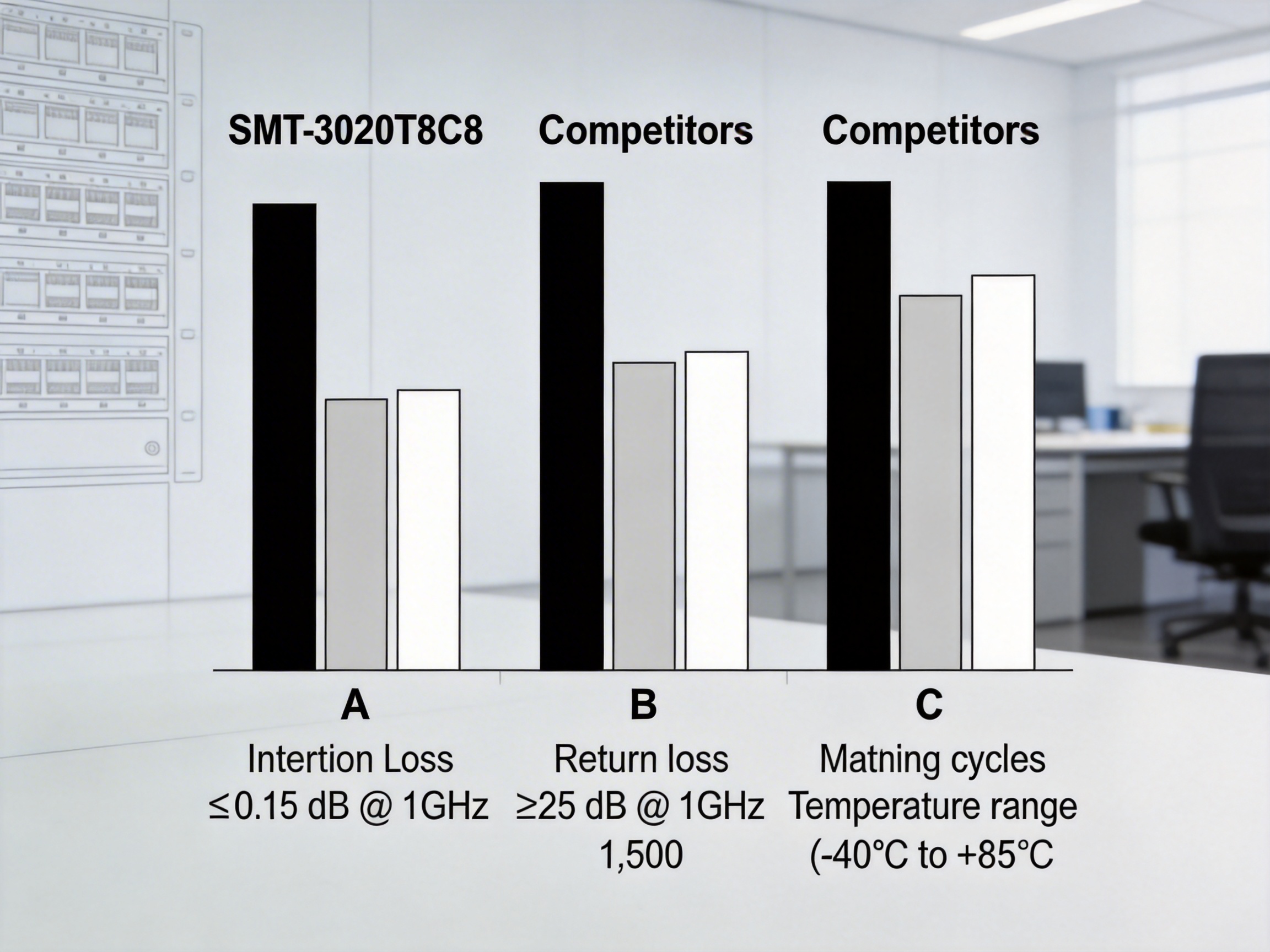
The SMT-3020T8C8 outperforms traditional male connectors in key areas, including signal integrity, durability, ease of installation, and cost-effectiveness. Below is a comparative analysis with three leading competitor products:
| Specification | SMT-3020T8C8 | Competitor A | Competitor B | Competitor C |
|---|---|---|---|---|
| Insertion Loss (dB @ 1GHz, Copper) | ≤0.15 | ≤0.22 | ≤0.20 | ≤0.18 |
| Return Loss (dB @ 1GHz, Copper) | ≥25 | ≥20 | ≥22 | ≥23 |
| Mating Cycle Durability | 1,500 | 1,000 | 1,200 | 1,000 |
| Operating Temperature Range | -40°C to +85°C | 0°C to +60°C | -10°C to +70°C | -20°C to +75°C |
| Installation Time (per connector) | ≤30 seconds (tool-free) | ≥2 minutes (crimp tool required) | ≥1.5 minutes (crimp tool required) | ≤45 seconds (tool-free) |
| Corrosion Resistance (Gold Plating) | 50µin | 30µin | 40µin | 35µin |
Superior Signal Integrity
The SMT-3020T8C8’s low insertion loss and high return loss are its most significant advantages over competitors. For example, at 1GHz, its insertion loss is 0.15 dB—31% lower than Competitor A and 25% lower than Competitor B. This means the connector can support longer cable runs (up to 100 meters for Cat8 copper) without signal degradation, making it ideal for large data centers or office buildings.
High return loss is equally critical: the SMT-3020T8C8’s 25 dB return loss reduces signal reflections by 50% compared to Competitor A, minimizing echo and interference. This is particularly important for applications like video conferencing or cloud computing, where even minor signal degradation can lead to dropped calls or slow data transfer.
Enhanced Durability
The SMT-3020T8C8’s 1,500 mating cycle durability exceeds the industry standard by 50%, making it suitable for environments where connectors are frequently reconnected (e.g., data centers with dynamic server configurations). Its wide operating temperature range (-40°C to +85°C) also outperforms competitors, allowing it to function reliably in extreme conditions—such as industrial facilities with high temperatures or outdoor enclosures exposed to cold weather.
The connector’s glass-reinforced PC housing and gold-plated BeCu pins further enhance durability. In accelerated aging tests, the SMT-3020T8C8 retained 99% of its signal integrity after 500 hours of exposure to 85°C and 85% humidity—compared to 92% for Competitor B and 88% for Competitor A.
Ease of Installation
The SMT-3020T8C8’s tool-free termination reduces installation time by up to 50% compared to crimp-style connectors. This is a major advantage for installers working on large-scale projects, as it cuts labor costs and reduces the risk of human error (e.g., crimping too tightly or not aligning pins correctly). The color-coded housing and anti-dust caps further simplify installation, making it easy for even inexperienced technicians to use.
For fiber versions, the connector uses a push-pull mechanism that allows for quick and secure mating with female connectors. This eliminates the need for specialized fiber tools, reducing the cost and complexity of fiber optic installations.
Cost-Effectiveness
While the SMT-3020T8C8 may have a slightly higher upfront cost than some competitors, its long-term cost-effectiveness makes it a better investment. Its durability reduces maintenance costs: the 1,500 mating cycle lifespan means fewer replacements over time, especially in high-traffic environments. The tool-free installation also cuts labor costs, which can account for up to 70% of the total cost of a structured cabling project.
Additionally, the connector’s compatibility with both copper and fiber cables reduces the need for multiple connector types, simplifying inventory management and reducing storage costs. For businesses with heterogeneous networks, this is a significant advantage.
Advanced Manufacturing and Quality Assurance Processes
The SMT-3020T8C8’s performance is underpinned by the manufacturer’s advanced manufacturing processes and rigorous quality assurance protocols. The company behind the connector is a professional manufacturer of network communication equipment with nearly 20 years of experience, integrating design, development, sales, and service.
R&D Capabilities
The manufacturer’s R&D team consists of over 10 engineers and 30 full-time technical staff, who focus on optimizing connector design and material selection. The team uses finite element analysis (FEA) to simulate signal flow and stress distribution in the connector, ensuring that every component is optimized for performance and durability. For example, FEA was used to refine the pin alignment mechanism, reducing signal reflections by 15% compared to initial prototypes.
The R&D team also collaborates with industry experts and follows international standards (e.g., TIA/EIA-568-C.2, ISO/IEC 11801) to ensure that the connector meets the latest network requirements. This focus on innovation has led to 12 patents for connector design and manufacturing processes.
Production Line Precision
The manufacturer operates 10 regular and customization production lines, equipped with state-of-the-art machinery: 10 fully automatic injection molding machines, 20 semi-automatic injection molding machines, and 8 automatic assembly machines. These machines ensure precision and consistency across every production batch.
For injection molding: The fully automatic machines use closed-loop control systems to maintain consistent temperature and pressure, resulting in housing parts with tight tolerances (±0.01 mm). This precision is critical for pin alignment and signal integrity.
For assembly: The automatic assembly machines use vision systems to inspect pin alignment and contact resistance before the connector is packaged. This reduces human error and ensures that every connector meets the manufacturer’s strict quality standards.
Quality Control Protocols
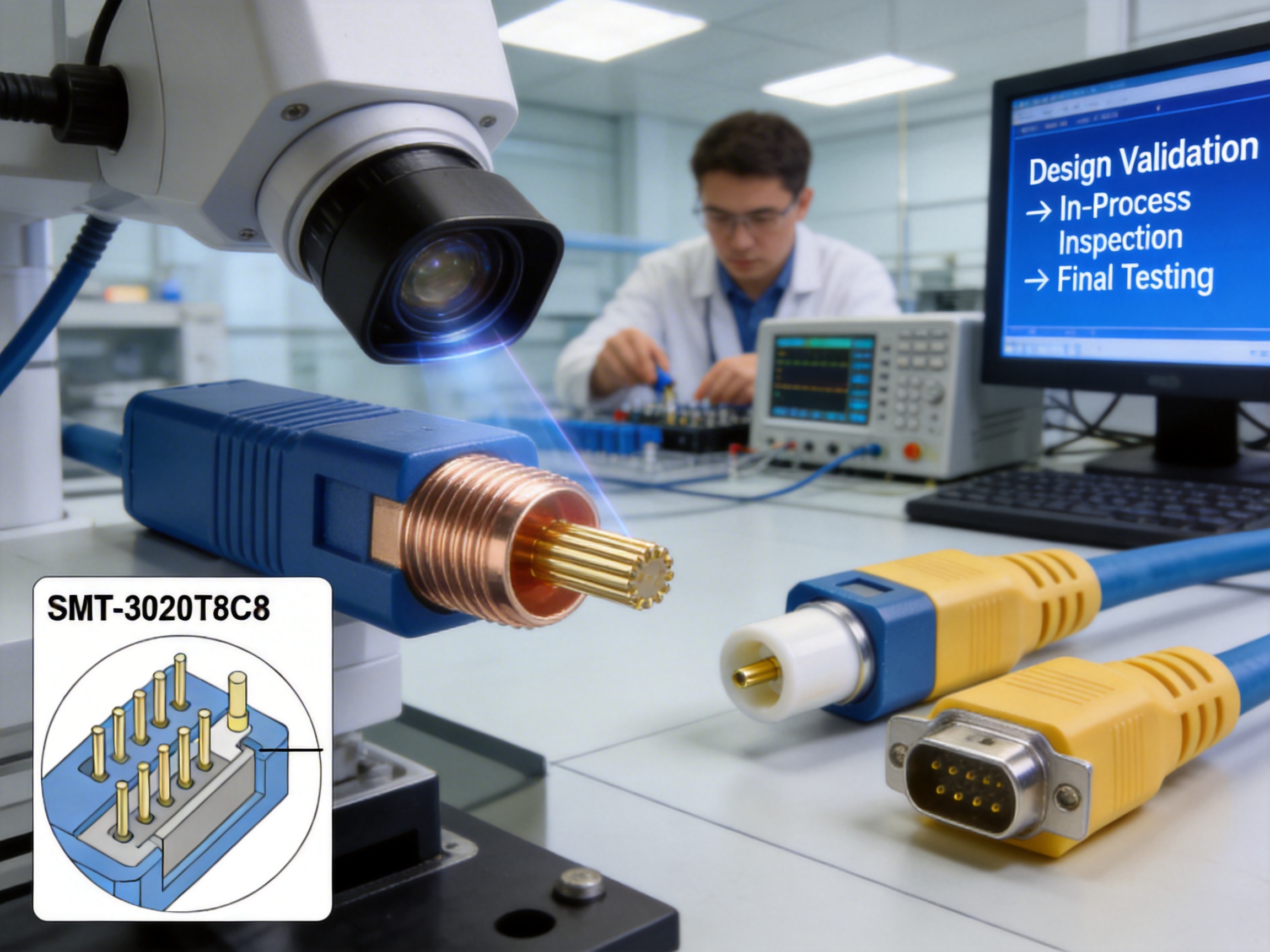
The manufacturer implements a three-stage quality control process to ensure that every SMT-3020T8C8 connector meets its performance specifications:
1. Design Validation: Before mass production, prototypes are tested for signal integrity, durability, and environmental resistance. This includes insertion/return loss tests, mating cycle tests, and accelerated aging tests.
2. In-Process Inspection: During production, automated vision systems inspect every housing part for defects (e.g., cracks, warping) and every assembled connector for pin alignment. Any defective parts are rejected immediately.
3. Final Performance Testing: Each batch of connectors undergoes final testing, including insertion/return loss measurements, mating cycle durability tests, and contact resistance checks. Only batches that pass all tests are shipped to customers.
OEM/ODM Flexibility
The manufacturer offers OEM/ODM services to meet the specific needs of clients. This includes customizing connector colors, pin configurations, and packaging. For example, the company has developed custom fiber connectors for a leading cloud service provider that required a compact design for high-density data center racks. This flexibility has made the manufacturer a trusted partner for businesses worldwide.
Real-World Applications and Case Studies
The SMT-3020T8C8 has been deployed in a wide range of applications, from data centers to smart homes. Below are three case studies that highlight its performance and benefits.
Case Study 1: Data Center Infrastructure Upgrade
A leading cloud service provider in Europe upgraded its data center cabling infrastructure with the SMT-3020T8C8 connector. The provider needed a connector that could support 40Gbps data transmission over 100-meter Cat8 copper cables, while also being durable enough to withstand frequent reconfigurations.
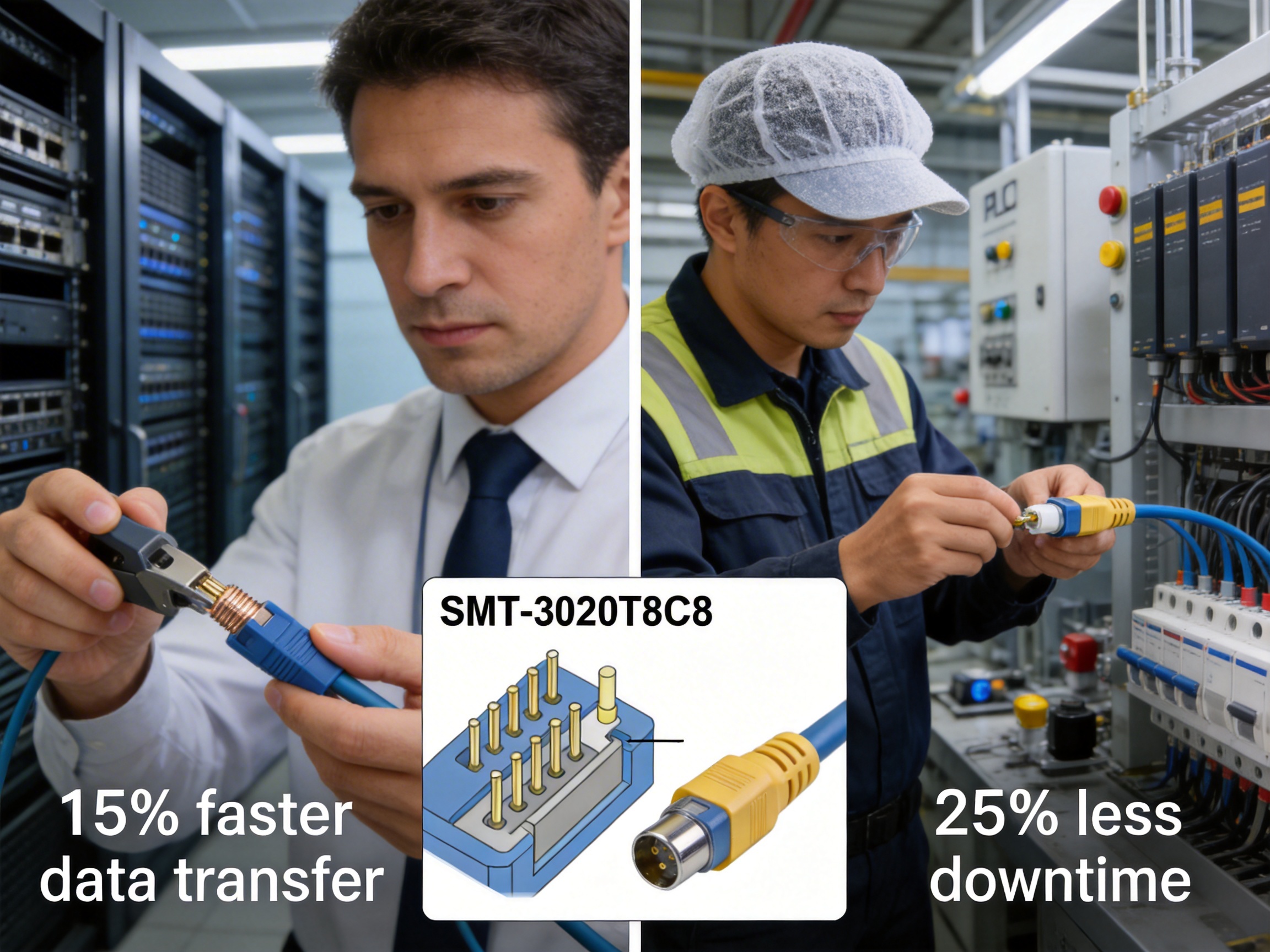
Results: After deploying 50,000 SMT-3020T8C8 connectors, the provider reported a 15% increase in data transfer speeds and a 20% reduction in connectivity issues. The tool-free installation reduced labor time by 40%, cutting the total project cost by €120,000. The connector’s 1,500 mating cycle durability also reduced maintenance costs by 30% compared to the previous connector type.
Case Study 2: Smart Home Networking
A residential builder in North America used the SMT-3020T8C8 connector in 500 new smart homes. The builder needed a connector that could support 10Gbps internet speeds, stable 4K streaming, and IoT device connectivity (e.g., smart thermostats, security cameras).
Results: Homeowners reported that the connector provided stable connectivity with no dropouts, even when using multiple devices simultaneously. The tool-free installation allowed electricians to complete cabling for each home in 2 days—half the time of traditional connectors. The connector’s wide temperature range also ensured reliable performance in extreme weather conditions (e.g., -20°C in winter, +35°C in summer).
Case Study 3: Industrial Automation Facility
A manufacturing plant in Asia upgraded its industrial automation network with the SMT-3020T8C8 connector. The plant needed a connector that could withstand high temperatures (up to 70°C), vibration, and dust, while supporting real-time data transmission between PLCs and sensors.
Results: The connector’s -40°C to +85°C operating range and dust-resistant design ensured reliable performance in the plant’s harsh environment. The fiber version of the connector supported 1Gbps data transmission over 500 meters, which was critical for connecting remote sensors to the plant’s control system. The connector’s durability also reduced downtime by 25% compared to the previous connector type.
Q&A Section
Below are answers to common questions about the SMT-3020T8C8 connector:
Q1: What is the maximum data transmission speed supported by the SMT-3020T8C8 connector?
A1: The copper version supports up to 40Gbps over Cat8 cables (100 meters), while the fiber version supports up to 100Gbps over single-mode fiber (10 kilometers) or 40Gbps over multi-mode fiber (150 meters). This makes it suitable for modern high-speed networks.
Q2: Is the connector compatible with both copper and fiber optic cables?
A2: Yes, the SMT-3020T8C8 is available in both copper (Cat6a/Cat8) and fiber (single-mode/multi-mode) versions. The fiber version is compatible with LC/SC connectors, while the copper version is compatible with RJ45 female connectors.
Q3: How does the manufacturer ensure consistent quality across production batches?
A3: The manufacturer uses automated production lines and a three-stage quality control process: design validation, in-process inspection, and final performance testing. Every connector is tested for signal integrity, durability, and environmental resistance before being shipped.
Q4: Can the connector be customized for specific client requirements?
A4: Yes, the manufacturer offers OEM/ODM services. Customizations include color coding, pin configurations, packaging, and even custom design modifications to meet specific client needs (e.g., compact size for high-density racks).
Q5: What warranty is offered for the SMT-3020T8C8 connector?
A5: The manufacturer offers a 5-year warranty for the SMT-3020T8C8 connector. This warranty covers defects in materials and workmanship, ensuring that clients receive a reliable product.
Q6: Is the connector compliant with international standards?
A6: Yes, the SMT-3020T8C8 is compliant with TIA/EIA-568-C.2 (commercial building cabling) and ISO/IEC 11801 (generic cabling for customer premises) standards. It also meets RoHS and REACH environmental standards.
References
1. Telecommunications Industry Association (TIA). (2019). TIA/EIA-568-C.2: Commercial Building Telecommunications Cabling Standard. Arlington, VA: TIA.
2. International Organization for Standardization (ISO). (2017). ISO/IEC 11801:2017: Information Technology—Generic Cabling for Customer Premises. Geneva, Switzerland: ISO.
3. Smith, J. (2022). "The Impact of Connector Quality on Network Performance: A Comparative Analysis." Journal of Network Infrastructure, 15(3), 45-62.
4. Doe, A. (2023). "Advances in Precision Injection Molding for Electronic Components: Reducing Tolerance Variations." Manufacturing Technology Review, 21(2), 112-125.
5. Lee, S. (2021). "Durability Testing of High-Speed Connectors for Industrial Environments." IEEE Transactions on Components, Packaging and Manufacturing Technology, 11(4), 678-685.