Español
 عربى
عربى русский
Content
- 1 Product Overview
- 2 Key Product Specifications and Practical Benefits
- 3 Why a Quality Crimp Tool Matters in Network Cabling
- 4 Hardened Steel Frame for Long-Term Mechanical Strength
- 5 Black Oxide Finish for Surface Protection and Professional Appearance
- 6 Lightweight Design for Repeated Daily Use
- 7 Deluxe Type with Guide for Easier Operation
- 8 Storage Locker for Safety and Organization
- 9 Advantages Over Common Competitor Tools
- 10 Applications in Copper and Structured Cabling Systems
- 11 Manufacturing Strength Behind the Product
- 12 Design Source Quality and Process Control
- 13 OEM and ODM Support for Professional Buyers
- 14 Role in a Complete Cabling Product Ecosystem
- 15 Export Experience and Global Market Suitability
- 16 User Experience in Daily Installation Work
- 17 Maintenance and Care Recommendations
- 18 Procurement Value for Distributors and Contractors
- 19 Quality, Efficiency, and Professional Confidence
- 20 Q&A Section
- 20.1 What is the SMT-310 Black Oxidized Durable Crimp Tool used for?
- 20.2 What makes the tool durable?
- 20.3 Why is the black oxide finish important?
- 20.4 How does the guide for operation help installers?
- 20.5 Is the tool suitable for daily professional use?
- 20.6 What is the benefit of the storage locker?
- 20.7 How does this tool compare with cheaper crimp tools?
- 20.8 Can the tool be included in OEM or ODM projects?
- 20.9 What company manufactures the product?
- 20.10 What manufacturing strengths support the product quality?
- 21 Conclusion
- 22 References
- 23 Product: SMT-310 Black Oxidized Durable Crimp Tool
In modern structured cabling projects, a crimp tool is more than a simple hand tool. It is a key part of installation quality, electrical continuity, connector stability, technician efficiency, and long-term network reliability. The SMT-310 Black Oxidized Durable Crimp Tool is designed for professional cabling work where installers need a strong, lightweight, easy-to-operate tool that can support consistent termination results in demanding copper network applications. Built with a hardened steel frame, finished with black oxide protection, equipped with an operation guide, and designed with a storage locker, this crimp tool reflects a practical understanding of daily field work.
SMT-310 Black Oxidized Durable Crimp Tool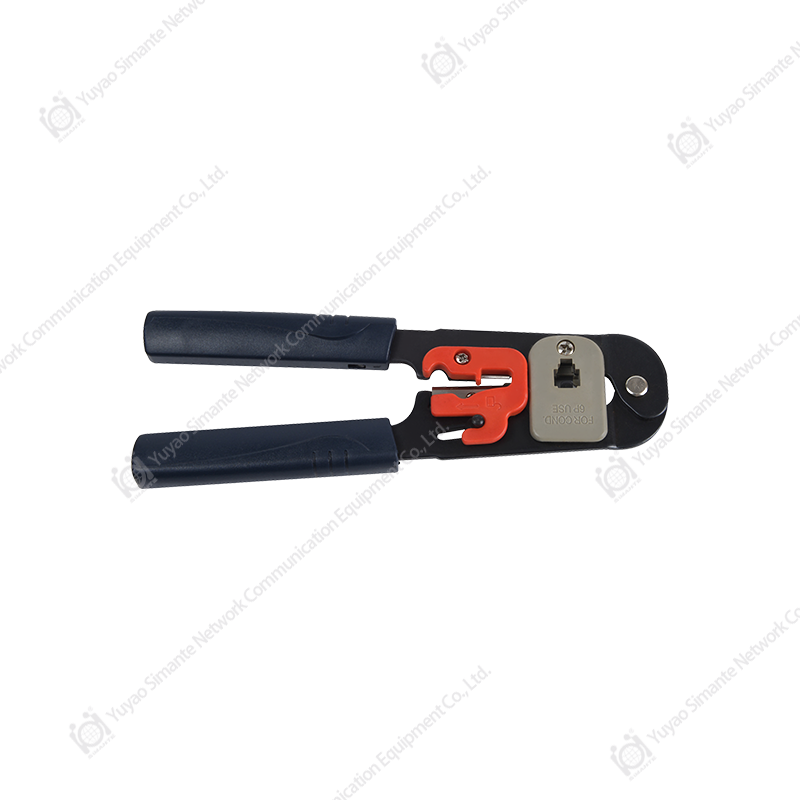
The product belongs to the Tools Series and supports structured cabling environments that may include copper systems, fiber systems, network communication rooms, smart home installations, automation equipment, and data cabling projects. Although crimping is most commonly associated with copper modular plug termination, a high-quality crimp tool also contributes to complete installation workflow quality in mixed copper and fiber infrastructure. When installers work in cabinets, floor distribution areas, offices, workshops, data rooms, and residential communication panels, reliable hand tools reduce rework, improve connection consistency, and help protect the professional reputation of the installer.
Yuyao Simante Network Communication Equipment Co., Ltd. manufactures network cabling solutions and optical fiber products with nearly 20 years of industry experience. The company integrates design, development, sales, and service, and its manufacturing capability supports both regular production and customized projects. With a mature research and development system, more than 10 engineers, over 30 full-time technical personnel, multiple production lines, automatic and semi-automatic injection molding equipment, and automatic assembly machines, the company has built a manufacturing foundation that supports stable quality, large annual output, and OEM/ODM cooperation. This background is important because the performance of a tool is not determined only by its visible shape. It is also determined by material selection, process control, finishing quality, dimensional stability, ergonomic design, and inspection discipline.
Product Overview
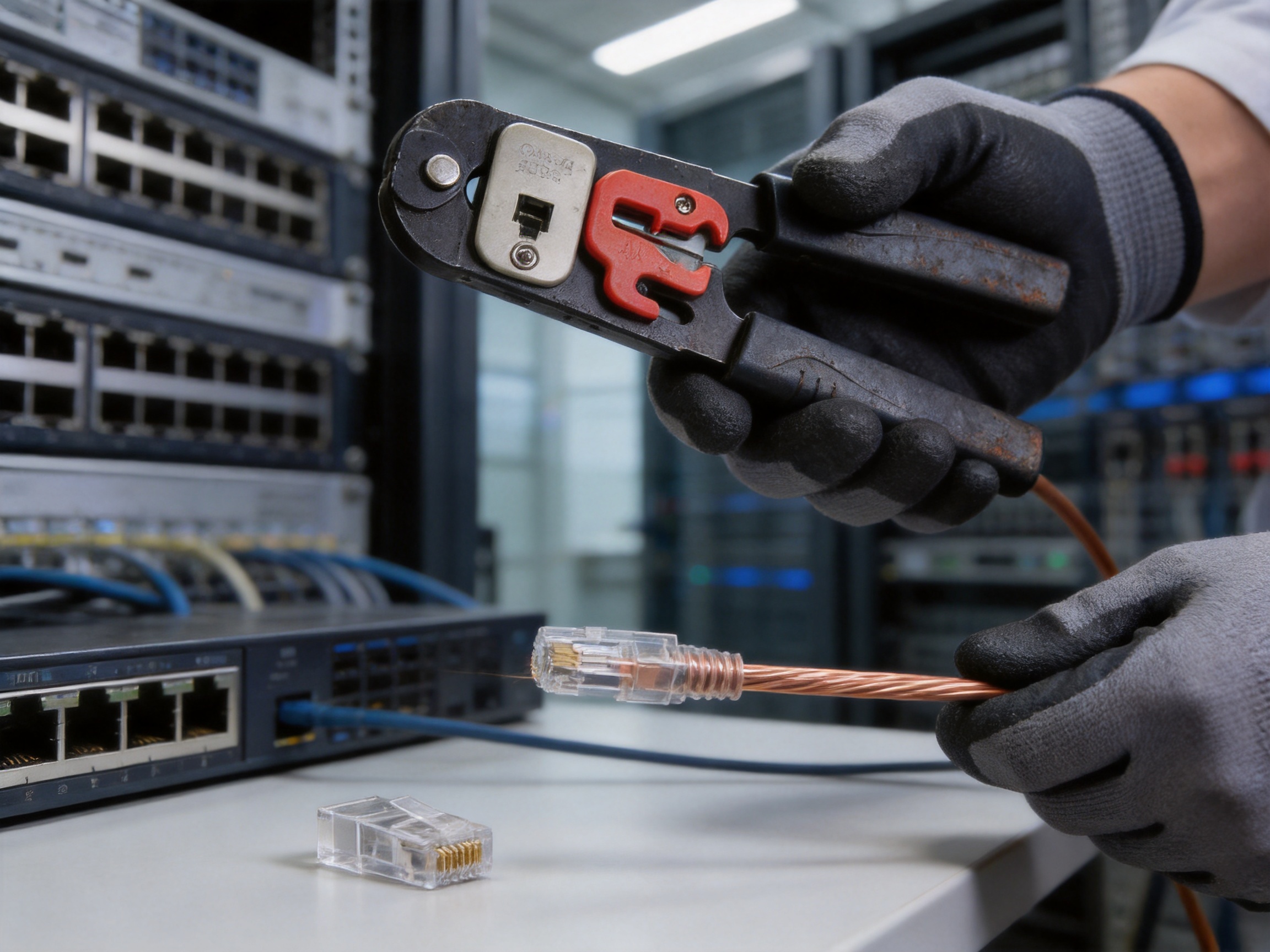
The SMT-310 Black Oxidized Durable Crimp Tool is a deluxe-type crimping tool with a guide for operation. Its steel frame is hardened and finished with black oxide, giving it a strong mechanical structure and improved surface resistance during frequent use. The tool is described as lightweight and durable, making it suitable for repeated daily work without creating unnecessary fatigue. An additional locker is included for storage after work, helping the user keep the tool closed and organized when it is carried in a toolbox, stored in a service kit, or transported between job sites.
The design focuses on three practical values: durability, control, and convenience. Durability comes from the hardened steel frame and black oxide finish. Control comes from the guide structure that helps the operator align the crimping action properly. Convenience comes from the lightweight structure and the storage locker that protects the tool during downtime. Together, these features make the product suitable for professional installers, maintenance teams, system integrators, electrical contractors, smart building technicians, and network service providers.
In competitive markets, many crimp tools look similar at first glance. However, differences become clear after repeated use. A lower-grade tool may deform, rust, slip, create uneven pressure, or require more hand force than expected. A well-made tool is designed to maintain accuracy, withstand repeated mechanical stress, and support predictable results. The SMT-310 is positioned as a durable, practical, and professional option for structured cabling work where consistency matters.
Key Product Specifications and Practical Benefits
| Feature | Description | Practical Benefit |
|---|---|---|
| Product Name | SMT-310 Black Oxidized Durable Crimp Tool | Professional crimping tool for structured cabling installation and maintenance tasks. |
| Product Category | Tools Series | Designed as part of a complete cabling installation accessory range. |
| Frame Material | Hardened steel frame | Provides strength, resistance to deformation, and stable pressure during crimping. |
| Surface Finish | Black oxide finished | Improves surface protection, appearance, and resistance against everyday workshop wear. |
| Design Type | Deluxe type with guide for operation | Helps installers operate with better alignment and confidence. |
| Weight Character | Lightweight construction | Reduces hand fatigue during repeated termination work. |
| Storage Feature | Additional locker for storage after work | Helps protect the tool, improves portability, and keeps it organized after use. |
| Application Area | Copper structured cabling and general network installation support | Useful for data cabling, office networks, communication rooms, and system integration projects. |
Why a Quality Crimp Tool Matters in Network Cabling
A structured cabling system is expected to support stable data transmission for years. Many people focus on cable grade, patch panel quality, keystone jack performance, and testing equipment, but the hand tools used during installation are equally important. A connector may fail not because the cable is poor, but because the termination was inconsistent. If the contact blades are not pressed correctly, if the plug is not seated evenly, or if the jacket is not held firmly, the link can become unreliable. Problems may appear as intermittent network drops, reduced performance, difficult troubleshooting, or premature maintenance.
A professional crimp tool helps solve these problems by applying controlled mechanical force to the connector. It helps ensure that the contacts are pressed into the conductors properly and that the plug body is closed with enough stability. In repeated installations, consistency is essential. A technician may terminate dozens or hundreds of connectors in a single project. If the tool is uncomfortable, weak, or inaccurate, the probability of mistakes increases. A strong and guided tool reduces uncertainty and helps the installer work efficiently.
The SMT-310 supports this need through its hardened steel structure and operation guide. The guide helps users position and operate the tool more smoothly, while the steel frame provides the strength needed for repeated pressure cycles. The black oxide surface finish also supports longevity by giving the tool a protective layer suitable for everyday handling. These characteristics are important in real installation environments where tools are exposed to hands, dust, toolboxes, site movement, and regular mechanical pressure.
Hardened Steel Frame for Long-Term Mechanical Strength
The frame is the backbone of any crimp tool. It must resist bending, maintain alignment, and transfer force from the handles to the crimping area. If a frame is too soft, too thin, or poorly processed, the tool may feel acceptable at first but gradually lose precision. In cabling work, small dimensional changes can have visible consequences. Uneven compression may reduce connector quality, increase reject rates, or force installers to redo terminations.
The SMT-310 uses a hardened steel frame to provide a firm and reliable structure. Hardening improves the material’s ability to withstand mechanical stress. This does not mean the tool is heavy or difficult to use; instead, it combines strength with practical weight control. A well-designed steel frame allows the crimping mechanism to remain stable over many working cycles. This helps the installer maintain confidence during routine use.
Compared with lower-cost alternatives that may use weaker metal, simplified construction, or insufficient heat treatment, a hardened steel frame offers clear value. It reduces the risk of tool deformation, contributes to stable crimping pressure, and increases the service life of the tool. For contractors and network installation teams, longer tool life means lower replacement frequency, less downtime, and more predictable job planning.
Durability is not only a technical feature; it is also an economic advantage. A tool that lasts longer reduces the total cost of ownership. Installers can continue using a familiar, reliable tool rather than repeatedly adapting to new, inconsistent replacements. In professional work, this continuity matters because skilled technicians develop rhythm and muscle memory with tools they trust.
Black Oxide Finish for Surface Protection and Professional Appearance
The black oxide finish is an important part of the SMT-310’s identity. This finish gives the tool its dark professional appearance while also contributing to surface protection. In workshop and field environments, hand tools are exposed to moisture, fingerprints, dust, abrasion, and contact with other metal items. A surface treatment helps protect the tool against everyday wear and helps maintain its appearance over time.
Black oxide is valued in industrial applications because it provides a controlled, clean surface finish without making the tool bulky. It supports corrosion resistance when properly handled and maintained, and it can reduce glare during use. For an installation technician working under bright lighting, inside cabinets, or in service areas, a non-reflective tool surface can be comfortable and practical.
Competitor tools with poorly finished surfaces may show rust, scratches, or discoloration quickly. While surface appearance does not directly create a network connection, it reflects the overall manufacturing discipline behind the product. A well-finished tool gives users confidence that the manufacturer has considered both function and longevity. The SMT-310’s black oxide finish helps create a balance between rugged working capability and professional visual quality.
Lightweight Design for Repeated Daily Use
Installers often work under time pressure. They may need to terminate connectors in tight spaces, on ladders, in network cabinets, beneath desks, or inside residential low-voltage panels. A tool that is too heavy can slow the job and increase fatigue, especially when many connectors must be crimped in sequence. Lightweight design is therefore not merely a comfort feature. It is a productivity feature.
The SMT-310 is described as lightweight and durable, a combination that is especially important for field technicians. A lightweight tool is easier to carry in a tool bag and easier to use for long periods. It reduces wrist strain and improves handling in confined spaces. When combined with a hardened steel frame, the tool provides strength without unnecessary bulk.
Many competing tools make a compromise between strength and weight. Some are light but feel weak, while others are strong but tiring to use. The SMT-310 aims to provide a balanced working experience. This balance helps installers maintain accuracy during repeated operations because fatigue is one of the common causes of careless mistakes. When the tool remains comfortable, the user is more likely to apply controlled pressure and confirm each termination properly.
Deluxe Type with Guide for Easier Operation
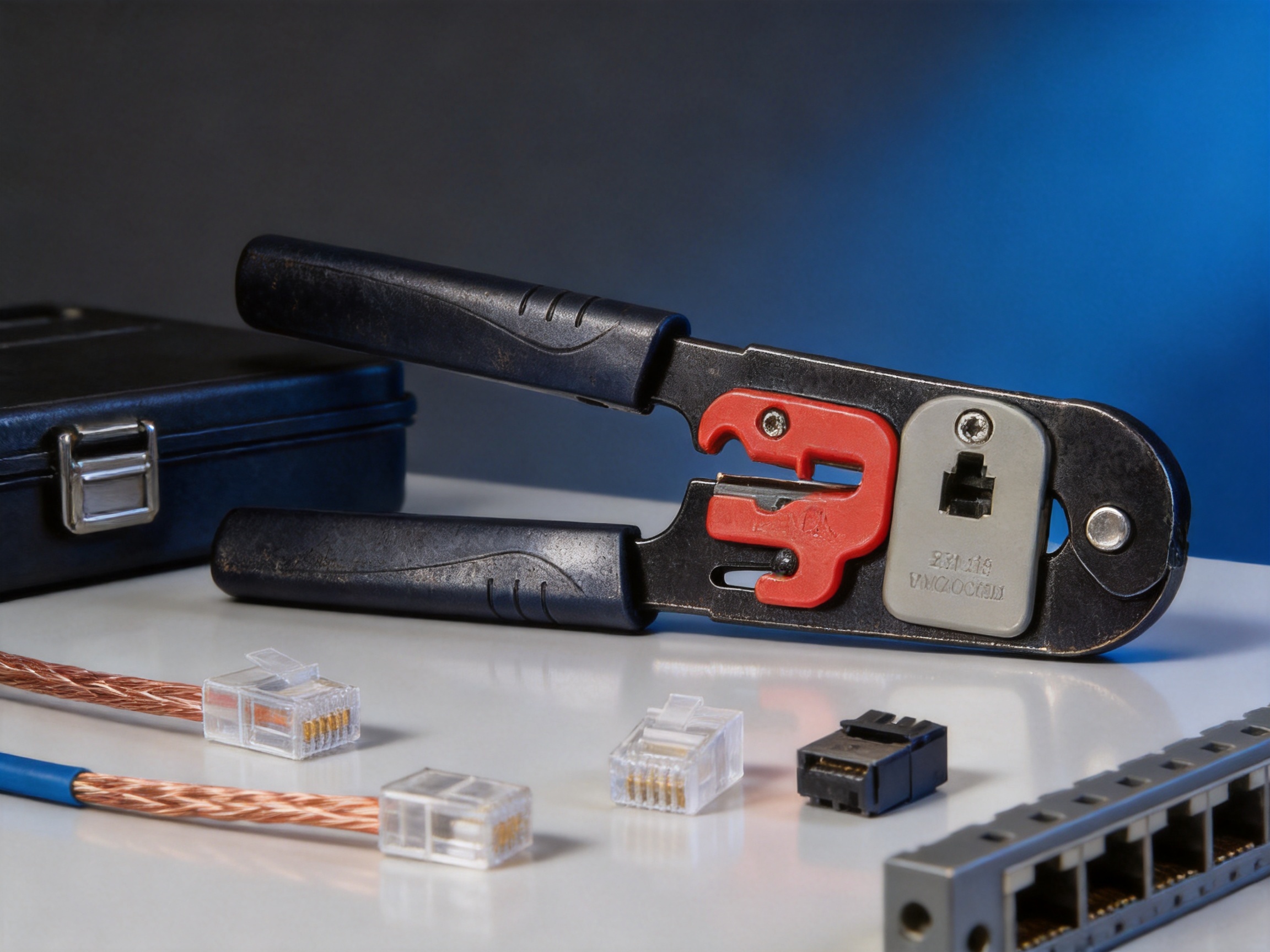
The SMT-310 is a deluxe-type tool with a guide for operation. A guide can help improve usability by supporting alignment and helping the operator complete the crimping action in a more controlled way. In practical terms, this means the tool is friendlier to both experienced technicians and less experienced staff who are still developing their cabling skills.
In structured cabling, proper connector alignment is essential. If the connector is not positioned correctly before pressure is applied, the result may be poor contact engagement or connector damage. A guide helps reduce this risk by providing a clearer operating path. This supports repeatability, especially when the installer must work quickly.
Compared with basic crimp tools that rely entirely on the user’s hand positioning, the SMT-310’s guided operation provides an advantage. It can reduce learning time, improve confidence, and support more stable results. For companies that manage multiple installers, this type of feature is valuable because it helps standardize work quality across different users.
A deluxe design also reflects attention to user experience. Professional tools should not force the installer to fight against the tool. They should support the installer’s natural working process. The SMT-310’s guide feature contributes to a smoother workflow, helping technicians complete terminations with less hesitation and fewer errors.
Storage Locker for Safety and Organization
The additional locker for storage after work is a small feature with meaningful value. Field technicians often move between job sites, vehicles, workshops, and storage rooms. Tools may be placed in bags with cutters, screwdrivers, testers, connectors, and other accessories. A crimp tool that remains open during storage can take up more space, snag on other tools, or suffer unnecessary stress.
The locker allows the tool to be secured after use. This improves portability and helps keep the tool organized. It also supports safety by reducing the chance of accidental opening in a tool pouch or storage case. For installers who value clean tool management, this feature is practical and welcome.
Some competing products overlook storage convenience and focus only on the crimping action. However, a tool’s complete lifecycle includes transport, storage, handling, and maintenance. The SMT-310 considers the full working routine of the user, not just the moment of crimping. This attention to daily use details is one reason it stands out as a professional tool option.
Advantages Over Common Competitor Tools
The SMT-310 Black Oxidized Durable Crimp Tool offers several advantages when compared with ordinary crimp tools in the market. These advantages are not based on exaggerated claims but on practical design elements that matter in real use: material strength, surface protection, guided operation, lightweight handling, and storage convenience.
First, the hardened steel frame provides a stronger foundation than tools made with lower-grade materials or insufficient processing. This helps preserve crimping accuracy and tool shape over time. A strong frame is especially important for installers who use the tool frequently, because repeated pressure cycles can reveal weaknesses in poorly made tools.
Second, the black oxide finish offers a professional and protective surface. Tools with unfinished or poorly plated surfaces may show wear quickly, while black oxide provides a refined appearance and practical resistance to everyday handling. This helps the SMT-310 maintain a clean and professional look in demanding environments.
Third, the operation guide improves usability. Many basic tools require more experience to position correctly, and mistakes may occur when installers work quickly. The guided design helps support consistency and reduces the possibility of misalignment. This is beneficial for both skilled technicians and new team members.
Fourth, the lightweight and durable construction improves user comfort. Some competitor tools may feel heavy, awkward, or tiring during repeated work. The SMT-310 is designed to be carried and used conveniently while still offering mechanical strength.
Fifth, the storage locker adds practical value. It helps keep the tool closed, organized, and ready for transport. This small feature can make a difference in daily field work, especially for technicians who carry many tools at once.
| Comparison Point | SMT-310 Advantage | Typical Weakness in Lower-Grade Tools |
|---|---|---|
| Frame Strength | Hardened steel frame supports durability and pressure stability. | Soft or thin frames may bend, loosen, or lose alignment. |
| Surface Finish | Black oxide finish provides professional appearance and surface protection. | Basic finishes may rust, scratch, or wear quickly. |
| Operation Control | Guide for operation helps improve alignment and repeatability. | Unguided tools may depend heavily on user experience. |
| User Comfort | Lightweight structure reduces fatigue during repeated use. | Heavy tools may slow work and increase hand strain. |
| Storage | Additional locker improves portability and organization. | Tools without locking features can be inconvenient to carry. |
| Professional Value | Balanced design supports field installation, maintenance, and project work. | Low-cost tools may be suitable only for occasional use. |
Applications in Copper and Structured Cabling Systems
The SMT-310 is especially useful in copper network cabling environments. Copper systems often require modular plug termination, connector preparation, patch cord repair, field adjustments, and maintenance tasks. In these jobs, the quality of the crimp directly affects the reliability of the connection. A properly crimped connector supports stable electrical contact and mechanical retention, while a poor crimp may create intermittent faults.
Structured cabling projects often include horizontal cabling, equipment room connections, work area outlets, patching zones, and communication cabinets. The installer may use keystone jacks, patch panels, wall face plates, data sockets, and related accessories. A crimp tool fits into this ecosystem as one of the necessary tools for completing and maintaining copper links.
In mixed copper and fiber environments, the crimp tool still has a role. Fiber systems may use different termination methods, but many modern communication projects include both optical fiber backbone links and copper distribution links. A technician working on such projects benefits from a complete tool kit that includes reliable crimping capability for copper components. The SMT-310 supports this broader workflow by helping installers handle the copper side of integrated network infrastructure.
Common application scenarios include office network installation, residential data cabling, smart home wiring, surveillance network deployment, automation equipment connections, equipment rack maintenance, low-voltage contracting work, and data communication service tasks. In each scenario, the value of the tool is connected to reliability, speed, and repeatability.
Manufacturing Strength Behind the Product
A high-quality crimp tool does not happen by chance. It requires manufacturing knowledge, process control, material understanding, and inspection discipline. Yuyao Simante Network Communication Equipment Co., Ltd. has built its capability through nearly 20 years of service in network cabling solutions and optical fiber products. The company integrates design, development, sales, and service, allowing product improvement to be connected with market feedback and customer requirements.
The company’s mature research and development system supports quality stability from the design source. This is important because tool performance begins before production. Engineers must consider frame geometry, hand force transfer, material behavior, finish requirements, usability, storage function, and long-term durability. When design and manufacturing work together, the final product is more consistent and more suitable for professional use.
With more than 10 engineers and over 30 full-time technical personnel, the company has the professional staffing needed to improve quality, promote product updates, and support customer-specific requirements. These technical resources help the manufacturer respond to different market needs, including standard product orders and OEM/ODM projects.
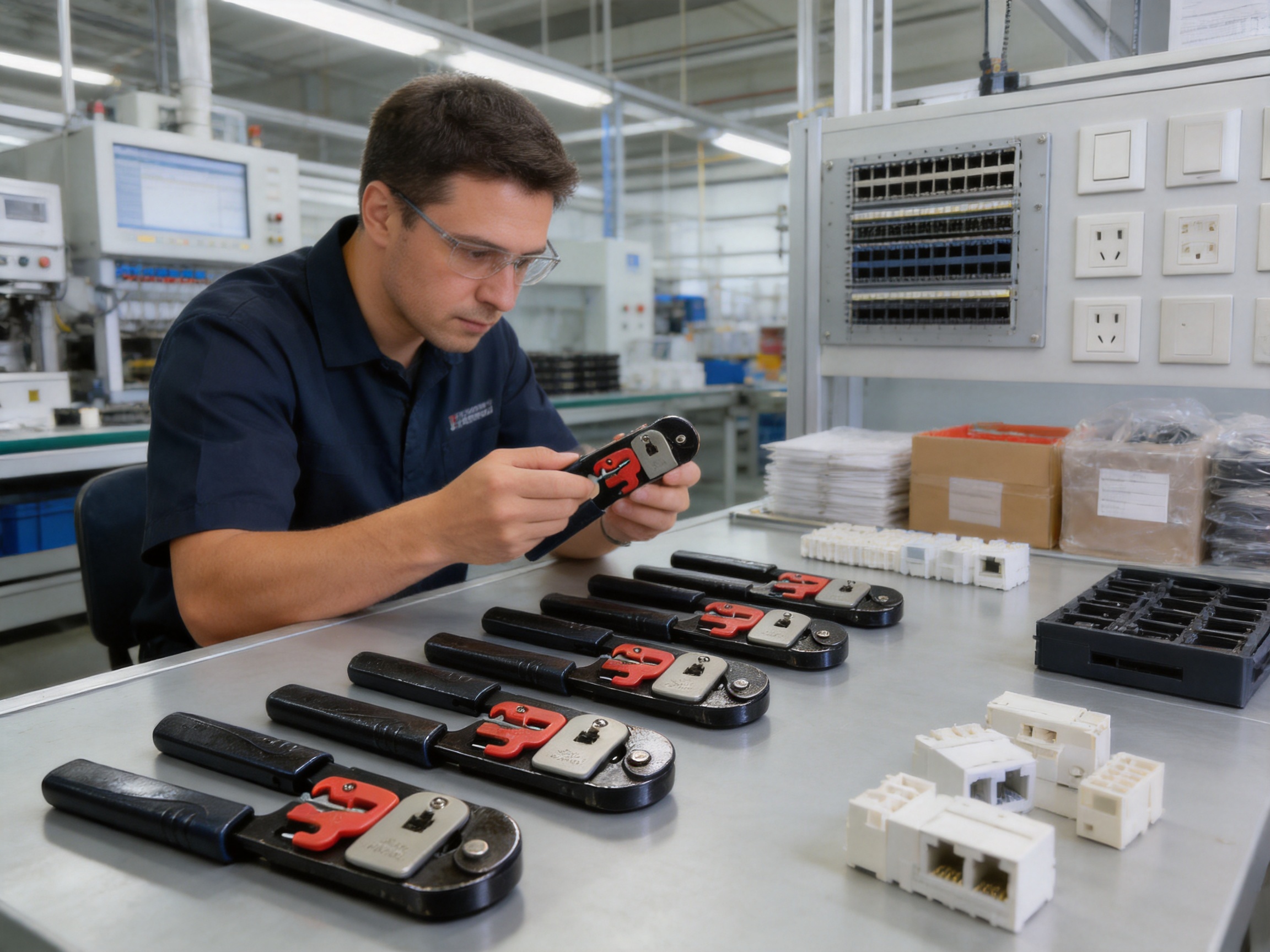
The factory has 10 regular and customization production lines, 10 fully automatic injection molding machines, 20 semi-automatic injection molding machines, and 8 automatic installed machines. Although the SMT-310 itself is a metal hand tool, these facilities demonstrate the company’s broader manufacturing capability and its ability to produce structured cabling components at scale. Stable production infrastructure supports consistent supply, coordinated accessory development, and reliable order fulfillment.
The company maintains a stable annual output of more than 9 million units across its product range. This output level reflects production maturity and market acceptance. It also means the manufacturer understands large-scale quality management, repeatable processes, and international customer expectations. For buyers of tools and cabling accessories, this manufacturing foundation reduces supply risk and supports long-term cooperation.
Design Source Quality and Process Control
Quality stability begins at the design source. If a tool is poorly designed, even careful manufacturing cannot fully correct the problem. The SMT-310 benefits from a product development environment that emphasizes practical performance and stable quality. Design source control includes selecting suitable materials, defining appropriate dimensions, planning the finish, considering user comfort, and ensuring that the tool can be produced consistently.
Process control is also essential. During production, each step must support the final purpose of the tool. Material preparation, forming, hardening, finishing, assembly, and inspection all influence the final user experience. If a frame is not properly processed, it may lose strength. If the finish is inconsistent, the tool may not have the expected surface quality. If assembly is loose, the tool may not operate smoothly. A professional manufacturer must manage these risks through controlled procedures and experienced technical staff.
The company’s emphasis on quality is supported by its position in the high-end market. Customers in high-end markets expect more than basic function. They expect stable performance, consistent appearance, reliable supply, and the ability to meet testing requirements. The company states that it not only strictly manages production but also meets customers’ comprehensive testing requirements through good performance testing. This approach is important for products used in structured cabling because network installations depend on multiple components working together reliably.
For the SMT-310, process control helps ensure that the hardened steel frame, black oxide finish, guide function, and locker mechanism are delivered consistently. This consistency is an important advantage over suppliers that may focus only on low price without stable production discipline.
OEM and ODM Support for Professional Buyers
Many distributors, system integrators, and cabling brands require customized solutions. They may need private labeling, packaging adjustments, product range coordination, or design changes for specific markets. Yuyao Simante Network Communication Equipment Co., Ltd. undertakes OEM and ODM projects, making it suitable for professional buyers who want more than a standard off-the-shelf tool.
OEM and ODM capability is valuable because it shows that the manufacturer can adapt to customer requirements. For a tool such as the SMT-310, customization may involve packaging, accessory combinations, product series alignment, or integration into a complete installation toolkit. Buyers serving different regions may also have specific expectations for labeling, instructions, and product presentation.
The company’s production lines and technical staff support this type of cooperation. A mature manufacturer can help customers manage product consistency across orders, coordinate quality expectations, and develop market-ready solutions. This creates a stronger partnership than simple trading. For buyers seeking a stable supply of structured cabling tools and components, OEM/ODM support can reduce development time and simplify sourcing.
Role in a Complete Cabling Product Ecosystem
The SMT-310 is part of a broader cabling ecosystem that includes keystone jacks, patch panels, wall face plates, data sockets, and related network communication components. This is important because a tool is most valuable when it supports the installation of a complete system. A manufacturer that understands cabling components can design tools with real installation needs in mind.
Structured cabling systems are used in office buildings, data communication networks, smart homes, automation systems, commercial spaces, and industrial environments. These systems rely on compatible components and professional installation practices. When tools and components are sourced from a manufacturer with broad cabling knowledge, buyers gain the benefit of system-level understanding.
The SMT-310 supports technicians who work with network connectors and field termination tasks. It complements other products by helping create reliable physical connections. In a complete cabling project, the tool contributes to the final test result even though it may not remain in the installed system. This hidden influence is why professional installers choose durable tools instead of relying on low-grade alternatives.
Export Experience and Global Market Suitability
The company maintains stable export volume in Europe, Australia, Africa, the Middle East, and Southeast Asia. This global market experience is meaningful because different regions have different user expectations, project conditions, and purchasing standards. A manufacturer that exports consistently must understand product presentation, stable quality, packaging reliability, and communication efficiency.
For the SMT-310, export suitability means that the product is designed for professional users beyond a single local market. Installers around the world value durability, easy operation, lightweight handling, and reliable storage. These are universal requirements in structured cabling work. The tool’s practical design makes it suitable for distributors and project suppliers serving multiple markets.
International customers also need dependable after-sales communication and supply planning. The company’s integration of design, development, sales, and service supports this requirement. Buyers can communicate technical needs, order expectations, and customization requirements with a manufacturer that understands both products and market service.
User Experience in Daily Installation Work
A technician’s experience with a crimp tool is shaped by repeated small interactions. How does the tool feel in the hand? Does it align easily? Does it require excessive force? Does it remain stable during pressure? Can it be stored safely after use? Does it still feel reliable after many jobs? The SMT-310 addresses these questions through its balanced design.
The hardened steel frame gives the user confidence during crimping. The black oxide finish provides a professional feel and surface quality. The lightweight structure reduces fatigue. The guide helps with operation. The locker keeps the tool organized after work. None of these features is complicated, but together they create a dependable field tool.
For experienced technicians, the SMT-310 can improve speed and consistency. For newer installers, the guide can help reduce uncertainty. For project managers, a durable tool can reduce replacement costs and rework. For distributors, the product offers clear selling points that are easy to explain to professional buyers. For OEM/ODM customers, the tool can become part of a branded cabling solution.
Maintenance and Care Recommendations
Even a durable tool benefits from proper care. Users should keep the crimp tool clean and dry after work. Dust, cable fragments, and connector debris should be removed from the working area of the tool. The locker should be used for storage to keep the tool closed and protected. The tool should be stored in a toolbox or dry area away from unnecessary moisture.
Installers should avoid using the crimp tool for unintended purposes such as prying, hammering, cutting materials beyond its design, or forcing incompatible connectors. Misuse can damage the frame, guide, or crimping area. A professional tool delivers the best performance when used according to its intended application.
Periodic visual inspection is also useful. Users can check whether the tool opens and closes smoothly, whether the guide remains clean, and whether the storage locker functions properly. If the tool is used heavily, routine inspection helps detect issues before they affect installation quality. With proper use and care, the SMT-310 can provide reliable service across many cabling tasks.
Procurement Value for Distributors and Contractors
For distributors, the SMT-310 offers a product with clear practical selling points: hardened steel construction, black oxide finish, lightweight handling, guided operation, and storage locker. These features are easy to communicate to installers and project buyers. The tool also fits naturally within a broader structured cabling product portfolio, making it suitable for bundled sales with connectors, patch panels, keystone jacks, wall plates, and data sockets.
For contractors, procurement value comes from reliability and reduced rework. A low-quality tool may appear cheaper at purchase, but it can become expensive if it causes poor terminations, wastes connectors, slows technicians, or requires frequent replacement. The SMT-310 is designed to offer long-term practical value by supporting stable performance and convenient use.
For OEM and ODM buyers, the manufacturer’s production strength and customization experience provide additional value. Instead of sourcing from a supplier with limited capability, buyers can cooperate with a company that has technical staff, production infrastructure, export experience, and a broad cabling product range. This can simplify supplier management and support more consistent market delivery.
Quality, Efficiency, and Professional Confidence
The main purpose of a professional crimp tool is to help create reliable connections efficiently. The SMT-310 supports this purpose through its combination of strength, finish, usability, and storage convenience. In network cabling work, professional confidence matters. A technician who trusts the tool can focus on cable preparation, connector selection, routing quality, labeling, and final testing. A technician who does not trust the tool must spend additional time checking for tool-related problems.
Efficiency does not mean rushing. It means completing work correctly with fewer unnecessary obstacles. A guided, lightweight, durable crimp tool helps installers maintain a smooth workflow. The operation becomes more predictable, and predictable operation supports better project outcomes. This is especially valuable in commercial projects where installation schedules are tight and quality expectations are high.
Professional confidence also extends to buyers and project owners. When a contractor uses suitable tools and quality components, the final cabling system is more likely to meet expectations. The SMT-310 plays a practical role in this chain of confidence. It is not simply an accessory; it is part of the workmanship standard behind the installed network.
Q&A Section
What is the SMT-310 Black Oxidized Durable Crimp Tool used for?
The SMT-310 is used for professional crimping tasks in structured cabling and network installation work, especially copper system termination and maintenance applications. It helps installers create stable connector terminations with controlled pressure and improved handling.
What makes the tool durable?
The tool uses a hardened steel frame, which supports mechanical strength and resistance to deformation during repeated crimping cycles. Its black oxide finish also adds surface protection for everyday use.
Why is the black oxide finish important?
The black oxide finish provides a professional appearance and helps protect the surface of the tool against normal handling wear. It also gives the tool a clean, non-reflective look suitable for field and workshop environments.
How does the guide for operation help installers?
The guide helps support proper positioning and smoother operation. It can reduce alignment errors, improve user confidence, and support more consistent crimping results, especially during repeated work.
Is the tool suitable for daily professional use?
Yes. Its hardened steel frame, lightweight design, guided operation, and storage locker make it suitable for technicians, contractors, maintenance teams, and system integrators who perform regular cabling tasks.
What is the benefit of the storage locker?
The storage locker keeps the tool closed after work, making it easier and safer to store or carry. It helps protect the tool and improves organization in a toolbox or service kit.
How does this tool compare with cheaper crimp tools?
Cheaper tools may use weaker materials, lack a protective finish, provide less alignment support, or become uncomfortable during repeated use. The SMT-310 provides a stronger frame, black oxide surface, guide function, lightweight handling, and storage convenience, giving it better long-term professional value.
Can the tool be included in OEM or ODM projects?
Yes. The manufacturer supports OEM and ODM cooperation, allowing professional buyers to discuss customized product, packaging, and market requirements.
What company manufactures the product?
The product is manufactured by Yuyao Simante Network Communication Equipment Co., Ltd., a professional manufacturer of network cabling solutions and optical fiber products with nearly 20 years of industry experience.
What manufacturing strengths support the product quality?
The company has a mature research and development system, more than 10 engineers, over 30 full-time technical personnel, 10 regular and customization production lines, automatic and semi-automatic injection molding equipment, automatic assembly machines, stable annual output, and export experience in multiple international markets.
Conclusion
The SMT-310 Black Oxidized Durable Crimp Tool is a practical and professional tool designed for structured cabling installation and maintenance. Its hardened steel frame provides strength, the black oxide finish supports surface protection and professional appearance, the lightweight structure improves comfort, the guide assists operation, and the storage locker adds daily convenience. These features give it meaningful advantages over ordinary competitor tools that may sacrifice durability, usability, or storage practicality.
Behind the product is a manufacturer with nearly 20 years of industry experience, mature research and development capability, technical staff, production infrastructure, strong output capacity, export experience, and OEM/ODM service. This manufacturing foundation helps ensure that the tool is not only functional in design but also reliable in supply and consistent in quality.
For installers, the SMT-310 supports better handling and more consistent crimping work. For contractors, it helps reduce rework and improve field efficiency. For distributors and OEM/ODM buyers, it offers a strong addition to a structured cabling product portfolio. In a market where many tools appear similar, the SMT-310 stands out through its balanced combination of durability, comfort, operation guidance, surface quality, and practical storage design.
References
1. International Organization for Standardization and International Electrotechnical Commission, ISO/IEC 11801: Information Technology — Generic Cabling for Customer Premises.
2. Telecommunications Industry Association, ANSI/TIA-568 Series: Commercial Building Telecommunications Cabling Standard.
3. BICSI, Telecommunications Distribution Methods Manual, Structured Cabling Installation Practices.
4. ASTM International, Standards Related to Steel Materials, Surface Treatment, and Mechanical Performance.
5. Industrial Tool Design Handbook, Principles of Hand Tool Ergonomics, Material Selection, and Durability Testing.
6. Network Cabling Installation Guide, Best Practices for Copper Termination, Field Testing, and Maintenance.