Español
 عربى
عربى русский
Content
- 1 Product Role in Copper and Fiber Structured Cabling Systems
- 2 Core Design Advantages of the 1U 12-Ring Structure
- 3 Technical Specifications and Application Data
- 4 Material Strength and Surface Treatment
- 5 Installation Efficiency and Standard Compatibility
- 6 Improved Cable Protection and Bending Radius Control
- 7 Advantages Over Common Competitor Products
- 8 Manufacturing Strength Behind the Product
- 9 Quality Control and Performance Testing Culture
- 10 Practical Benefits for Installers, Integrators, and End Users
- 11 Application Scenarios
- 12 Packaging, Storage, and Logistics Reliability
- 13 How the Cable Manager Supports Future Moves and Changes
- 14 Comparison with Improvised Cable Management Methods
- 15 Why Professional Cable Management Affects Network Performance
- 16 Company Manufacturing Capabilities and Market Experience
- 17 OEM and ODM Value for Global Customers
- 18 Selection Guidelines for Rack Cable Managers
- 19 Q&A Section
- 19.1 What is the main purpose of the SMT-3010-12P 1U 12 Ring Cable Manager?
- 19.2 Where is this cable manager installed?
- 19.3 How many cables can it accommodate?
- 19.4 Is the product suitable for both copper and fiber systems?
- 19.5 What material is used for the bracket?
- 19.6 What surface treatment does it use?
- 19.7 Does the product meet environmental requirements?
- 19.8 What are the operating environmental conditions?
- 19.9 Why is a ring-style cable manager better than using cable ties only?
- 19.10 What advantages does this product have over many competing cable managers?
- 20 Conclusion
- 21 References
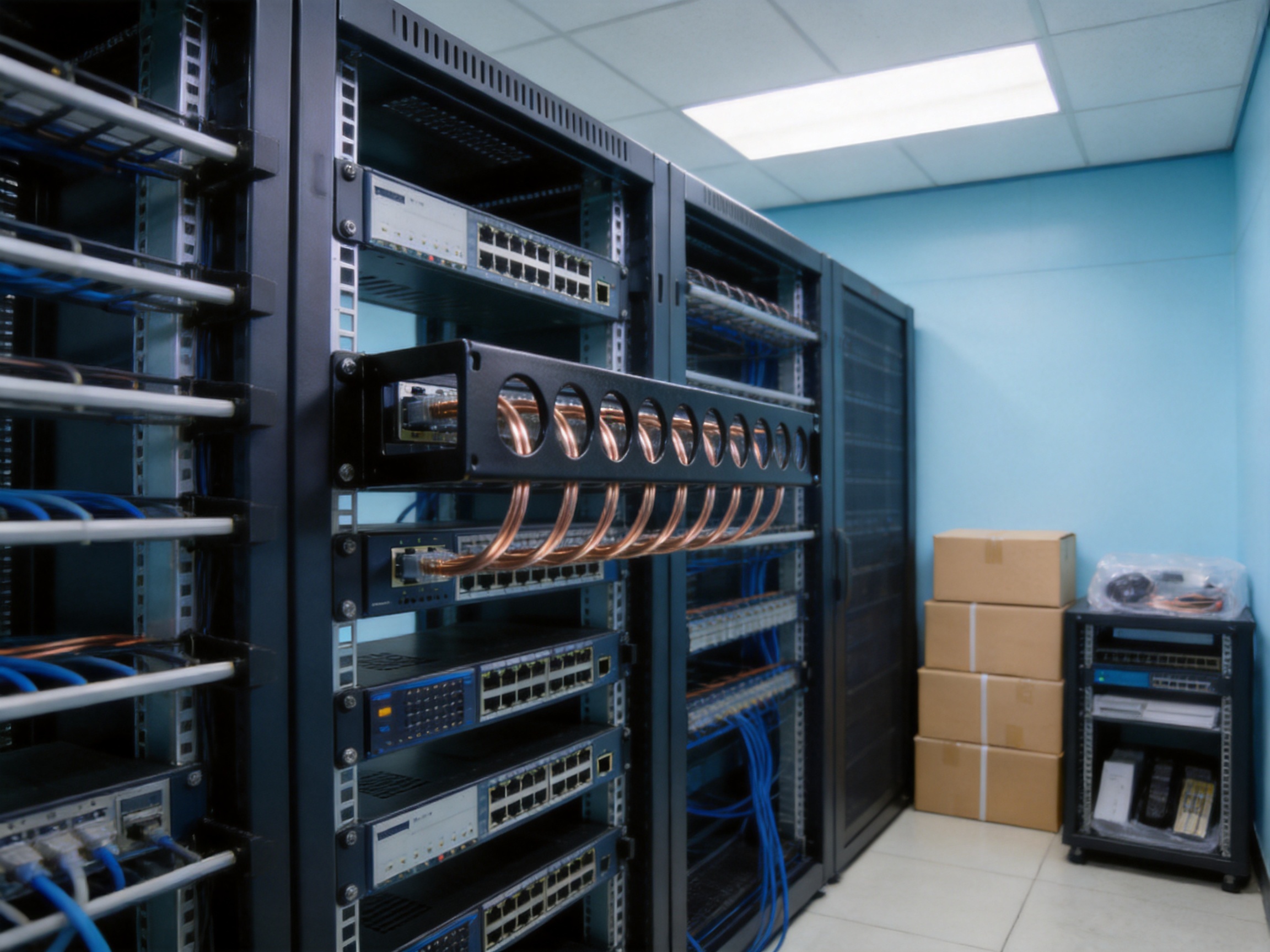
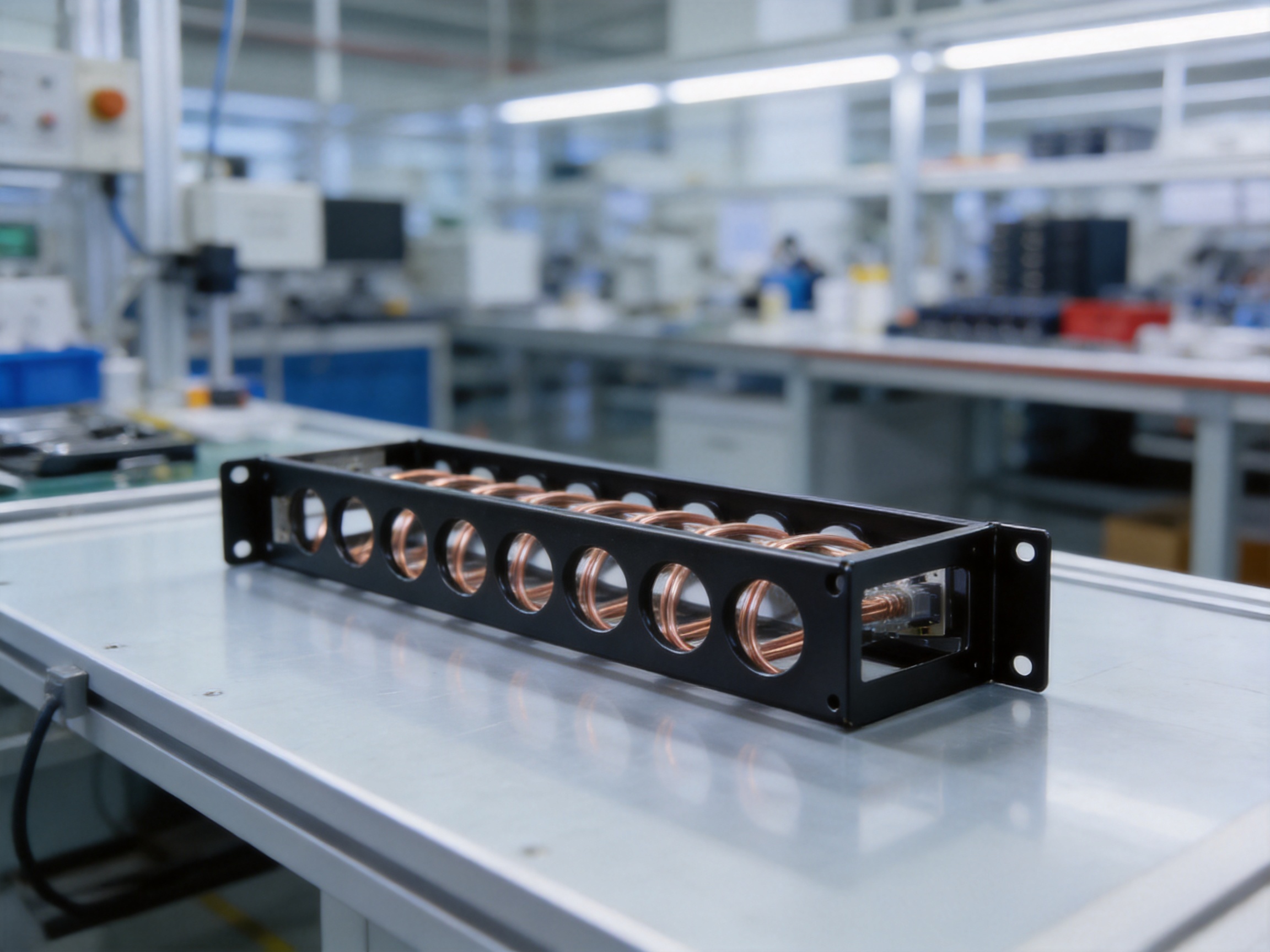
In modern data rooms, telecommunications closets, enterprise networks, security systems, and smart-building infrastructure, cable organization is not a decorative detail; it is a core requirement for performance, maintainability, airflow, safety, and long-term scalability. The SMT-3010-12P 1U 12 Ring Cable Manager is designed for 19-inch rack environments where copper and fiber cabling must remain accessible, protected, and neatly routed. Installed at the front of the rack, it provides horizontal cable management for patch cords and equipment jumpers, helping network administrators keep structured cabling systems clean, efficient, and ready for future changes.
As networks expand, cable density increases quickly. Patch panels, switches, optical distribution units, data sockets, wall plates, and other structured cabling components often compete for limited rack space. Without proper cable management, patch cords can bend too sharply, become tangled, block equipment ventilation, or make troubleshooting slower and more expensive. A 1U ring-style horizontal cable manager solves these common problems by giving cables a dedicated routing path, maintaining a more reliable bending radius, and making moves, additions, and changes easier to complete.
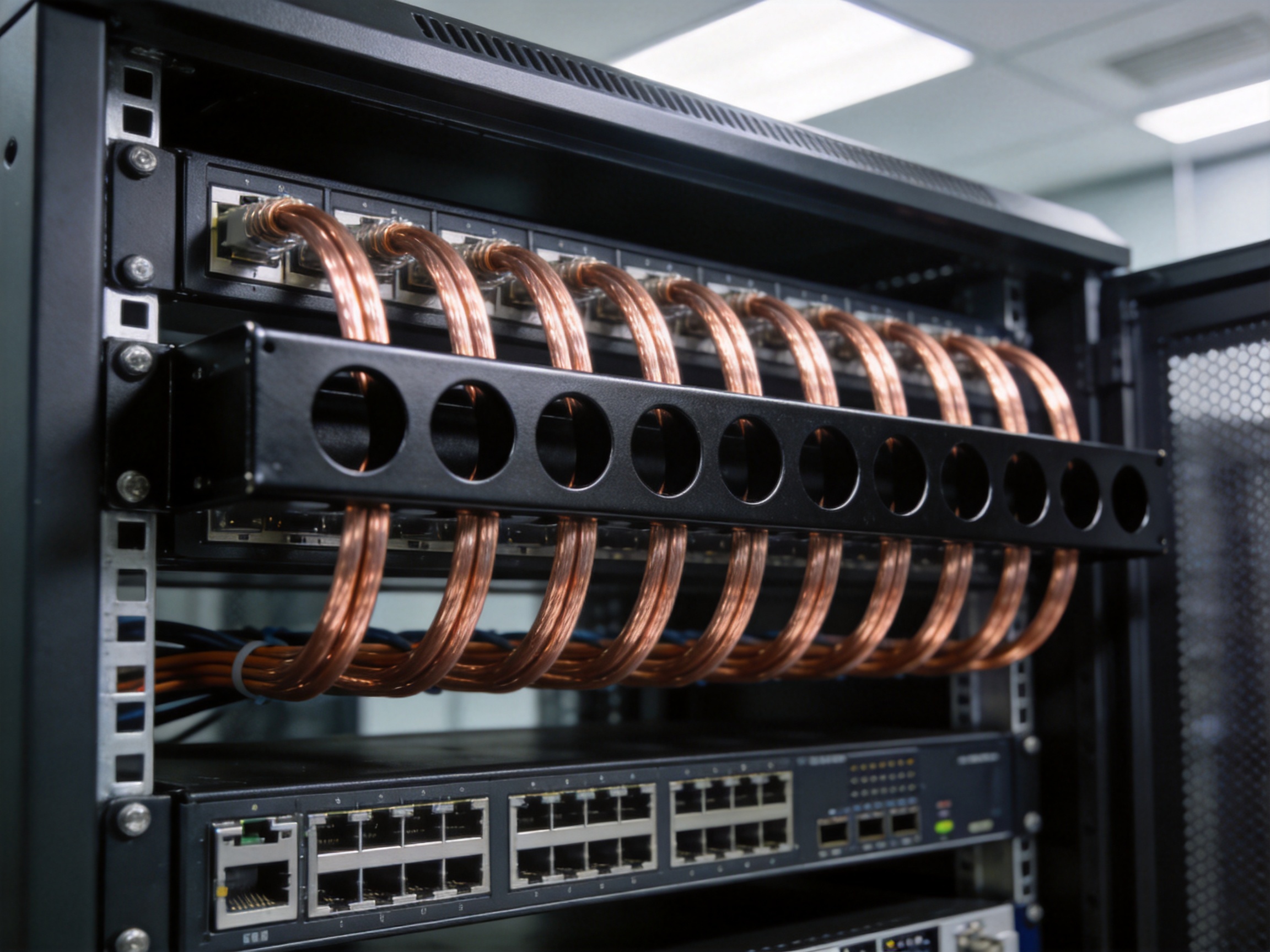
The SMT-3010-12P is built around a practical and durable design philosophy. It is compatible with standard 19-inch equipment racks, cabinets, and wall-mount frames. Its front-mounted structure allows technicians to route copper patch cords, equipment jumpers, and selected fiber jumpers in an orderly manner. With twelve cable-management rings and a high-capacity routing space, the unit can accommodate up to 24 four-pair cables while helping preserve cable geometry and reducing stress on connectors. For data cabling environments where uptime and orderly maintenance matter, this cable manager provides a simple but valuable upgrade.
Product Role in Copper and Fiber Structured Cabling Systems
The SMT-3010-12P belongs to the cable manager category, but its real value is best understood within the complete structured cabling system. A structured cabling installation includes patch panels, keystone jacks, face plates, data sockets, patch cords, cabinets, racks, and often fiber optic components. Each part has a specific function, and cable management is the link that keeps those functions coordinated. A patch panel may terminate the horizontal cabling correctly, and a switch may provide high-speed network connectivity, but if patch cords are unorganized, even a technically qualified system can become difficult to operate.
Horizontal cable managers are especially important in racks where frequent patching changes occur. In offices, data centers, surveillance networks, industrial control rooms, and campus networks, technicians often need to add new devices, reroute services, replace switches, or perform troubleshooting. A cable manager positioned between or near patch panels and active equipment guides patch cords across the rack face and reduces the chance of accidental disconnection. This improves operational reliability and helps technicians work faster without disturbing neighboring cables.
For copper cabling, maintaining cable geometry is essential. Category-rated twisted-pair cables depend on balanced pairs and controlled construction to reduce crosstalk and preserve transmission quality. Excessive pulling, tight bends, or compression can harm performance. The SMT-3010-12P helps protect patch cords by offering a more controlled routing route and a larger bending radius than unmanaged cable bundles. For fiber environments, bend control is equally important because optical fibers can suffer signal loss or permanent damage when bent beyond safe limits. Although the product is primarily a horizontal rack cable manager, its orderly routing concept benefits both copper and fiber structured cabling layouts.
The product also supports visual management. A neat rack allows labels, ports, cable paths, and equipment status indicators to remain visible. This is not only convenient but also critical during urgent maintenance. When network issues occur, the time needed to identify and follow a cable path can determine how quickly service is restored. By reducing cable crossing, sagging, and random routing, the cable manager helps create a rack environment that supports faster diagnosis and more predictable operations.
Core Design Advantages of the 1U 12-Ring Structure
The 1U height is one of the product’s main practical strengths. Rack units are valuable, and many network cabinets are already crowded with switches, patch panels, power distribution devices, and fiber management hardware. A 1U horizontal cable manager provides useful routing capacity without consuming excessive rack space. This makes it suitable for both compact wall-mount cabinets and larger floor-standing racks. In many installations, a 1U manager can be placed above or below a patch panel or switch to create a clean, serviceable cable path.
The twelve-ring design offers organized cable separation and routing flexibility. Instead of forcing all patch cords through one narrow opening, the rings distribute cable pathways across the front of the rack. Technicians can route cables according to port groups, device zones, service types, or labeling plans. This structure reduces cable congestion at individual points and helps prevent sharp directional changes. The ring system also supports easy cable insertion and removal, which is important during moves, additions, and changes.
Compared with many low-cost cable managers that provide limited routing depth or weak plastic structures, the SMT-3010-12P emphasizes stable construction, practical capacity, and compatibility. The design can accommodate up to 24 four-pair cables, giving it enough capacity for common patching applications while still promoting neat cable spacing. The increased bending radius helps protect cables from excessive strain, which can be especially important in high-speed network systems where cable performance margins matter.
The product’s installation-friendly design also contributes to efficiency. Because it follows the standard 19-inch rack format, it can be integrated into existing rack systems without special adaptation. This reduces installation time and helps contractors maintain consistent rack layouts across projects. For system integrators and installers, repeatable installation is a major advantage. A cable manager that mounts quickly, aligns properly, and performs reliably reduces labor cost and project risk.
Technical Specifications and Application Data
The SMT-3010-12P combines standard rack compatibility with durable materials and controlled environmental performance. Its bracket is made from cold-rolled steel plate, and the surface is finished with electrostatic powder spraying. This construction approach gives the product the strength needed for daily operation in equipment rooms while providing a clean appearance and protective surface layer. The product is designed to meet RoHS requirements, supporting environmentally responsible procurement in structured cabling projects.
| Item | Specification | Practical Benefit |
|---|---|---|
| Product Type | 1U 12-ring horizontal cable manager | Organizes patch cords and equipment jumpers at the rack front |
| Rack Compatibility | Standard 19-inch racks, cabinets, and wall mounts | Fits common structured cabling installations without special modification |
| Installation Position | Front of rack | Provides visible, accessible cable routing and management |
| Cable Capacity | Up to 24 four-pair cables | Supports common copper patching density with orderly routing |
| Main Material | Cold-rolled steel bracket | Provides strength, dimensional stability, and long service life |
| Surface Treatment | Electrostatic powder coating | Improves surface protection and appearance |
| Environmental Compliance | RoHS requirements | Supports responsible material selection and project compliance |
| Operating Temperature | -25°C to +70°C | Suitable for a broad range of indoor equipment environments |
| Humidity Condition | Up to 85% relative humidity under specified temperature conditions | Supports stable use in normal telecommunications and equipment rooms |
| Packaging | Special blister bag and carton packaging | Protects product during storage and transportation |
The operating temperature range of -25°C to +70°C allows the cable manager to be used in many controlled indoor sites and some demanding infrastructure rooms. Its humidity tolerance supports use in environments where stable but not extreme humidity may be present. The product is not a complex electronic device, but environmental performance remains important because rack hardware should maintain mechanical strength, coating integrity, and installation reliability over time.
The packaging design also reflects professional handling requirements. Each product is placed in a special blister bag and then into a cardboard box, with accessories included. Labels indicating product model and quantity help distributors, installers, and warehouse personnel identify items quickly. The packaged products should be stored in a warehouse environment with an ambient temperature of -5°C to +30°C, relative humidity not exceeding 70%, and air free from acid, alkali, and other corrosive gases. Under these conditions, the recommended storage period is three years.
Material Strength and Surface Treatment
A cable manager may appear simple, but material selection has a direct impact on durability and long-term rack performance. The SMT-3010-12P uses a bracket made from cold-rolled steel plate. Cold-rolled steel is valued for its dimensional accuracy, smooth surface, and mechanical strength. In rack-mounted accessories, these characteristics help maintain alignment, resist deformation, and support repeated handling during installation or maintenance.
Many competing products in the market rely heavily on lightweight plastic parts or thin metal structures. While such products may be sufficient for very light-duty applications, they can flex, warp, or crack under repeated cable movement or accidental impact. A stronger metal bracket provides greater confidence in commercial and professional installations, especially when technicians frequently access patching zones. The cold-rolled steel structure gives the cable manager the rigidity needed to remain stable after installation.
The electrostatic powder coating process further improves the product’s performance. Powder coating creates a uniform protective layer on the metal surface. Compared with ordinary painting methods, powder coating can provide stronger adhesion, better surface coverage, and improved resistance to everyday wear. It also contributes to a clean, professional rack appearance. In data rooms and telecommunications spaces, visual consistency is useful because it supports organized site standards and reflects careful project execution.
The coating also helps protect the metal from common environmental exposure in indoor installations. While proper storage and operating conditions should always be followed, a good surface finish reduces the risk of corrosion and improves product life. For installers and end users, this means fewer concerns about premature surface degradation and a more professional-looking rack over many years of use.
Installation Efficiency and Standard Compatibility
One of the greatest advantages of the SMT-3010-12P is its compatibility with the global 19-inch rack standard. This makes it suitable for data cabinets, wall-mount enclosures, open racks, server rooms, network closets, and telecommunications frames. Standard compatibility reduces uncertainty for project planners and allows the cable manager to be selected alongside other common structured cabling components.
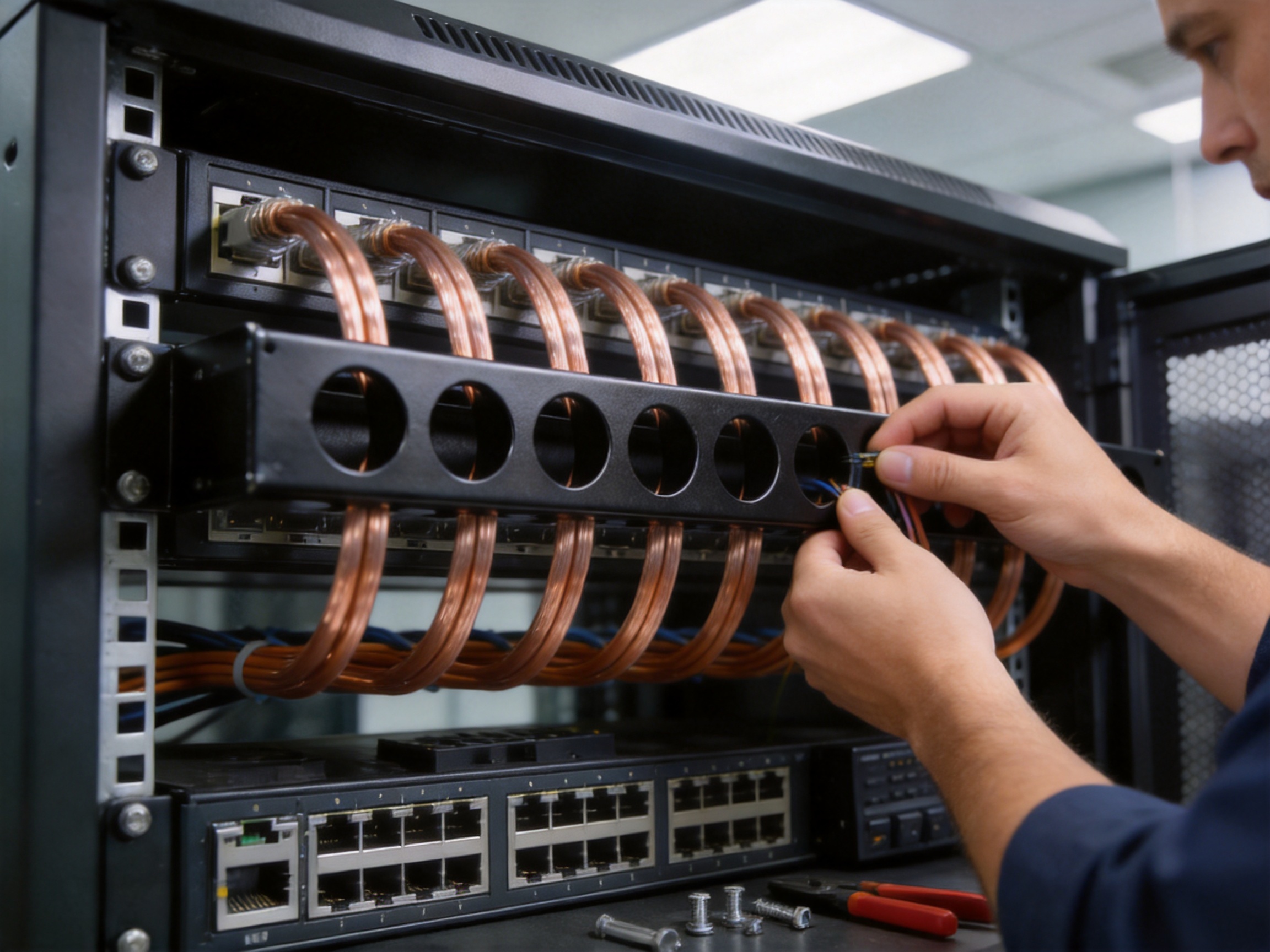
Installation speed matters in real projects. Contractors often work under tight schedules and must complete rack assembly, cable termination, testing, labeling, and documentation within limited time. A cable manager with a sturdy and easy-to-install design improves workflow by reducing adjustment time and minimizing installation complications. When the manager fits correctly into a 19-inch rack, technicians can quickly secure it and continue with patch cord routing.
The product’s front-of-rack installation position makes cable routing intuitive. Technicians can guide patch cords from patch panels to switches through the rings, avoiding random cable draping across equipment. This is particularly useful when the rack contains multiple patch panels and active devices. By creating a dedicated horizontal routing level, the cable manager helps define a neat cabling path and keeps cable bundles from covering ports or equipment indicators.
Compared with improvised cable organization methods such as cable ties alone, the ring manager offers a more flexible and serviceable solution. Cable ties can be useful for bundling, but they can also be over-tightened, making cables difficult to adjust and potentially damaging cable jackets. The ring cable manager allows cables to pass through open routing areas without being compressed. It supports both stability and future flexibility, which is essential in dynamic network environments.
Improved Cable Protection and Bending Radius Control
Network cables are engineered components, not ordinary wires. Copper twisted-pair cables depend on pair twist consistency and controlled impedance. Fiber optic jumpers depend on optical path integrity and bend radius control. When cables are sharply bent, crushed, or tangled, performance can degrade. Problems may not always appear immediately, but they can cause intermittent faults, reduced link margins, increased error rates, or difficult troubleshooting later.
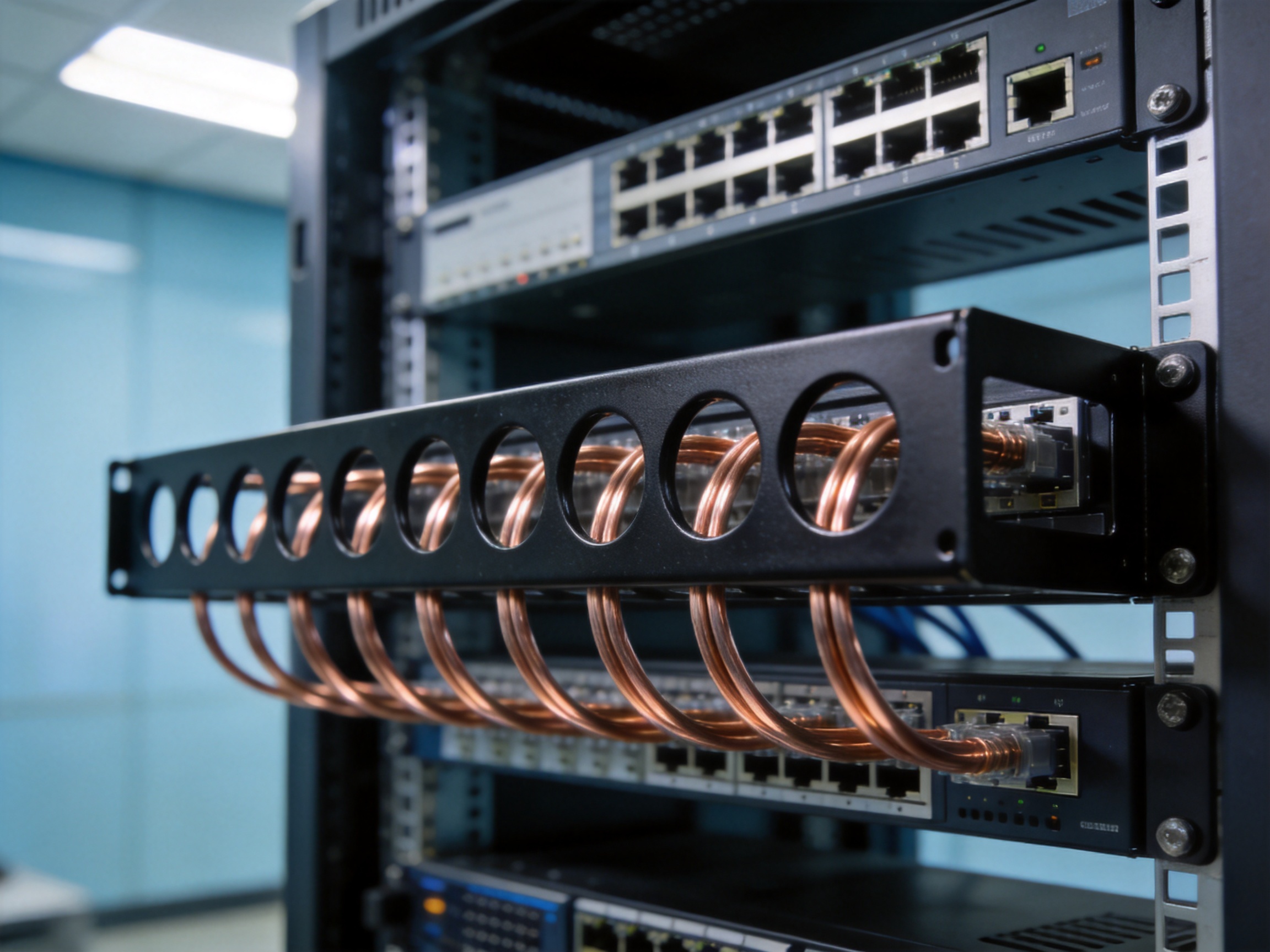
The SMT-3010-12P helps reduce these risks by creating a larger and more predictable bending route for jumpers. Its ring structure guides cable curves and discourages tight bends near patch ports. This is important because many patching problems occur near the front of racks where cables leave ports and change direction. By supporting a controlled horizontal path, the cable manager reduces stress on connectors and cable jackets.
In high-density racks, unmanaged cables often pile up in front of active equipment. This can cause cables to press against each other, cover ventilation openings, and create strain on patch panel ports. Over time, gravity and repeated handling can worsen these issues. A horizontal cable manager distributes cable weight and keeps the cable field more stable. The result is a cleaner rack face, less mechanical stress, and easier access to ports.
Compared with competitors that offer minimal cable depth or narrow routing spaces, the SMT-3010-12P provides practical capacity for up to 24 four-pair cables. This capacity is well suited for typical patching groups while encouraging orderly cable placement. It avoids the common mistake of overloading a small management channel, which can defeat the purpose of cable management. Proper cable capacity helps preserve both function and appearance.
Advantages Over Common Competitor Products
In the cable management market, products may look similar at first glance, but differences in design, material, manufacturing control, and application support can significantly affect user experience. The SMT-3010-12P offers several advantages over common alternatives. First, its cold-rolled steel construction provides a stronger and more stable mounting base than many lightweight plastic or thin-sheet products. This improves durability in racks where daily maintenance and cable movement occur.
Second, the standard 19-inch 1U design balances capacity and space efficiency. Some competing cable managers consume more rack units than necessary, while others are too shallow to manage real patching loads. The SMT-3010-12P provides a practical middle ground: compact enough to preserve rack space, yet capable enough to manage up to 24 four-pair cables. This makes it useful for small and medium network cabinets as well as larger structured cabling systems.
Third, the ring-based layout supports faster cable changes. In some closed-channel designs, adding or removing cables can be inconvenient because technicians must thread cables through restricted pathways. Ring-style management provides more accessible routing, especially during maintenance. It helps technicians trace and adjust individual patch cords more easily, reducing downtime and frustration.
Fourth, the product benefits from professional manufacturing resources behind it. Yuyao Simante Network Communication Equipment Co., Ltd. is a manufacturer specializing in network cabling solutions and optical fiber products. With nearly 20 years of service experience, the company integrates design, development, sales, and service. This background matters because cable managers are often purchased as part of a complete cabling ecosystem. A manufacturer familiar with patch panels, keystone jacks, wall face plates, data sockets, and fiber-related products can design rack accessories with a practical understanding of real installation conditions.
Fifth, the product is supported by a production system designed for stability and repeatability. The company has more than 10 engineers and over 30 full-time technical personnel who contribute to product development, quality improvement, and product updates. This technical team helps ensure that products are not merely assembled but are developed with attention to application requirements, production feasibility, and long-term consistency.
Manufacturing Strength Behind the Product
A reliable cable manager depends not only on its drawing but also on the quality of manufacturing execution. Yuyao Simante Network Communication Equipment Co., Ltd. operates 10 regular and customized production lines, 10 fully automatic injection molding machines, 20 semi-automatic injection molding machines, and 8 automatic assembly machines. Although the SMT-3010-12P uses a metal bracket, the company’s broader manufacturing platform demonstrates its capacity to produce structured cabling components at scale and maintain stable quality across product categories.
The presence of automatic and semi-automatic production equipment supports consistent dimensional control and production efficiency. In structured cabling products, consistency is essential because small deviations can affect installation fit, port alignment, assembly performance, and user satisfaction. Advanced manufacturing equipment helps reduce variation and supports stable annual output of more than 9 million units across product lines.
The company’s mature research and development system helps guarantee quality stability from the design source. This is an important distinction from manufacturers that rely mainly on low-cost imitation. When engineering teams are involved early, products can be optimized for material usage, installation experience, packaging protection, and compliance requirements. For a cable manager, this means the mounting structure, ring spacing, surface finish, and packaging details can be refined before mass production.
Manufacturing strength is also reflected in customization capability. The factory undertakes OEM and ODM projects, which means it can support clients with specific product requirements, packaging preferences, branding needs, or project-based adjustments. For distributors, system integrators, and large procurement customers, this flexibility is valuable. A standard product like the SMT-3010-12P can serve broad applications, while manufacturing experience allows the supplier to respond to market-specific expectations.
Another advantage is integrated product knowledge. Since the company produces a wide range of network cabling components, it understands how cable managers interact with patch panels, keystone jacks, data sockets, wall plates, and related accessories. This improves the ability to provide practical product recommendations and develop compatible systems rather than isolated hardware items. In structured cabling, system thinking often leads to better results than purchasing unrelated components from multiple unknown sources.
Quality Control and Performance Testing Culture
Quality control is especially important for products used in infrastructure environments. Even a simple rack accessory can create problems if it has poor dimensional accuracy, weak surface treatment, sharp edges, unreliable packaging, or inconsistent material quality. The SMT-3010-12P benefits from a manufacturing culture that emphasizes high-end market expectations and comprehensive performance testing.
The company manages production strictly and responds to customers’ testing requirements for product performance. This approach helps ensure that products meet both internal standards and the practical expectations of global buyers. Stable exports to Europe, Australia, Africa, the Middle East, and Southeast Asia demonstrate the company’s experience with different market requirements and customer preferences.
For a cable manager, quality checks may include dimensional inspection, surface condition review, mounting-hole accuracy, coating uniformity, packaging verification, and accessory completeness. These details directly influence installation efficiency. If holes are misaligned, installers lose time. If coating quality is poor, the product appearance and corrosion resistance suffer. If packaging is inadequate, products may be damaged before reaching the job site. A professional manufacturing system reduces these risks.
RoHS compliance is another important part of product responsibility. Many modern projects require materials to meet environmental standards, especially in commercial buildings, public infrastructure, education facilities, and international procurement. Compliance with RoHS requirements supports responsible supply chain management and helps buyers meet project documentation needs.
The company’s quality stability begins at the design source. This phrase is important because many defects are easier to prevent in design than to correct after production. By considering installation, material, process, and packaging requirements during development, the manufacturer can reduce the likelihood of field problems. This design-first approach is a meaningful advantage over competitors that focus only on lowest-cost production.
Practical Benefits for Installers, Integrators, and End Users
For installers, the primary benefit of the SMT-3010-12P is time savings. A standard 19-inch rack-mount design helps the product install quickly. The ring layout makes cable routing convenient and fast. By reducing cable clutter during installation, it also helps technicians complete labeling and testing more efficiently. Clean cable organization at the beginning of a project reduces rework and creates a better final presentation for customers.
For system integrators, the product supports standardized rack design. Many integrators need to deliver repeatable solutions across multiple sites, such as retail chains, office buildings, schools, hotels, hospitals, or industrial facilities. A consistent cable manager makes rack layouts more predictable and easier to document. When every rack uses a similar cable routing strategy, maintenance teams can work more efficiently across the entire network.
For end users, the most important benefits are reliability and maintainability. A well-managed rack reduces accidental cable stress and makes troubleshooting faster. When network changes are needed, technicians can identify cable paths more easily and complete changes with less risk of disturbing unrelated connections. Over the life of a cabling system, these advantages can save many hours of labor and reduce service disruption.
For distributors and procurement teams, the product offers a practical combination of standard compatibility, durable construction, professional packaging, and manufacturer support. It can be supplied as part of a broader structured cabling solution that includes copper and fiber system components. This simplifies sourcing and helps buyers maintain consistent quality across related product categories.
Application Scenarios
The SMT-3010-12P is suitable for a wide range of structured cabling environments. In office network closets, it can be installed between patch panels and switches to organize patch cords for workstations, wireless access points, printers, IP phones, and security devices. The 1U format is ideal for compact cabinets where every rack unit matters.
In data rooms, the cable manager can help organize connections among access switches, distribution panels, and service equipment. While high-density data centers may use larger vertical and horizontal cable management systems, 1U ring managers remain useful for local patching, smaller racks, edge cabinets, and network support frames. Their simplicity makes them easy to deploy and maintain.
In surveillance and security systems, structured cabling often supports IP cameras, access control units, intercoms, and monitoring devices. Cable organization is important because security networks may expand over time as more cameras or devices are added. A horizontal cable manager supports future expansion by keeping patching zones clear and accessible.
In smart buildings and automation systems, network cabinets may contain a mixture of data, control, and communication connections. Organized cabling helps technicians distinguish between system groups and reduces the risk of accidental disconnection. The SMT-3010-12P supports this need by providing visible and separated routing across the rack front.
In education, healthcare, hospitality, and public infrastructure projects, professional cable management contributes to reliability and service continuity. Schools and hospitals cannot afford frequent network disruption. Hotels and commercial buildings must support guest services, back-office operations, and security systems. A cable manager is a small component, but it helps support the stability of the larger network.
Packaging, Storage, and Logistics Reliability
Good packaging is part of product quality. The SMT-3010-12P is placed into a special blister bag and then into a cardboard box, with product accessories included. The carton receives a label indicating the product model and quantity, supporting efficient warehouse management and job-site identification. Regular packing is arranged as 10 boxes per carton, with one unit per box and 10 units per carton.
This packaging method helps protect the surface finish and structural shape during transportation. Rack accessories often pass through multiple handling stages before installation, including factory packing, export transport, distributor warehousing, local delivery, and project-site storage. Proper packaging reduces the risk of scratches, deformation, missing accessories, or confusion between product models.
Storage requirements are clearly defined. Packaged products should be stored in a warehouse with ambient temperature from -5°C to +30°C, relative humidity not exceeding 70%, and no acid, alkali, or other corrosive gases in the surrounding air. These requirements help preserve the surface coating and packaging condition before installation. The recommended storage period is three years under specified conditions.
For distributors, clear packaging and storage guidance are valuable because inventory may be held for different project schedules. For contractors, durable packaging helps products arrive at the site ready for installation. For end users, protected delivery reduces delays and supports a smoother project timeline.
How the Cable Manager Supports Future Moves and Changes
Network infrastructure is never completely static. Employees move, devices are added, bandwidth requirements change, and equipment is upgraded. A structured cabling system must be able to adapt without becoming chaotic. The SMT-3010-12P supports future moves, additions, and changes by creating a cable path that is both organized and accessible.
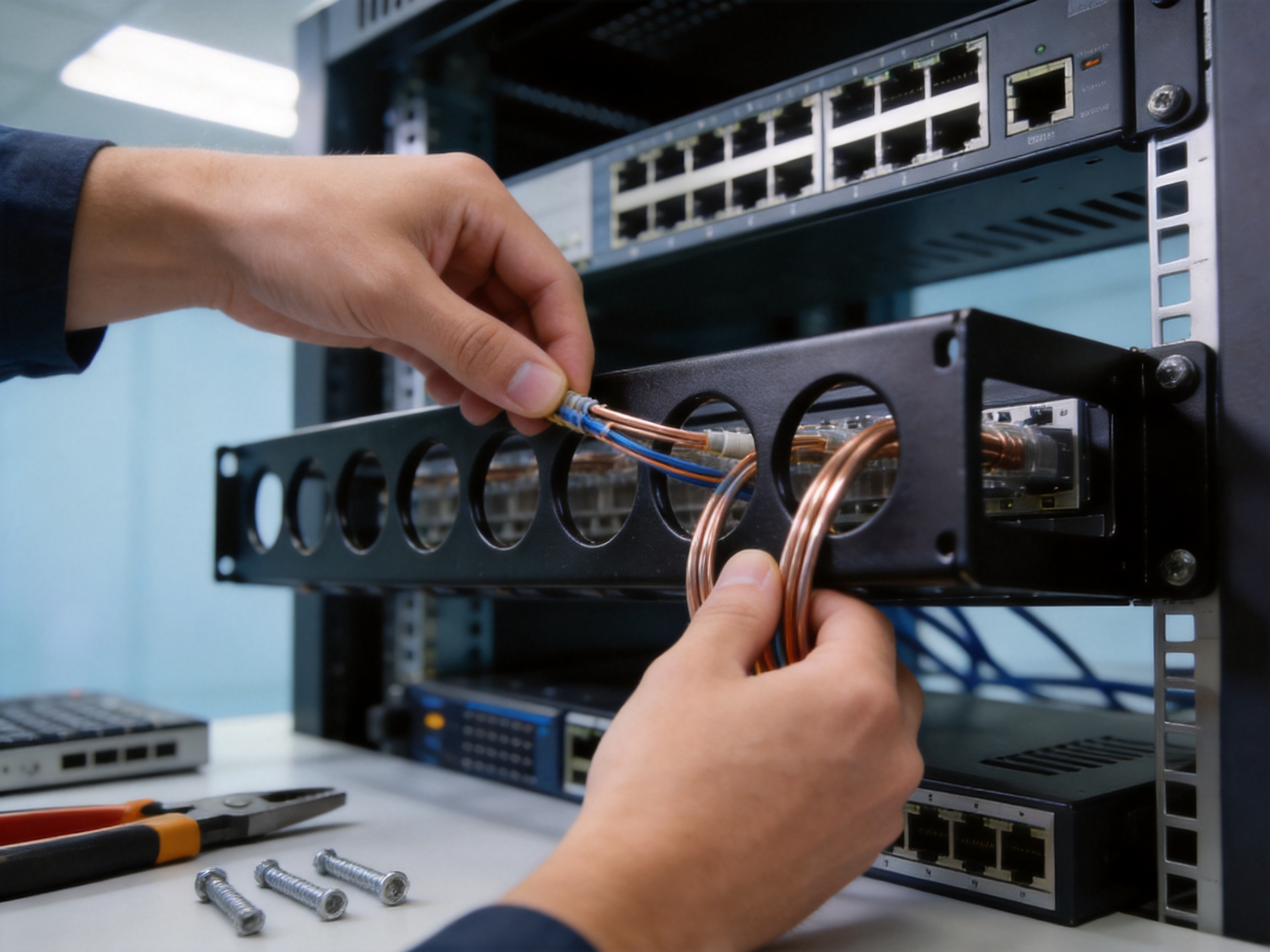
When cables are routed through rings rather than tied into tight bundles, individual patch cords can be adjusted more easily. Technicians can remove a cable, add a new one, or reroute a connection with less disruption to neighboring cords. This flexibility reduces the time needed for routine network changes and lowers the risk of accidental service interruption.
Future readiness also depends on maintaining a clear visual layout. If a rack begins neatly organized and uses dedicated cable managers, it is more likely to remain organized after multiple changes. Conversely, racks without cable management often become progressively worse as each new cable is added wherever space is available. The SMT-3010-12P provides a physical structure that encourages good cabling habits over time.
The product’s standard specification design also supports long-term planning. Because it is compatible with common 19-inch racks and structured cabling layouts, it can be incorporated into standardized designs across multiple sites. This helps organizations maintain consistency as networks grow.
Comparison with Improvised Cable Management Methods
Some installations attempt to manage cables using only cable ties, hook-and-loop straps, or informal routing. While these methods can support small cable groups, they do not replace a properly installed horizontal cable manager. Cable ties may secure cables too tightly, potentially compressing jackets and affecting performance. They also make future changes slower because ties must be cut and replaced.
Hook-and-loop straps are more flexible than plastic ties, but they still need a physical routing structure. Without a cable manager, cables may sag across equipment or form uncontrolled curves. The SMT-3010-12P provides the structure that straps alone cannot offer. It defines the cable path, protects the rack face, and keeps cables away from critical ports and ventilation areas.
Another improvised method is leaving slack to hang freely in front of the rack. This may seem convenient at first, but it quickly creates clutter and risk. Hanging cables can be pulled accidentally, block visibility, and make troubleshooting difficult. A ring cable manager allows slack to be guided and organized rather than left unmanaged.
Compared with these improvised methods, the SMT-3010-12P provides a professional, repeatable, and scalable approach. It supports better appearance, easier maintenance, improved cable protection, and greater installation consistency. For professional projects, this difference is clearly visible and operationally meaningful.
Why Professional Cable Management Affects Network Performance
Cable management is sometimes underestimated because it does not process data directly. However, physical-layer organization influences network performance in several indirect but important ways. First, proper routing helps prevent mechanical damage to cables. Damaged patch cords can cause link instability, packet errors, or intermittent failures that are difficult to diagnose.
Second, organized cabling improves cooling airflow. In network cabinets, active equipment such as switches and power devices generate heat. Cable congestion in front of ventilation openings can reduce airflow and contribute to higher equipment temperatures. By keeping cables routed through a dedicated path, the cable manager helps maintain a clearer equipment front.
Third, professional cable management improves maintenance accuracy. When technicians can see and follow cable routes, they are less likely to disconnect the wrong cable. This reduces human error, one of the most common causes of network outages during maintenance. The SMT-3010-12P supports this by making cable paths cleaner and easier to understand.
Fourth, organized racks are easier to document and audit. Many organizations need accurate network records for security, compliance, and operations. Cable management helps align physical rack conditions with documentation. When the physical environment is orderly, labeling and records remain more useful.
Company Manufacturing Capabilities and Market Experience
Yuyao Simante Network Communication Equipment Co., Ltd. is a professional manufacturer of network cabling solutions and optical fiber products. The company integrates design, development, sales, and service, allowing it to support customers from early communication through product delivery and after-sales cooperation. With nearly 20 years of service experience, it has developed a practical understanding of market needs and customer expectations.
The company’s main products include keystone jacks, patch panels, wall face plates, data sockets, and other structured cabling components. These products are widely used in network communication, smart home systems, automation equipment, and structured cabling projects. This broad product base strengthens the company’s ability to understand how individual components work together in real installations.
Its factory resources include regular and customized production lines, automatic and semi-automatic injection molding equipment, and automatic assembly machines. The stable annual output of more than 9 million units demonstrates production scale and operational maturity. For buyers, production scale matters because it supports consistent supply, project fulfillment, and long-term cooperation.
The company’s engineering and technical team also plays a key role. More than 10 engineers and over 30 full-time technical personnel contribute to quality improvement and product updates. This helps the manufacturer respond to changing market requirements, develop new solutions, and maintain product reliability. In the structured cabling industry, where standards, equipment designs, and installation practices evolve, continuous technical improvement is essential.
OEM and ODM Value for Global Customers
Many customers require more than a standard catalog product. Distributors may need private-label packaging. System integrators may require project-specific documentation. Regional markets may have different preferences for color, packaging, accessory sets, or labeling. The manufacturer’s OEM and ODM capabilities provide flexibility for these needs.
OEM cooperation allows customers to purchase proven products with customized branding or packaging. ODM cooperation goes further by supporting product development based on customer requirements. For a cable manager like the SMT-3010-12P, this may involve packaging specifications, surface finish preferences, accessory configuration, or related rack-management solutions. Such flexibility helps customers build competitive product lines and respond quickly to market demands.
The company’s export experience across Europe, Australia, Africa, the Middle East, and Southeast Asia supports international cooperation. Different regions may have different project habits, quality expectations, and logistics requirements. A manufacturer with global export experience is better prepared to handle documentation, packaging, communication, and product adaptation for diverse markets.
For buyers seeking long-term supply, OEM and ODM capacity also indicates a deeper manufacturing foundation. It shows that the factory is not limited to simple trading activity but can participate in product planning, production control, and customer-specific solutions. This creates stronger value compared with suppliers that only offer generic products without technical support.
Selection Guidelines for Rack Cable Managers
When selecting a cable manager, buyers should consider more than price. The first factor is rack compatibility. The product should fit standard 19-inch racks and align properly with cabinet mounting points. The SMT-3010-12P meets this requirement, making it suitable for common rack environments.
The second factor is capacity. A cable manager should provide enough routing space for the expected number of patch cords without encouraging overcrowding. The SMT-3010-12P can accommodate up to 24 four-pair cables, making it appropriate for many office, equipment-room, and telecommunications applications.
The third factor is material and durability. Metal construction, especially cold-rolled steel, provides better structural confidence than weak or undersized alternatives. Surface treatment should also be considered because it affects appearance and corrosion resistance. The electrostatic powder coating on this product supports both protection and professional presentation.
The fourth factor is installation and maintenance convenience. Ring-style management supports accessible cable routing and future changes. For dynamic networks, this is often more valuable than a closed or overly restrictive design. The cable manager should help technicians work, not create additional obstacles.
The fifth factor is manufacturer reliability. A product supported by an experienced structured cabling manufacturer offers advantages in quality consistency, packaging, customization, and long-term supply. The manufacturing capabilities behind the SMT-3010-12P strengthen its value for professional buyers.
Q&A Section
What is the main purpose of the SMT-3010-12P 1U 12 Ring Cable Manager?
Its main purpose is to provide horizontal cable management at the front of a 19-inch rack. It organizes patch cords and equipment jumpers, protects cables from excessive bending, improves rack appearance, and makes maintenance easier.
Where is this cable manager installed?
It is installed at the front of standard 19-inch equipment racks, cabinets, or wall-mount frames. This position allows technicians to route cables visibly and conveniently between patch panels, switches, and other rack-mounted equipment.
How many cables can it accommodate?
The cable manager can accommodate up to 24 four-pair cables under suitable routing conditions. This makes it practical for many common copper patching applications in structured cabling systems.
Is the product suitable for both copper and fiber systems?
Yes. It is especially useful for copper patch cords and equipment jumpers, but its organized routing and bend-control benefits can also support selected fiber jumper management when used appropriately according to fiber bend-radius requirements.
What material is used for the bracket?
The bracket is made from cold-rolled steel plate. This material provides strength, stability, and reliable rack mounting performance.
What surface treatment does it use?
The product uses electrostatic powder spraying on the metal surface. This creates a clean and protective finish that improves durability and appearance.
Does the product meet environmental requirements?
Yes. The product is designed to meet RoHS requirements, supporting responsible material selection and compliance needs in modern infrastructure projects.
What are the operating environmental conditions?
The operating temperature range is -25°C to +70°C, with humidity tolerance up to 85% relative humidity under specified conditions. Proper installation and storage environments should always be followed.
Why is a ring-style cable manager better than using cable ties only?
A ring-style cable manager provides a dedicated routing structure, while cable ties only bundle cables. Rings allow easier cable changes, reduce compression risk, guide bending paths, and keep the rack face cleaner and more serviceable.
What advantages does this product have over many competing cable managers?
It offers durable cold-rolled steel construction, standard 19-inch 1U compatibility, practical capacity, convenient ring-style routing, RoHS compliance, professional packaging, and the support of an experienced structured cabling manufacturer with strong production and customization capabilities.
Conclusion
The SMT-3010-12P 1U 12 Ring Cable Manager is a practical and durable solution for organizing patch cords and equipment jumpers in structured cabling systems. Its 19-inch rack compatibility, 1U space efficiency, twelve-ring routing structure, cold-rolled steel bracket, powder-coated surface, and capacity for up to 24 four-pair cables make it a strong choice for professional network installations.
Its value extends beyond simple cable tidiness. By helping control bending radius, reducing cable clutter, improving access to ports, and supporting future moves and changes, it contributes to network reliability and maintenance efficiency. Compared with many competitor products and improvised cable-management methods, it offers a better balance of strength, capacity, installation convenience, and long-term usability.
The manufacturing strength behind the product further enhances its credibility. Yuyao Simante Network Communication Equipment Co., Ltd. combines nearly 20 years of industry experience with engineering resources, automated production equipment, quality control practices, export experience, and OEM/ODM flexibility. This allows customers to source not only a cable manager but also a dependable structured cabling component backed by professional manufacturing capability.
For network closets, equipment rooms, enterprise racks, security systems, smart-building installations, and communications cabinets, the SMT-3010-12P provides a reliable foundation for cleaner, safer, and more maintainable cabling. In any environment where structured cabling must support long-term performance, a well-designed horizontal cable manager is a small investment with significant operational benefits.
References
ANSI/TIA-568, Commercial Building Telecommunications Cabling Standard.
ISO/IEC 11801, Information Technology: Generic Cabling for Customer Premises.
BICSI, Telecommunications Distribution Methods Manual.
RoHS Directive, Restriction of Hazardous Substances in Electrical and Electronic Equipment.
IEC 61935, Specification for the Testing of Balanced and Coaxial Information Technology Cabling.
Manufacturer product information for SMT-3010-12P 1U 12 Ring Cable Manager.